
Site Admin
12. Gavvy Cravath
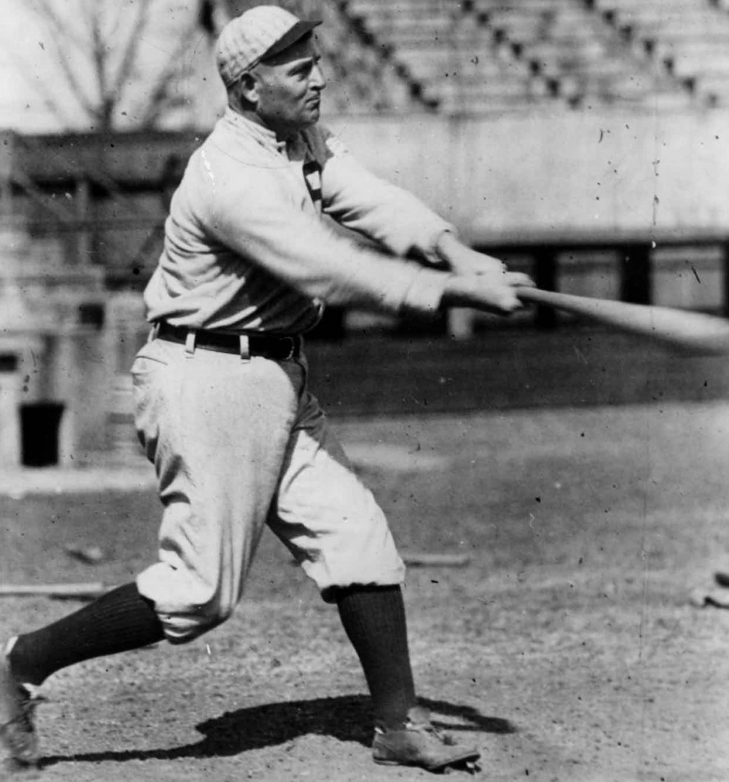
Prior to Babe Ruth fundamentally altering the landscape of professional baseball with his formidable power hitting to the upper deck, the unparalleled home run king during the dead-ball era was Gavvy Cravath. Nonetheless, in accordance with the prevailing baseball rationale of the early 20th century, Cravath was expected to be entirely phased out of the sport. Making his Major League debut at the age of 27 with the Boston Red Sox, he was widely criticized by teammates, fans, and front offices for his painfully slow on-field foot speed. He remained within the minor league system for several years, seemingly relegated to the lower levels on organizational depth charts, until a highly unconventional clerical error in a telegram, at the age of 31, afforded him a second opportunity with the Philadelphia Phillies, an opportunity he capitalized on to completely rewrite the record books.
Arriving at Shibe Park in 1912, Cravath promptly established himself as a formidable force at the plate. During an era characterized by scuffed baseballs, heavy bats, and low-scoring tactical contests, his right-handed power-hitting was remarkably exceptional. He secured the National League home run title an impressive six times within a seven-year period.
Although his 24 home runs in 1915 was a modest total by today's standards, it was a remarkable and extraordinary feat for its era, surpassing the combined power of entire opposing teams. He skillfully used his strong pull-hitting ability to take advantage of the small size of Philadelphia’s Baker Bowl, making the right-field wall his own personal launching pad.
However, labeling Cravath just as a powerful hitter ignores his impressive offensive efficiency. He wasn't a free swinger; instead, he had a keen, disciplined eye at the plate, leading the National League in on-base percentage twice, including an outstanding .412 in 1915. He was a highly effective run scorer, leading the senior circuit in RBIs twice, most notably with 128 RBIs in 1913, and was a league leader in slugging percentage and OPS twice, helping build the franchise's historic 1915 pennant-winning team.
The sheer density of his production during his nine-year stay on Broad Street yielded an exceptional .291/.391/.489 slash line—a statistical fingerprint that commands immense respect across any generation of baseball history. He even stepped up to serve the organization as a player-manager during his final two summers, providing a steady, respected hand through a difficult transitional era before officially retiring after the 1920 season.
He was chosen for the Philadelphia Baseball Wall of Fame in 2000.
11. Billy Hamilton
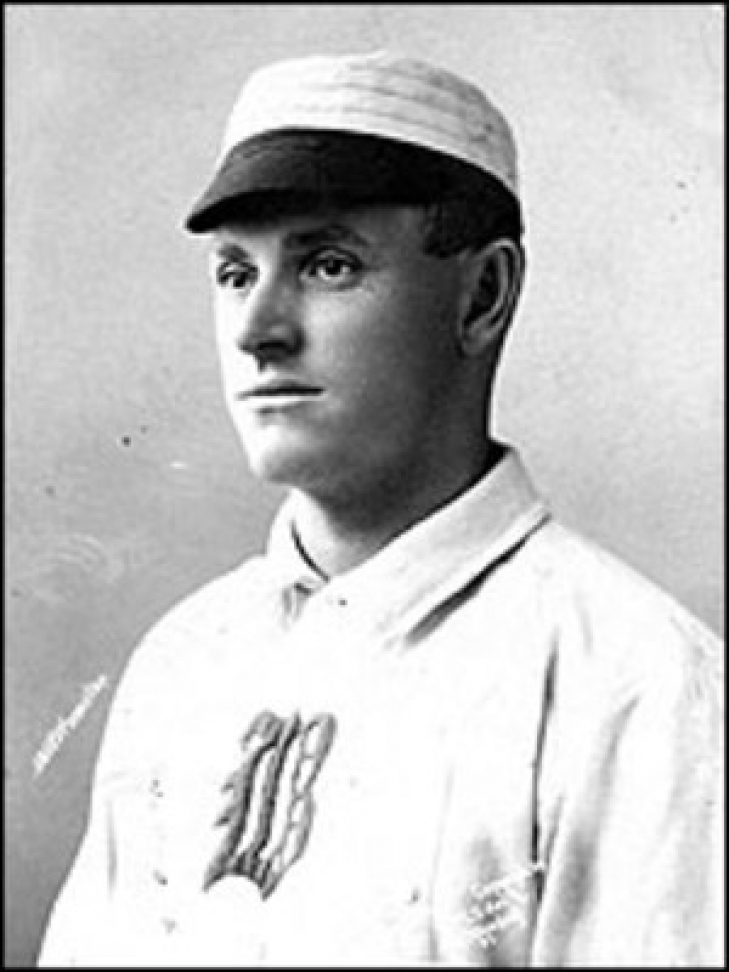
In the hyper-competitive landscape of 1890s baseball, “Sliding" Billy Hamilton was universally recognized as a human hurricane on the basepaths. He didn't just break the existing rules of baserunning; he completely rewrote the operational blueprint of the sport, popularizing the head-first slide, the drag bunt, and the daring art of advancing from first to third on a single. Decades after he hung up his heavy woolen uniform, an objective evaluation of his statistical fingerprints confirms that he remains firmly among the most elite, high-efficiency weapons ever to play the game.
To genuinely acknowledge Hamilton’s remarkable dominance, it is essential to consider the extraordinary volume of his stolen base statistics. During his six-year tenure with the Philadelphia Phillies, he regarded the basepaths as his personal domain, leading the National League in stolen bases four times within that period. Three of these seasons saw him surpass the remarkable three-hundred mark.
Certainly, to influence a defensive play on the basepaths, a runner must initially secure a position on base—and Hamilton mastered the art of creating such traffic with exceptional proficiency. He earned two National League batting titles while playing for Philadelphia, combining a formidable line-drive swing with a highly disciplined, precise eye that resulted in three individual on-base percentage titles in the senior circuit.
The pinnacle of this offensive discipline was reached during the historic 1894 season. That summer, Hamilton showcased extraordinary offensive skill, achieving a remarkable .521 on-base percentage and setting a major league record with 192 runs scored—a unique single-season achievement that has stood untouched for more than a century.
Contemporary metric purists and roster analysts occasionally observe that his tenure on Broad Street was relatively brief, encompassing only six summers before his trade to the Boston Beaneaters prior to the 1896 season. However, attempting to diminish his ranking based solely on traditional longevity overlooks the unparalleled intensity of his peak performance. In merely 702 games wearing a Philadelphia uniform, Hamilton dominated opposing pitching staffs with an extraordinary .360 batting average, 1,084 hits, and an impressive 510 stolen bases. Working alongside future legends Ed Delahanty and Sam Thompson, he constituted the core of arguably the most exceptional scoring outfield ever assembled.
The Veteran’s Committee for the Baseball Hall of Fame chose Hamilton in 1961 for the Baseball Hall of Fame, but an overall look at what he accomplished as a baseball player will easily tell you that this was decades too late. The Phillies inducted Hamilton into the Philadelphia Baseball Wall of Fame in 2004.
10. Jimmy Rollins
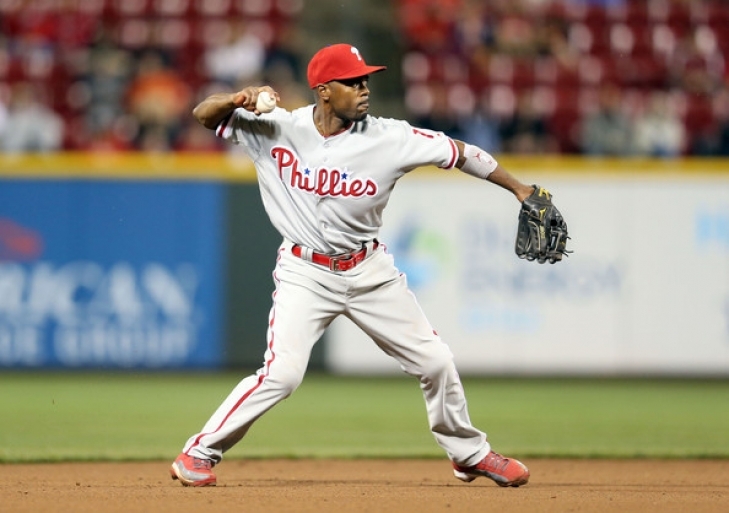
Achieving the distinction of being the sole top-ranked player on a franchise's all-time hits leaderboard is an extraordinary accomplishment for any baseball athlete. Doing so within an organization established in professional hits since 1883, an era that includes legendary figures such as Mike Schmidt, Richie Ashburn, and Ed Delahanty, approaches the realm of the surreal. Nonetheless, this is precisely the position held by James Calvin "Jimmy" Rollins. For nearly fifteen years, the dynamic shortstop has served as the rapid, passionate force behind the most enduringly successful period in the history of the Philadelphia Phillies.
Having been raised on the concrete playgrounds of Northern California, Rollins admired the esteemed Rickey Henderson. Throughout his career, he consistently incorporated that same style of intense, unrestrained chaos into the leading position of the Philadelphia Phillies' batting order. He transformed the contemporary leadoff role by integrating exceptional speed with an unexpectedly potent power-hitting capability.
Rollins transformed the basepaths into his personal laboratory, utilizing exceptional internal timing to steal 20 or more bases in 13 of his 14 complete seasons with Philadelphia, three times surpassing the notable 40-steal milestone. He was particularly effective when driving the ball into the gaps, consistently circling the bases to lead the National League in triples on four separate occasions. Similar to his childhood hero, he had the ability to shift the momentum of a game with a single swing, aggressively punishing pitchers by hitting 216 home runs while playing for the Phillies—an all-time franchise record for a switch-hitter.
Nevertheless, constraining "J-Roll" to an offensive catalyst alone underestimates his full genius. On the baseball field, he transformed the shortstop position into a demonstration of athletic mastery. Equipped with a remarkably swift initial movement, exceptional spatial awareness, and a powerful arm, Rollins proficiently deflected hits with ease, earning four National League Gold Glove Awards and establishing a franchise-record defensive standard that contributed to the stability of a championship-caliber pitching staff.
His career reached its peak during a landmark, award-winning 2007 season. In spring, Rollins confidently called the Phillies the "team to beat" in the National League East—and then spent the following six months proving his confidence true. He delivered an extraordinary regular season, playing all 162 games and achieving a rare 20-20-20-20 season (doubles, triples, home runs, and steals). He topped the senior circuit with 139 runs, hit a career-high 30 home runs, and amassed 212 hits with a solid .296 batting average, earning the 2007 National League Most Valuable Player award.
More than just an accumulator of individual hardware, Rollins was a ruthless winner. He was the vocal catalyst that drove the franchise to five consecutive division titles, back-to-back pennants, and the unforgettable 2008 World Series championship.
Advanced metric purists sometimes criticize his .324 on-base percentage as a drawback for a traditional leadoff hitter, a focus on efficiency that fuels ongoing debate over his Hall of Fame credentials. However, solely emphasizing his walk rate ignores his durability and performance in big games. He concluded his notable 15-year career with the Phillies, holding franchise records in hits (2,306) and doubles (479), and also stole 453 bases. His legacy was definitively secured with his induction into the Philadelphia Phillies Wall of Fame in 2025.
9. Chuck Klein
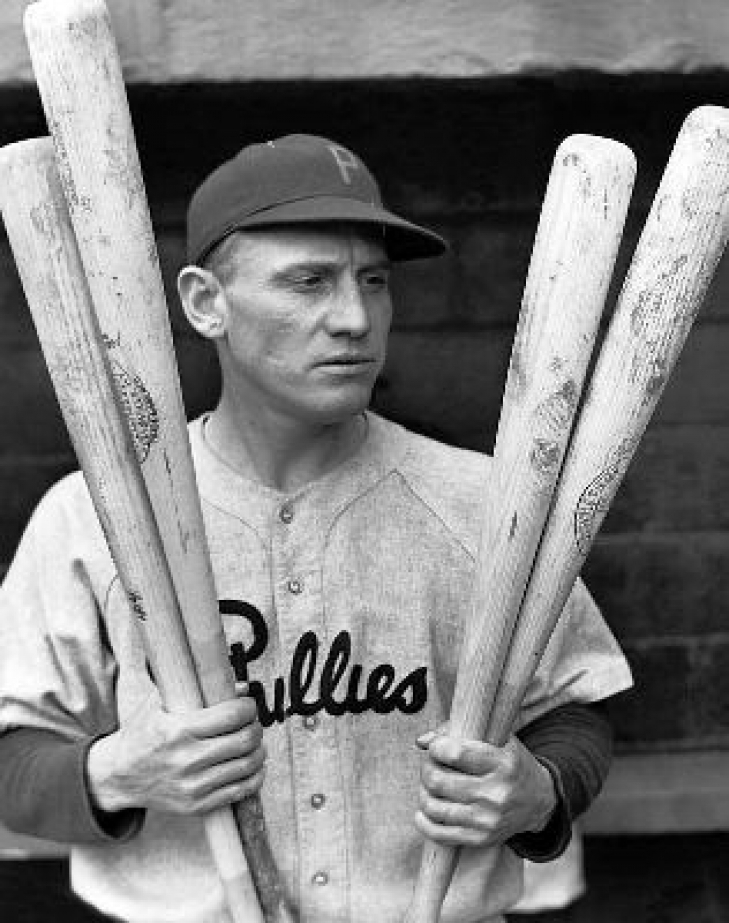
Throughout baseball's extensive history, there have been instances in which a franchise's fortunes have been significantly influenced by a fortunate administrative decision. Conventionally, Chuck Klein's prime years were characterized by his dominance over National League pitchers while representing the St. Louis Cardinals. During his prolific tenure with Fort Wayne in the Central League, Klein was firmly integrated within the Redbirds' developmental system. Nevertheless, the Cardinals simultaneously maintained ownership of the rival Dayton club, an evident violation of Major League Baseball regulations. Upon discovering this infringement, the vigilant Commissioner Kenesaw Mountain Landis mandated the liquidation of the St. Louis franchise and its player assets. Subsequently, the financially constrained Philadelphia Phillies front office submitted the highest bid, thereby markedly altering the franchise’s future trajectory.
Klein’s breakout campaign in 1929—his inaugural full season in the major leagues—remains an exemplary display of offensive prowess. He engaged the supporters at Baker Bowl with an extraordinary career-high of 43 home runs, earning the National League title. His formidable right-handed batting continued to pose a significant threat, as he further contributed by hitting an additional 40 home runs in the subsequent summer.
While his home run totals naturally fluctuated to 31, 38, and 28 over the subsequent three summers, Klein's raw output was so overwhelming that he captured three more home run titles, bringing his total to an incredible four crowns over a five-year span.
However, categorizing Klein exclusively as a one-dimensional, over-the-fence slugger entirely overlooks the true brilliance of his historical peak. Between 1929 and 1933, he demonstrated exceptional contact-hitting prowess, consistently maintaining a seasonal batting average above .330. The apogee of his multifaceted dominance was achieved during his 1933 Triple Crown pursuit, wherein he secured the National League batting title with an impressive .368 average, while also leading the circuit in on-base percentage (.422) and slugging percentage (.602). Throughout this distinguished five-year period, he recorded four seasons with an on-base percentage exceeding .400 and four campaigns with an OPS exceeding 1.000. This regular-season performance was characterized by an array of statistical outliers of historical significance, culminating in a well-deserved National League Most Valuable Player award in 1932, framed by two narrowly missed runner-up finishes.
Regrettably, Klein’s pioneering offensive clinic took place in almost complete isolation. The Philadelphia Phillies were notoriously financially struggling and consistently occupied the lower end of the standings. Acknowledging that his trade value was their sole liquid asset, the financially constrained organization transferred their franchise icon to the Chicago Cubs prior to the commencement of the 1934 season.
A severe mid-career injury in Chicago permanently sapped his explosive lower-body mechanics, leaving him a mere fraction of his former self. He eventually returned to Broad Street for a nostalgic second stint, followed by brief late-career roles in the early 1940s before finally hanging up his spikes.
Klein would enter the Baseball Hall of Fame in 1980 as a Veterans Committee Selection. With the Phillies, Klein smacked 243 Home Runs, batted .326 with 1,705 Hits. Klein's name was placed on the Philadelphia Baseball Wall of Fame in 1979.