
Site Admin
33. Curt Simmons
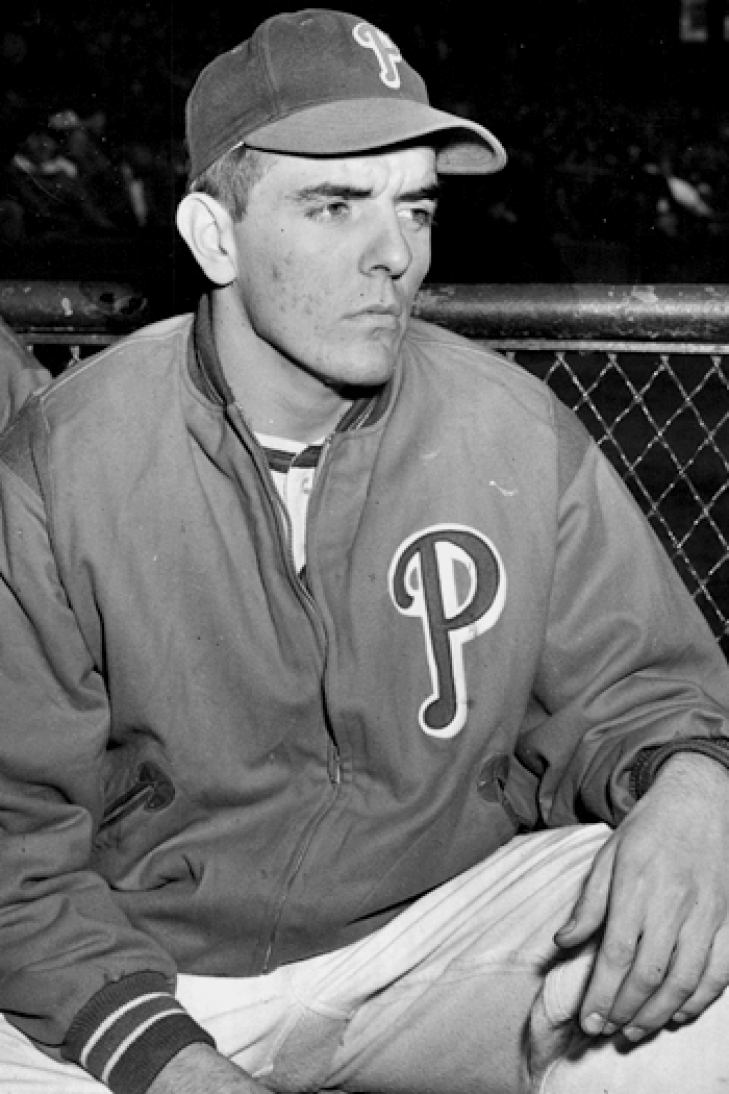
The story of the 1950 "Whiz Kids" often focuses on Robin Roberts's legendary achievements, but a closer look at that iconic era shows that Curtis Thomas Simmons was a crucial and consistent part of the rotation. Coming from a widely publicized amateur bidding war as a local star from Eastern Pennsylvania, this smooth left-hander skipped the typical minor league route to bring fast, reliable pitching directly to Broad Street. For more than ten years, his fluid pitching style and strategic mastery made him a key, high-volume contributor during one of the most celebrated periods in franchise history.
His early-season performance peaked dramatically during the 1950 pennant race. At only 21, Simmons demonstrated exceptional mound skill, finishing with a 17-8 record and a 3.40 ERA, leading the young team toward the National League title. Just as his career was on the rise, a year-long military deployment to Korea abruptly halted his progress, causing him to miss the 1951 schedule entirely, and the 1950 World Series, since his National Guard unit was activated in September just before the Fall Classic.
When he resumed active duty in 1952, he appeared completely refreshed by his time away, delivering arguably the best personal performance of his career. Simmons finished with a 14-8 record, posted an impressive 2.82 ERA, led Major League Baseball with six shutouts, and topped the National League with an outstanding 2.76 FIP.
While Roberts dominated national headlines as the team's leading workhorse, Simmons was a dependable, steady presence alongside him. He made winning a consistent achievement, reaching 14 or more victories five times with the team and earning three National League All-Star selections in 1952, 1953, and 1957. He was also chosen as the starting pitcher for the Senior Circuit in both the 1952 and 1957 Midsummer Classics. His command on the mound helped him protect the score, and he maintained a high level of efficiency, finishing in the National League's top ten for ERA seven times during his tenure with Philadelphia.
After a difficult period marked by injuries and a disappointing 1960 slump, the Phillies’ management decided to release the veteran southpaw in late May. Instead of ending his career there, Simmons made a remarkable comeback, joining the St. Louis Cardinals. He reinvented his pitching style and played another seven seasons in the major leagues, including a standout 1964 season with 18 wins that finally earned him the World Series ring he missed out on as a young player.
With the Phils, Simmons had a 115-110 record, 109 complete games, and 1,052 strikeouts across 1,939.2 grueling frames in Philadelphia, trailing only Steve Carlton and Chris Short for the most wins by a left-hander in organizational history. The Phillies selected Simmons for the Philadelphia Baseball Wall of Fame in 1992.
35. Jack Clements
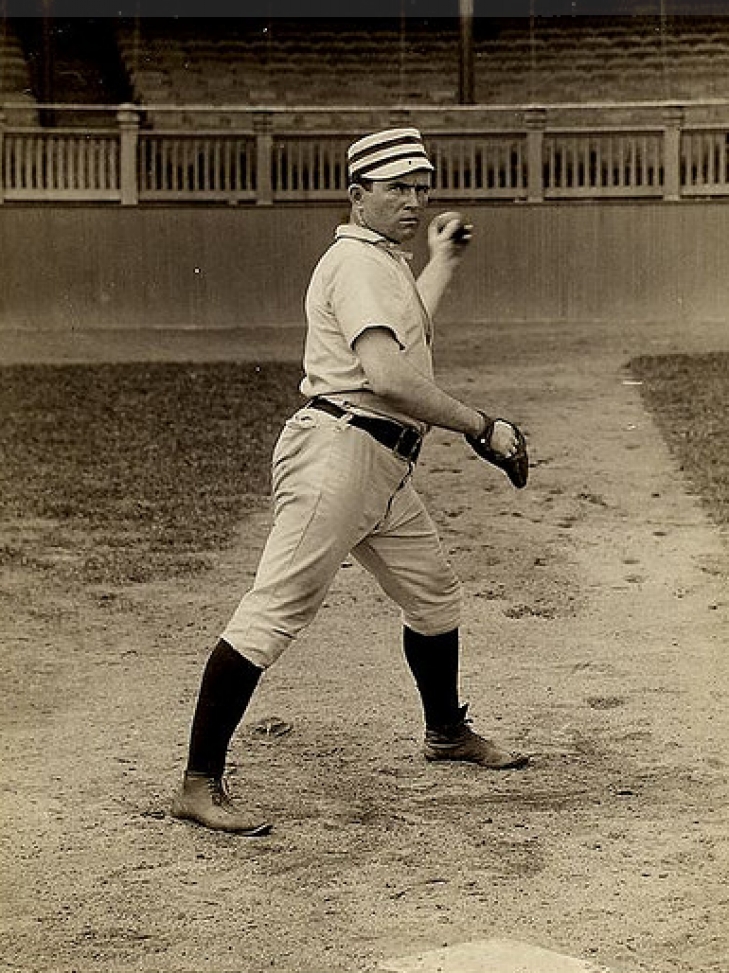
In the tough environment of 19th-century baseball, the catcher’s box was like a collision zone. Jack Clements, known as “Bones," was a striking figure due to his notoriously surly attitude, his thick, low-slung build, and his refusal to follow conventional rules in his career. The Pennsylvania native was a trailblazer behind home plate, among the first catchers to systematically wear a sheepskin chest protector. Even more remarkable for modern fans, Clements is one of the few true left-handed catchers in Major League Baseball history, a rare position that has disappeared in today’s game.
His extensive and high-volume residency in Philadelphia lasted exactly 1,000 games from 1884 to 1897. Although catching without modern equipment was physically demanding and worn down most players of his era, Clements flourished, becoming one of the most outstanding, run-producing hitters of his time.
He didn't just survive at the plate; he excelled. Clements surpassed the elite .300 batting average five times while wearing a Philadelphia uniform, and achieved the impressive .400 on-base percentage three times, solidifying his role at the core of the lineup. The peak of his contact-hitting was during a 1895 offensive clinic, where Clements hit .394 over 85 games, the highest season batting average for a catcher in major league history.
Bones was more than just a singles hitter; he had a powerful, advanced swing that was uncommon for his time. In 1893, a high-scoring year, he hit 13 home runs, and in 1895, he reached a career-best with 17 homers. To put this into perspective, hitting double digits in homers during the 1890s was similar to anchoring a modern team with 40-plus home runs.
When he finally left the organization after fourteen dedicated summers, he left a remarkable localized slash line of .289/.352/426, supported by 1,079 hits and 70 home runs, a substantial offensive contribution that drastically changed team expectations for the catching position.
Although his grumpy attitude and intense exchanges with umpires sometimes annoyed league officials, local fans highly admired the relentless effort needed to pitch thousands of innings as a southpaw. He was a pioneering workhorse whose distinctive playing style and remarkable offensive achievements secure his status as a key figure in Philadelphia baseball history.
32. Roy Halladay

Before Roy Halladay donned a Philadelphia jersey, his reputation as a top-tier player in the modern game was well established. As the reliable and dominant pitcher for the Toronto Blue Jays, "Doc" had already won an American League Cy Young Award and led the league in bWAR for consecutive seasons. He exemplified the ideal old-school workhorse, thriving in an era of strict pitch counts. However, when he was traded to the Phillies before the 2010 season, Halladay managed to elevate his already stellar career into an enduring baseball legend.
His debut campaign in red pinstripes showcased exceptional athletic control. Halladay systematically dismantled National League lineups, achieving a 21-10 record with a stellar 2.44 ERA, leading the majors with nine complete games and four shutouts. On May 29, during that remarkable summer, he delivered a flawless performance by pitching a perfect game against the Florida Marlins. This historic feat secured him the unanimous National League Cy Young Award, placing him among the few to win the honor in both leagues.
Yet, it was his unforgettable introduction to the high-leverage theater of October that permanently altered the archives of the sport. Making the very first postseason appearance of his twelve-year career in Game 1 of the NLDS, Halladay stepped onto the mound at Citizens Bank Park and completely paralyzed the Cincinnati Reds. Armed with a devastating, biting cutter and immaculate spatial command, he carved his way through history to spin a no-hitter, marking only the second no-hit masterpiece in postseason history after Don Larsen’s famed 1956 World Series perfect game.
He carried his front-line dominance into the 2011 season, posting a strong regular season with a 19-6 record and a career-best 2.35 ERA, earning him a close second in the Cy Young voting. Unfortunately, the intense workload needed to maintain that level of excellence took a severe physical toll. Serious shoulder and back injuries caused him to lose much of his signature velocity and movement, diminishing his once-formidable presence to a shadow of itself during two painful, less effective seasons before he officially retired in late 2013.
Halladay would die in 2017 when he crashed his amphibious plane in the Gulf of Mexico. The Phillies would posthumously induct him into their Baseball Wall of Fame in 2018, and the Baseball Hall of Fame chose him the next year.
31. Larry Bowa
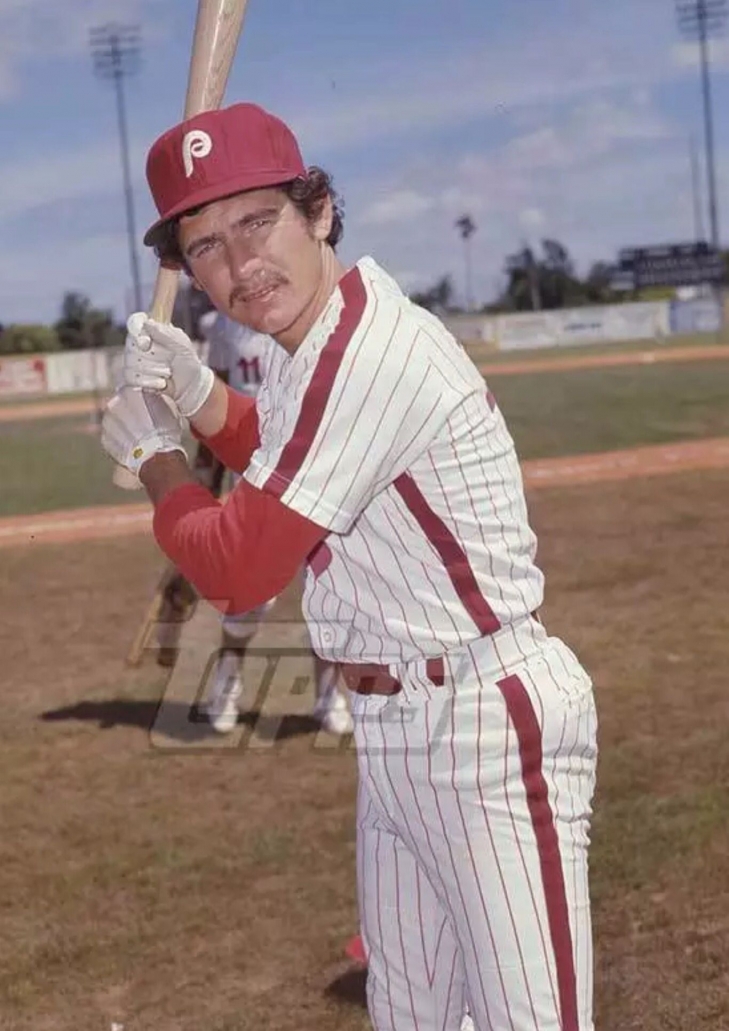
Surviving twelve tough seasons as the Phillies' starting shortstop demands exceptional defensive skills. For Larry Bowa, this was the only way to succeed. Known for his fiery, ultra-competitive nature, which earned him the nickname "The Gnat,” he turned the shortstop role into a showcase of precise positioning and relentless coverage. Although his power at the plate was modest, his glove was a top-tier, era-defining defense that anchored the infield during the team’s golden era.
From a run prevention standpoint, Bowa was an exceptionally efficient player with low variability. He led all National League shortstops in fielding percentage five times, thanks to his quick first step and flawless glove work, which helped him reliably cover the turf at Veterans Stadium.
His advanced spatial metrics were extremely impressive, far exceeding a simple regional favorite. He ranked in the top ten in the National League for defensive bWAR five times, peaking in 1978 when he led all Senior Circuit position players with a remarkable 2.9 defensive WAR.
Evaluating Bowa solely as a defensive player overlooks his highly productive role as a table-setter in the lineup’s bottom half. Despite lacking power—hitting only 13 home runs over 1,739 games in Philadelphia, he consistently found ways to prolong innings. Bowa achieved three summers hitting over .280 and amassed 1,798 hits while with Philadelphia. His exceptional speed allowed him to disrupt catchers, securing nine straight seasons with at least 20 stolen bases.
The peak of his regular-season efforts and national acclaim occurred during the iconic 1978 year. Bowa delivered an outstanding display on both offense and defense, achieving a career-high 192 hits and posting a impressive .294 batting average, which earned him a well-deserved third place in the National League Most Valuable Player voting.
That impressive pedigree remained completely unbreakable when the spotlight was brightest during the remarkable 1980 championship run. He made the Fall Classic his personal stage, batting an impressive .375 against the Kansas City Royals and playing a key role in securing the franchise's first-ever world title.
After being traded to the Chicago Cubs before the 1982 season, he eventually became a prominent, passionate presence in the dugout. In 2001, he rejoined his true baseball home, taking charge of a rebuilding team and leading an unexpected turnaround of 86 wins, which earned him the National League Manager of the Year award, demonstrating that his emotional core was forever linked to Broad Street.
Of course, the primary reason his overall historical valuation faces stiff resistance from modern spreadsheet analysts lies in the final two-thirds of his slash line. With a career franchise on-base percentage of .301 and a slugging metric of .324, his low-efficiency approach at the plate was a persistent drag on offensive run creation. Saying that, he was beloved in his heyday in Philly.
He was later inducted into the Philadelphia Baseball Wall of Fame in 1990.