
Site Admin
20. Johnny Callison
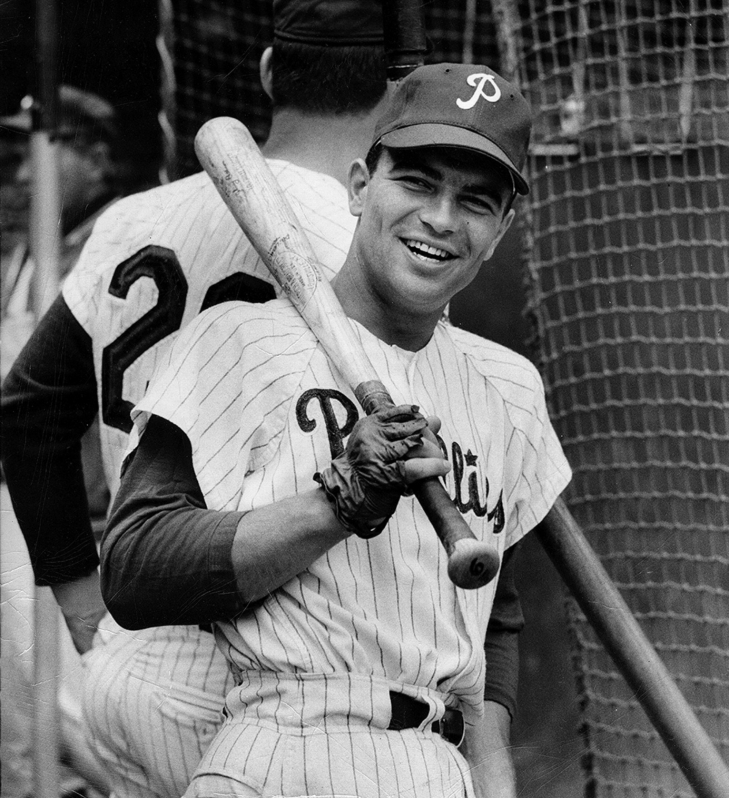
When John Callison joined the Philadelphia Phillies through a trade with the Chicago White Sox before the 1960 season, he quickly faced an almost unfair comparison. Known for his incredibly fast left-handed swing and a powerful arm, scouts and the national press eagerly compared him to Mickey Mantle. While matching such a lofty standard was impossible, Callison established a unique, star-quality legacy of his own, becoming the regular and reliable presence in the Phillies' outfield for ten years.
Operating mainly from right field, with a short, tactical two-year stint in left field, Callison rapidly became one of the most well-rounded and versatile players in the Senior Circuit. He delivered powerful over-the-fence hitting during a pitching-heavy era, achieving four seasons with at least 20 home runs. His standout period included consecutive summers where he surpassed 30 home runs.
However, focusing solely on his offensive performance overlooks a major part of his talent. On the field, Callison exemplified athletic mastery in containment, earning recognition as one of the top defensive right fielders of his era. With exceptional spatial awareness and an impressively precise, powerful throwing arm, he consistently topped the National League’s outfield assist charts, significantly influencing how opposing third-base coaches planned their strategies.
The peak of his career and national fame occurred during the famous 1964 pennant race. Callison delivered an impressive, year-long offensive display, hitting 31 home runs, with 104 RBIs, and leading the league with 40 doubles. He capped off that memorable summer by hitting a walk-off, three-run homer in the 1964 Midsummer Classic, earning All-Star Game MVP honors. He finished as a close and highly regarded runner-up for the National League Most Valuable Player Award.
While he may never have reached those specific statistical heights again, Callison continued to be a reliable, top-tier contributor. He received MVP votes in three different seasons and earned three All-Star selections in his career with the team. He maintained a steady, level-headed presence at the top of the order throughout the 1969 season before ending his career with periods in Chicago and New York.
With Philadelphia, Callison had 1,438 Hits, 185 Home Runs, and batted .271. He was added to the Philadelphia Baseball Wall of Fame in 1996.
21. Jim Bunning
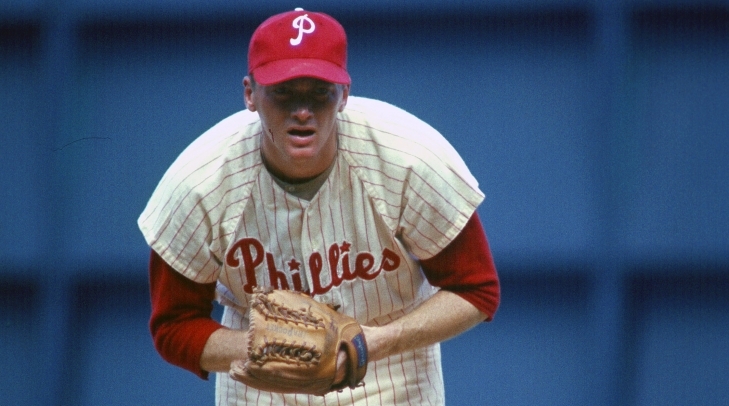
To truly determine the official geographic home of an elite pitcher's legacy, one must look beyond the win-loss record and examine the physical artifacts left behind. According to standard box-score logic, James Paul David Bunning might appear to be tied to Michigan, where he secured more regular-season wins and earned five of his seven All-Star selections with the Detroit Tigers. However, when considering the pinnacle of his historical significance, there is no debate: Bunning is fundamentally tied to the City of Brotherly Love. It is the city where his most legendary achievements were made, the city that permanently elevated his jersey into the rafters, and, most notably, the city whose iconic red script is forever engraved on the cap of his Cooperstown plaque.
Bunning officially joined the team through a blockbuster trade before the 1964 season, quickly becoming the Phillies' dominant, high-speed pitcher. With a deceptive sidearm delivery and a relentless, highly competitive attitude, he made the mound a showcase of athletic control.
Although he had previously pitched a no-hitter in Detroit, Bunning created a legendary moment on Father’s Day in 1964 by defeating the New York Mets at Shea Stadium and throwing the first regular-season perfect game in the National League in 84 years.
Far from being just a fleeting success, his core efficiency stats during his four-year prime on Broad Street were outstanding. He achieved an exceptional individual peak, highlighted by a historic 1967 season where he posted a 17-15 record, an impressive 2.29 ERA, and led the league with six shutouts and 302.1 innings pitched. He narrowly missed winning the National League Cy Young Award, finishing as a highly regarded runner-up.
Advanced metric purists often point out that, despite pitching fewer innings in Philadelphia than in Detroit, his exceptional dominance was so intense that he ended up with a higher career bWAR during his time with the Phillies. After an extended period in Pittsburgh and Los Angeles, Bunning returned to Broad Street for a two-year farewell, providing experience and stability to a rebuilding team before retiring after the 1971 season.
Bunning entered the Baseball Hall of Fame through the Veterans Committee in 1996, though he never should have had to wait so long to enter Cooperstown. As for the Phillies, his name was added to the Philadelphia Baseball Wall of Fame in 1982, and his number 14 was retired in 2001.
19. Sam Thompson
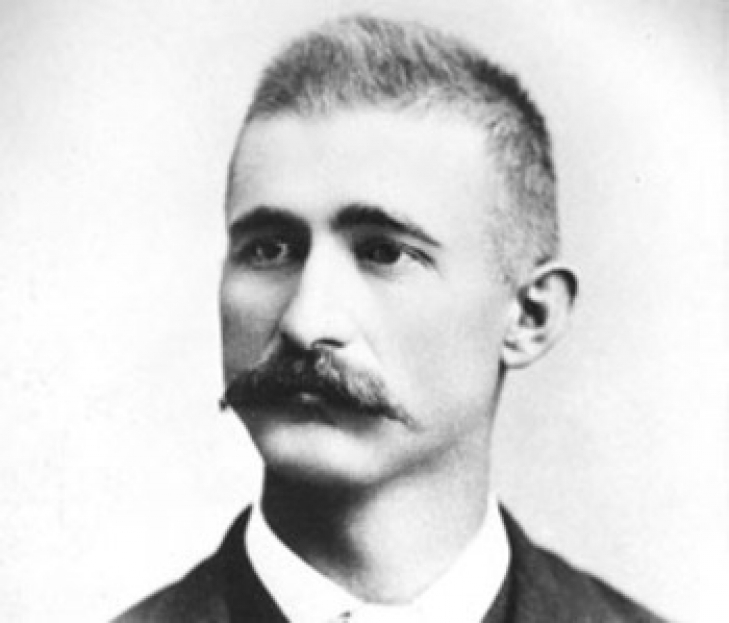
Back in late 1888, the Philadelphia Quakers, who would eventually become the modern Phillies, made a bold move by paying $5,000 to buy Samuel Luther Thompson's contract from the shrinking Detroit Wolverines. At the time, this was a huge financial risk, but it quickly paid off. In just one summer, it became clear that the front office had scored one of the greatest deals in professional sports history. Thompson, a towering six-foot-two with a big handlebar mustache, had a powerful, left-handed swing that completely changed the game of raw, line-drive power in the 19th century, turning the outfield into his personal stage of destruction.
His first campaign in Philadelphia in 1889 was a historic breakthrough. Thompson broke all tactical limits by hitting an astonishing 20 home runs, becoming the first left-handed hitter in major league history to reach that milestone and winning the National League home run title convincingly.
He demonstrated that heavy, long-ball hitting was a consistent weapon by winning a second home run title during the 1895 team explosion that produced 190 runs. His consecutive drives into the gaps, marked by relentless force, helped him secure back-to-back National League slugging titles in 1894 and 1895, greatly boosting the team's extra-base power.
However, labeling "Big Sam" only as a pioneering, one-dimensional slugger overlooks the remarkable contact-hitting skills he displayed throughout his career. During his ten years with the franchise, he consistently posted high batting averages, with five seasons surpassing .300. The peak of this versatile excellence was in 1894, when Thompson achieved an incredible .415 batting average, standing out in an all-Hall-of-Fame outfield with Billy Hamilton and Ed Delahanty.
Thompson was a ruthlessly efficient run producer, famously weaponizing his heavy approach to drive in runs at a density that modern analysts still marvel at, including a league-leading 165 RBIs in 1895.
A series of nagging injuries and a desire to pursue business ventures reduced his physical presence late in his career, causing him to leave the regular lineup after 1898. Despite this, his consistent season performance resulted in a remarkable .334/.389/509 franchise batting line, along with 1,478 hits and 95 home runs. This impressive benchmark continues to be highly regarded by modern roster analysts.
In 1977, the Baseball Hall of Fame Veterans Committee selected Thompson and in 1995, he was inducted into the Philadelphia Baseball Wall of Fame.
18. Cy Williams
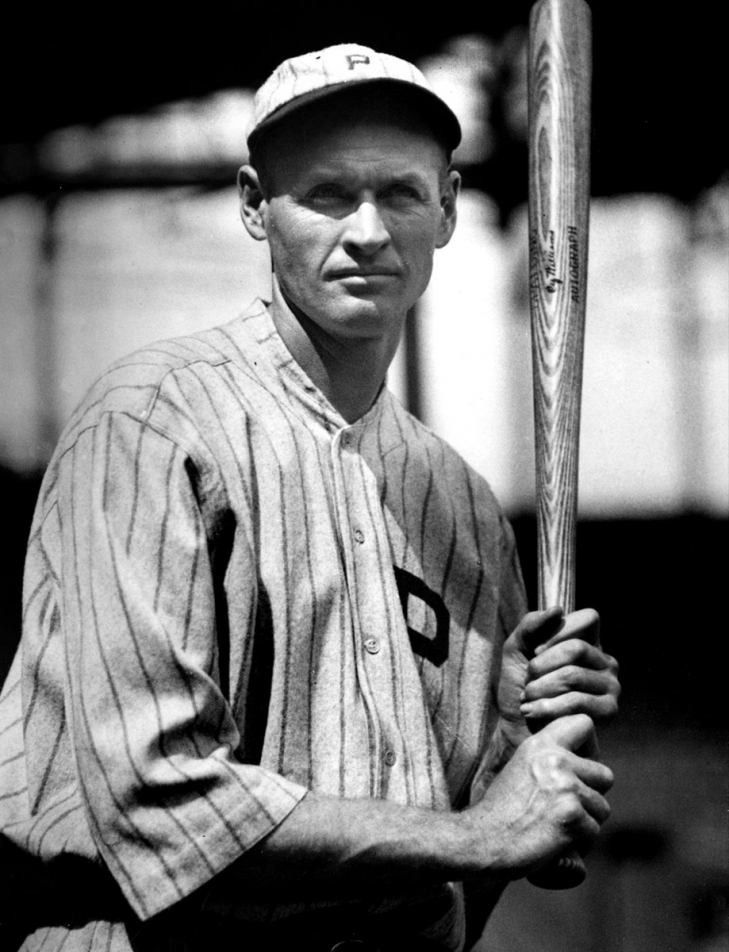
Within the extensive archives of baseball trades, some exchanges become increasingly imbalanced with each winter. Before the 1918 season, the Chicago Cubs executed a veteran trade, sending 30-year-old outfielder Fred "Cy" Williams to the Philadelphia Phillies in return for Dode Paskert. Paskert immediately experienced a sharp decline in performance at age 36 in Chicago, while Williams was only beginning to enter the most important phases of his career. He had already demonstrated his ability to excel during the dead-ball era, winning a National League home run title with 12 homers in 1916. Moving to the hitter-friendly Baker Bowl helped the left-handed batter develop his skills further and lay the foundation for his future success.
The offensive evolution didn’t happen overnight. As the sport shifted its tactical focus to the longball in the early 1920s, Williams adapted his approach to fit the new pace. During the 1920 season, he earned his second career home run title by hitting 15 home runs.
Most importantly, that summer was his first time batting over .300 in an individual season. This achievement was not a one-time feat; Williams surpassed that elite contact-hitting mark five more times while playing for Philadelphia, disproving the idea that he was only a power hitter.
As his physical prime aligned with the live-ball era, Williams posted impressive modern power stats. He earned two more senior circuit home run titles, hitting a league-high 41 home runs in 1923 and adding 30 in 1927 to secure his fourth career crown. Between 1922 and 1926, he became a consistent force of extra-base hits, recording five straight summers with a slugging percentage well above .500.
When he ultimately left the diamond after the 1930 schedule, he held the esteemed title of the National League's all-time career home run leader. This achievement, a significant milestone in baseball history, cemented his status as an elite pioneer of the modern power game, even though it was eventually surpassed by future players.
He accumulated 1,553 hits, 280 doubles, 217 home runs, and a superb .306 career batting average as a Phillie, and the club enshrined Williams into their Baseball Wall of Fame in 1985.