- Published in Top 50 Chicago Cubs
37. Frank Schulte
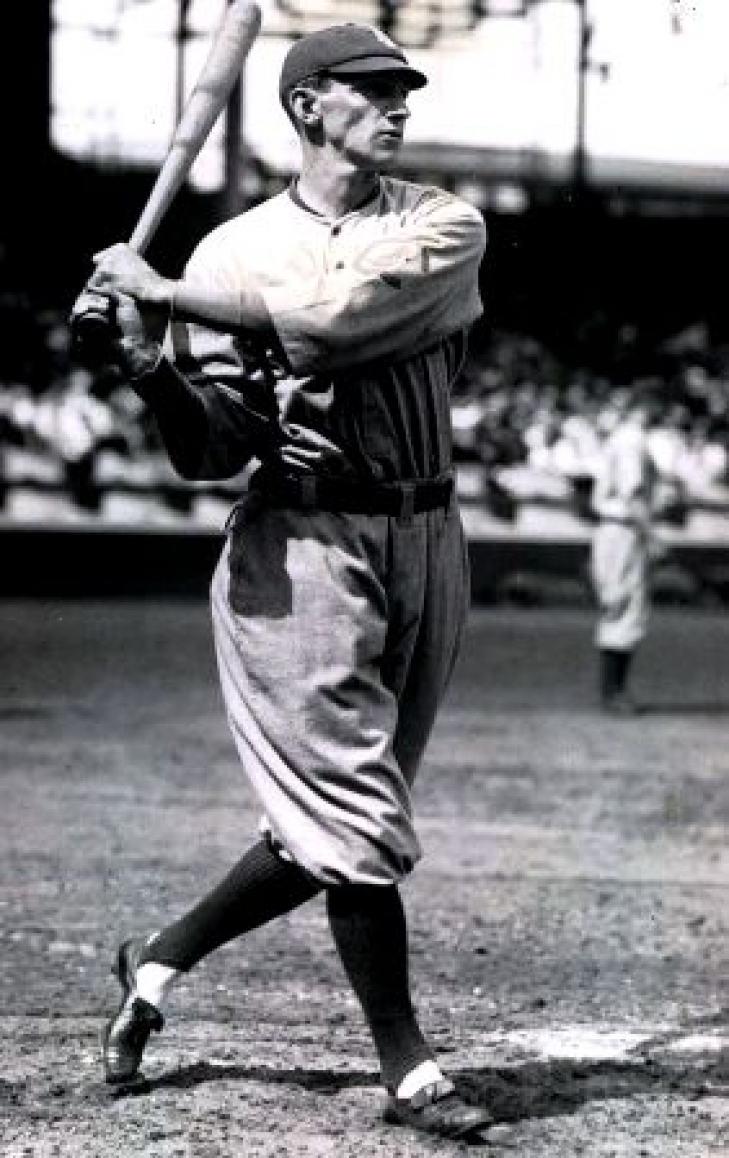
Chicago’s early 20th-century dominance relied on a core of legendary infielders, but it was Schulte who provided the stability from the grass of the West Side Grounds. He settled into the Cubs' starting lineup during the historic 1906 campaign and quickly matured into a vital postseason performer. During the franchise's run of four pennants in five years, Schulte was a model under pressure, batting a collective .321 across four World Series appearances. He arrived as a young outfielder and immediately became a championship-caliber contributor to the 1907 and 1908 world titles.
The absolute pinnacle of his career, and a milestone for the sport, arrived in 1911. In an era where power was a rare commodity, Schulte authored a season of such profound that he was named the National League’s Most Valuable Player. He led the circuit in home runs (21), RBIs (107), and slugging percentage (.534), but his most enduring achievement was becoming the first player in baseball history to join the "20-20-20-20" club. By recording at least 20 doubles, triples, home runs, and stolen bases in a single summer, he proved he was the most dynamic all-around threat of his generation.
Consistency defined the remainder of his thirteen-year tenure on the North Side. While he never replicated the triple-slash explosion of his MVP campaign, he remained a high-volume producer, accumulating 1,590 hits and maintaining a respectable .272 career average in a Cubs uniform. In Chicago, he was regarded as a hard-nosed veteran who could impact the game in every phase, serving as the bridge between the Tinker-to-Evers-to-Chance era and the years that followed. He wasn't just a part of the dynasty; he was the player who ensured the Cubs remained the class of the league well into the next decade.
The conclusion of his storied Chicago journey came in 1916 when he was traded to the Pittsburgh Pirates.