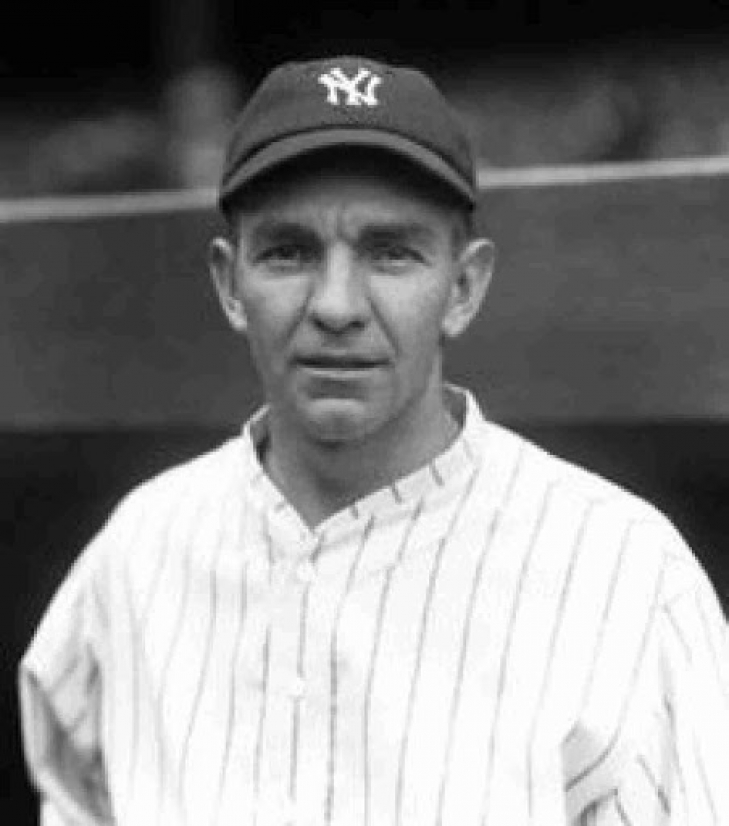
When a franchise builds its identity around a mythic moniker like the "Bronx Bombers," the elite pitching often gets overshadowed. Bob Shawkey spent 13 seasons in New York as the team’s main ace before the baseball world focused on Babe Ruth and Lou Gehrig's home runs. Nicknamed "Sailor Bob" after military service on USS Arkansas during WWI, his arrival through a $3,000 purchase from Connie Mack's Athletics in June 1915 changed the New York rotation.
Shawkey combined a high-velocity fastball with an exceptionally sharp, snapping curveball to methodically dismantle lineups. He expended no time in establishing an elite workload, experiencing a remarkable first full summer in pinstripes in 1916. He delivered an exceptional hybrid performance by initiating 27 games and completing another 24 from the bullpen, securing 24 victories to place second in the American League behind only Walter Johnson, while maintaining an impressive 2.21 ERA.
His consistency over the subsequent years emerged as the primary competitive driving force for Manager Miller Huggins. Shawkey surpassed the elusive 20-win threshold on four occasions while serving in New York, achieving identical 20-win seasons in 1919 and 1920, and culminating with another 20-victory season that contributed significantly to the 1922 pennant pursuit. He demonstrated mastery in run prevention, securing the 1920 American League ERA title with an exceptional 2.46 ERA. His meticulous approach to pitching was complemented by a formidable, historically significant dominance; notably, on the final day of the 1919 season, Shawkey recorded 15 strikeouts against Philadelphia batters, establishing a franchise record for the most strikeouts in a single game, a milestone that remained unchallenged for 59 years until Ron Guidry's remarkable 18-strikeout game in 1978.
Beyond his impressive stats, Shawkey is woven into the organization's history. On April 18, 1923, before 74,000 fans, he was the Opening Day starter for Yankee Stadium's debut. He threw a complete game to beat the Red Sox 4–1, becoming the first to pitch in "The House That Ruth Built." While Babe Ruth hit the stadium's first home run, Shawkey drove in another run and was the game's winning pitcher.
His arm eventually succumbed to severe structural fatigue in the latter half of the decade, shifting him into a veteran depth role during the historic 1927 "Murderers' Row" championship campaign before he formally transitioned to coaching. He closed his brilliant pinstriped playing career with 168 wins, 1,163 strikeouts, 168 complete games, and a stellar 3.12 ERA.