- Published in The Retro Football Show
Super Bowl III-- Season 1 Episode 2
January 12, 1969. Kirk Buchner and Paul Lawrence look at Super Bowl III, one of the most important football games of all time.
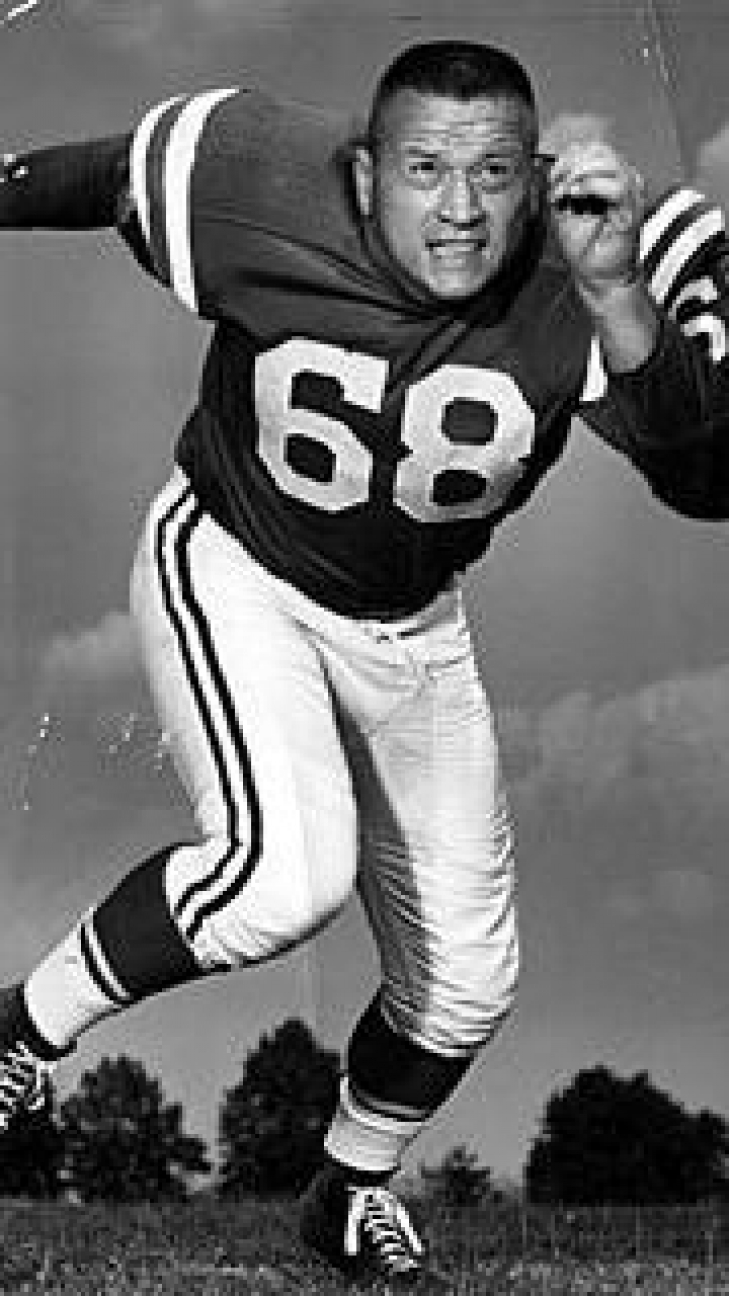
When the Baltimore Colts drafted Alex Sandusky in the 16th round (184th overall) out of tiny Clarion University in 1954, nobody expected a longshot prospect from a small Pennsylvania college to lock down a starting offensive line spot for over a decade. Armed with low-center-of-gravity leverage, brute physical strength, and exceptional mobility, Sandusky shattered expectations by seizing the starting right guard spot as a rookie and refusing to relinquish it for the next 13 years.
Sandusky’s defining qualities were his exceptional consistency and remarkable durability on the offensive line. Playing alongside Hall of Famer Jim Parker and center Dick Szymanski, Sandusky provided Johnny Unitas with a reliable interior pocket while opening running lanes for Alan Ameche and Lenny Moore. His tenacious pass protection and speed as a pulling guard played a key role in Weeb Ewbank’s offense during the team’s consecutive NFL Championship victories in 1958 and 1959.
Even as the league expanded and defensive fronts grew heavier through the 1960s, Sandusky remained a quiet force on the interior. His individual peak earned national recognition in 1964 when he garnered Second-Team AP All-Pro honors after starting all 14 games for a Colts squad that captured the Western Conference title and advanced to the NFL Championship Game.
After retiring following the 1966 campaign, Sandusky left as a two-time champion and a fixture in franchise history. Across 13 seasons in horseshoe blue and white, he missed just one of 166 regular-season games, becoming an unsung hero of Baltimore’s golden era.
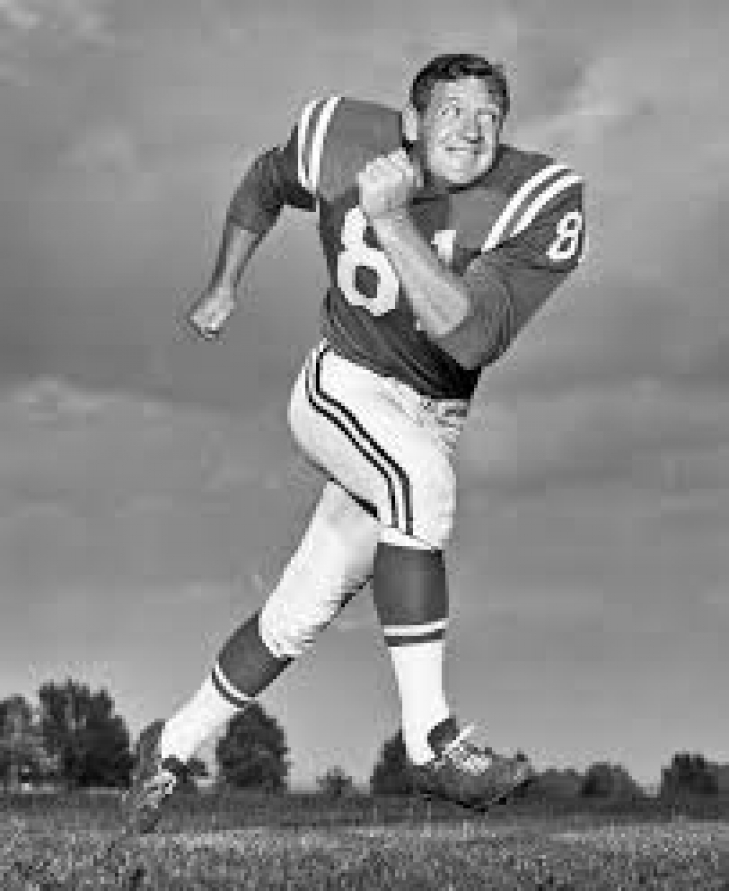
Drafted in the 14th round of the 1954 NFL Draft out of South Dakota, Ordell Braase took the scenic route to professional football stardom, working through military service and roster cuts before finally breaking into the Baltimore lineup in 1957. Once he arrived, the patient defensive end proved a master of longevity and technique, evolving from a trusted situational reserve during the Colts’ back-to-back 1958 and 1959 NFL Championship runs into an irreplaceable anchor on the right side of the defensive front.
Braase officially claimed the starting right defensive end spot in 1960, pairing with legendary defensive tackle Art Donovan and Hall of Famer Gino Marchetti to form one of the era’s most formidable pass-rushing fronts. Renowned for his disciplined edge setting and relentless motor, Braase consistently collapsed pockets and stifled sweep runs, serving as an on-field field general for Don Shula’s defense as his career progressed into his mid-30s.
Rather than slowing down with age, Braase saved his individual peak for the twilight of his career. In 1966 and 1967—at ages 34 and 35—he earned consecutive Pro Bowl invitations and Second-Team AP All-Pro honors, standing out as one of the NFL’s premier defensive ends through pure leverage and veteran savvy.
His final professional campaign in 1968 delivered one last team triumph, as Braase anchored a historically dominant Baltimore defense that surrendered just 144 points all season to capture the 1968 NFL Championship and earn a spot in Super Bowl III.
Over his 160 games in Baltimore, Braase had 80 sacks and seven fumble recoveries.
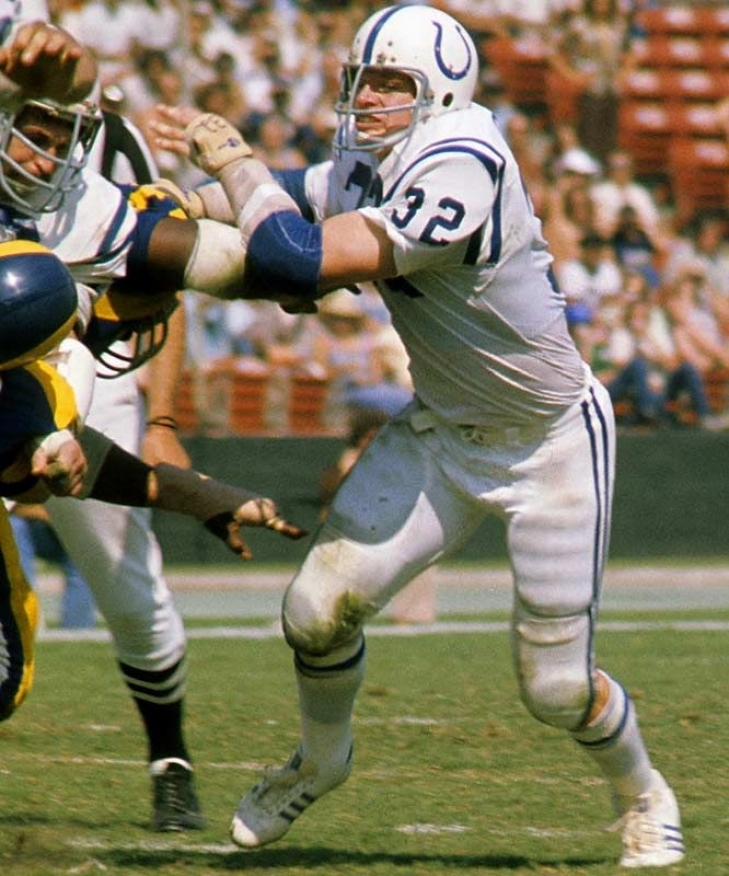
Think about this for a second. Mike Curtis played Linebacker in the 1960s and 70s, and his peers in that fierce era considered him one of the meanest players in the game. How much does that tell you about Curtis?
Arriving as a 1st Round Pick from Duke, the Baltimore Colts had a gem in the converted Fullback who would excel in the interior of the Colts' defense. A ferocious tackler, he would also accrue 25 Interceptions in his career, and in 1968, he would be named to the first of two straight All-Pro Teams. Denied the Super Bowl by Joe Namath's miracle New York Jets team, Curtis would help Baltimore return in Super Bowl V, where in the big game he was arguably the best defensive player on the field for the Colts. He would be named to four Pro Bowls overall and would finish his career with the Seattle Seahawks and Washington Redskins.
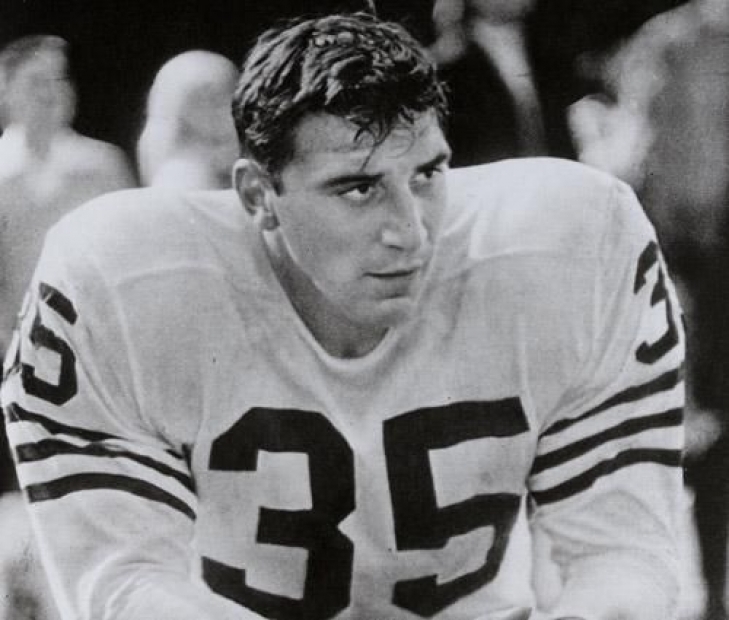
Alan Ameche won the Heisman Trophy in 1954, and the Wisconsin Badgers star went 3rd overall in the Draft. Chosen by the Baltimore Colts, he would win the NFL Rookie of the Year, leading the league in Rushing Yards, Rushing Touchdowns, and Yards from Scrimmage. This was Ameche's best statistical year, but he became an offensive fixture on an excellent Colts team that won the NFL Championship in 1958 and 1959. It was in the former title that Ameche cemented his legacy, as in that game (which has been dubbed “The Greatest Game Ever Played”), the Running Back scored two Touchdowns, including the game-winning one that would beat the New York Giants. That alone makes Alan Ameche an iconic figure in Pro football lore.
Ameche was a four-time Pro Bowl Selection (1955-58) and was chosen for the 1950’s All-Decade Team.
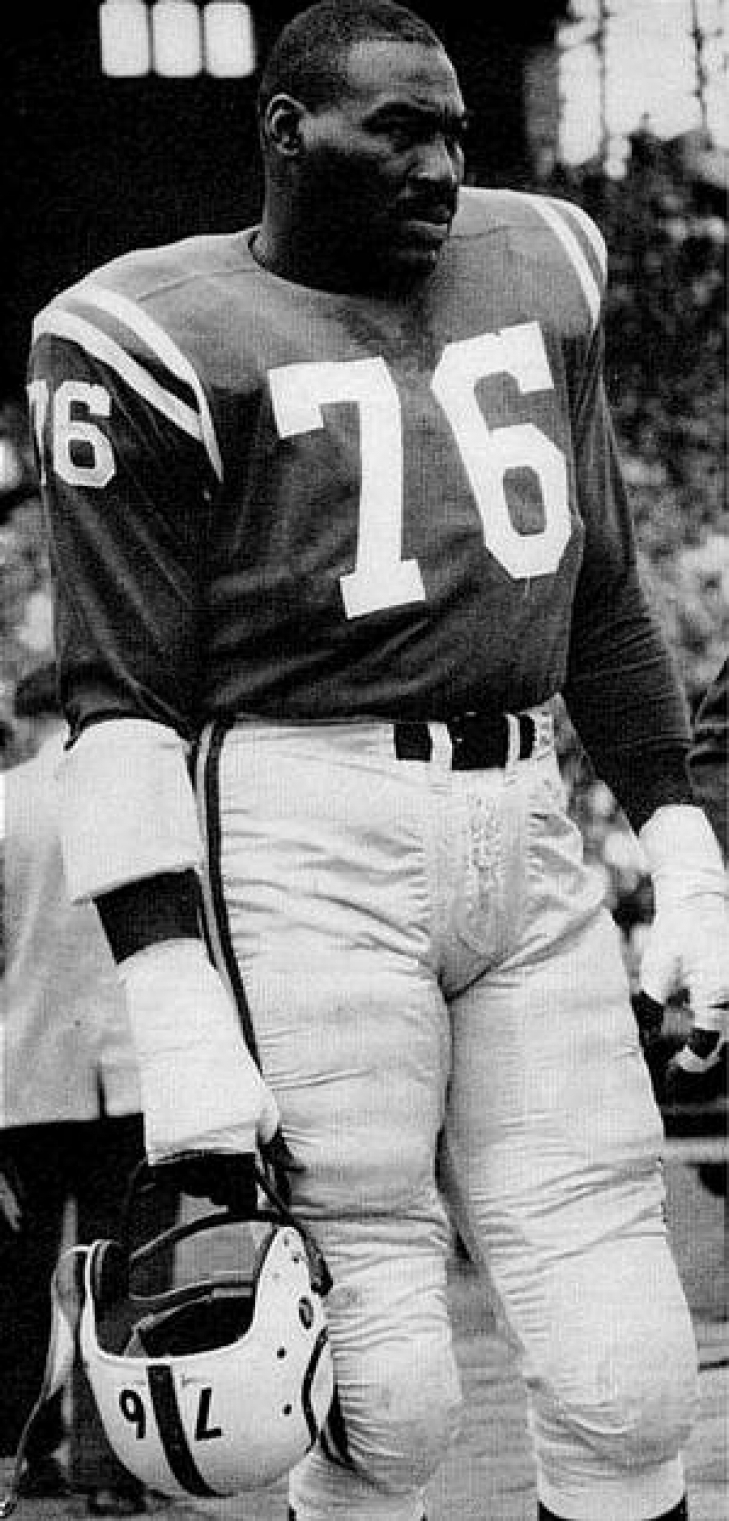
Gene “Big Daddy” Lipscomb enlisted in the military and played football at USMC Camp Pendleton, so if you think the teams of the NFL lightly recruited him, you would be right!
The 300-pound Lipscomb would, however, sign with the Los Angeles Rams in 1952 and would win the starting Right Defensive Tackle job in 1953, but went on to greater success when he was traded to the Baltimore Colts. "Big Daddy" helped anchor the Colts to the 1958 and 1959 NFL Championships, and, not so coincidentally, he was named a First Team All-Pro for his efforts. Lipscomb went to Pittsburgh in 1961 and went to his third Pro Bowl in 1962, but that would be his final year in Pro Football, as sadly, his career ended when he died of a heroin overdose in May of 1963.
We can only imagine how much more he would have accomplished had he been focused, clean, and, more importantly, alive, but what he did on the gridiron cannot be overlooked.
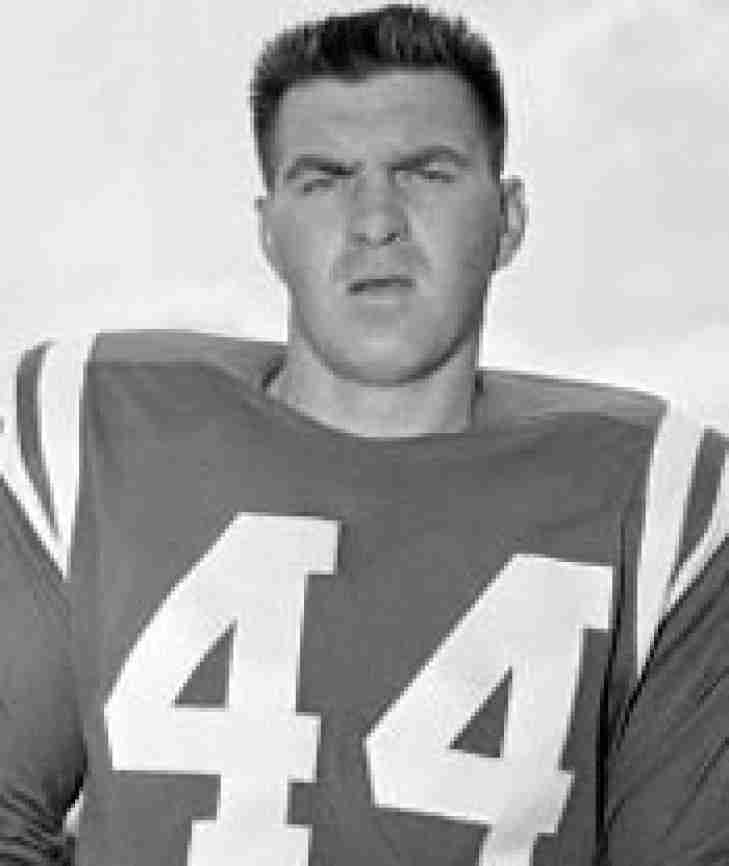
Long before specialized rosters ruled professional football, Bert Rechichar stood out as the ultimate multi-phase weapon in the early days of Weeb Ewbank’s Baltimore Colts. Selected 10th overall in the 1952 draft by Cleveland, Rechichar arrived in Baltimore in 1953 and quickly became a starter in the secondary. Known throughout the league as a bone-jarring, physically imposing safety, his instinctive range over the top gave Baltimore an aggressive backbone at the back end of their defense.
While his violent tackling set the tone on defense, Rechichar wrote his name permanently into football lore during his very first home game in Baltimore in 1953. Lining up against the Chicago Bears, he stepped back and drilled a staggering 56-yard field goal—a booming strike that shattered the previous NFL record by eight yards and stood as the longest field goal in league history for 17 years. Beyond his placekicking, Rechichar served as the team's primary return specialist and emergency punter, handling kickoffs, punts, and coverage duties with equal tenacity.
Rechichar’s individual peak in horseshoe blue came between 1955 and 1957, when he earned three consecutive Pro Bowl selections as one of the NFL’s premier safety anchors. He snagged 24 interceptions across seven seasons in Baltimore, frequently turning defense into instant offense alongside cornerbacks Carl Taseff and Don Shinnick.
His versatile contributions culminated in team triumphs at the decade's end, helping Baltimore secure back-to-back NFL Championships in 1958 and 1959 before finishing his career with brief stints in Pittsburgh and New York. With the Colts, Rechichar had 24 interceptions for 313 return yards, six fumble recoveries, 30 field goals made, 378 kick return yards, and two NFL Championship rings.
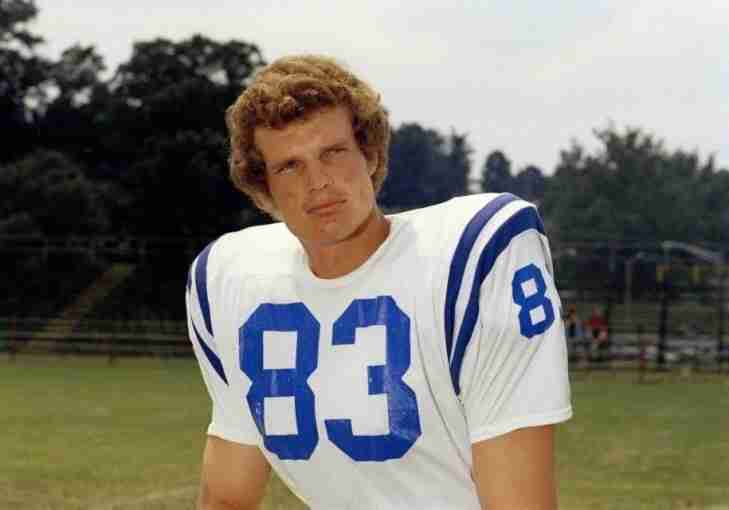
Standing 6-foot-7 with a range that redefined off-ball linebacker play in the late 1960s, Ted Hendricks arrived in Baltimore as a second-round pick out of Miami (FL) in 1989 and immediately earned his iconic nickname: "The Stork." With his towering height and immense wingspan, Hendricks transformed Don McCafferty's defense, using his frame to disrupt short passing lanes, smother sweep runs, and leap over field-goal units to block kicks with alarming frequency.
Hendricks stepped into a starting strongside linebacker role during his sophomore season in 1970, emerging as an indispensable centerpiece of Baltimore’s championship run. His spatial awareness and coverage skills were vital in Super Bowl V, where he helped bottle up the Dallas Cowboys' offense in a tight 16–13 victory to capture the first of his four career Super Bowl rings.
Over his final three seasons in Baltimore (1971–1973), Hendricks put together a dominant, peak-level stretch of linebacker play. He earned three consecutive Pro Bowl selections and a First-Team AP All-Pro nod in 1971, picking off 11 passes, recovering seven fumbles, and recording a safety in horseshoe blue. His knack for creating game-changing defensive turnovers in high-leverage moments made him one of the most feared defensive playmakers in pro football.
After the 1973 campaign, a contract dispute led to his departure for Green Bay and eventually the Oakland Raiders, where he became a legend, but he built the foundation of his Hall of Fame career in Baltimore across 70 consecutive regular-season games. Enshrined in the Pro Football Hall of Fame in 1990, Hendricks cemented his legacy as a uniquely gifted linebacker. In Baltimore, he recorded 11 interceptions for 126 return yards, seven fumble recoveries, and a defensive touchdown.
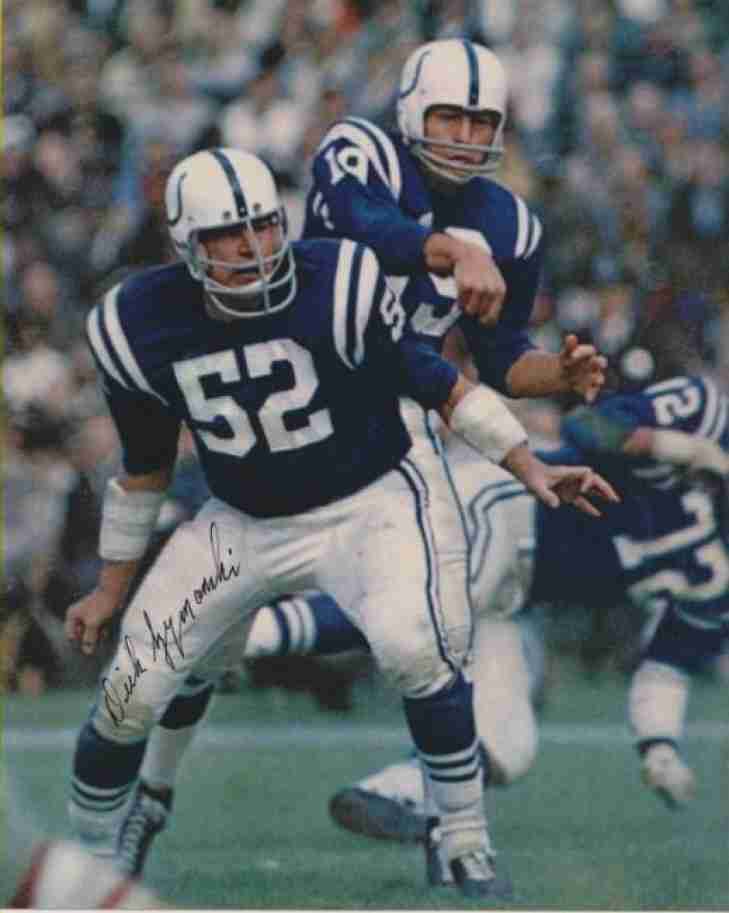
Few players in professional football history have personified two-way versatility like Dick "Sizzy" Szymanski, an iron-jawed pivot who could snap to Johnny Unitas on one drive and drop back to wallop opposing halfbacks on the next. Emerging from Notre Dame in 1955, Szymanski hit Baltimore like a physical revelation, jumping straight into the starting center spot as a rookie to earn Pro Bowl honors before putting his gridiron career on hold to serve his country in the U.S. Army.
After missing the entire 1956 season due to military service, Szymanski returned to a roster that needed his grit on the other side of the ball. Head coach Weeb Ewbank shifted him to middle linebacker for the 1959 and 1960 campaigns, where Szymanski flanked Don Shinnick and Bill Pellington to form one of the league's most punishing linebacking trios. His instinctive play inside proved vital during Baltimore's run to their second consecutive title in 1959, including a 31–16 victory over the New York Giants in the NFL Championship Game.
Returning to his primary center position in 1961, Szymanski re-established himself as one of the game's premier offensive line generals. Serving as the pre-snap caller and protector for Johnny Unitas, he played in 80 consecutive regular-season games from 1959 through 1964, earning two additional Pro Bowl invitations in 1962 and 1964 while anchoring a front line that powered Baltimore back to the top of the league.
Durable, tough, and fiercely loyal across 13 active seasons spent exclusively in horseshoe blue and white, Szymanski appeared in 155 regular-season games, winning three NFL Championship rings (1958, 1959, 1968) before transitioning directly into a multi-decade front office career with the franchise as a scout, personnel director, and general manager.
Syzmanski left the gridiron with 129 starts, 6 interceptions, and one of the most solid reputations in franchise history.
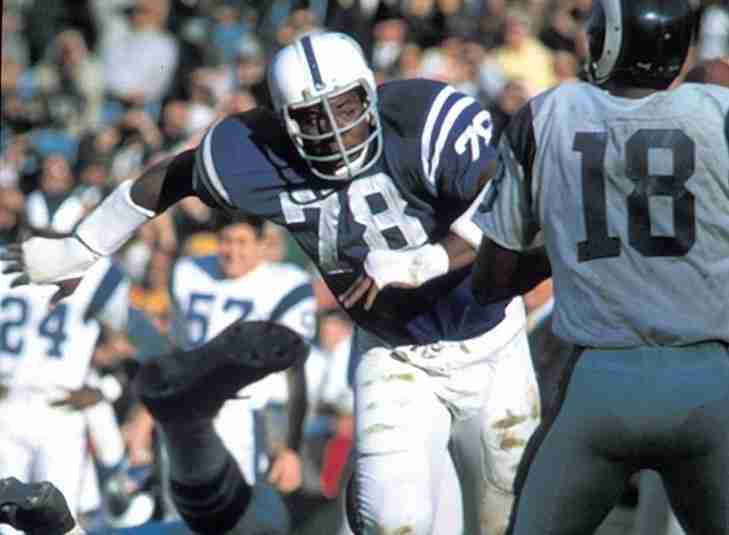
Long before pop culture knew him as the towering Moses Hightower in the Police Academy film franchise, Charles "Bubba" Smith struck genuine fear into opposing backfields as an imposing gridiron force. Selected first overall in the 1967 NFL Draft out of Michigan State, the 6-foot-7, 265-pound defensive end possessed a rare blend of length, explosive speed, and brute power that instantly transformed Don Shula’s defensive front in Baltimore.
Operating on the left side of Baltimore’s defensive trench, Smith became one of the premier pass rushers and edge setters in the National Football League. He earned Second-Team All-Pro recognition in 1968, helping anchor a defense that surrendered just 144 points all season en route to the 1968 NFL Championship. His individual production climbed even higher in 1970 and 1971, earning back-to-back Pro Bowl honors and culminating in a First-Team AP All-Pro campaign in 1971.
Smith’s defensive presence reached its apex during Baltimore’s march to glory in Super Bowl V. Teaming up with Billy Ray Smith Sr. and Fred Miller, his disruptive penetration harassed Dallas quarterbacks throughout the contest, holding the Cowboys' offense in check during a dramatic 16–13 victory to bring the Lombardi Trophy to Baltimore.
Though a tragic knee injury sustained during the 1972 preseason—after colliding with a steel yard-marker post on the sideline—forced him to miss the entire year and ultimately altered his athletic trajectory, his five-season playing run in Baltimore remains legendary.
He was traded to the Oakland Raiders in 1973 before finishing his career with the Houston Oilers. With the Colts, Smith accumulated 43 sacks in 69 games.
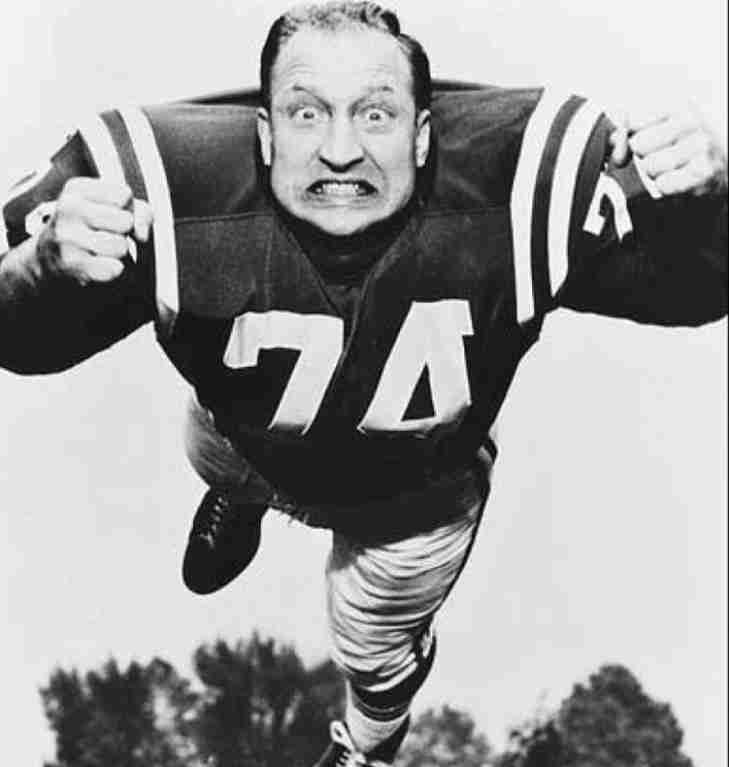
Long before he put the final exclamation point on his 13-year career in orange-squeezed Super Bowl V glory, Billy Ray Smith Sr. arrived in Charm City as a seasoned, battle-tested interior force. Drafted out of Arkansas in 1957, the Augusta native spent his early seasons with the Rams and Steelers before joining the Baltimore Colts in 1961. Smith instantly plugged into the defensive line rotation, bringing relentless leverage, technique, and an unrelenting work ethic that earned him the fond nickname "Rabbit"—a nod to his surprising quickness off the snap for a 250-pound defensive tackle.
Smith’s greatest asset was his rock-solid adherence to defensive fundamentals and unshakeable locker room presence. As a multi-year defensive captain under head coaches Don Shula and Don McCafferty, he anchored the interior alongside Bubba Smith and Fred Miller, establishing a stout front that neutralized opposing ground attacks. His individual peak arrived during the historic 1968 campaign, where he earned Second-Team AP All-Pro honors while helping power Baltimore's dominant defense to the 1968 NFL Championship title.
His career reached a storybook conclusion in 1970. Operating as the heart and soul of the defense at age 35, Smith helped guide the Colts through a gritty playoff run that culminated in Super Bowl V against the Dallas Cowboys. In a hard-hitting 16–13 victory, Smith’s interior wall held firm, securing the franchise's first Super Bowl ring and providing the veteran captain with a perfect fairy-tale exit from professional football.
Durable and steady across a decade for the Shoe, Smith appeared in 133 regular-season games for Baltimore, serving as a trusted leader through one of the most successful eras in team history. Retiring immediately after that Super Bowl V victory, Smith left the game as a two-time champion who set the benchmark for professionalism and defensive line play in Baltimore. He recorded 69.5 sacks in Baltimore.
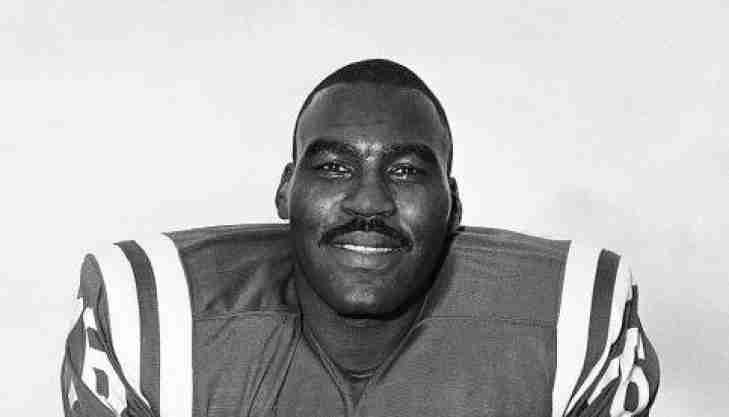
Standing 6-foot-6 and weighing a massive 288 pounds, Gene "Big Daddy" Lipscomb took one of the most improbable paths to professional football stardom in NFL history. Never attending college, Lipscomb honed his physical craft while serving in the United States Marine Corps before breaking into the league with the Los Angeles Rams as an undrafted free agent in 1953. After three seasons in Southern California where his immense potential was overshadowed by off-field friction, the Rams placed him on waivers in 1956—allowing Weeb Ewbank's Baltimore Colts to scoop up the towering defensive tackle for a mere $100 claim fee.
In Charm City, Lipscomb found structure, brotherhood, and immediate stardom. Lining up alongside Hall of Famers Gino Marchetti and Art Donovan, "Big Daddy" utilized a terrifying combination of lateral quickness and physical strength to obliterate opposing offensive lines. His signature move—a stinging slap to the earhole of holding blockers—and his unmatched range allowed him to pursue halfbacks from sideline to sideline. He led Baltimore in tackles during his second season and anchored a dominant interior front that powered the Colts to back-to-back NFL Championships in 1958 and 1959.
During those dual championship runs, Lipscomb operated as arguably the most dominant interior defender in pro football. He earned consecutive First-Team AP All-Pro selections and Pro Bowl nods in 1958 and 1959, then added Second-Team All-Pro honors in 1960. His ability to swallow up double-teams inside gave Baltimore’s linebackers complete freedom to flow to the ball, cementing his reputation as a defensive engine.
Traded to the Pittsburgh Steelers in 1961, Lipscomb played two final All-Pro-caliber seasons before his life was tragically cut short in 1963 at age 31.
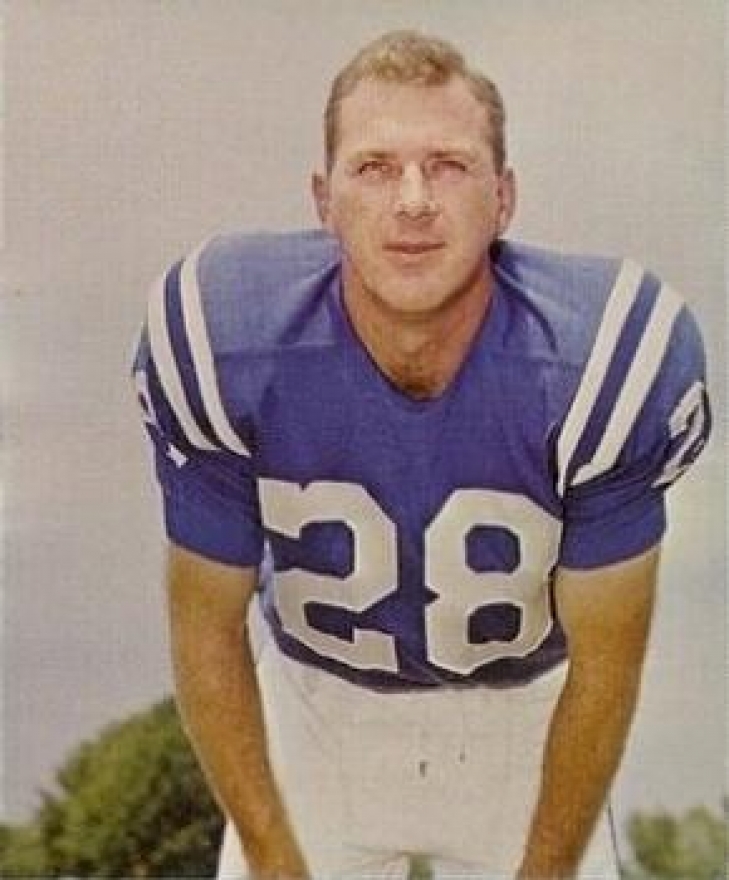
Long before he became Johnny Unitas' favorite downfield target in Charm City, Jimmy Orr proved his big-play pedigree in Pittsburgh. Drafted in 1958 out of Georgia, Orr captured AP NFL Rookie of the Year honors and earned a Pro Bowl bid with the Steelers before a blockbuster multi-player trade brought him to Baltimore in 1961. Lined up opposite Raymond Berry, Orr brought explosive field-stretching vertical speed that gave the Colts' offense an entirely new dimension.
Orr’s signature trait was his staggering big-play efficiency. Possessing exceptional boundary tracking and deep-ball acceleration, he led the entire National Football League in yards per reception twice during his ten seasons in Baltimore—averaging a ridiculous 21.7 yards per catch in 1964 and an incredible 25.6 yards per catch in 1968. Across his ten campaigns in horseshoe blue, Orr averaged 22.9 yards per catch, a mark that stands as one of the most explosive multi-year runs in pro football history.
His individual peak arrived in 1965, when he put together a dominant First-Team AP All-Pro season. With 45 receptions for 847 yards and 11 touchdown catches, Orr earned his second career Pro Bowl selection and established himself as one of the game’s premier flankers. He finished in the NFL's top ten in receiving yards three times during his Colts tenure (1962, 1964, and 1965).
Despite being famously missed by Earl Morrall on the infamous "flea-flicker" play in Super Bowl III while standing wide open in the end zone, Orr found ultimate narrative redemption two years later. In Super Bowl V against the Dallas Cowboys, Orr helped Baltimore secure a dramatic 16–13 victory, walking off the field for the last time as a Super Bowl champion.
With the Colts, Orr caught 256 passes for 5,859 yards and 50 touchdowns, averaging a stunning 22.9 yards per reception.
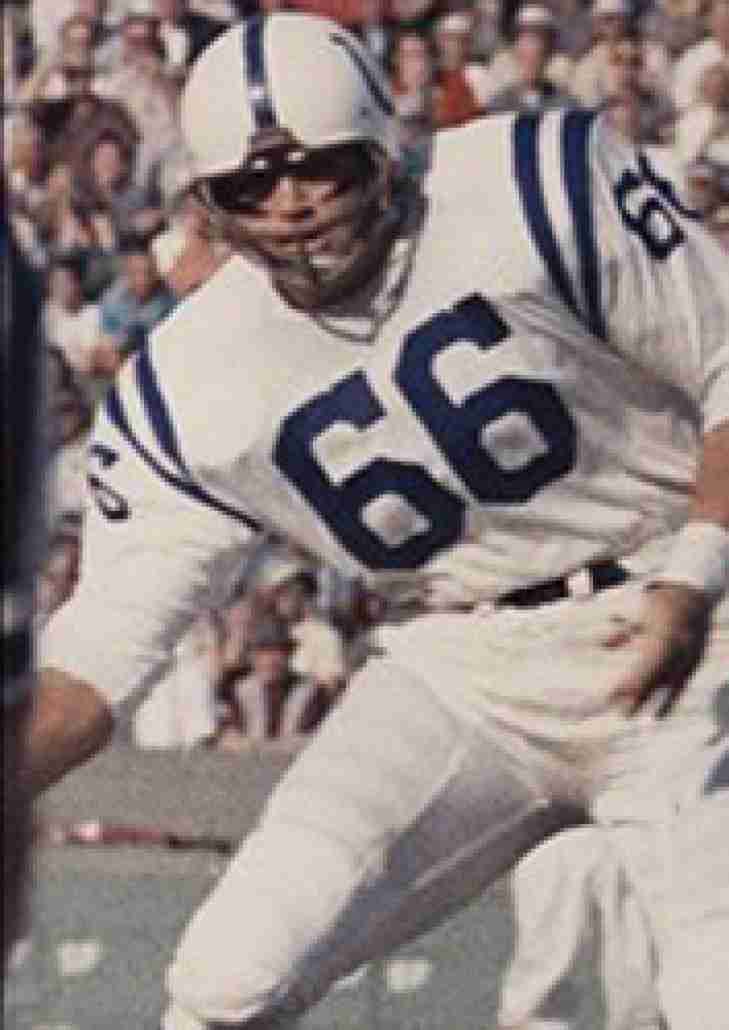
Selected in the second round (20th overall) of the 1957 NFL Draft out of UCLA—where he starred as a two-way fullback and linebacker—Don Shinnick stepped into Baltimore's linebacking corps with an extraordinary nose for the football. Joining Weeb Ewbank's defense alongside Bill Pellington and Gino Marchetti, Shinnick immediately solidified the interior, displaying rare spatial awareness and zone-coverage instincts.
Shinnick’s defining superpower was his unprecedented ability to drop into coverage and snatch opposition passes out of the air. While middle linebackers of the late 1950s were expected primarily to stuff the run, Shinnick revolutionized second-level pass defense. His career apex came in 1959, when he tied for the NFL lead with seven interceptions, earning Second-Team AP All-Pro honors while anchoring Baltimore's defense during their second consecutive NFL Championship run.
Beyond his coverage prowess, Shinnick stood as a relentless, bone-jarring tackler who consistently diagnosed plays before they unfolded. His diagnosing ability enabled Baltimore to capture back-to-back world titles in 1958 and 1959, culminating in his starting role on the 1968 NFL Championship team that reached Super Bowl III.
Loyal and durable across 13 active seasons spent exclusively in Baltimore, Shinnick played in 166 regular-season games for the franchise, picking off at least one pass in 12 of his 13 NFL campaigns. He finished with 37 interceptions for 255 return yards and nine fumble recoveries.
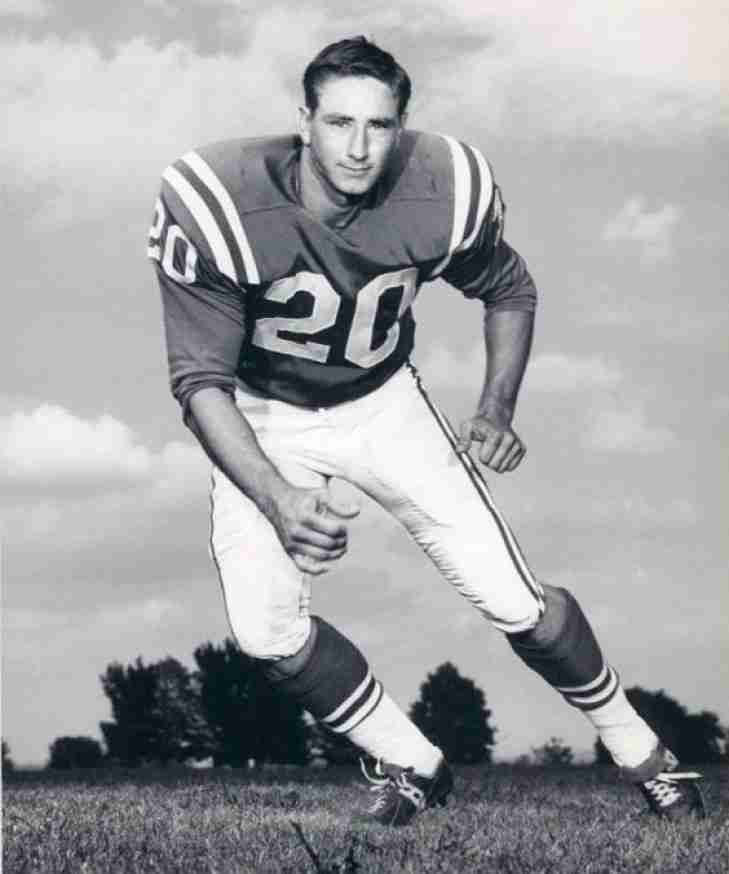
Selected in the third round (41st overall) of the 1963 NFL Draft out of West Texas State, safety Jerry Logan arrived in Baltimore with exceptional speed, ball-hawking instincts, and positional versatility. He carved out an immediate role on special teams as a dangerous kickoff and punt returner while earning snaps in a crowded secondary, quickly becoming a reliable fixture at strong safety for legendary head coach Don Shula.
Logan’s nose for the football made him one of the most prolific turnover machines in franchise history. Alongside free safety Rick Volk, Logan anchored Baltimore's "Organ Grinders" defense that led the Colts to the 1968 NFL Championship and an appearance in Super Bowl III. His play elevated even higher in 1970, when he picked off six passes—returning two for touchdowns—to earn First-Team AP All-Pro honors and his second of three Pro Bowl selections.
His ball-security instincts proved vital during Baltimore's run to glory in Super Bowl V. Logan was a centerpiece of a defensive unit that held the Dallas Cowboys to just 13 points in a dramatic 16–13 victory, securing the franchise's first Super Bowl title and wiping away the sting of two years prior.
Beyond his coverage range in the secondary, Logan remained an indispensable special-teams weapon throughout his career, amassing nearly 1,000 combined return yards. He was a Colt for his entire career and compiled 34 interceptions with 1,203 all-purpose yards.
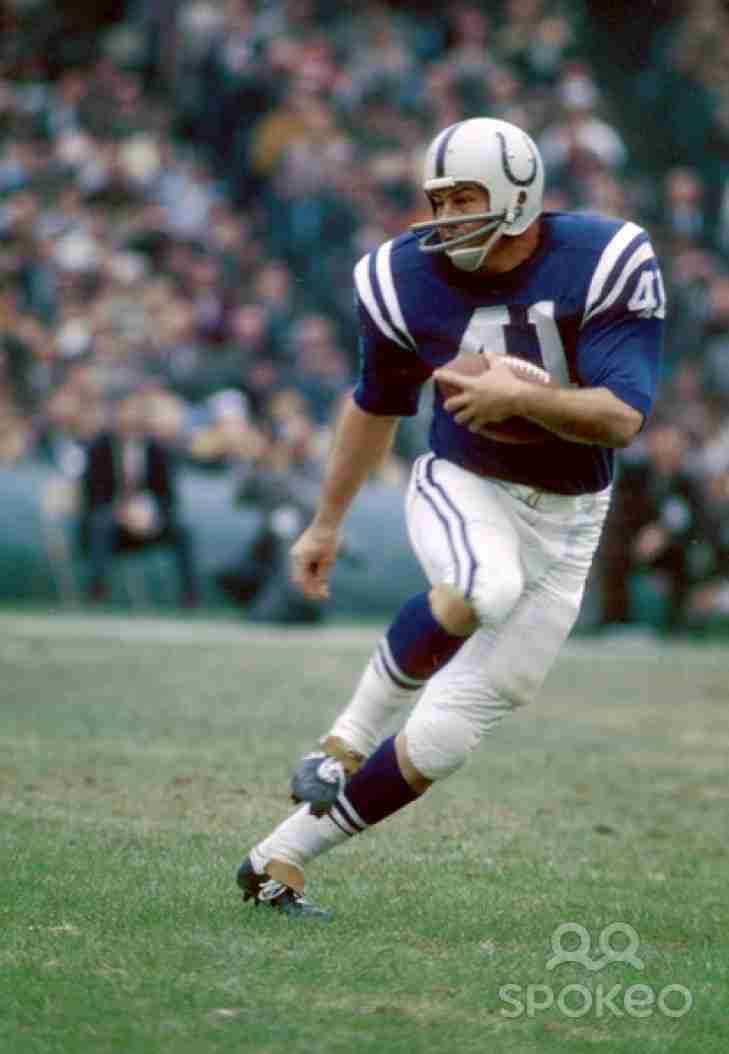
Before he ever topped the NFL in all-purpose yardage or hoisted a Super Bowl trophy, Tom Matte etched his name into pro football folklore as the ultimate utility man who stepped up when disaster struck. Arriving in Baltimore as a first-round pick out of Ohio State in 1961, Matte immediately made his mark with power running and soft hands, but it was his willingness to adapt—and famously wear a play-sheet taped to his wrist as an emergency quarterback—that proved he was the heartbeat of Don Shula’s backfield.
Matte earned legendary gridiron status during the 1965 season through one of the most famous emergency performances in pro football history. When injuries knocked out starting quarterbacks Johnny Unitas and Gary Cuozzo, Shula tapped Matte to start at quarterback for the regular-season finale and the Western Conference playoff game against Green Bay. Wearing a now-famous wristband with handwritten plays taped to his forearm—a strategic innovation that reshaped modern football communication—Matte managed the offense with courage and poise, leading Baltimore to a 20–0 victory over Los Angeles and pushing the Packers to overtime.
Returning to his primary halfback role, Matte produced his individual statistical masterpiece during the late 1960s. He earned back-to-back Pro Bowl selections in 1968 and 1969, serving as the offensive focal point alongside Earl Morrall and Unitas. In 1968, he rushed for 662 yards and ten touchdowns to power Baltimore to the 1968 NFL Championship. He followed up in 1969 with a First-Team AP All-Pro campaign, pacing the entire National Football League with 1,420 all-purpose yards and 11 total touchdowns while averaging 5.0 yards per carry.
Matte's dual-threat versatility proved essential during Baltimore's championship run in Super Bowl V. Contributing as both a runner and receiving outlet, he helped the Colts secure a 16–13 victory over the Dallas Cowboys to bring the Vince Lombardi Trophy to Baltimore.
Retiring after the 1972 season, Matte had 4,646 rushing yards, 45 rushing touchdowns, 249 receptions for 2,869 yards and 12 touchdown catches, and 8,882 total all-purpose yards.
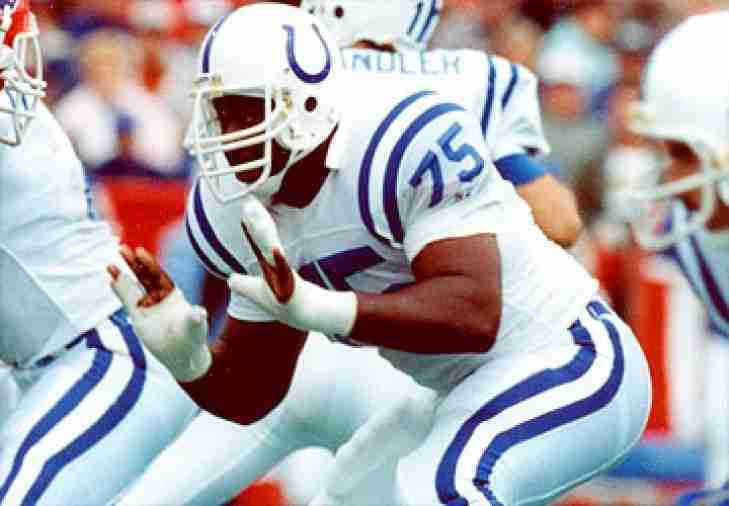
Drafted fourth overall in the 1983 NFL Draft by the Denver Broncos, offensive tackle Chris Hinton was immediately thrust into the spotlight when he was traded to the Baltimore Colts as the centerpiece of the historic deal for John Elway. While Elway's refusal to play for Baltimore reshaped the franchise's trajectory, Hinton quickly proved to be an elite, perennial All-Pro caliber anchor in his own right, famously joking years later that if Elway had stayed in Baltimore, Hinton wouldn't have been there to block for him anyway.
Plugging in immediately at guard as a rookie before switching to left tackle, Hinton weathered the franchise's turbulent relocation to Indianapolis in 1984 while serving as the focal point of the offensive line. Possessing rare technical precision and explosive functional power, he handled the league's premier pass rushers week after week. Across his seven seasons with the Colts, Hinton earned six Pro Bowl selections (1983, 1985–1989), two First-Team AP All-Pro selections (1987, 1989), and three Second-Team AP All-Pro honors (1985, 1986, 1988), spearheading a unit that paved the way for Eric Dickerson's dominant rushing campaigns in the late 1980s.
Hinton spent the final six years of his 13-season NFL career with Atlanta and Minnesota, earning a seventh Pro Bowl nod with the Falcons in 1993. His sustained excellence across the decade was permanently recognized when he was named to the NFL 1980s All-Decade Team. The Colts formally honored his enduring impact by inducting him into the Indianapolis Colts Ring of Honor in 2001.
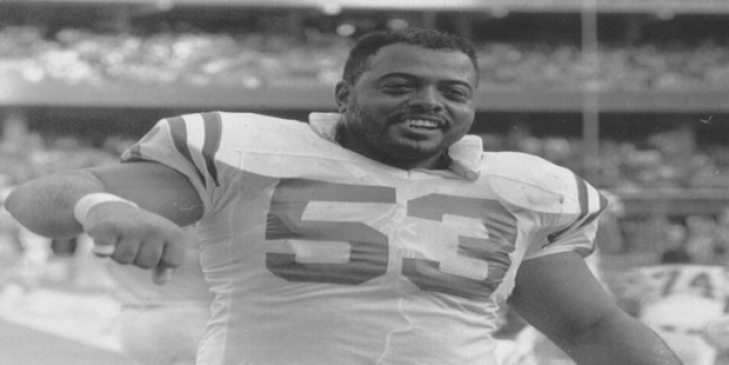
Drafted in the second round (32nd overall) of the 1980 NFL Draft out of the University of Georgia, Ray Donaldson arrived in Baltimore initially ticketed for interior depth. But by his second season in 1981, "Bulldog" earned the starting nod at center, breaking historical ground as the first African-American starting center in NFL history. That barrier-breaking moment launched a stellar, decade-plus run as the unyielding anchor of the Colts' offensive line.
Donaldson was the ultimate model of durability and quiet leadership through a turbulent chapter in franchise history. He served as the primary pivot man during the team's overnight relocation from Baltimore to Indianapolis in 1984, becoming the undisputed engine of the offense. Combining dense functional strength with elite footwork, he carved out gaping lanes for dynamic backfield talents—most notably clearing the way for Eric Dickerson’s league-leading 1,659 rushing yards during the 1988 season.
Donaldson’s peak national recognition in horseshoe blue came in the late 1980s. Between 1986 and 1989, he was selected to four consecutive Pro Bowls, earned Second-Team AP All-Pro honors in 1987, and helped lead Indy to an AFC East division crown and a playoff berth. His streak of 152 consecutive starts over a 10-year span highlighted a relentless work ethic that earned universal reverence from teammates and defensive linemen across the NFL.
He went on to spend two productive years anchoring the line for the Seattle Seahawks before experiencing a career renaissance with the Dallas Cowboys.
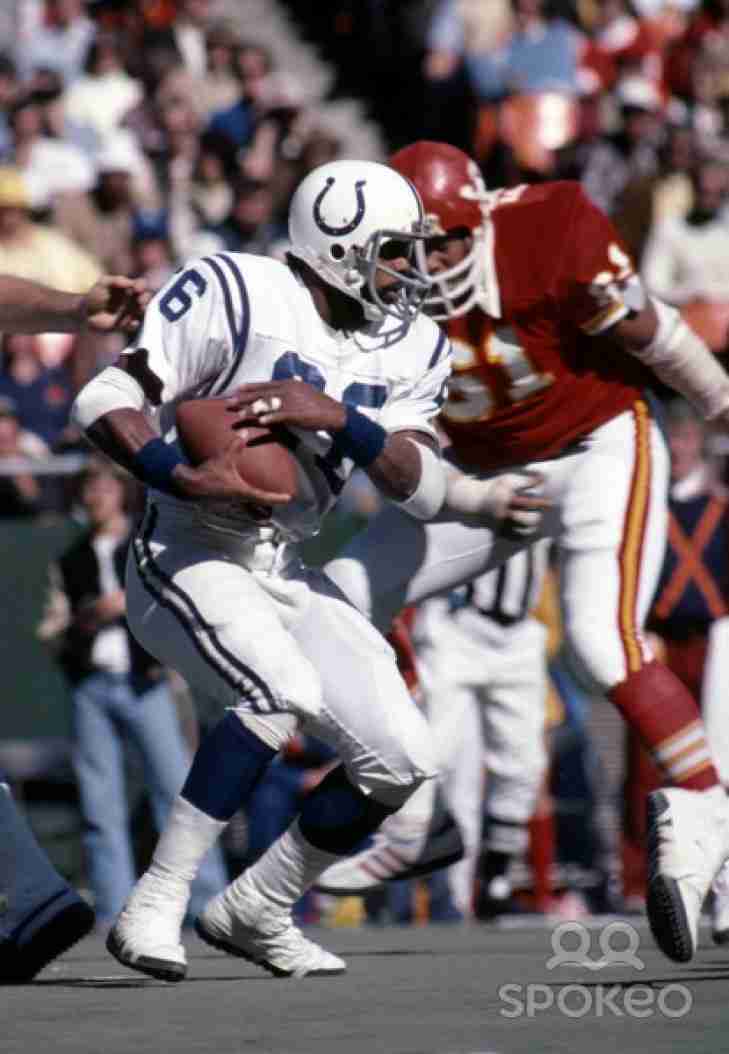
Drafted in the second round of the 1972 NFL Draft out of Penn State, Lydell Mitchell arrived in Maryland as an elite, multi-dimensional weapon ready to transform Baltimore's backfield. After a couple of seasons settling into the professional ranks, Mitchell exploded into full stardom alongside quarterback Bert Jones, serving as the offensive engine for a juggernaut squad that captured three consecutive AFC East division titles from 1975 to 1977.
Mitchell’s prime in blue and white was characterized by constant dual-threat versatility. He became the franchise’s first to achieve three straight 1,000-yard rushing seasons, surpassing 1,193 yards in 1975, 1,200 in 1976, and 1,159 in 1977. His most groundbreaking achievements, however, came through the air: Mitchell led the NFL in receptions twice—72 catches in 1974 and 71 in 1977—a rare feat for a running back at that time. In his outstanding 1976 season, he recorded an NFL-high 23 Approximate Value (AV), 1,755 scrimmage yards, and eight touchdowns, earning Second-Team AP All-Pro honors.
During his peak stretch, Mitchell was a three-time Pro Bowl selection (1975, 1976, 1977) and a two-time Second-Team AP All-Pro choice. Whether grinding out tough yards between the tackles or lining up as Jones' primary safety valve out of the backfield, he regularly generated high-volume output, racking up over 1,700 yards from scrimmage in three straight campaigns. After a contract dispute, Mitchell spent his final three NFL seasons with San Diego and the Los Angeles Rams, but he reached his highest level in Baltimore.
With the Colts, Mitchell had a total of 8,010 yards from scrimmage and 41 total touchdowns.
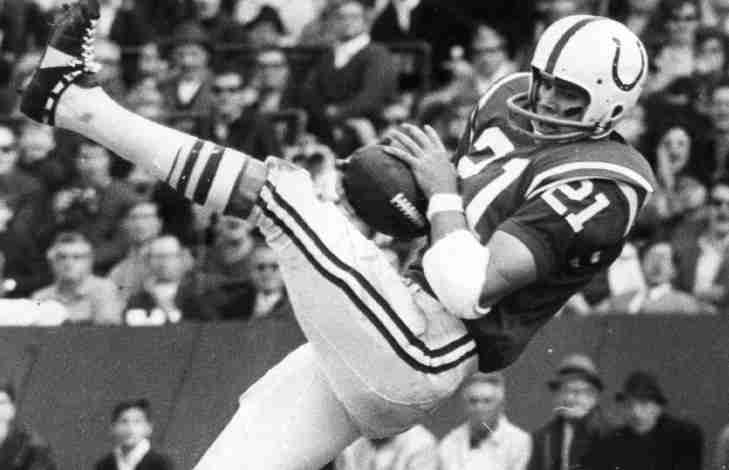
Selected in the second round (45th overall) of the 1967 NFL Draft out of Michigan, Rick Volk completed a rare football progression by transitioning straight from a Rose Bowl appearance with the Wolverines to starting in the NFL as a rookie. Arriving in Baltimore, the tough, cerebral safety immediately won the starting free safety job, bringing instincts, sharp tackling, and ball-hawking range to the back end of the Baltimore secondary.
Volk's impact was immediate, helping propel Baltimore to a 11–1–2 record as a rookie in 1967 while earning his first career Pro Bowl selection and First-Team AP All-Pro honors. The following season, he helped lead the Colts to the NFL Championship and an appearance in Super Bowl III. However, that championship clash turned tragic for Volk when he suffered a severe concussion in a collision in the second half, forcing him to be hospitalized while Baltimore suffered a shocking upset loss to the New York Jets.
Redemption arrived two years later in Super Bowl V against the Dallas Cowboys. Playing with a shoulder harness and relentless determination, Volk made one of the game's defining plays in the fourth quarter. Snagging a critical interception off Cowboys quarterback Craig Morton, he returned it 30 yards to the Dallas 2-yard line, setting up Tom Nowatzke’s game-tying touchdown run and paving the way for Baltimore's 16–13 victory to claim the Lombardi Trophy.
By the time his tenure with the franchise concluded after the 1975 season, Volk had intercepted 31 passes in a Colts uniform—ranking among the top marks in franchise history. He closed out his career with brief stints in New York (Giants) and Miami, but his legacy was permanently established in Baltimore as a big-game playmaker.