Menu
A+ A A-
Committee Chairman

Committee Chairman

Kirk Buchner, "The Committee Chairman", is the owner and operator of the site.  Kirk can be contacted at [email protected] .

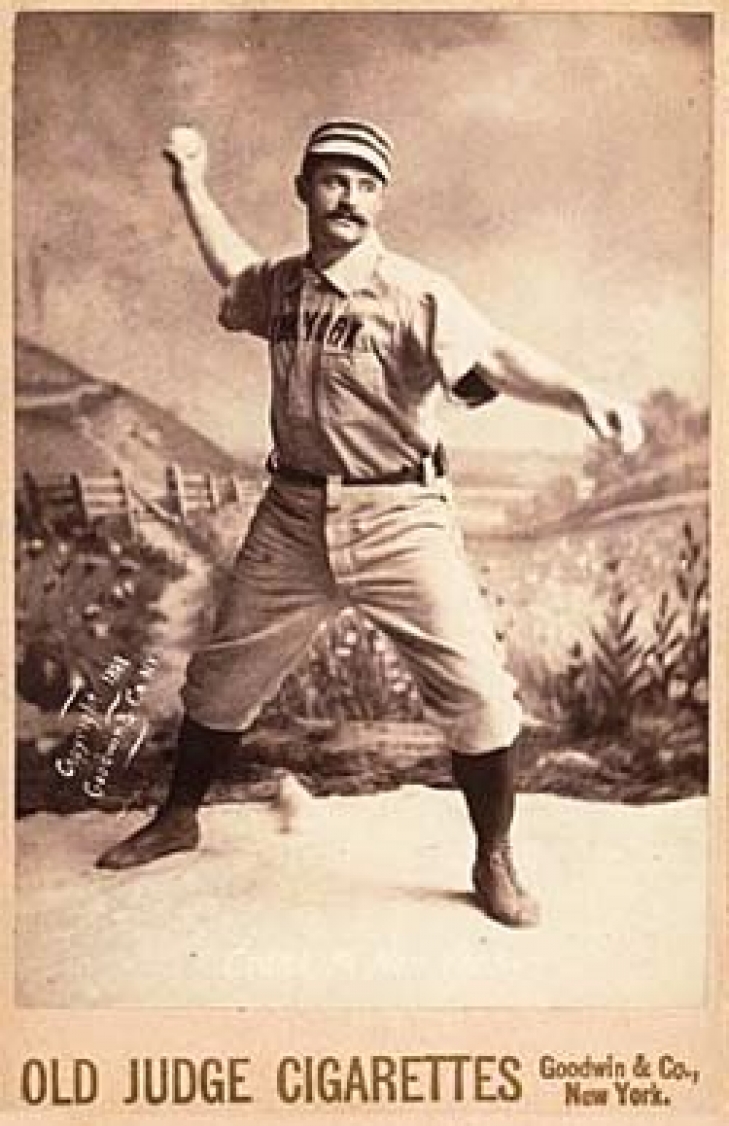
125. Pete Browning

Many of the early baseball players suffered from an addiction to alcohol, but we have to wonder if any of them had anything on Pete Browning, an Outfielder who once quipped, "I can't hit the ball until I hit the bottle."   He hit the bottle a lot, but he also hit the baseball at a high level.

Browning took his hitting seriously, as he was believed to be one of the first players to have his bats custom-made.  He went as far as to give names to each of his bats, which may have been eccentric at the time, but the man who was known as the “Louisville Slugger” was one of the better hitters of his time.

Browning’s career began in his hometown of Louisville in 1882 with the Eclipse of the American Association, the team he played for the rest of the decade.  In his rookie season, Browning swept the Slash Line (.378/.420/.510) and again led the AA in Batting Average (.362) and On Base Percentage (.392).  He batted over .300 in the first eight of his nine years in baseball.

After Louisville, he played in Cleveland in the one season of the Players’ League, and he won the Batting Title (.373).  Browning would bounce around for the rest of his career in the National League with stops in Pittsburgh, Cincinnati, Louisville, St. Louis, and Brooklyn.

Over a 13-year career, Browning had 1,646 Hits with a .341 Batting Average.  This was an incredible career for someone who drank himself to death and dealt with mastoiditis and partial deafness. 

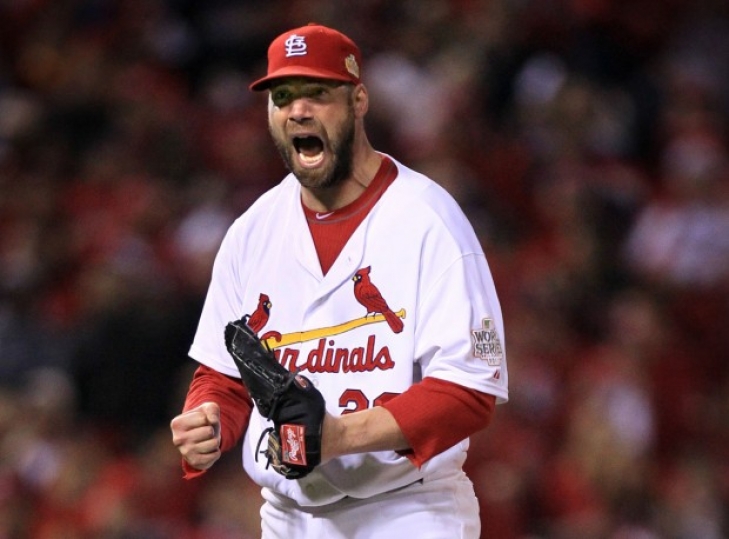
191. Lon Warneke

Lon Warneke played his entire career in the National League, splitting his run with rivals Chicago and St. Louis.

Warneke had one game in 1930 and 20 in 1931 for the Cubs, and while some scouts viewed him as a future star, they were likely surprised by what he accomplished in 1932.  That year, “The Arkansas Hummingbird” led the NL in Wins (22), ERA (2.37), and he was second in MVP voting.  He helped the Cubs win the Pennant, though they would lose the World Series to the New York Yankees.

Warneke proved he was not a one-year wonder: he went to three All-Star Games with Chicago and had three more top-20 MVP finishes, along with two more 20-win seasons.  The Cubs angered their fans when they traded him to their sworn enemy, St. Louis, after the 1936 season.

Warneke played for the Redbirds for five and a half years, earning another two All-Star nods, and he always posted a winning record.  That half-year was 1942, when he was dealt back to the Cubs, playing for them (save for a year in the military) until 1945.  He left the game with a record of 192-121

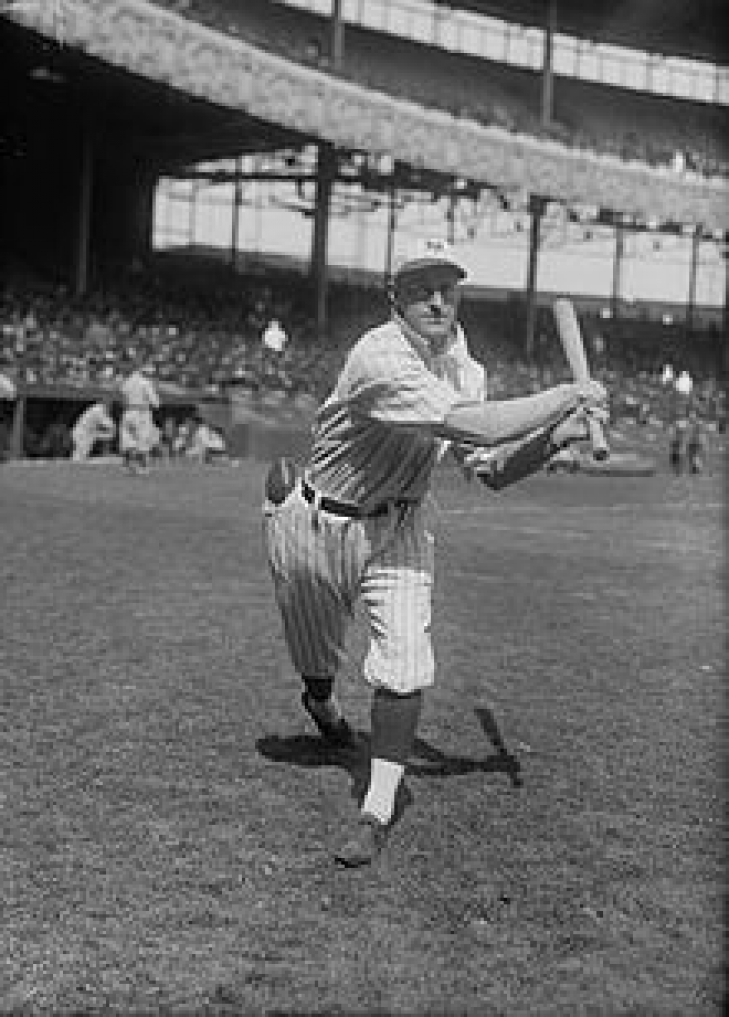
230. Tommy Henrich

Tommy Henrich is a part of the folklore of the New York Yankees, but with the legends that the Bronx Bombers have had, sometimes “Old Reliable” gets lost in the shuffle.

Henrich played his entire career in New York, first debuting in 1937, and helping them in the 1938 World Series win.  His breakout year was in 1941 when he had 31 Home Runs and won another World Series Championship.   Henrich was one of the many who lost time in baseball due to his participation in World War II, and he lost three years, but he came back to have the best run of his career.

Henrich would lead the American League in Triples in 1947 and 1948 and was also the league leader in Runs with 138 in 1948.  He would help the Yanks win the 1947 and 1949 World Series, and he was a huge part of those wins, batting .323 in the '47 Series and hitting the first walk-off Home Run in Game 1 of the ’49 Series.

Retiring after 1950, Henrich was a five-time All-Star and had 183 career Home Runs.

160. David Wells

One of the more interesting characters of the game, David "Boomer" Wells, played 21 seasons in the Majors for nine different teams, three of which he had two stints.  Wells longevity allowed him to amass a record of 239-157 with 2,201 Strikeouts, but don't view him as a "compiler."

Wells was an excellent control pitcher who led the American League in BB/9 four times and was in the top ten in that stat 12 times.  He also led the AL in SO/BB once (1998), and again, he was in the top ten in that metric 11 times.  Wells, who threw a perfect game in 1998, would also finish third in Cy Young voting, and he would help his New York Yankees win the World Series.  Two years later, when he was with the Toronto Blue Jays, he led the league in wins and again finished third in Cy Young voting.

Over the course of his long career, he also played for Detroit, Cincinnati, Baltimore, Chicago (AL), San Diego, Boston, and Los Angeles.