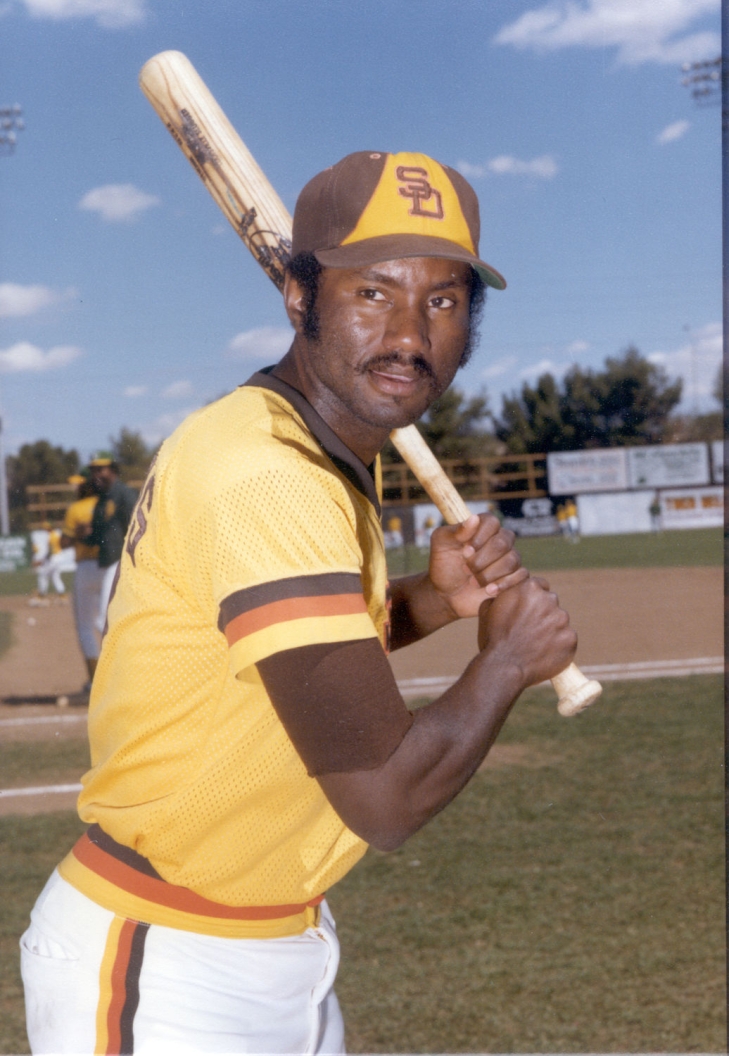
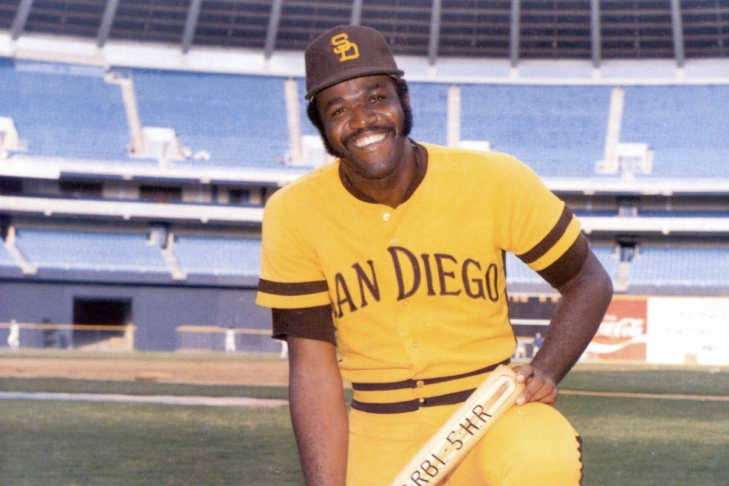
When establishing an organizational identity from inception, a young franchise necessitates a dynamic catalyst capable of dictating the pace of the game solely through speed. The San Diego Padres identified their ideal facilitator when they selected Gene Richards as the top pick in the secondary phase of the 1975 amateur draft. Demonstrating relentless progress through the minor leagues with unrestricted authorization, the left-handed outfielder made his debut in Major League Baseball by the spring of 1977. Richards promptly transformed his first summer into a notable demonstration of high-velocity playmaking, achieving an impressive .290 batting average and setting a then-Major League rookie record with 56 stolen bases. This served as an exceptional initial introduction to a player who would dedicate the subsequent seasons to exemplifying the definitive pace-setter for the San Diego offense.
Throughout the late 1970s and early 1980s, Richards established himself as a reliable leadoff hitter under the Southern California sun. He combined excellent bat control with sharp spatial awareness, often forcing opposing National League defenses into a frantic routine.
He surpassed the coveted .300 batting average twice, achieving a smooth .308 in 1978 and a strong .301 during a standout 1980 season. This 1980 regular-season performance showcased his ability to produce volume, as he frequently connected against National League pitchers, leading the Senior Circuit with 155 singles and stealing 40 bases.
His unique, high-velocity running style remained a nightmare for catchers, and he backed up his offensive prowess by leading the National League with 12 triples during the strike-shortened 1981 season.
Yet, focusing entirely on his offensive speed tells only half the story of his multi-dimensional footprint. Defensively, Richards adapted smoothly to Jack Murphy Stadium's large outfield, using his quick closing speed to chase down line drives. His throwing arm was effective and surprisingly fierce; he led all National League left fielders in assists in 1980 with 21 outfield putouts. He continued this performance in 1981, recording 14 assists and consistently providing a reliable and aggressive defensive presence.
After a subpar 1983 season, Richards left for San Francisco as a free agent, but he would be out of the Majors after a year. With San Diego, Richards batted .291 with 242 stolen bases.