Menu
A+ A A-
Site Admin

Site Admin

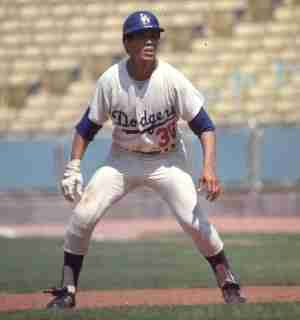
62. Maury Wills

Maury Wills did not make the Major Leagues until he was 26 years old yet still managed to rack up over 2,000 hits in his career.  What numbers would he have put up if he had cracked a big league roster earlier, and would it have been enough to make him a member of the Hall of Fame?

Maury Wills might be known first in any baseball reference guide as the winner of the National League MVP award in 1962, but his real contribution was how he changed the perception of how runs could be scored.  Wills was not the first man to be a star on the base paths, but he did usher in the base paths' renaissance.  Wills was the first to steal over 100 bases, and it wasn’t long before teams across the country looked for a Wills-type player to lead off their lineup.  Wills would go on to lead the NL in steals on six occasions.

Maury Wills however was not the perfect leadoff man.  Wills did not walk enough, and his overall on-base percentage was not ideal.  He also suffered in the post-playing career, with his managing stint with Seattle considered the worst in baseball history, and he often rubbed baseball writers the wrong way.  Maury Wills may not have been the best base stealer in history, but he did change the way the game was played for a while, and that is certainly a huge pro on his Hall of Fame ledger.

Should Maury Wills be in the Hall of Fame?

Definitely put him in! - 77.9%
Maybe, but others deserve it first. - 9.5%
Probably not, but it wouldn't be the end of the world. - 3.7%
No opinion. - 0%
No way! - 8.9%

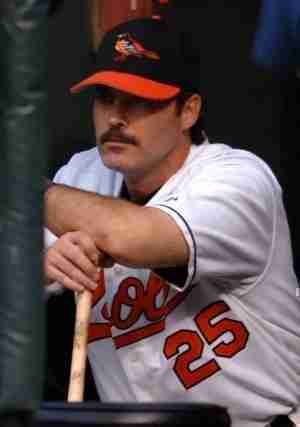
18. Rafael Palmeiro

At the time of the infamous steroids trial, Rafael Palmeiro seemed to come off so well.  Of course, when you are sitting next to a man who suddenly suffered from amnesia (Mark McGwire), a man who suddenly forgot the English language (Sammy Sosa), and the man who broke the “bro code” (Jose Canseco), a defiant and confident-sounding Rafael Palmeiro could not help but look good.  A few months later, Palmeiro was suspended by Major League Baseball for testing positive for steroids.

Ironically, this could hurt Palmeiro’s chances more than anyone else who testified at Congress.  At that point, he had reached 500 home runs, quieter than anyone else ever had, and was knocking on the door of 3,000 hits.  Seemingly, anyone else with those numbers would be a celebrated figure beset with endorsements and rabid fans.  Palmeiro had neither, as he was playing in the shadow of flashier and more successful power hitters.  As such, he was not regularly in the hunt for MVPs and only appeared in four All-Star games, which, considering his career numbers, was relatively low.  Subsequently, he was rarely with great teams and holds the dubious record of having played the most games without a World Series appearance.

Prior to the steroid stigmatism, Palmeiro had the Hall of Fame locked numbers of 500 Home Runs and 3,000 Hits.  Without the allegations, he may not have even been a lock for first-ballot induction.  With the PED label, a look at his offence showed a massive upswing at age 34.  McGwire may one day be forgiven, as might Sosa.  Palmeiro likely won’t.  As unfathomable as it seemed a decade ago, he was almost a one-and-done Hall of Fame candidate, and his years on the ballot fell well short of the maximum as he fell off after his fourth year.  This could be a sad reality for one of his day's most consistent offensive performers.

Should Rafael Palmeiro be in the Hall of Fame?

Definitely put him in! - 54.2%
Maybe, but others deserve it first. - 9.4%
Probably not, but it wouldn't be the end of the world. - 5.8%
No opinion. - 0.6%
No way! - 30%

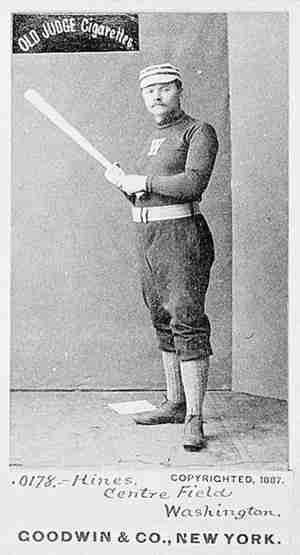
58. Paul Hines

If you win the Triple Crown in baseball, should you be considered somewhat immortal, right?  Well, if you do in the age before film and before Home Runs meant anything, that accomplishment becomes a hidden accolade.

In the early days of Baseball, Hines was a hitting machine and actually had more base hits than anyone in the National League from 1875 to 1880.  Hines was a two-time Batting Champion and led the league in other offensive categories multiple times.  Little has been said about his playing days, but with the recent wave of sabermetrics, a look at Hines reveals a player with a Hall of Fame resume, even if it was never captured on film.

Should Paul Hines be in the Hall of Fame?

Definitely put him in! - 66%
Maybe, but others deserve it first. - 6.4%
Probably not, but it wouldn't be the end of the world. - 10.6%
No opinion. - 0%
No way! - 17%

12. Tommy John

We imagine that there are younger baseball fans who are oblivious that there really was a Tommy John and that it was not just the name of a surgery.  This would be unfortunate, as Tommy John has to go down as one of the most durable pitchers in baseball history.

Likely the most amazing statistic about Tommy John is that he lasted twenty-six seasons.  Considering that he missed a season and a half due to arm trouble, it would have been expected that his career would not be a long one.  Not only did he come back from revolutionary surgery to repair his tendon (what we become known as “Tommy John” surgery), but he would post the most productive period of his career, where he won twenty games three times in four years and was a Cy Young contender for that aforementioned four-year span

John was an effective sinkerball pitcher using his control to get batters out on the ground rather than put it past them.  This isn’t to say that he couldn’t strike out batters, but he was not among the leaders in that category.  Had Tommy John been more of a strikeout pitcher (which is a far sexier stat) or been part of a World Series win, he may have received more votes.  As his overall career numbers are similar to those of Bert Blyleven, who finally made it to Cooperstown, a very strong case could be made by the Veterans Committee for Tommy John.


Should Tommy John be in the Hall of Fame?

Definitely put him in! - 78.4%
Maybe, but others deserve it first. - 7.5%
Probably not, but it wouldn't be the end of the world. - 7.5%
No opinion. - 0.4%
No way! - 6.2%