Menu
A+ A A-
Site Admin

Site Admin

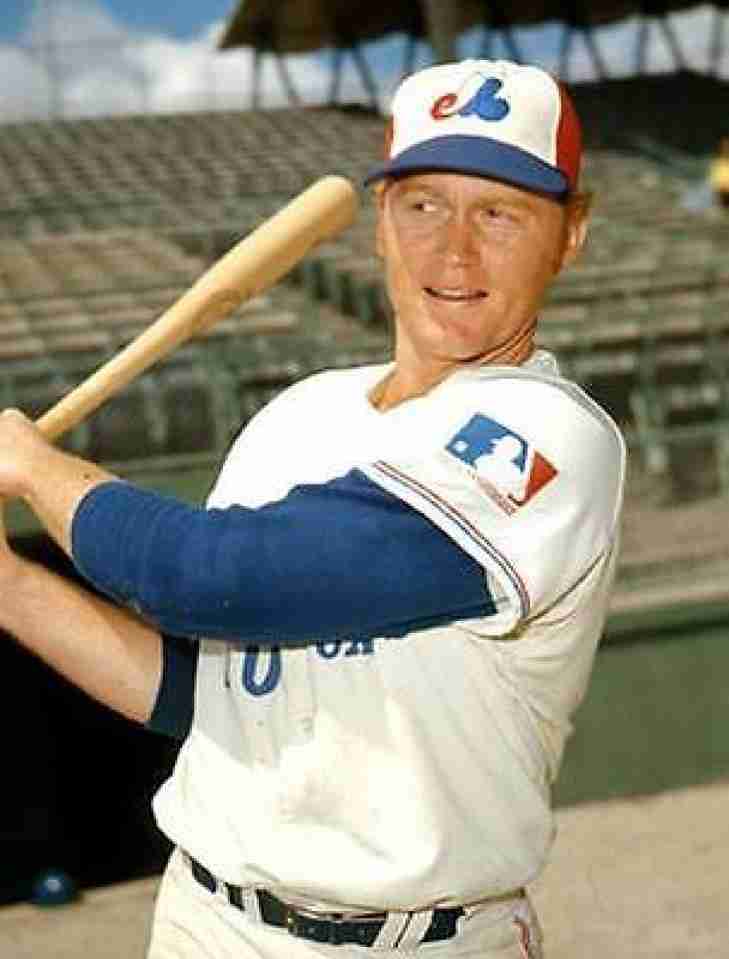
23. Rusty Staub

When the expansion Montreal Expos took the field for their inaugural season in 1969, they desperately needed an identity. They found it in Rusty Staub. With an unmistakable shock of red hair, an incredibly disciplined left-handed approach, and a genuine eagerness to learn French so he could converse directly with the fans, Staub didn't just become the young franchise’s first legitimate star—he became a cultural icon in Quebec. Completely embraced by the local faithful, who affectionately christened him Le Grande Orange, Staub turned Parc Jarry into his personal sanctuary during three of the most dazzling, high-volume offensive seasons the city would ever witness.

His introductory 1969 campaign in Canada was a masterclass in elite plate discipline and high-leverage execution. Staub completely paralyzed National League pitchers, launching 29 home runs, drawing an astonishing 110 walks, and batting a brilliant .302. He weaponized his deep understanding of the strike zone to generate a magnificent, league-leading .426 on-base percentage—an explosive franchise-record clip that set the gold standard for expansion team table-setters.

Far from a single-summer outlier, he sustained that elite efficiency through the next two calendars. In 1970, Staub clubbed a career-high 30 home runs and walked 112 times while driving in 94 runs. He backed it up in 1971 by playing in all 162 games, collecting a career-best 186 hits and batting .311. Across all three full seasons of his initial Montreal residency, he earned consecutive All-Star selections and was arguably one of the toughest outs in the Senior Circuit.

Yet, as the small-market Expos scrambled for roster depth, the front office made the highly unpopular decision to trade their franchise face to the New York Mets prior to the 1972 season. It broke the hearts of Montreal fans, but the deep-seated mutual adoration never truly faded. After a long, productive journey through New York, Detroit, and Texas, Staub engineered a brief, highly emotional homecoming in July 1979. Though it was just a short "cup of coffee" consisting of 38 games primarily as a veteran pinch-hitter, the roar of the Montreal crowd upon his return beautifully underscored his permanent place in the fabric of Canadian baseball history.

With the Expos, Staub appeared in 518 games. He accumulated 508 hits, 86 doubles, 78 home runs, and 289 RBIs. Driven by 310 walks against just 206 strikeouts, he generated an exceptional .296/.402/.481 slash line—good for an elite 146 OPS+.

16. Jordan Zimmermann

Jordan Zimmermann's rise in Washington mirrored the franchise’s transformation from an NL East afterthought to a powerhouse. Drafted in 2007 from Division III Wisconsin-Stevens Point, he needed little development. With a fierce competitive edge and a clean, high-velocity three-pitch repertoire, he bypassed minors to secure a spot in the 2009 rotation, establishing himself as a workhorse of the District's pitching staff.

Zimmermann’s early seasons showcased exceptional athletic resilience. After a promising rookie debut was abruptly halted by a torn UCL, necessitating Tommy John surgery, he managed a technically perfect recovery. In 2011, he returned with a remarkable 3.18 ERA. The following year, he demonstrated remarkable durability, pitching 195.2 innings with a 2.94 ERA, assisting Washington in winning its first-ever National League East division title.

Zimmermann reached the peak of his career with a remarkable 2013 season. He overwhelmed National League hitters with a powerful 92-95 mph four-seam fastball, a sharp slider he called his "baby cutter," and a looping 12-to-6 curveball. This diverse arsenal helped him record a 19–9 win-loss record, lead the league in victories and shutouts (2), and maintain a solid 3.25 ERA. These achievements earned him his first All-Star selection and a seventh-place finish in NL Cy Young voting.

Far from done, he crafted an exceptional personal masterpiece during a remarkable 2014 season, lowering his ERA to a career-low 2.66 and earning his second consecutive All-Star selection. He cemented his legacy in District sports history on the final day of that season by throwing a historic, stunning 104-pitch no-hitter against the Miami Marlins—the first no-hitter in modern Nationals history. This outstanding summer season also earned him a fifth-place finish in the AL Cy Young voting.

After a durable 2015 summer in which he pitched 200 innings, the highly sought-after free agent left the capital city to sign a large multi-year deal with the Detroit Tigers. Despite injuries and physical decline affecting his later years in the American League, his seven seasons in Washington stand as a prime example of consistent frontline performance.

Because he shared the marquee with high-profile aces like Stephen Strasburg and Max Scherzer, his clinical efficiency could occasionally be underrated on the national stage. Yet, as a National, Zimmermann has a stellar 70–50 record, 903 strikeouts, and a 3.32 ERA.

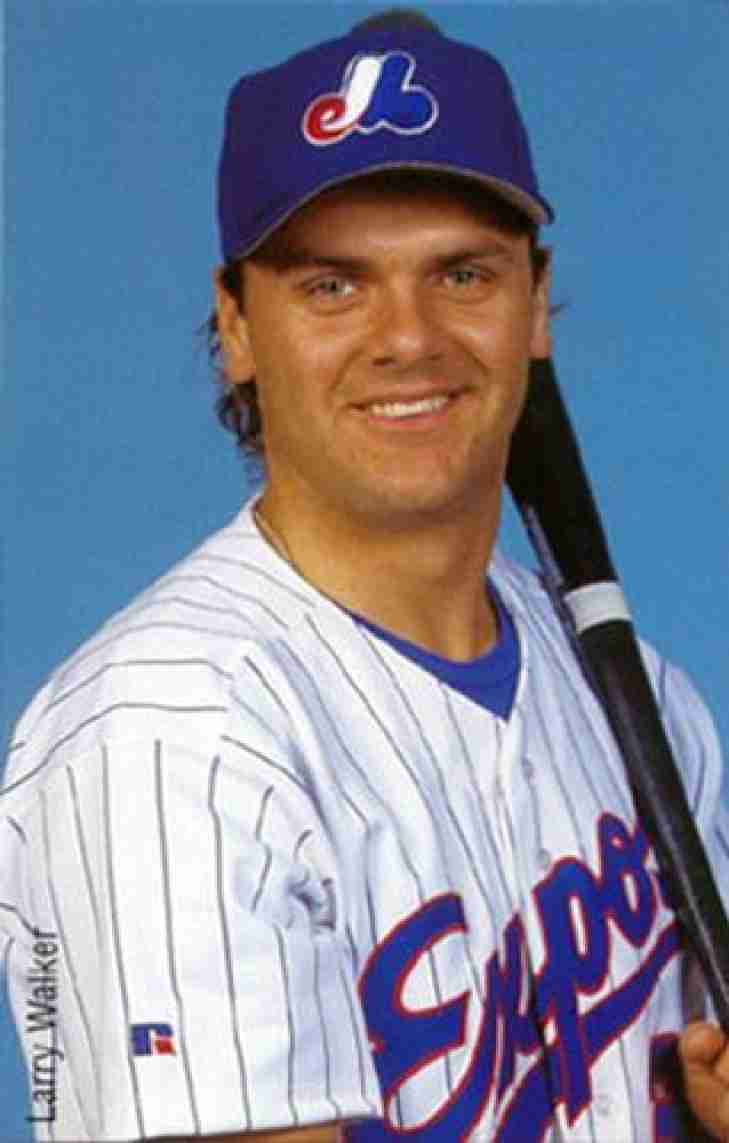
21. Larry Walker

The rise of Larry Walker in Montreal remains one of the most brilliant chapters in the franchise's home-grown development. Discovered at a national training camp in Saskatchewan, the Maple Ridge, British Columbia, native was famously signed as an unheralded amateur free agent for a microscopic $1,500 bonus. Initially a raw athlete who had prioritized ice hockey for most of his youth, Walker underwent an extraordinary physical and technical transformation in the minor leagues. By the dawn of the 1990s, he had emerged as the gold standard for a true five-tool player, turning right field at Stade Olympique into his own highlight reel.

His early full seasons established him as a key foundational player in a rising, legendary Expos core. Walker combined broad athletic ability with a quick, aggressive left-handed swing. In a remarkable 1992 breakthrough, he overwhelmed National League pitching by hitting .301 with 23 home runs, earning his first Gold Glove and Silver Slugger awards, and becoming the only Canadian-born player to be named Expos Player of the Year. He maintained that high standard effortlessly in 1993, earning another All-Star selection and a second Gold Glove, solidifying his reputation as a globally recognized superstar.

Walker's remarkable 1994 schedule stands out as his top individual achievement in Canada. Despite suffering a severe rotator cuff injury that limited him to first base to safeguard his shoulder, his offensive performance remained exceptional. He batted an impressive .322 and led all of Major League Baseball with 44 doubles, providing a crucial role for a outstanding Montreal team that held the best record in baseball before the strike interrupted play.

Yet, within the organization’s broader historical ledger, the conclusion of his tenure remains one of the most painful "what-if" scenarios in sports history. Unlike a traditional trade market, the small-market franchise collapsed under financial constraints after the lockout. Desperate to slash payroll, the front office declined to offer arbitration to their superstar right fielder, which granted him free agency a year early. In April 1995, Walker took his final walk away from Quebec, signing a lucrative contract with the Colorado Rockies, where he would later capture a landslide National League MVP Award and three batting titles on his path to Cooperstown.

Walker, with Montreal, amassed 666 hits, 140 doubles, 14 triples, 99 home runs, and 384 RBIs. Using his elite speed, he stole 76 bases and posted a .281/.357/483 slash line—128 OPS+. He was inducted into the Canadian Baseball Hall of Fame in 2009 and the National Baseball Hall of Fame in Cooperstown as part of the Class of 2020.

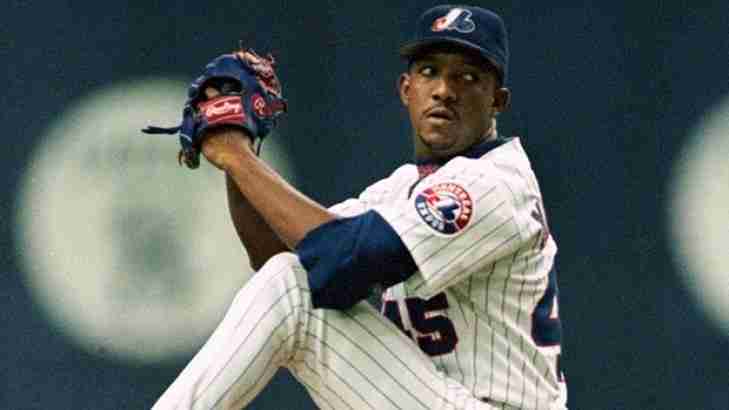
13. Pedro Martinez

The trade that brought Pedro Martínez to Montreal before the 1994 season is a landmark moment in Expos history. Acquired from the Los Angeles Dodgers for second baseman Delino DeShields, this slender right-hander with an explosive, whip-like delivery quickly defied the idea that he was too slight to handle the physical demands of a major league starter. Over four remarkable summers in Quebec, Martínez evolved his raw, high-velocity pitches into a dominant force in the major leagues.

His debut before the Olympic Stadium crowd was immediately memorable. In the challenging 1994 season, Martínez served as a crucial yet overlooked driver for the remarkable Expos team, which led Major League Baseball with a 74–40 record before the players' strike unexpectedly ended their championship hopes. That summer, he posted an 11–5 record, demonstrating that his powerful fastball and developing changeup could consistently deceive top major league hitters.

As the organization was gradually compelled to dismantle its core due to increasing financial constraints, Martínez individually took on the burden of carrying the franchise. He achieved his first career All-Star selection in 1996 with 222 strikeouts, but this was just a preview of the extraordinary, record-breaking performance he delivered in 1997.

That 1997 campaign remains one of the most exceptional single-season pitching performances ever observed on a Major League mound. Martínez entirely incapacitated National League batters, transforming the strike zone into his personal domain. He achieved a remarkable 17–8 record while leading the major leagues with a microscopic, modern-era 1.90 ERA and delivering an extraordinary league-high of 13 complete games. He employed precise, high-pressure command to record an impressive 305 strikeouts over 241.1 innings, becoming the first right-handed pitcher since Walter Johnson in 1912 to reach the 300-strikeout threshold with an ERA below 2.00. This outstanding, elite performance designated him as the first—and only—pitcher in Montreal Expos history to be awarded the National League Cy Young Award.

Just as he established himself as a global superstar, the harsh realities of Montreal's small-market economics forced a change. Recognizing they lacked the financial means to offer their young star a market-value contract extension, the front office traded their key player to the Boston Red Sox in November 1997. Martínez would go on to achieve immortal status in baseball in New England, but the foundation of his legendary peak was laid during his time with the Expos.

Martínez was inducted into the Baseball Hall of Fame in 2015. As an Expo, he played 118 games (117 starts), with a 55–33 record, 3.06 ERA, and 1.09 WHIP. He pitched 797.1 innings, with 20 complete games, eight shutouts, 843 strikeouts, and a 135 ERA+.