Menu
A+ A A-
Site Admin

Site Admin

15. Jim Ringo

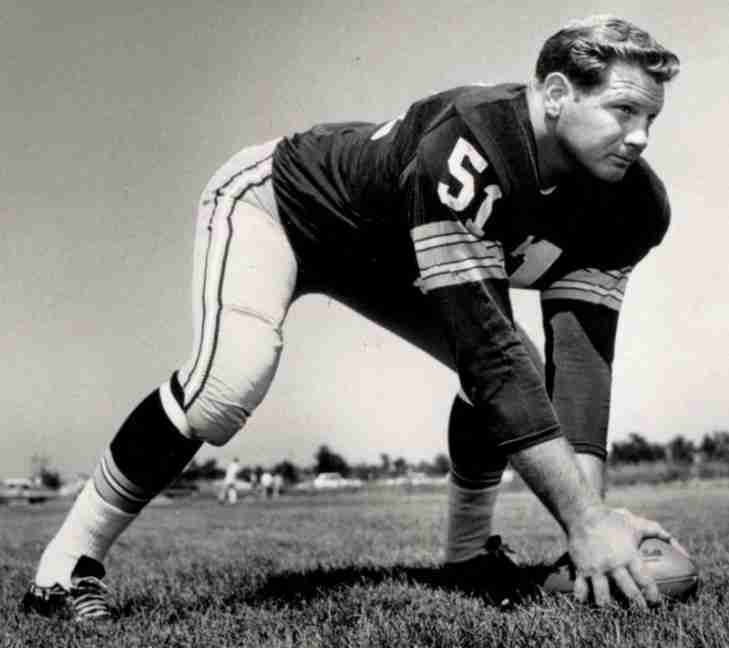
Jim Ringo entered the league undersized for an offensive lineman at just 211 pounds, but the seventh-round pick from Syracuse quickly neutralized that deficit with lightning-quick footwork and technical precision. He took over as the Green Bay Packers' starting center in his rookie campaign and anchored the interior line through two distinctly different eras in the Tundra.

When Vince Lombardi arrived in 1959, Ringo became the vital on-field general for the iconic "Lombardi Power Sweep." Masterfully executing block-and-seal maneuvers against larger nose tackles, he spearheaded the blocking units that powered Green Bay to back-to-back NFL Championships in 1961 and 1962. His flawless line calls and unmatched durability made him the premier center of his generation, earning ten Pro Bowl selections and six First-Team AP All-Pro nods overall, with most coming during his decorated decade in Wisconsin.

Ringo's tenure in Titletown ended suddenly after the 1963 season, when he was traded to the Philadelphia Eagles, where he played four final seasons before retiring. His foundational contributions to Green Bay's dynasty led to his induction into the Green Bay Packers Hall of Fame in 1974, his being named to the NFL 1960s All-Decade Team, and his ultimate immortality with a Pro Football Hall of Fame enshrinement in Canton in 1981.

He started 126 games for the Packers. 
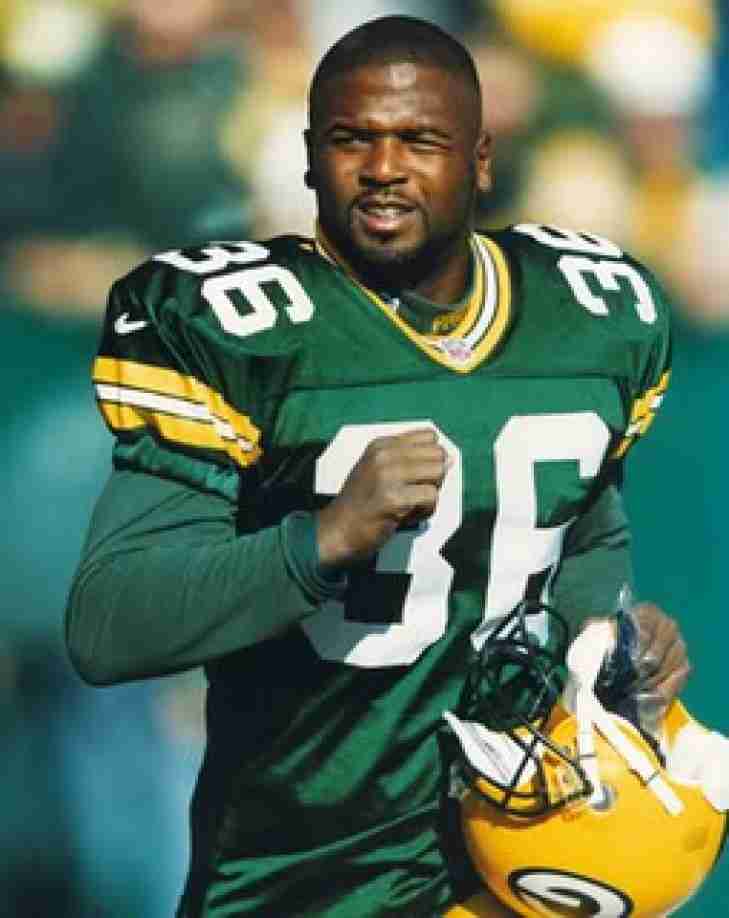
20. LeRoy Butler

Drafted in the second round (48th overall) out of Florida State in 1990, LeRoy Butler arrived in Green Bay as a versatile, instincts-driven defensive back who would ultimately revolutionize how NFL defensive coordinators utilized the strong safety position. Stepping into defensive coordinator Fritz Shurmur’s aggressive scheme, Butler evolved into the ultimate hybrid weapon—a bone-jarring run enforcer in the box, a smooth coverage defender against tight ends and slot receivers, and a terrifying blitz threat coming off the edge.

Butler's tactical brilliance powered Green Bay's defensive renaissance in the 1990s. In a December 1993 matchup against the Los Angeles Raiders, he permanently altered NFL touchdown culture when he scooped up a Reggie White fumble lateral and vaulted into the South End Zone bleachers—spurring the world-famous "Lambeau Leap." His versatility reached absolute peak impact during the championship run of 1996, when he posted 87 tackles, five interceptions (including a 90-yard pick-six), two fumble recoveries, and a career-high 6.5 sacks to anchor the league's top-ranked scoring defense.

Beyond his iconic celebration, Butler created a historic legacy as the first defensive back in NFL history to amass at least 20 career sacks and 20 career interceptions. Serving as a key leader for Green Bay's consecutive Super Bowl-winning teams—including a standout game with seven tackles and a sack in Super Bowl XXXI against New England—he earned three straight First-Team AP All-Pro honors from 1996 to 1998 (and four overall: 1993, 1996–1998) as well as four Pro Bowl selections.

His durability in Wisconsin was equally remarkable, as he played in 116 consecutive games before a shoulder injury forced his retirement. Named to the NFL 1990s All-Decade Team, Butler’s contributions led to his induction into the Green Bay Packers Hall of Fame in 2007, followed by his enshrinement into the Pro Football Hall of Fame in 2022.

Butler played in 181 regular-season games with 166 starts, plus 14 postseason contests (all 14 postseason starts), and accumulated 38 interceptions (533 return yards, one touchdown), 20.5 sacks, 889 tackles (723 solo), 12 forced fumbles, and 10 fumble recoveries.

19. James Lofton

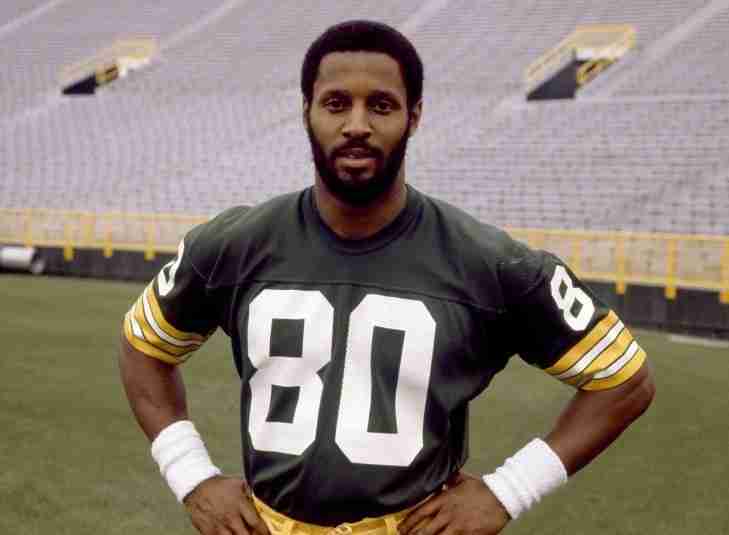
Stepping onto the turf as a first-round pick (6th overall) out of Stanford in 1978, James Lofton brought track-star speed and an extraordinary vertical leaping radius to Green Bay. The NCAA long jump champion wasted no time establishing himself as the premier big-play target in Titletown, hauling in 46 receptions for 818 yards and six touchdowns as a rookie to earn his first of seven Pro Bowl selections with the franchise.

Lofton’s brilliance defined Green Bay’s high-flying passing attack throughout the late 1970s and 1980s. Between 1980 and 1985, he recorded five 1,000-yard receiving seasons in six years, highlighted by a dominant stretch alongside quarterback Lynn Dickey. In 1983 and 1984, Lofton led the NFL in yards per reception in back-to-back seasons, averaging an astounding 22.4 and 22.0 yards per catch—including a career-high 1,361 receiving yards in 1984. Opposing secondaries simply could not contain his stride, forcing teams to roll safety help over the top or risk giving up instant long-distance scores, such as his career-long 83-yard touchdown run on a reverse against the Giants in 1982.

His durability in Wisconsin was just as remarkable as his speed; Lofton never missed a single game due to injury across his nine seasons in Titletown, starting 135 of 136 regular-season games. After departing Green Bay following the 1986 campaign, he continued stretching defenses for the Raiders, Bills, Rams, and Eagles. During his run in Buffalo, he remained a potent deep threat for a team that reached three consecutive Super Bowls, ultimately becoming the first receiver in league history to cross the 14,000-career-receiving-yards mark. His long-standing achievements in Green Bay earned him induction into the Green Bay Packers Hall of Fame in 1999, followed by his enshrinement into the Pro Football Hall of Fame in 2003.  He was also chosen for the 1980s All-Decade Team.

Statistically, as a Packer, he compiled 530 receptions, 9,656 receiving yards, 49 receiving touchdowns, and 180 rushing yards with one touchdown.

17. Tony Canadeo

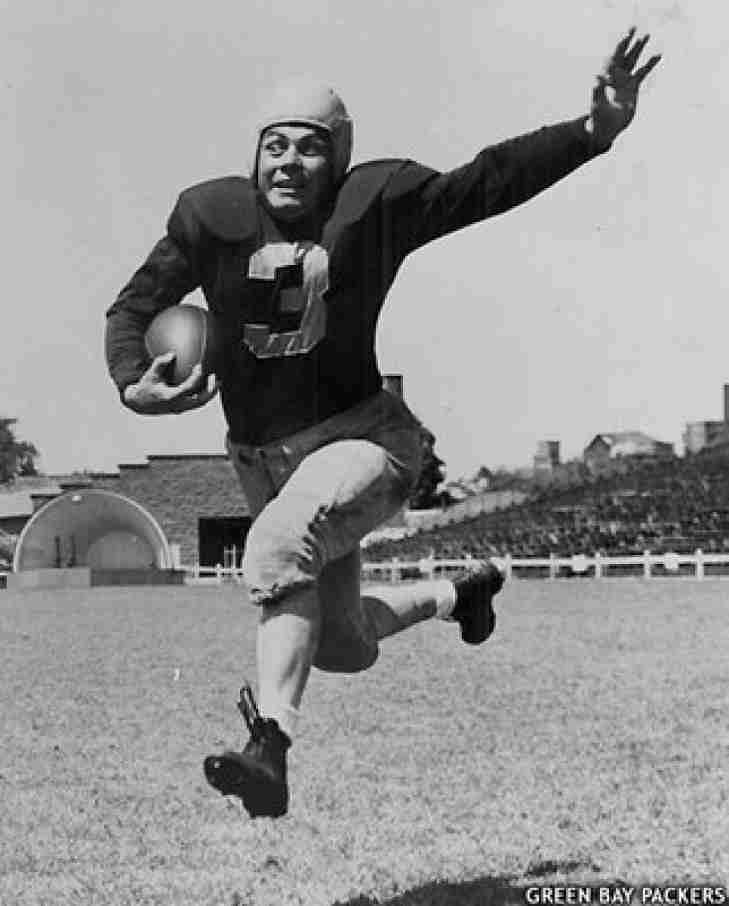
Long before single-position specialists dominated professional football, Gonzaga alumnus Tony Canadeo provided Green Bay with an explosive, do-it-all weapon who defined the grittiest era of franchise history. Known affectionately as the "Gray Ghost" for his prematurely silver hair and ghost-like open-field vision, Canadeo took on every assignment Curly Lambeau threw his way—rushing, throwing, catching, returning kicks, punting, and lining up in the secondary.

Canadeo's two-way mastery helped keep Green Bay at the top of the NFL hierarchy during the 1940s. He earned First-Team All-Pro honors in 1943 after leading the squad in rushing and passing, then helped power the Packers to the 1944 NFL Championship over New York. After stepping away from football to serve in the U.S. Army during World War II, Canadeo returned to the Packers in 1946 without missing a beat. His defining individual peak arrived in 1949 when he rushed for 1,052 yards—becoming just the third player in NFL history (and the first in franchise history) to crack the single-season 1,000-yard barrier, a feat made all the more remarkable given it occurred during a 12-game schedule on a two-win team.

Upon his retirement following the 1952 campaign, Canadeo left as the franchise's all-time leading rusher. In 1952, Green Bay officially retired his No. 3—the first jersey number retired in the organization's historic existence. His enduring impact on the franchise led to his induction into the Green Bay Packers Hall of Fame in 1973, followed by his enshrinement into the Pro Football Hall of Fame in 1974.

Across 11 active seasons spent entirely with the Green Bay Packers (1941–1944, 1946–1952), Canadeo played in 116 regular-season games with 85 starts, plus two postseason contests (two postseason starts). He compiled 4,197 rushing yards, 26 rushing touchdowns, 1,642 passing yards, 16 passing touchdowns, 69 receptions, 579 receiving yards, five receiving touchdowns, nine interceptions, 51 punts, and 1,385 total return yards.