Menu
A+ A A-
Site Admin

Site Admin

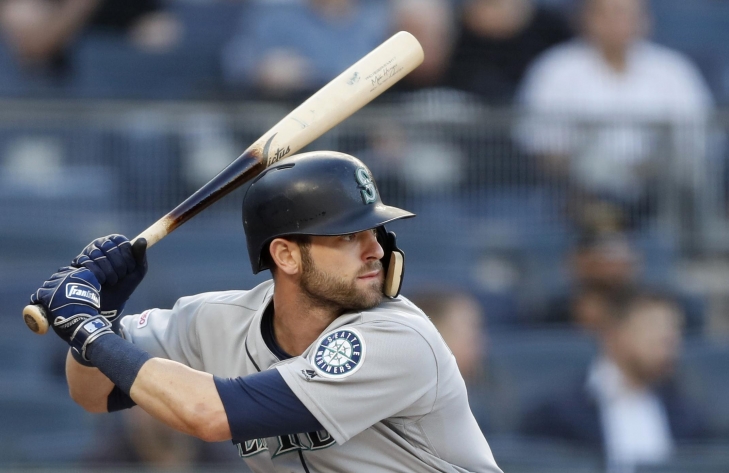
27. Raul Ibanez

Playing 19 seasons in the major leagues is a remarkable feat for anyone, but it’s especially extraordinary for a player picked in the 36th round of the 1992 amateur draft. Drafted as a catcher from Miami-Dade Community College, Raúl Ibañez overcame the odds with his legendary work ethic and a smooth, left-handed swing. This combination helped him succeed in three separate stints with the Seattle Mariners, linking multiple generations of Pacific Northwest baseball.

His early days in Seattle tested his patience and perseverance. Debuting in the majors in 1996, Ibañez spent five years shuttling between the Kingdome and the minors, struggling to find regular playing time on star-packed teams with Ken Griffey Jr., Alex Rodriguez, and Edgar Martinez. After becoming a free agent after 2000, he moved to the Kansas City Royals, where he finally realized his potential as an everyday left fielder and laid the groundwork for the offensive success that would define his prime.

The Mariners, acknowledging they had missed out on Ibañez, quickly reacquired him before the 2004 season with a three-year free-agent contract. This second phase of his career marked his greatest achievement. Over five years of remarkable durability, he established himself as a consistent run producer in Seattle's lineup, posting five straight seasons with a .280+ batting average and reaching at least 20 home runs four times.

Although his defensive stats in left field were inconsistent, his powerful batting more than made up for any weaknesses on defense. His best offensive season was in 2006, when he hit a career-high 33 home runs and had 123 RBIs, the third-best in the American League. He continued with seasons of 105 and 110 RBIs, helping the team through tough times and earning MVP votes in 2006 and 2008.

After walking away again via free agency in 2009 to reach an All-Star game and a World Series with Philadelphia, the ultimate testament to his longevity arrived in 2013. Returning to Safeco Field as a gray-bearded, 41-year-old veteran, Ibañez electrified the fan base with a staggering exhibition of old-man power. He tied Ted Williams' historic major-league record for the most home runs in a single season by a 41-year-old, launching 29 longballs to provide a vital spark of leadership for a young, developing roster before concluding his playing days a year later.

Across his 1,110 games with the Mariners—over half of his 2,161 career MLB appearances—Ibañez had 1,077 hits, 216 doubles, and 156 home runs.

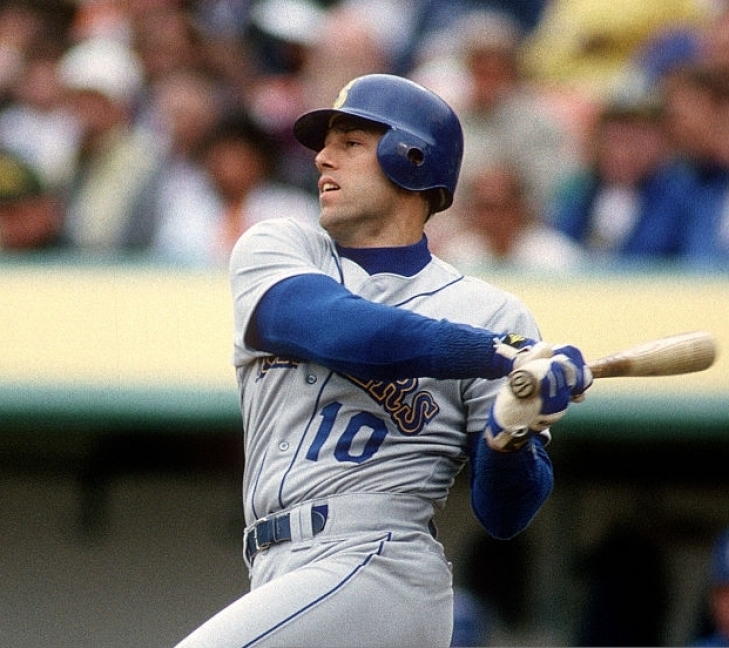
22. Dan Wilson

Acquired by the Cincinnati Reds through a strategic trade in December 1993, Daniel Allen Wilson promptly established himself as an indispensable presence in the Pacific Northwest. Widely esteemed for his exceptional game-calling skills, superior footwork, and meticulous preparation, he became the preferred safety net for renowned pitchers such as Randy Johnson and Jamie Moyer, confidently managing the most challenging pitching staffs in the league.

Wilson was openly a contact-focused hitter at the plate, with advanced metrics often limited by a modest .309 career on-base percentage. However, his main value was never about offensive flash; it was rooted in his defensive excellence, which set the standard for his era.

Wilson delivered a standout performance during the regular season by effectively stopping opposing running games. He led the American League in caught stealing twice, with 38 in 1995 and 41 in 1997. Additionally, he frequently ranked among the league's top catchers in defensive range factor per game and fielding percentage. He retired holding the highest career fielding percentage ever recorded by a catcher in American League history at that time.

Although known for his defensive mastery, he also showed he could deliver powerful hits when everything was right. His peak offensive season was in 1996, a year marked by awards and excellence. That summer, Wilson made checking inside fastballs and exploiting mistakes a daily habit, hitting a career-high 18 home runs and 83 RBIs, with a strong .285 batting average. This outstanding performance earned him his only Major League All-Star selection, confirming his status as a comprehensive and elite catcher.

He demonstrated remarkable durability during his 12 summers in the Emerald City, playing in 1,251 games and earning exactly 1,071 hits for the franchise. His career was ultimately cut short by a severe knee injury in 2005, ending his highly decorated playing journey.

Wilson’s legacy with the organization has culminated in a significant second act. As a proud Hall of Famer with the Seattle Mariners alongside Randy Johnson, he made a striking return to the big leagues as the club's manager in August 2024.

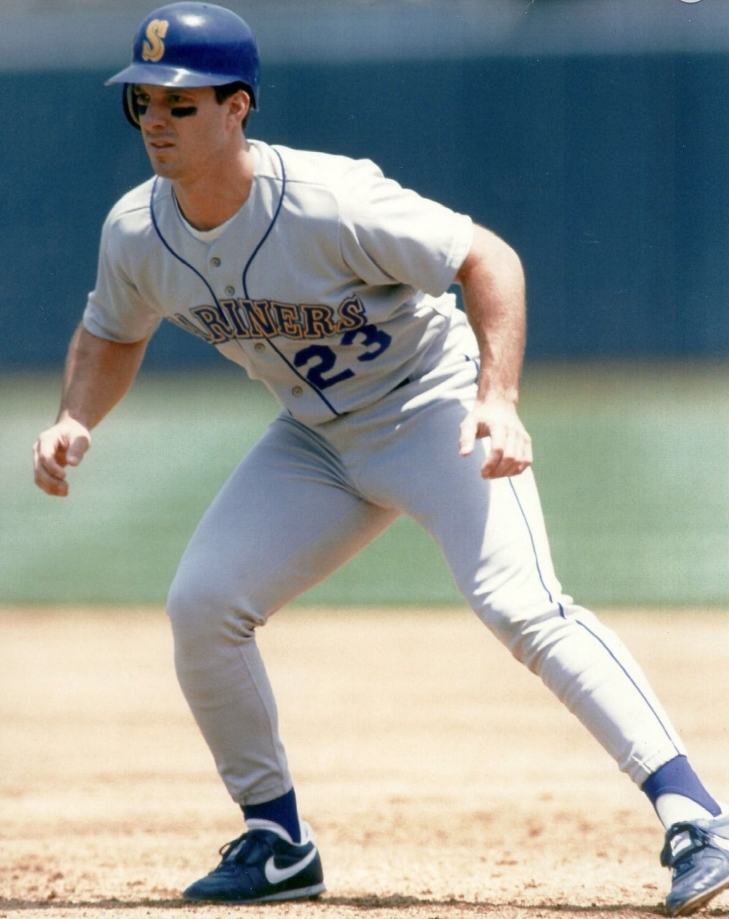
26. John Olerud

By December 1999, when John Olerud became a free agent, his achievements were already outstanding. He had secured an American League batting title and earned two consecutive World Series championships with Toronto, followed by three highly effective seasons with the New York Mets. However, the pull of returning to his roots in the Pacific Northwest—where he had established himself as a legendary, multi-talented All-American at Washington State University—was too strong. The Seattle Mariners signed the graceful first baseman to a three-year deal, aligning his arrival to replace star Ken Griffey Jr., and to help stabilize a franchise nearing an unprecedented competitive phase.

Olerud’s homecoming immediately yielded defensive dividends that national writers had long overlooked during his time on the East Coast. Standing a flexible 6-foot-5, his pristine positioning, soft hands, and uncanny ability to scoop off-target throws turned the Seattle infield dirt into an absolute clinic. In his inaugural summer with the club in 2000, he captured his first career Gold Glove Award, an accolade he would win twice more in 2002 and 2003. He transformed first base defense into an art form, providing a vital safety net for a star-studded coaching staff and a young pitching core that relied heavily on his level-headed execution.

Olerud's impeccable glove established a perfect baseline, but his flawless left-handed swing remained a powerful weapon in Lou Piniella's lineup. His technique reached a remarkable peak during the notable 2001 and 2002 seasons. In those summers, he consistently maintained above a .300 batting average while displaying a top-tier, walk-focused approach that kept his on-base percentage over .400. He combined disciplined plate discipline with an unexpected increase in raw power, hitting exactly 21 home runs in 2001 and 22 in 2002.

His outstanding 2001 regular season was the driving force behind a historic roster that captivated the baseball world. Olerud played all 159 games, driving in 95 runs and achieving a remarkable 136 OPS+, leading a lineup that set an American League record with 116 wins. That summer, he received his only career American League All-Star nod, reinforcing his role as the steady, professional core of the most dominant regular-season team of the modern era.

The veteran finally faced the effects of aging and ongoing lower-body problems during the 2004 season. His offensive stats declined sharply, and as the Mariners shifted to a younger roster, the front office decided to release the popular first baseman in July. He had brief stints with the Yankees and Red Sox before retiring, ending a highly successful 17-year Major League career.

Olerud walked away from Safeco Field having compiled 709 hits, 72 home runs, and a phenomenal .285/.388/.439 slash line across his 717 games in a Mariners uniform.

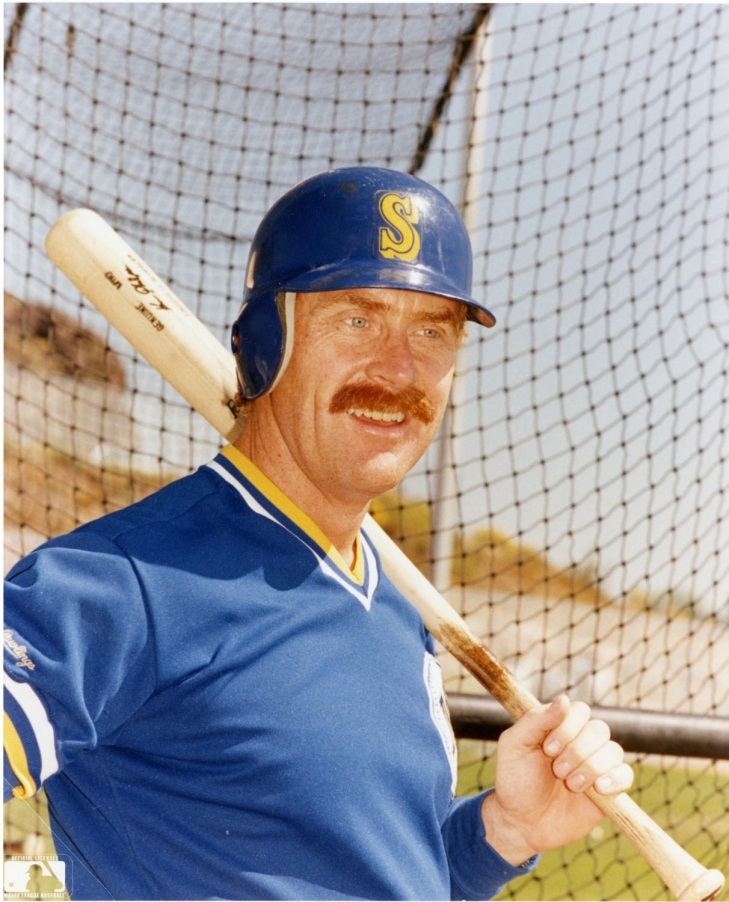
28. Mike Moore

The Seattle Mariners, in their 1981 amateur draft, selected Mike Moore from Oral Roberts with the top overall pick, as they were a young franchise in need of a reliable workhorse. Moore, a powerful right-hander, was fast-tracked to the majors, joining the starting rotation the following summer. His debut at the Kingdome was intense, as he played for a struggling team and experienced three losing seasons with records of 7–14, 6–8, and 7–17, while trying to keep his ERA below 4.70. Despite these tough stats, his strong arm and high strikeout talent convinced the front office to focus on his long-term growth.

That patience paid off brilliantly during Moore’s remarkable 1985 season, a summer when he finally mastered his control and delivered the peak of his Pacific Northwest career. With a powerful, deceptive fastball, he achieved a 17–10 record and lowered his ERA to an impressive 3.46 across 247 innings. Demonstrating classic durability, he completed 14 games and carried a thin pitching staff on his broad shoulders, finishing tenth in the American League Cy Young Award voting and ranking sixth among AL pitchers with a 6.3 bWAR.

While surface losses returned the following summer, Moore’s significant contribution to the team became evident during the 1986 season. He started 37 games, pitching a remarkable 266 innings and facing a league-high 1,145 batters in the American League. Despite an 11–13 record and a 4.30 ERA, his skill in managing high-pressure situations and limiting damage in a hitter-friendly park earned him an impressive 4.6 bWAR, highlighting his value beyond win-loss statistics.

During his time in Seattle, Moore primarily relied on a fast, high-velocity pitch to keep opposing lineups unbalanced. He often ranked near the top of the league in strikeouts, making the top ten in the American League three times as a Mariner. The peak of this power pitching style came in his final summer with the team in 1988, when he achieved a personal best of 182 strikeouts in 228⅔ innings, establishing himself as one of the division’s most respected power pitchers before entering free agency.

After his contract expired following the 1988 season, Moore decided to sign with the dominant Oakland Athletics. There, he quickly reached the peak of his career. He gained national fame during an outstanding 1989 season, which saw him earn his first All-Star selection, win 19 games, and start two games in the Fall Classic, contributing to Oakland's World Series sweep.

Moore closed out his seven-year stretch in Seattle with a deceptive 66–96 record, but his legacy is truly defined by his 225 starts, 72 complete games, and 937 strikeouts.