Menu
A+ A A-
Site Admin

Site Admin

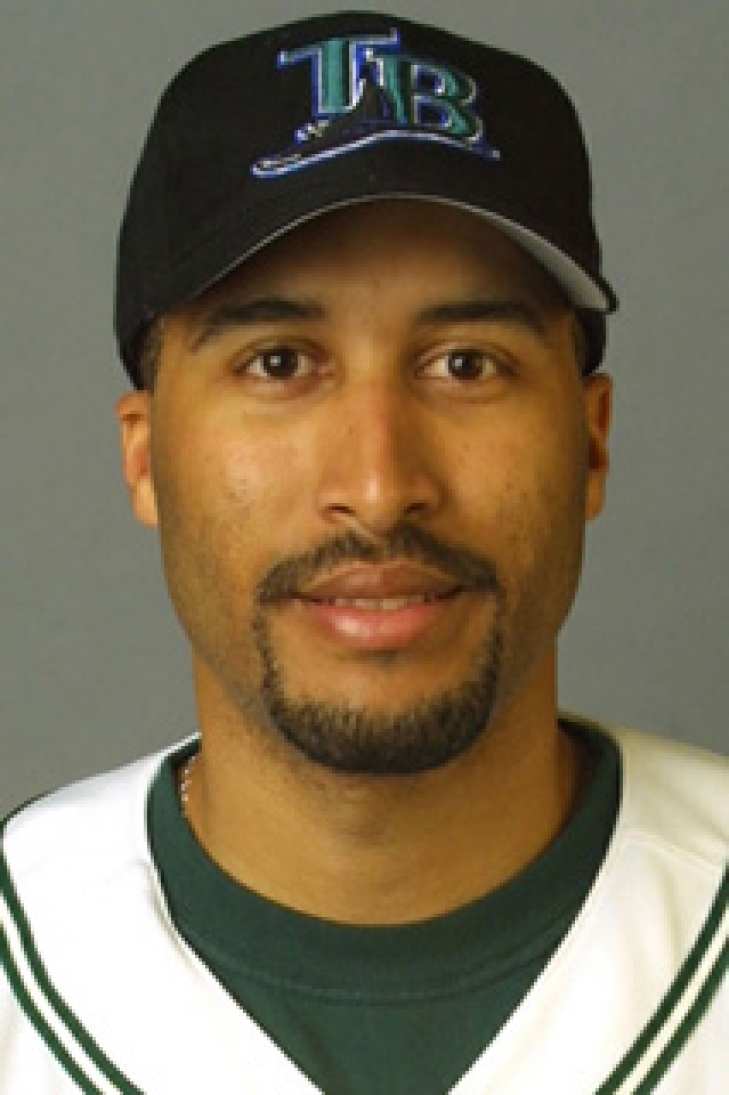
7. Carlos Pena

When a player's career seems abandoned by the league, choosing the right environment can ignite a remarkable comeback. Carlos Peña arrived in St. Petersburg before the 2007 season on a small minor league contract, largely seen as a former top prospect whose prime was lost in a rough patch with Detroit and Boston. What happened next defied baseball experts' expectations and changed the entire dynamic of the American League East. With a powerful, clutch left-handed swing and excellent plate discipline, this charismatic first baseman not only revived his career but also became Tampa Bay's key power hitter and emotional leader during their historic rise to relevance.

His initial 2007 season in Tampa was truly impressive. After securing a spot on the roster during spring training, Peña made it a habit to hit towering baseballs deep into the Florida night every single game. He expertly took down opposing pitchers, shattering the franchise record books with a career-high 46 home runs and 121 RBIs. His remarkable efficiency powered the entire offense, blending a solid .282 batting average with an outstanding .411 on-base percentage and an impressive .627 slugging percentage. This exceptional performance earned him the American League Comeback Player of the Year award, a Silver Slugger, and a notable ninth-place finish in the AL Most Valuable Player voting.

Peña showed that his powerful skills weren't just a one-time thing; he was a key part of the team during the amazing 2008 season when they went from worst to first. That summer, he hit 31 home runs and drove in 102 runs, impressing everyone with his strong batting and excellent defense. In fact, he became the first player in Tampa Bay history to win a Gold Glove Award. He continued his incredible performance in 2009, leading the American League with 39 home runs during the All-Star season, completing a remarkable three-year streak of hitting over 100 RBIs each year.

With all of that being said, Peña was the ultimate precursor to the modern three-true-outcome era; he was an inherently high-volume strikeout hitter who struggled heavily with contact as his career advanced. His batting average slid to .196 in 2010, and after a brief free-agent year with the Chicago Cubs, his 2012 return to the Trop yielded a tough .197 mark over 160 games.

While those significant contact leaks limited his traditional metrics, his exceptional ability to draw walks—leading the league with 87 bases on balls in 2012—regularly protected his on-base percentage and enhanced his overall lineup contribution. Following his final departure from the organization at the end of the 2012 calendar year, he left behind a remarkable statistical record founded on pure power. Throughout his two tenures totaling five seasons with the franchise, Peña amassed precisely 559 hits, 113 doubles, 163 home runs, and 468 runs batted in, with a career batting average of .230 with the club.

6. James Shields

When tracing the journey of a pitching staff from a humble beginning to a strong, perennial American League contender, it becomes clear that a highly efficient bullpen needs a rock-solid foundation. Before the Tampa Bay front office gained international recognition for its innovative opener strategies and careful pitcher management, they relied on a fierce, resilient right-hander who saw the idea of a bullpen game as a personal challenge. When James Shields made his major league debut in the summer of 2006, he didn't just secure his spot in the rotation; he became the dependable workhorse of the team, setting a high standard of durability and earning the caring clubhouse nickname “Big Game James.”

His early days in St. Petersburg saw him quickly refine his signature pitch, the tumbling changeup, establishing his dominance at the front of the rotation. During the historic 2008 season, when the rebranded Rays amazed the baseball world by winning their first American League pennant, Shields was the cornerstone of the pitching staff. He made recording deep outings a daily ritual, pitching 215.0 innings in 33 starts and finishing with a solid 14–8 record. He also played a key role in leading the team to its first World Series victory, delivering an outstanding, commanding performance in Game 5 of the Fall Classic against the Philadelphia Phillies.

Shields displayed remarkable consistency, pitching at least 200 innings for six straight summers from 2007 to 2012. He consistently overwhelmed batters with numerous empty swings and ranked among the top six in innings pitched in the American League four times.

His legendary 2011 season truly marked the pinnacle of his durability and skill. That year, Shields delivered an extraordinary performance, showcasing a toughness that defied modern standards. He dominated Major League hitters with a remarkable 16 wins, only 12 losses, and a sleek 2.82 ERA across 33 starts. His incredible stamina was highlighted by leading the league with 11 complete games, including four shutouts, and pitching an impressive 249.1 innings with 225 strikeouts. This outstanding achievement earned him his first All-Star nod and a third-place finish in the American League Cy Young Award voting. He continued his impressive streak in 2012, striking out 223 batters and ranking third in the league for the second year in a row.

With his free-agent timeline rapidly approaching and the small-market franchise seeking to maximize his market value, the inevitable business exit arrived in December 2012. The front office engineered a blockbuster trade, shipping Shields to the Kansas City Royals in a franchise-altering transaction that netted the organization future pillars Wil Myers and Jake Odorizzi, drawing a definitive curtain on his historic residency in Florida.

Across his 218 total appearances representing Tampa Bay, he accumulated exactly 87 wins against 73 losses, a 3.89 ERA, and 19 complete games over 1,454.2 innings of work.

5. Kevin Kiermaier

When highlighting the elite defensive players in major-league history, you'll sometimes come across a story that sounds almost unbelievable. Take Kevin Kiermaier, for example — the Tampa Bay Rays selected him in the 31st round of the 2010 amateur draft from a small junior college in Illinois. It’s rare for a player starting out in such an unassuming way to achieve a decade of such remarkable success, let alone make a big impact at the major league level. Despite being overlooked by scouts, Kiermaier made up for it with incredible speed and a legendary throwing arm that often left runners frozen in their tracks. During his impressive ten seasons with the Rays at Tropicana Field, this player nicknamed "The Outlaw" did more than just play in center field — he changed the way the game is played, establishing himself as one of the most effective and game-changing defenders in recent history.

His introductory phase featured a remarkable debut as a defensive substitute in the decisive 2013 Wild Card tiebreaker match. Subsequently, his 2014 rookie season served as an enduring caution to the entire league. Kiermaier consistently performed gravity-defying catches, maintained an impressive batting average of .263, and hit 8 triples along with 10 home runs, thereby solidifying his position as a starter.

The paramount achievement in his athletic career occurred during the remarkable 2015 regular season. In that summer, Kiermaier demonstrated exceptional defensive prowess, surpassing contemporary standards and challenging analysts to find new descriptors. Throughout that distinguished season, Kiermaier effectively suppressed offensive opportunities across the American League, recording an extraordinary 42 Defensive Runs Saved (DRS)—the highest single-season figure since the inception of this metric. He achieved an impressive 5.0 defensive bWAR, establishing himself as one of only four players in the history of baseball to attain the significant five-win benchmark solely through defensive performance. This defensively proven excellence earned him an American League Gold Glove, the distinguished Platinum Glove Award for the best overall defender in the league, and a commendable 7.1 total bWAR, ranking him fifth among all players in the league.

Far from a single-season outlier, Kiermaier maintained that premier lockdown status for the rest of his tenure in St. Petersburg, capturing his second Gold Glove in 2016 alongside back-to-back Wilson Defensive Player of the Year honors.

Severe hand fractures, hip ailments, and knee surgeries repeatedly interrupted his momentum, reducing his workload to under 100 games in both 2017 and 2018. Yet, demonstrating the legendary grit that defined his entire identity, he never let his defensive efficiency dip; he remarkably finished every single full season of his Rays career with a defensive bWAR north of 1.5.

While he remained a light contact hitter, he weaponized enough muscle to clear the double-digit home run mark five separate times for the team, while providing crucial veteran poise during the club's run to the 2020 American League pennant.

After the 2021 season, Tampa declined to pick up his option, and he signed with the Toronto Blue Jays. With the Rays, Kiermaier accumulated 756 hits, 121 doubles, 51 triples, 82 home runs, and 112 stolen bases, balanced by 74 Total Zone Runs and a staggering 17.7 defensive bWAR anchor.

4. David Price

When an organization holds the coveted first overall selection in the draft, the pressure to land a franchise-altering centerpiece is absolute. The Tampa Bay Rays faced that exact milestone in June 2007, selecting Vanderbilt University's electric left-hander to anchor their pitching pipeline. David Taylor Price did not merely arrive with immense, high-velocity hype; he stepped directly into a franchise-altering postseason script. Making his highly anticipated debut in September 2008, the towering southpaw functioned as an immediate high-leverage weapon out of the bullpen, recording the final outs of the American League Championship Series against Boston to push the Rays to their first-ever World Series appearance. That autumn cameo set the stage for an illustrious, hardware-certified residency as the undisputed ace of the rotation.

His introductory 2009 campaign as a full-time starter was a standard learning experience, as he labored through structural adjustments to post a 10–7 record with a 4.42 ERA across 23 assignments.

Following a successful summer in 2011, when he posted 12 wins and struck out 218 batters, his career reached its peak during an incredible 2012 regular season. That Year, Price delivered a remarkable display of skill and dominance, truly showcasing his talent. He consistently overwhelmed opposing lineups, leading the entire league with an impressive 20–5 record and a tiny, league-leading 2.56 ERA across 31 starts. His efficiency was exceptional- pitching 211.0 innings, striking out 205 batters in critical counts, and maintaining a fantastic 1.100 WHIP. These outstanding performances earned him the prestigious 2012 American League Cy Young Award, marking him as a true legend in the organization.

A painful triceps ailment triggered a minor statistical dip during the 2013 schedule; he engineered an absolute masterpiece of workhorse redemption during the first half of the 2014 campaign. Price recaptured his elite velocity to earn his fourth career All-Star nod, pacing all of Major League Baseball with 271 strikeouts and 248.1 innings pitched across the full summer.

However, with the small-market franchise falling out of the immediate postseason hunt and his free-agent timeline looming, the inevitable business exit arrived that July. The front office engineered a blockbuster three-team trade, shipping their long-time ace to the Detroit Tigers for a return centered on Drew Smyly and Willy Adames, drawing a definitive curtain on his historic residency in St. Petersburg. Price would later leverage his elite status to capture ultimate world-championship jewelry with the Boston Red Sox in 2018 before concluding his stellar career with the Los Angeles Dodgers. 

With Tampa Bay, Price had a brilliant 82–47 record, a sharp 3.18 ERA, and exactly 1,065 strikeouts in 1,143.2 innings of work across 170 starting assignments.