It is with great pleasure that we announce the results of the third annual Notinhalloffame MLB Regular Season Cup, and let us explain how this works:
With every single regular season game, we anointed the best five players in the game with descending points, 5-4-3-2-1.
We knew the following:
- The top players for the MLB NIHOF Cup are not always the best in the league, as injuries keep players out of games, and a premium on staying healthy can help pile up points. It also does not hurt to be a top player on an average or mediocre team, as they can amass Cup points easier that elite players on loaded squads.
- In Baseball, it is more common than in Basketball and Hockey for a player to accrue points with a single Home Run in a game, and overall favors position players. Starting Pitchers have a hard time with approximately 30-35 Starts and throwing less innings than in previous generations. This also is true for closers, which is not made for this process.
- Please remember, that this is NOT who we think were the best players this year, and does not reflect overall consistency. Treat this the way did, as a fun process and more of a compilation of temporary domination.
- Next year, we will implement a new system to help repair the gap between Pitchers and Position Players
1,100 players had at least one Cup Point, and we tell you them all!
So, MLB players! Get your agents to work winning this into your contracts!
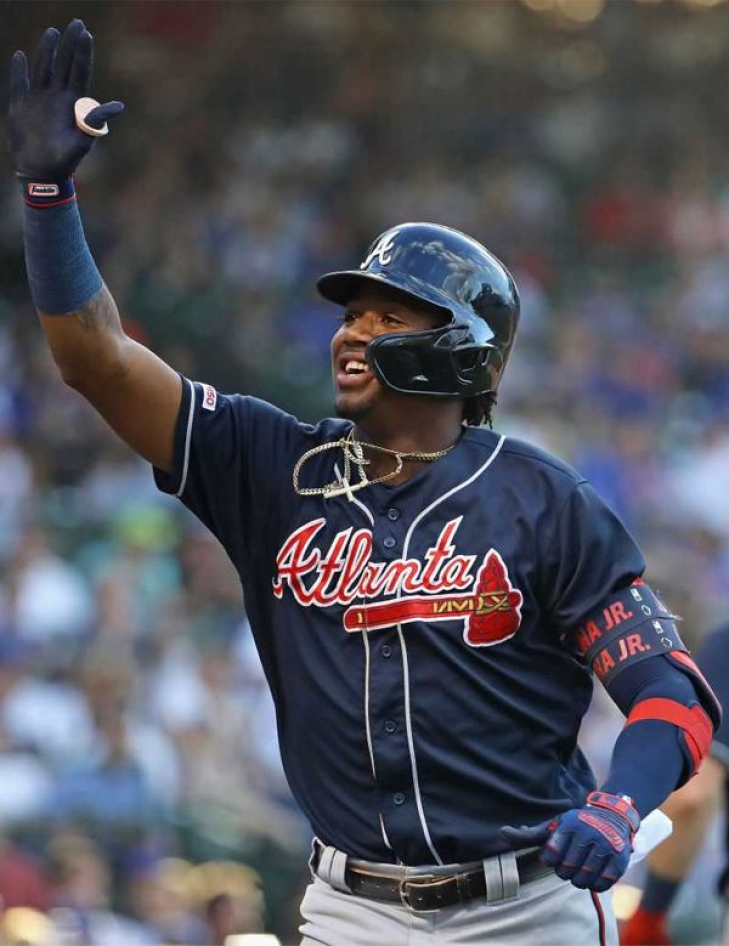
1. Ronald Acuna: Atlanta Braves, Outfield:
208 Cup Points, 159 Games, 1.31 Cup Points per Game, 41 Home Runs, 106 Runs Batted In, 73 SB, .337/.416/.596, 8.1 bWAR.
He did it!
Shohei Ohtani had a stranglehold on the 2023 Cup lead for months, but when he went down to injury, the first member of the 40-70 club took advantage, and won it all. Acuna, who was already a superstar going into 2023, is now a megastar, adding a fourth All-Star, with more accolades likely to come. He led the National League in Runs Scored (149), Hits (217), Stolen Bases (73), OBP (.416), OPS (.596), OPS+ (168), Power-Speed # (52.5), Win Probability Added (6.3) and Total Bases (383) and was second in Slugging (.596). He was also fourth in Home Runs (41) and fifth in RBIs (106).
2. Shohei Ohtani: Los Angeles Angels, Designated Hitter & Pitcher:
202 Cup Points, 135 Games, 1.50 Cup Points per Game, 44 Home Runs, 95 Runs Batted In, 20 SB, .304/.412/.654, 10.1 bWAR & 10-5, 3.14 ERA, 167 SO, 1.061 WHIP.
When September rolled in, we thought that Ohtani had an insurmountable lead, even though he was shut down on the mound with a UCL tear. He would then cease activity at the plate with on September 16 with oblique issues and days later, his stuff was removed from his locker, which will likely be permanent. Nevertheless, Ohtani will win the American League MVP, which he should. Ohtani won his first Home Run Title (44), while also topping the American League standings for the first time in On Base Percentage (.412), Slugging (.654), OPS (1.066) and Total Bases (325). He batted over .300 for the first time this year, had his third consecutive 95+ RBI year, and led the AL in bWAR (10.1) for the second time. Pitching-wise, Ohtani was solid, and had the best start to his career in that discipline, though cooled off mid-year. The Angels were a disaster this year, and mortgaged their future for an outside playoff spot and even more distant shot at keeping Ohtani. Saying that, we can understand why a team might take that shot for a player like him. He is in a category of one.
3. Mookie Betts: Los Angeles Dodgers, Outfield:
193 Cup Points, 152 Games, 1.27 Cup Points per Game, 39 Home Runs, 107 Runs Batted In, 13 SB, .307/.408/.579, 8.4 bWAR.
Betts was a man on fire over the summer, and it looked like he was making a push for the National League MVP. That will likely go to Acuna, but this was another phenomenal season for the now seven-time All-Star. Betts’ 8.4 led the NL, making him now a three-time league leader (two in NL, one in AL), and ended the season second in OPS+ (163), third in Slugging (.527), and OPS (.987), was fourth in OBP (.408) and fifth in Batting (.307). He also had top ten finishes in Home Runs, RBIs, Hits, Runs and Doubles.
4. Matt Olson: Atlanta Braves, First Base:
178 Cup Points, 162 Games, 1.10 Cup Points per Game, 54 Home Runs, 139 Runs Batted In, 1 SB, .283/.389/.604, 7.4 bWAR.
The Atlanta Braves set the record for the most Home Runs in a season, and Olson was the leader of that, winning his first Home Run Title (54), while also finishing first in Runs Batted In (139) and Slugging (.604). Olson added his second All-Star in what was his best year in Baseball, and he also was second in OPS (.993), third in OPS+ (162), and was fifth in Win Probability Added (4.4). Olson’s placement makes Atlanta the first team with two players.
5. Juan Soto: San Diego Padres, Outfield:
177 Cup Points, 162 Games, 1.09 Cup Points per Game, 35 Home Runs, 109 Runs Batted In, 12 SB, .275/.410/.519, 5.6 bWAR.
The Padres were one of the biggest disappointments of the year, but Juan Soto did his job, leading the league in Walks (132) for the second straight year, while adding a second consecutive All-Star Game. He had a personal best in Home Runs (35) giving him first top ten rank in this statistic, and he also placed third in RBIs (109). Finishing second in On Base Percentage (.410), Soto landed fifth in OPS (.839) and OPS+ (158).
6. Freddie Freeman: Los Angeles Dodgers, First Base:
176 Cup Points, 154 Games, 1.06 Cup Points per Game, 29 Home Runs, 102 Runs Batted In, 23 SB, .331/.410/.567, 6.6 bWAR.
Freeman had another exemplary year securing his eighth All-Star Game and leasing the National League in Doubles (59) for the fourth time. In the Slash Line, Freeman was third in both Batting (.331), On Base Percentage (.410), fourth in Slugging (.567), OPS (.967) and OPS+ (161), and was also second in Hits (211) and Runs (131).
7. Corbin Carroll: Arizona Diamondbacks, Outfield:
163 Cup Points, 155 Games, 1.05 Cup Points per Game, 25 Home Runs, 76 Runs Batted In, 54 SB, .285/.362/.506, 5.4 bWAR.
The Arizona Diamondbacks were not expected to have this good a season and a lot of that success can be attributed to Corbin Carrol, who was the best rookie in Baseball. Carroll was an All-Star this year, led the NL in Triples (10) and Championship Win Probability (4.4), and was the runner up to Acuna in Stolen Bases (54).
8. Kyle Tucker: Houston Astros, Outfield:
154 Cup Points, 157 Games, 0.98 Cup Points per Game, 29 Home Runs, 112 Runs Batted In, 30 SB, .284/.369/.517, 5.4 bWAR.
Tucker was a Home Run away form a 30-30 year, but the now two-time All-Star won his first RBI Title (112), was fourth in OPS+ (142), sixth in OPS (.886), seventh in Slugging (.517), eighth in OBP (.369) and ninth in Batting (.284). Tucker was also second in both Win Probability Added (4.6) and Championship Win Probability Added (4.2).
9. Kyle Schwarber: Philadelphia Phillies, Outfield:
153 Cup Points, 155 Games, 0.94 Cup Points per Game, 47 Home Runs, 104 Runs Batted In, 0 SB, .197/.343/.474, 0.7 bWAR.
Despite the very low bWAR (0.7) and Batting Average (.197), Schwarber gets on base, has power, and when it matters, he is often clutch. What a strange player to be ranked this high, or does it show that bWAR doesn’t work? Of his 720 Plate Appearances, over half of them resulted in a Home Run (47), Walk (126) or a Strikeout (215), and he was second in the HR category.
10. Rafael Devers: Boston Red Sox, Third Base:
152 Cup Points, 153 Games, 0.99 Cup Points per Game, 33 Home Runs, 100 Runs Batted In, 5 SB, .271/.351/.500, 3.5 bWAR.
Devers was once at the top of the standings (albeit very early in the season), and we kept waiting for him to fall out of the top ten, but it ever happened. The Third Baseman had at least 30 Home Runs and 100 RBIs for the third time in his career, and was in the top ten in both categories. He was also ninth in Slugging (.500) and OPS (.851).
Here is a little more about #11-50:
11. Bobby Witt: Kansas City Royals, Shortstop:
147 Cup Points, 158 Games, 0.93 Cup Points per Game, 30 Home Runs, 96 Runs Batted In, 49 SB, .276/.319/.495, 4.4 bWAR.
Witt had a very good sophomore season, leading the AL in Triples (11) and joined the 30-30 Club. He led the AL in Power-Speed # (37.2), was second in Stolen Bases (49) and third in Hits (177).
12. Alex Bregman: Houston Astros, Shortstop:
145 Cup Points, 161 Games, 0.90 Cup Points per Game, 25 Home Runs, 98 Runs Batted In, 3 SB, .262/.363/.441, 4.9 bWAR.
Bregman was in the top ten for a bit, and finished third in Runs (103) and Walks (92), with a sixth-place finish in Runs Batted In (98). He was also eighth in Hits (163).
13. Marcus Semien: Texas Rangers, Second Base:
144 Cup Points, 162 Games, 0.89 Cup Points per Game, 29 Home Runs, 100 Runs Batted In, 14 SB, .276/.348/.478, 7.4 bWAR.
Semien has been great since he arrived in Texas, and this season he added his second All-Star and led the league in Hits (185) and Runs (122). Fifth in Defensive bWAR (2.3), Semien was first in the AL among position players in bWAR (7.4). He was also fourth in RBIs (100).
14 (TIE). Pete Alonso: New York Mets, First Base:
143 Cup Points, 154 Games, 0.89 Cup Points per Game, 46 Home Runs, 118 Runs Batted In, 4 SB, .217/.318/.504, 3.2 bWAR.
Alonso had his third All-Star season, where he did what he always did; smash a lot of Home Runs. The disappointing Mets got what they thought out of Alonso with his second-place finish in RBIs (118) and third-place tally in taters (46).
14 (TIE). Corey Seager: Texas Rangers, Shortstop:
143 Cup Points, 119 Games, 1.20 Cup Points per Game, 33 Home Runs, 96 Runs Batted In, 2 SB, .327/.390/.623, 6.9 bWAR.
Seager seems to love Texas, as he has been fantastic the past two years, both of which gave him a trip to the All-Star Game. Seager missed a lot of games due to injury, but is still ranked very high, and would lead the American League in Doubles with 42, was the league-leader in Offensive bWAR (6.4), and was second in Slugging (.623). This was an incredible year considering the number of Games he missed.
16. Spencer Torkelson: Detroit Tigers, First Base:
141 Cup Points, 159 Games, 0.87 Cup Points per Game, 31 Home Runs, 94 Runs Batted In, 3 SB, .233/.313/.446, 0.8 bWAR.
Torkelson led the Tigers in Cup Points, and had he been a stronger team with these statistics would probably be lower. He was eighth in Home Runs (31) in the American League, and with all due respect is very surprisingly high in this process, but this is more of a reflection of someone from Detroit having to produce. This feels very basketball-like doesn’t it?
17. Yandy Diaz: Tampa Bay Rays, First Base:
140 Cup Points, 137 Games, 1.03 Cup Points per Game, 22 Home Runs, 78 Runs Batted In, 0 SB, .330/.410/.522, 5.2 bWAR.
Diaz was an All-Star for the first time, and would win the American League Batting Title. He was also fourth in OPS (.932) and Win Probability Added (4.4). Diaz took over as Tampa’s top offensive weapon this year, though other circumstances occurred allowing that to happen.
18 (TIE). Nick Castellanos: Philadelphia Phillies, Outfield:
137 Cup Points, 157 Games, 0.87 Cup Points per Game, 29 Home Runs, 106 Runs Batted In, 11 SB, .272/.311/.476, 1.6 bWAR.
Castellanos added his second Al-Star Game, and joined the 200-Home Run Club this year, and was clutch all season.
18 (TIE). Julio Rodriguez: Seattle Mariners, Outfield:
137 Cup Points, 155 Games, 0.88 Cup Points per Game, 32 Home Runs, 103 Runs Batted In, 37 SB, .275/.333/.485, 5.3 bWAR.
Rodriguez had another dynamic year, capped by a four-game stretch where he went 17-for-21, setting a record for the most Hits in a four-game span. He also joined the 30-30 Club, and added his second All-Star in as many seasons.
20 (TIE). Christian Walker: Arizona Diamondbacks, First Base:
136 Cup Points, 157 Games, 0.87 Cup Points per Game, 33 Home Runs, 103 Runs Batted In, 11 SB, .258/.333/.497, 3.8 bWAR.
Walker has been very good the last two years, and cracked 100 in RBIs for the first time. He was sixth in Extra Base Hits (71) and tenth in both RBIs (103) and Championship Probability Added (1.2).
20 (TIE). Manny Machado: San Diego Padres, Third Base:
136 Cup Points, 138 Games, 0.99 Cup Points per Game, 30 Home Runs, 103 Runs Batted In, 11 SB, .258/.319/.462, 2.9 bWAR.
Machado was down this year, but that still makes him better than most baseball players.
22. Luis Arraez: Miami Marlins, Third Base:
135 Cup Points, 147 Games, 0.92 Cup Points per Game, 10 Home Runs, 69 Runs Batted In, 3 SB, .354/.393/.459, 4.9 bWAR.
Arraez flirted with .400 this year, and won his second straight Batting Title. He also led the National League in Singles (160), was sixth in OBP (.393) and tenth in OPS (.861). Arraez also went to his second straight All-Star Game.
23. Gunnar Henderson: Baltimore Orioles, Third Base:
131 Cup Points, 150 Games, 0.87 Cup Points per Game, 28 Home Runs, 82 Runs Batted In, 10 SB, .255/.325/.489, 6.3 bWAR.
Henderson was one of the plethora of outstanding rookies this season, and he finished third in the AL in bWAR for Position Players (6.3).
24 (TIE). Ketel Marte: Arizona Diamondbacks, Second Base:
130 Cup Points, 150 Games, 0.87 Cup Points per Game, 25 Home Runs, 82 Runs Batted In, 8 SB, .276/.358/.485, 4.9 bWAR.
Of the nine seasons that Marte has played, this was arguably his second best. He finished second in the league in Triples (9) and was seventh in Championship Win Probability Added (2.1).
24 (TIE). Brandon Nimmo: New York Mets, Outfield:
130 Cup Points, 152 Games, 0.86 Cup Points per Game, 24 Home Runs, 68 Runs Batted In, 3 SB, .274/.363/.466, 4.0 bWAR.
Nimmo blasted a career-high 24 Home Runs and also collected a personal best Hits with 162.
26. Cody Bellinger: Chicago Cubs, Outfield:
129 Cup Points, 130 Games, 0.99 Cup Points per Game, 26 Home Runs, 97 Runs Batted In, 20 SB, .307/.356/.525, 4.4 bWAR.
Bellinger had a comeback year, where the 2019 MVP finished seventh in Slugging (.525) and eighth in OPS (.881).
27. Francisco Lindor: New York Mets, Shortstop:
128 Cup Points, 160 Games, 0.80 Cup Points per Game, 31 Home Runs, 98 Runs Batted In, 31 SB, .254/.336/.470, 6.0 bWAR.
Lindor was not an All-Star (his last was 2019), but the Mets Shortstop had his first 30-30 year and was fifth in bWAR for Position Players in the NL (6.0). He was also seventh in Runs (108).
28 (TIE). Jose Ramirez: Cleveland Guardians, Third Base:
126 Cup Points, 156 Games, 0.81 Cup Points per Game, 24 Home Runs, 80 Runs Batted In, 28 SB, .282/.355/.475, 5.1 bWAR.
Ramirez was tenth in Batting (.282) and went to his fifth All-Star Game this season.
28 (TIE). Randy Arozarena: Tampa Bay Rays, Outfield:
126 Cup Points, 151 Games, 0.81 Cup Points per Game, 23 Home Runs, 83 Runs Batted In, 22 SB, .254/.364/.425, 3.5 bWAR.
Arozarena, who is one of the most exciting an likable players in Baseball, went to his first All-Star Game and had a perfect Fielding Percentage this season.
28 (TIE). Vladimir Guerrero Jr. : Toronto Blue Jays, First Base:
126 Cup Points, 156 Games, 0.81 Cup Points per Game, 26 Home Runs, 94 Runs Batted In, 5 SB, .264/.345/.444, 2.0 bWAR.
Guerrero Jr. was an All-Star for the third straight year, but he has regressed from his MVP-caliber 2021 Season.
31 (TIE). Ian Happ: Chicago Cubs, Outfield:
125 Cup Points, 158 Games, 0.79 Cup Points per Game, 21 Home Runs, 84 Runs Batted In, 14 SB, .246/.360/.431, 2.9 bWAR.
Happ had his third 20-plus Home Run year and he led all National League Leftfielders in Assists (12) and Double Plays Turned (4).
31 (TIE). Fernando Tatis Jr.: San Diego Padres, Outfield:
125 Cup Points, 141 Games, 0.87 Cup Points per Game, 25 Home Runs, 78 Runs Batted In, 29 SB, .257/.322/.449, 5.5 bWAR.
Tatis began the year on the suspended list, but he came back strong, and in some circles (ours included) was an All-Star snub.
33 (TIE). Anthony Santander: Baltimore Orioles, Outfield:
124 Cup Points, 153 Games, 0.81 Cup Points per Game, 28 Home Runs, 95 Runs Batted In, 3 SB, .257/.325/.472, 3.0 bWAR.
Santander finished the season second in Doubles (41) and seventh in Extra Base Hits (70).
33 (TIE). Jorge Soler: Miami Marlins, Designated Hitter & Outfield:
124 Cup Points, 153 Games, 0.81 Cup Points per Game, 36 Home Runs, 75 Runs Batted In, 1 SB, .250/.341/.512, 1.8 bWAR.
An All-Star for the first time, Soler played far more at DH than he has had previously, while finishing eighth in Home Runs (36).
33 (TIE). Adolis Garcia: Texas Rangers, Outfield:
124 Cup Points, 148 Games, 0.84 Cup Points per Game, 39 Home Runs, 107 Runs Batted In, 9 SB, .245/.328/.508, 4.2 bWAR.
Garcia had a very good power season where he was second in Home Runs and RBIs and eight in Slugging. The two-time All-Star seems like he should be much higher, but that is this process.
36 (TIE). Austin Riley: Atlanta Braves, Outfield:
122 Cup Points, 159 Games, 0.77 Cup Points per Game, 37 Home Runs, 97 Runs Batted In, 3 SB, .281/.345/.515, 5.9 bWAR.
Riley had another great year, executing his third consecutive 30-HR season. Finishing seventh in bWAR in the National League, Riley lost out on a few Cup Points to his high-octane teammates.
36 (TIE). Yordan Alvarez: Houston Astros, Designated Hitter & Outfield:
122 Cup Points, 114 Games, 1.08 Cup Points per Game, 31 Home Runs, 97 Runs Batted In, 0 SB, .293/.407/.583, 4.5 bWAR.
Alvarez was in the tail end of the top ten early this year, but he missed significant time due to injury. Despite only playing 114 Games, Alvarez secured his third straight season with at least 31 Home Runs and 97 RBIs.
38 (TIE). Ozzie Albies: Atlanta Braves, Second Base:
121 Cup Points, 148 Games, 0.82 Cup Points per Game, 33 Home Runs, 109 Runs Batted In, 13 SB, .280/.336/.513, 4.7 bWAR.
Albies was an All-Star for the third time and set a personal best in Home Runs (33), RBIs (109) and Slugging (.513).
38 (TIE). Max Muncy: Los Angeles Dodgers, First Base:
121 Cup Points, 114 Games, 0.90 Cup Points per Game, 36 Home Runs, 105 Runs Batted In, 1 SB, .212/.333/.475, 2.8 bWAR.
Muncy only had 102 Hits, but 36 of them went deep, and he has a career-high 105 Runs Batted In.
38 (TIE). Adley Rutschman: Baltimore Orioles, Catcher & Designated Hitter:
121 Cup Points, 154 Games, 0.79 Cup Points per Game, 20 Home Runs, 80 Runs Batted In, 1 SB, .277/.374/.435, 2.8 bWAR.
The Orioles sophomore went to his first All-Star Game this season and finished sixth in On Base Percentage.
41. Aaron Judge: New York Yankees, Outfield:
120 Cup Points, 106 Games, 1.13 Cup Points per Game, 37 Home Runs, 75 Runs Batted In, 3 SB, .267/.405/.613, 4.5 bWAR.
Judge had a spectacular start to the season, but injuries derailed his run for a second MVP. The Yankees superstar had his fourth 30-plus Home Run year, and was an All-Star for the fifth time.
42 (TIE). Luis Robert: Chicago White Sox, Outfield:
118 Cup Points, 145 Games, 0.81 Cup Points per Game, 38 Home Runs, 80 Runs Batted In, 20 SB, .264/.315/.542, 5.1 bWAR.
Robert went to his first All-Star Game and shattered everything else he did in his young career.
42 (TIE). Josh Naylor: Cleveland Guardians, First Base & Outfield:
118 Cup Points, 121 Games, 0.98 Cup Points per Game, 17 Home Runs, 97 Runs Batted In, 10 SB, .308/.354/.489, 2.5 bWAR.
Naylor batted over .300 for the first time in his career, and was eighth in RBIs (97).
42 (TIE). Isaac Paredes: Tampa Bay Rays, Third Base, Second Base & First Base:
118 Cup Points, 143 Games, 0.83 Cup Points per Game, 31 Home Runs, 98 Runs Batted In, 1 SB, .250/.352/.488, 4.3 bWAR.
Paredes had his breakout year, where he finished in the top ten in Home Runs, RBIs, OPS and OPS+.
42 (TIE). George Springer: Toronto Blue Jays, Outfield:
118 Cup Points, 143 Games, 0.83 Cup Points per Game, 21 Home Runs, 72 Runs Batted In, 20 SB, .258/.327/.405, 2.1 bWAR.
Springer had his first 20-20 Season.
46 (TIE). Spencer Steer: Cincinnati Reds, First Base, Third Base & Outfield:
117 Cup Points, 156 Games, 0.75 Cup Points per Game, 23 Home Runs, 86 Runs Batted In, 15 SB, .271/.356/.464, 3.0 bWAR.
In other seasons, Steer would win the Rookie of the Year.
46 (TIE). Alec Bohm: Philadelphia Phillies, Third Base & First Base:
117 Cup Points, 145 Games, 0.81 Cup Points per Game, 20 Home Runs, 97 Runs Batted In, 4 SB, .274/.327/.437, 0.5 bWAR.
Bohm hit when it counted, though his defense weakens his overall game.
46 (TIE). Bryan Reynolds: Pittsburgh Pirates, Outfield:
117 Cup Points, 145 Games, 0.81 Cup Points per Game, 24 Home Runs, 84 Runs Batted In, 12 SB, .263/.330/.460, 2.5 bWAR.
Reynolds had another good year, with his 24 Home Runs being the third season in a row where he achieved that tally.
46 (TIE). Nolan Arenado: St. Louis Cardinals, Third Base:
117 Cup Points, 144 Games, 0.82 Cup Points per Game, 26 Home Runs, 93 Runs Batted In, 3 SB, .266/.330/.460, 2.4 bWAR.
Arenado appears to be slowing down, but still added his eighth All-Star Game appearance.
46 (TIE). CJ Abrams: Washington Nationals, Shortstop and Second Base:
117 Cup Points, 151 Games, 0.78 Cup Points per Game, 18 Home Runs, 64 Runs Batted In, 47 SB, .245/.300/.412, 3.4 bWAR.
Abrams is a young star on a bad team and was third in Stolen Bases (47).
Here are the stats of those who finished #51-#100:
51. J.P. Crawford: Seattle Mariners, Outfield:
116 Cup Points, 145 Games, 0.80 Cup Points per Game, 19 Home Runs, 65 Runs Batted In, 2 SB, .266/.380/.438, 5.0 bWAR.
52 (TIE). Dansby Swanson: Chicago Cubs, Shortstop:
115 Cup Points, 147 Games, 0.78 Cup Points per Game, 22 Home Runs, 80 Runs Batted In, 9 SB, .244/.328/.416, 4.8 bWAR.
52 (TIE). Salvador Perez: Kansas City Royals, Catcher & Designated Hitter:
115 Cup Points, 140 Games, 0.82 Cup Points per Game, 23 Home Runs, 80 Runs Batted In, 0 SB, .255/.292/.422, 0.5 bWAR.
54. Triston Casas: Boston Red Sox, First Base:
114 Cup Points, 132 Games, 0.86 Cup Points per Game, 24 Home Runs, 65 Runs Batted In, 0 SB, .255/.367/.490, 2.2 bWAR.
55. Jonah Heim: Texas Rangers, Catcher:
113 Cup Points, 131 Games, 0.86 Cup Points per Game, 18 Home Runs, 95 Runs Batted In, 2 SB, .258/.317/.438, 2.9 bWAR.
56 (TIE). Christian Yelich: Milwaukee Brewers, Outfield:
112 Cup Points, 144 Games, 0.78 Cup Points per Game, 19 Home Runs, 76 Runs Batted In, 8 SB, .278/.370/.447, 3.6 bWAR.
56 (TIE). Gleyber Torres: New York Yankees, Outfield:
112 Cup Points, 158 Games, 0.71 Cup Points per Game, 25 Home Runs, 68 Runs Batted In, 13 SB, .273/.347/.453, 2.9 bWAR.
58. Lane Thomas: Washington Nationals, Outfield:
111 Cup Points, 156 Games, 0.71 Cup Points per Game, 28 Home Runs, 86 Runs Batted In, 20 SB, .268/.315/.458, 3.2 bWAR.
59. J.D. Martinez: Los Angeles Dodgers, Designate Hitter:
110 Cup Points, 113 Games, 0.71 Cup Points per Game, 33 Home Runs, 103 Runs Batted In, 1 SB, .271/.321/.572, 1.9 bWAR.
60. Nico Hoerner: Chicago Cubs, Designate Hitter:
109 Cup Points, 150 Games, 0.73 Cup Points per Game, 9 Home Runs, 68 Runs Batted In, 43 SB, .283/.346/.383, 5.0 bWAR.
61 (TIE). James Outman: Los Angeles Dodgers, Outfield:
108 Cup Points, 151 Games, 0.72 Cup Points per Game, 23 Home Runs, 70 Runs Batted In, 16 SB, .248/.353/.437, 3.3 bWAR.
61 (TIE). Josh Lowe: Tampa Bay Rays, Outfield:
108 Cup Points, 135 Games, 0.81 Cup Points per Game, 20 Home Runs, 83 Runs Batted In, 32 SB, .292/.335/.500, 3.7 bWAR.
61 (TIE). Bo Bichette: Toronto Blue Jays, Shortstop:
108 Cup Points, 135 Games, 0.81 Cup Points per Game, 20 Home Runs, 73 Runs Batted In, 5 SB, .308/.339/.475, 4.8 bWAR.
64. Marcell Ozuna: Atlanta Braves, Designated Hitter:
107 Cup Points, 144 Games, 0.74 Cup Points per Game, 40 Home Runs, 100 Runs Batted In, 0 SB, .274/.346/.558, 3.3 bWAR.
65. Teoscar Hernandez: Seattle Mariners, Shortstop:
106 Cup Points, 160 Games, 0.66 Cup Points per Game, 26 Home Runs, 93 Runs Batted In, 7 SB, .258/.305/.435, 2.1 bWAR.
66. Trea Turner: Philadelphia Phillies, Shortstop:
105 Cup Points, 155 Games, 0.68 Cup Points per Game, 26 Home Runs, 76 Runs Batted In, 30 SB, .266/.320/.459, 3.6 bWAR.
67 (TIE). Austin Hays: Baltimore Orioles, Outfield:
104 Cup Points, 144 Games, 0.72 Cup Points per Game, 16 Home Runs, 67 Runs Batted In, 5 SB, .275/.325/.444, 2.6 bWAR.
67 (TIE). Bryce Harper: Philadelphia Phillies, Designated Hitter:
104 Cup Points, 126 Games, 0.83 Cup Points per Game, 21 Home Runs, 72 Runs Batted In, 11 SB, .293/.401/.499, 3.7 bWAR.
69. Wander Franco: Tampa Bay Rays, Shortstop:
103 Cup Points, 112 Games, 0.92 Cup Points per Game, 17 Home Runs, 58 Runs Batted In, 30 SB, .281/.344/.475, 5.5 bWAR.
70 (TIE). Justin Turner: Boston Red Sox, Designated Hitter & First Base:
101 Cup Points, 146 Games, 0.70 Cup Points per Game, 23 Home Runs, 96 Runs Batted In, 4 SB, .276/.345/.455, 2.1 bWAR.
70 (TIE). Nate Lowe: Texas Rangers, First Base:
101 Cup Points, 146 Games, 0.70 Cup Points per Game, 17 Home Runs, 82 Runs Batted In, 1 SB, .262/.360/.414, 2.6 bWAR.
72. Jose Abreu: Houston Astros, First Base:
100 Cup Points, 141 Games, 0.71 Cup Points per Game, 18 Home Runs, 90 Runs Batted In, 0 SB, .237/.296/.383, -0.1 bWAR.
73 (TIE). Willy Adames: Milwaukee Brewers, Shortstop:
99 Cup Points, 149 Games, 0.66 Cup Points per Game, 24 Home Runs, 80 Runs Batted In, 5 SB, .217/.310/.407, 3.0 bWAR.
73 (TIE). Eugenio Suarez: Seattle Seahawks, Third Base:
99 Cup Points, 162 Games, 0.66 Cup Points per Game, 22 Home Runs, 96 Runs Batted In, 2 SB, .232/.323/.391, 2.2 bWAR.
75 (TIE). Seiya Suzuki: Chicago Cubs, Outfield:
98 Cup Points, 138 Games, 0.71 Cup Points per Game, 20 Home Runs, 74 Runs Batted In, 6 SB, .285/.357/.485, 2.7 bWAR.
75 (TIE). Josh Bell: Cleveland Guardians & Miami Marlins, First Base:
98 Cup Points, 150 Games, 0.65 Cup Points per Game, 22 Home Runs, 74 Runs Batted In, 0 SB, .247/.325/.419, 0.4 bWAR.
75 (TIE). Bryson Stott: Philadelphia Phillies, Second Base & Shortstop:
98 Cup Points, 151 Games, 0.65 Cup Points per Game, 15 Home Runs, 62 Runs Batted In, 31 SB, .280/.329/.419, 4.4 bWAR.
75 (TIE). Nolan Gorman: St. Louis Cardinals, Second Base & Third Base:
98 Cup Points, 119 Games, 0.82 Cup Points per Game, 27 Home Runs, 76 Runs Batted In, 7 SB, .236/.328/.478, 2.4 bWAR.
75 (TIE). Paul Goldschmidt: St. Louis Cardinals, First Base:
98 Cup Points, 154 Games, 0.64 Cup Points per Game, 25 Home Runs, 80 Runs Batted In, 11 SB, .268/.363/.447, 3.4 bWAR.
80. Cal Raleigh: Seattle Mariners, Catcher:
96 Cup Points, 146 Games, 0.66 Cup Points per Game, 30 Home Runs, 75 Runs Batted In, 0 SB, .232/.306/.456, 3.2 bWAR.
81 (TIE). Ryan McMahon: Colorado Rockies, Third Base & Second Base:
95 Cup Points, 152 Games, 0.63 Cup Points per Game, 23 Home Runs, 70 Runs Batted In, 5 SB, .240/.322/.431, 2.9 bWAR.
81 (TIE). Kerry Carpenter: Detroit Tigers, Outfield & Designated Hitter:
95 Cup Points, 118 Games, 0.81 Cup Points per Game, 20 Home Runs, 64 Runs Batted In, 6 SB, .278/.340/.471, 2.1 bWAR.
81 (TIE). Jake Burger: Chicago White Sox & Miami Marlins, Third Base & Second Base:
95 Cup Points, 141 Games, 0.67 Cup Points per Game, 34 Home Runs, 80 Runs Batted In, 1 SB, .250/.309/.518, 2.5 bWAR.
84 (TIE). Brandon Drury: Los Angeles Angels, Third Base & Second Base:
94 Cup Points, 125 Games, 0.81 Cup Points per Game, 26 Home Runs, 83 Runs Batted In, 0 SB, .262/.308/.497, 1.8 bWAR.
84 (TIE). William Contreras: Milwaukee Brewers, Catcher:
94 Cup Points, 141 Games, 0.67 Cup Points per Game, 17 Home Runs, 78 Runs Batted In, 6 SB, .291/.369/.459, 3.7 bWAR.
84 (TIE). Gerrit Cole: New York Yankees, Pitcher:
94 Cup Points, 33 Games, 2.85 Cup Points per Game, 15-4, 2.63 ERA, 222 SO, 0.981 WHIP, 7.5 bWAR
84 (TIE). J.D. Davis: San Francisco Giants, Catcher:
94 Cup Points, 144 Games, 0.65 Cup Points per Game, 18 Home Runs, 69 Runs Batted In, 1 SB, .248/.325/.413, 0.8 bWAR.
84 (TIE). Logan Webb: San Francisco Giants, Pitcher:
94 Cup Points, 33 Games, 2.85 Cup Points per Game, 11-13, 3.25 ERA, 194 SO, 1.074 WHIP, 5.6 bWAR
89. Jeimer Candelerio: Washington Nationals & Chicago Cubs, Catcher:
93 Cup Points, 140 Games, 0.66 Cup Points per Game, 22 Home Runs, 70 Runs Batted In, 8 SB, .251/.336/.471, 3.1 bWAR.
90 (TIE). T.J. Friedl: Cincinnati Reds, Outfield:
92 Cup Points, 140 Games, 0.66 Cup Points per Game, 16 Home Runs, 68 Runs Batted In, 22 SB, .256/.328/.446, 1.5 bWAR.
90 (TIE). Tommy Pham: New York Mets & Arizona Diamondbacks, Outfield:
92 Cup Points, 138 Games, 0.67 Cup Points per Game, 18 Home Runs, 66 Runs Batted In, 27 SB, .279/.352/.467, 3.8 bWAR.
90 (TIE). Michael Conforto: San Francisco Giants, Outfield:
92 Cup Points, 125 Games, 0.74 Cup Points per Game, 15 Home Runs, 58 Runs Batted In, 4 SB, .239/.334/.384, 0.7 bWAR.
93 (TIE). Masataka Yoshida: Boston Red Sox, Outfield & Designated Hitter:
91 Cup Points, 140 Games, 0.65 Cup Points per Game, 15 Home Runs, 72 Runs Batted In, 8 SB, .289/.338/.445, 1.4 bWAR.
93 (TIE). Brent Rooker: Oakland Athletics, Outfield & Designated Hitter:
91 Cup Points, 137 Games, 0.66 Cup Points per Game, 20 Home Runs, 69 Runs Batted In, 4 SB, .246/.329/.488, 2.1 bWAR.
93 (TIE). Carlos Santana: Pittsburgh Pirates & Milwaukee Brewers, First Base & Designated Hitter:
91 Cup Points, 146 Games, 0.62 Cup Points per Game, 23 Home Runs, 86 Runs Batted In, 6 SB, .240/.318/.429, 2.7 bWAR.
93 (TIE). Xander Bogaerts: San Diego Padres, Shortstop:
91 Cup Points, 155 Games, 0.59 Cup Points per Game, 19 Home Runs, 58 Runs Batted In, 19 SB, .285/.350/.440, 4.4 bWAR.
97 (TIE). Ryan Mountcastle: Baltimore Orioles, First Base & Outfield:
90 Cup Points, 115 Games, 0.78 Cup Points per Game, 18 Home Runs, 68 Runs Batted In, 3 SB, .270/.328/.452, 2.1 bWAR.
97 (TIE). Andrew Vaughn: Chicago White Sox, Outfield & First Base:
90 Cup Points, 152 Games, 0.59 Cup Points per Game, 21 Home Runs, 80 Runs Batted In, 0 SB, .258/.314/.429, 1.0 bWAR.
97 (TIE). Nolan Jones: Colorado Rockies, Outfield & First Base:
90 Cup Points, 106 Games, 0.85 Cup Points per Game, 20 Home Runs, 62 Runs Batted In, 20 SB, .297/.389/.542, 4.3 bWAR.
100 (TIE). J.T. Realmuto: Philadelphia Phillies, Catcher:
89 Cup Points, 135 Games, 0.66 Cup Points per Game, 20 Home Runs, 63 Runs Batted In, 16 SB, .252/.310/.452, 3.6 bWAR.
100 (TIE). Willson Contreras: St. Louis Cardinals, Catcher & Outfield:
89 Cup Points, 125 Games, 0.71 Cup Points per Game, 20 Home Runs, 67 Runs Batted In, 6 SB, .264/.358/.467, 3.4 bWAR.
Players with 88 Cup Points (Tied for #102)
Steven Kwan: Cleveland Guardians, Outfield
Max Kepler: Minnesota Twins, Outfield
Kevin Gausman: Toronto Blue Jays, Pitcher
Whit Merrifield: Toronto Blue Jays, Second Base & Outfield
Keibert Ruiz: Washington Nationals, Catcher
Players with 87 Cup Points (Tied for #107)
Zac Gallen: Arizona Diamondbacks, Pitcher
Alex Verdugo: Boston Red Sox, Outfield
Will Smith: Los Angeles Dodgers, Catcher
Players with 86 Cup Points (Tied for #110)
Blake Snell: San Diego Padres, Pitcher
Players with 85 Cup Points (Tied for #111)
Ha-Seong Kim: San Diego Padres, Second Base, Third Base & Shortstop
Wilmer Flores: San Francisco Giants, First Base, Designated Hitter & Third Base
Players with 84 Cup Points (Tied for #113)
Lourdes Gurriel: Arizona Diamondbacks, Outfield & Designated Hitter
Jazz Chisolm: Miami Marlins, Outfield
Joey Meneses: Washington Nationals, Designated Hitter & First Base
Players with 83 Cup Points (Tied for #116)
Ezequiel Tovar: Colorado Rockies, Shortstop
Jeff McNeil: New York Mets, Second Base & Outfield
George Kirby: Seattle Mariners, Pitcher
Tommy Edman: St. Louis Cardinals, Second Base, Outfield & Shortstop
Players with 82 Cup Points (Tied for #120)
Merrill Kelly, Arizona Diamondbacks, Pitcher
Spencer Strider: Atlanta Braves, Pitcher
Ke’Bryan Hayes: Pittsburgh Pirates, Third Base
Jack Suwinski: Pittsburgh Pirates, Outfield
Brandon Lowe: Tampa Bay Rays, Second Base
Players with 81 Cup Points (Tied for #125)
Christopher Morel: Chicago Cuba, Designated Hitter, Second Base & outfield
Andres Gimenez: Cleveland Guardians, Second Base
Anthony Volpe: New York Yankees, Shortstop
Josh Jung: Texas Rangers, Third Base
Players with 80 Cup Points (Tied for #129)
Jose Altuve: Houston Astros, Second Base
Ty France: Seattle Mariners, First Base
Players with 79 Cup Points (Tied for #131)
Kyle Bradish: Baltimore Orioles, Pitcher
Cedric Mullins: Baltimore Orioles, Outfield
Chris Bassitt: Toronto Blue Jays, Pitcher
Matt Chapman: Toronto Blue Jays: Third Base
Players with 78 Cup Points (Tied for #137)
Michael Harris: Atlanta Braves: Outfield
Edouard Julien: Minnesota Twins, Second Base & First Base
Shea Langeliers: Oakland Athletics, Catcher
Daulton Varsho, Toronto Blue Jays, Outfield
Players with 77 Cup Points (Tied for #139)
Riley Greene: Detroit Tigers, Outfield
Players with 76 Cup Points (Tied for #140)
Luis Rengifo: Los Angeles Angels, Second Base, Shortstop, Third Base & Outfield
Players with 75 Cup Points (Tied for #141)
Lars Nootbar: St. Louis Cardinals, Outfield
Zach Eflin: Tampa Bay Rays, Pitcher
Players with 74 Cup Points (Tied for #143)
Sean Murphy: Atlanta Braves, Catcher
Eddie Rosario: Atlanta Braves, Outfield
Luis Castillo: Seattle Mariners, Pitcher
Luke Raley: Tampa Bay Rays, Outfield & First Base
Players with 73 Cup Points (Tied for $148)
Matt McLain: Cincinnati Reds, Shortstop & Second Base
Hunter Renfroe: Cincinnati Reds, Outfield
Elias Diaz: Colorado Rockies, Catcher
Ryan Noda: Oakland Athletics, First Base & Outfield
Zack Wheeler: Philadelphia Phillies, Pitcher
Players with 72 Cup Points (Tied for #153)
Garrett Cooper: Miami Marlins & San Diego Padres, First Base & Designated Hitter
Corbin Burnes, Milwaukee Brewers, Pitcher
Donovan Solano: Minnesota Twins, First Base, Second Base, Third Base & Designated Hitter
Players with 71 Cup Points (Tied for #156)
Orlando Arcia: Atlanta Braves, Shortstop
Jarren Duran: Boston Red Sox, Outfield
Justin Steele: Chicago Cubs, Pitcher
Chas McCormick: Houston Astros, Outfield
Framber Valdez: Houston Astros, Pitcher
Taylor Ward: Los Angeles Angels, Outfield
Jose Siri: Tampa Bay Rays, Outfield
Jose Berrios: Toronto Blue Jays, Pitcher
Players with 70 Cup Points (Tied for #165)
Eloy Jimenez: Chicago White Sox, Outfield & Designated Hitter
Mike Trout, Los Angeles Angels, Outfield
Players with 69 Cup Points (Tied for #167)
Thairo Estrada: San Francisco Giants, Second Base & Shortstop
Joc Pederson: San Francisco Giants, Outfield
Players with 68 Cup Points (Tied for #169)
Andy Ibanez: Detroit Tigers, Second Base, Outfield & Third Base
Matt Vierling: Detroit Tigers, Outfield & Third Base
Braxton Garrett: Miami Marlins, Pitcher
Sonny Gray: Minnesota Twins, Pitcher
Royce Lewis: Minnesota Twins, Third Base & Shortstop
Andrew McCutchen: Pittsburgh Pirates, Outfield
Mike Yastrzemski: San Francisco Giants, Outfield
Jordan Montgomery: Texas Rangers, Pitcher
Players with 67 Cup Points (Tied for #177)
Adam Duvall: Boston Red Sox, Outfield
Yoan Moncada: Chicago White Sox, Third Base
Jake Fraley: Cincinnati Reds, Outfield
LaMonte Wade: San Francisco Giants, Outfield & First Base
Harold Ramirez: Tampa Bay Rays, Outfield, Designated Hitter & First Base
Players with 66 Cup Points (Tied for #182)
Pablo Lopez: Minnesota Twins, Pitcher
Michael Taylor: Minnesota Twins, Outfield
Seth Brown: Oakland Athletics, Outfield, Designated Hitter & First Base
Mitch Keller: Pittsburgh Pirates, Pitcher
Mitch Garver: Texas Rangers, Catcher
Players with 65 Cup Points (Tied for #187)
Jake Rogers; Detroit Tigers, Catcher
Amed Rosario: Los Angeles Dodgers, Shortstop & Second Base
Jason Heyward: Los Angeles Dodgers, Outfield
Mark Cahna: New York Mets & Milwaukee Brewers, Outfield, First Base & Designated Hitter
Logan Gilbert: Seattle Mariners, Pitcher
Jordan Walker: St. Louis Cardinals, Outfield
Players with 64 Cup Points (Tied for #193)
Dylan Cease: Chicago White Sox, Pitcher
Elly De La Cruz: Cincinnati Reds, Shortstop & Third Base
Clayton Kershaw: Los Angeles Dodgers, Pitcher
Francisco Alvarez: New York Mets, Catcher
Kodai Senga: New York Mets, Pitcher
Players with 63 Cup Points (Tied for #198)
Kyle Gibson: Baltimore Orioles, Pitcher
Javier Baez: Detroit Tigers, Shortstop
MJ Melendez: Kansas City Royals, Outfield & Catcher
Jesus Luzardo: Miami Marlins, Pitcher
Justin Verlander: New York Mets & Houston Astros, Pitcher
Johan Oviedo: Pittsburgh Pirates, Pitcher
Leody Tavares: Texas Rangers, Outfield
Players with 62 Cup Points (Tied for #205)
Dean Kremer: Baltimore Orioles, Pitcher
Jonathan India: Cincinnati Reds, Second Base
Jeremy Pena: Houston Astros, Shortstop
Mickey Moniak: Los Angeles Angels, Outfield
Max Scherzer: New York Mets & Texas Rangers, Pitcher
Players with 61 Cup Points (Tied for #210)
Patrick Wisdom: Chicago Cubs, Third Base, First Base & Designated Hitter
Harrison Bader: New York Yankees & Cincinnati Reds, Outfield
Players with 60 Cup Points (Tied for #212)
Jesus Sanchez: Miami Marlins, Outfield
D.J. LeMahieu: New York Yankees, Third Base & First Base
Aaron Nola: Philadelphia Phillies, Pitcher
Seth Lugo: San Diego Padres, Pitcher
Players with 58 Cup Points (Tied for #216)
Bryce Elder: Atlanta Braves, Pitcher
Connor Joe: Pittsburgh Pirates, Outfield & First Base
Players with 57 Cup Points (Tied for #218)
Gabriel Moreno: Arizona Diamondbacks, Catcher
Ryan O’Hearn: Baltimore Orioles, First Base & Outfield
Randal Grichuk: Los Angeles Angels: Outfield
Players with 56 Cup Points (Tied for #221)
Marcus Stroman: Chicago Cuba: Pitcher
Tanner Bibee: Cleveland Guardians, Pitcher
Bryan De La Cruz: Miami Marlins, Outfield
Jarred Kelencic: Seattle Mariners, Outfield
Danny Jansen: Toronto Blue Jays, Catcher
Players with 55 Cup Points (Tied for #226)
Enrique Hernandez: Boston Red Sox & Los Angeles Dodgers, Shortstop, Second Base & Outfield
Maikel Garcia: Kansas City Royals, Third Base & Shortstop
Michael Massey: Kansas City Royals, Second Base
Freddy Peralta: Milwaukee Brewers, Pitcher
Zack Gelof: Oakland Athletics, Second Base
Jurickson Profar: Colorado Rockies & San Diego Padres, Outfield & Designated Hitter
Patrick Bailey: San Francisco Giants, Pitcher
Yusei Kikuchi: Toronto Blue Jays, Pitcher
Players with 54 Cup Points (Tied for #234)
Chris Taylor: Los Angeles Dodgers, Outfield, Shortstop & Third Base
Tyrone Taylor: Milwaukee Brewers, Outfield
Gary Sanchez: New York Mets & San Diego Padres, Catcher
Players with 53 Cup Points (Tied for #237)
Brenton Doyle: Colorado Rockies, Outfield
Mauricio Dubon: Houston Astros, Second Base & Outfield
Jorge Polanco: Minnesota Twins, Second Base, Third Base & Designated Hitter
Players with 52 Cup Points (Tied for #240)
Rowdy Tellez: Milwaukee Brewers, First Base
Carlos Correa: Minnesota Twins, Shortstop
Anthony Rizzo: New York Yankees, First Base
Esteury Ruiz: Oakland Athletics, Outfield
Brandon Marsh: Philadelphia Phillies, Outfield
Alex Cobb: San Francisco Giants, Pitcher
Robbie Grossman: Texas Rangers, Outfield
Luis Garcia: Washington Nationals, Second Base & Shortstop
Players with 51 Cup Points (Tied for #248)
Adam Frazier: Baltimore Orioles, Second Base & Outfield
Yan Gomes: Chicago Cubs, Catcher
Elvis Andrus: Chicago White Sox, Shortstop
Martin Maldonado: Houston Astros, Catcher
David Peralta: Los Angeles Dodgers, Outfield
Trent Grisham: San Diego Padres, Outfield
Brendan Donovan: St. Louis Cardinals, Second Base, Outfield, Designated Hitter & First Base
Tyler Glasnow: Tampa Bay Rays, Pitcher
Dane Dunning: Texas Rangers, Pitcher
Players with 50 Cup Points (Tied for #257)
Charlie Morton: Atlanta Braves
Graham Ashcraft: Cincinnati Reds, Pitcher
Tyler Stephenson: Cincinnati Reds, Catcher & Designate Hitter
Akil Baddoo: Detroit Tigers, Outfield
Michael Lorenzen: Detroit Tigers & Philadelphia Phillies, Pitcher
Eduardo Rodriguez: Detroit Tigers, Pitcher
Cristian Javier: Houston Astros, Pitcher
Ryan Jeffers: Minnesota Twins, Catcher
Bailey Ober: Minnesota Twins, Pitcher
Paul DeJong: St. Louis Cardinals, Toronto Blue Jays & San Francisco Giants, Shortstop
Shane McClanahan: Tampa Bay Rays, Pitcher
Brandon Belt: Toronto Blue Jays, Designated Hitter & First Base
Alex Call: Washington Nationals, Outfield
Players with 49 Cup Points (Tied for #270)
Ramon Urias: Baltimore Orioles, Third Base, Second Base & First Base
Chris Sale: Boston Red Sox, Pitcher
Mike Clevinger: Chicago White Sox, Pitcher
Christian Encarnacion-Strand: Cincinnati Reds, First Base, Designated Hitter & Second Base
J.P. France: Houston Astros, Pitcher
Joe Ryan: Minnesota Twins, Pitcher
JP Sears: Oakland Athletics, Pitcher
Nathan Eovaldi: Texas Rangers, Pitcher
Players with 48 Cup Points (Tied for #278)
Shane Bieber: Cleveland Guardians, Pitcher
Charlie Blackmon: Colorado Rockies, Outfield
Taijuan Walker: Philadelphia Phillies, Pitcher
Jake Cronenworth, San Diego Padres, First Base & Second Base
Joe Musgrove: San Diego Padres, Pitcher
Jon Gray: Texas Rangers, Pitcher
Josiah Gray: Washington Nationals, Pitcher
Players with 47 Cup Points (Tied for #285)
Nick Pivetta: Boston Red Sox, Pitcher
Lucas Giolito: Chicago White Sox, Los Angeles Angels & Cleveland Guardians, Pitcher
Nick Senzel: Cincinnati Reds, Third Base & Outfield
Edward Olivares: Kansas City Royals, Outfield
Julio Urias: Los Angeles Dodgers, Pitcher
Matt Wallmer: Minnesota Twins, Outfield
Andrew Heaney: Texas Rangers, Pitcher
Alejandro Kirk: Toronto Blue Jays, Catcher
Players with 46 Cup Points (Tied for #293)
Pavin Smith: Arizona Diamondbacks, Outfield & First Base
Yainer Diaz: Houston Astros, Catcher, Designated Hitter & First Base
Players with 45 Cup Points (Tied for #295)
Kris Bryant: Colorado Rockies, Outfield & Designated Hitter
Jon Berti: Miami Marlins, Shortstop, Third Base & Outfield
Eury Perez: Miami Marlins, Pitcher
Willi Castro: Minnesota Twins, Outfield, Third Base & Second Base
Kyle Farmer: Minnesota Twins, Second Base, Third Base & Shortstop
Giancarlo Stanton: New York Yankees, Designated Hitter & Outfield
Michael Wacha: San Diego Padres, Pitcher
Bryce Miller: Seattle Mariners, Pitcher
Miles Mikolas: St. Louis Cardinals, Pitcher
Players with 44 Cup Points (Tied for #304)
Gavin Sheets: Chicago White Sox, Outfield, First Base & Designated Hitter
Byron Buxton: Minnesota Twins, Outfield
Players with 43 Cup Points (Tied for #306)
Geraldo Perdomo: Arizona Diamondbacks, Shortstop, Second Base & Third Base
Tyler Wells: Baltimore Orioles, Pitcher
Tariq Skubal: Detroit Tigers, Pitcher
Zack Short: Detroit Tigers, Second Base, Shortstop & Thrd Base
Vinnie Pasquantino: Kansas City Royals, First Base & Designated Hitter
Joey Gallo: Minnesota Twins, Outfield & First Base
Alex Kiriloff: Minnesota Twins, First Base & Outfield
Players with 42 Cup Points (Tied for #313)
Jorge Mateo: Baltimore Orioles, Shortstop
Hunter Brown: Houston Astros, Pitcher
Sandy Alcantara: Miami Marlins, Pitcher
Tony Kemp: Oakland Athletics, Outfield & Second Base
Stone Garrett: Washington Nationals, Outfield
Players with 41 Cup Points (Tied for #318)
Felix Bautista: Baltimore Orioles, Pitcher
Brayan Bello: Boston Red Sox, Pitcher
Tim Anderson: Chicago White Sox, Shortstop
Andrew Abbott: Cincinnati Reds, Pitcher
Bobby Miller: Los Angeles Dodgers, Pitcher
Miguel Rojas: Los Angeles Dodgers, Shortstop
Miguel Vargas: Los Angeles Dodgers, Second Base
Christian Vazquez: Minnesota Twins, Catcher
Isiah Kiner-Falefa: New York Yankees, Outfield & Third Base
Blake Sabol: San Francisco Giants, Catcher & Outfield
Ezequiel Duran: Texas Rangers, Third Base & Outfield
Players with 40 Cup Points (Tied for #330)
Travis d’Arneau: Atlanta Braves, Catcher
Connor Wong: Boston Red Sox, Catcher
Nelson Velazquez: Chicago Cubs & Kansas City Royals, Outfield
Will Benson: Cincinnati Reds Outfield
Elhuirus Montero: Colorado Rockies, First Base & Third Base
Corey Julks: Houston Astros, Outfield
Freddy Fermin: Kansas City Royals, Catcher
Brian Anderson: Milwaukee Brewers, Third Base & Outfield
Brandon Woodruff: Milwaukee Brewers, Pitcher
Manny Margot: Tampa Bay Rays, Outfield
Players with 39 Cup Points (Tied for #340)
Lance Lynn: Chicago White Sox & Los Angeles Dodgers, Pitcher
Joey Wiemer: Milwaukee Brewers, Outfield
Brice Turang: Milwaukee Brewers, Second Base & Shortstop
Domingo German: New York Yankees, Pitcher
Michael King: New York Yankees, Pitcher
Ji Hwan Bae: Pittsburgh Pirates, Second Base & Outfield
Austin Slater: San Francisco Giants, Outfield & First Base
Cavan Biggio: Toronto Blue Jays, Second Base, Outfield & First Base
Kevin Kiermaier: Toronto Blue Jays, Outfield
Players with 38 Cup Points (Tied for #349)
Grayson Rodriguez: Baltimore Orioles, Pitcher
Joey Votto: Cincinnati Reds, First Base
Hunter Greene: Cincinnati Reds, Pitcher
Bo Naylor: Cleveland Guardians, Catcher
Zack McKinstry: Detroit Tigers, Outfield, Second Base & Third Base
Reese Olson: Detroit Tigers, Pitcher
Drew Waters: Kansas City Royals, Outfield
Kenta Maeda: Minnesota Twins, Pitcher
Daniel Vogelbach: New York Mets, Designated Hitter & First Base
Clarke Schmidt: New York Yankees, Pitcher
J.J. Bleday: Oakland Athletics, Outfield
Yu Darvish: San Diego Padres, Pitcher
Players with 37 Cup Points (Tied for #361)
Kutter Crawford: Boston Red Sox, Pitcher
Jameson Taillon: Chicago Cubs, Pitcher
Mike Tauchman: Chicago Cubs, Outfield
Gabriel Arias: Cleveland Guardians, Shortstop, Outfield, First Base & Third Base
Patrick Sandoval: Los Angeles Angels, Pitcher
Wade Miley: Milwaukee Brewers, Pitcher
Devin Williams: Milwaukee Brewers, Pitcher
Ramon Laureano: Oakland Athletics & Cleveland Guardians, Outfield
Luis Campusano: San Diego Padres, Catcher
Martin Perez: Texas Rangers, Pitcher
Players with 36 Cup Points (Tied for #372)
Josh Rojas: Arizona Diamondbacks & Seattle Mariners, Second Base & Third Base
Ryne Nelson: Arizona Diamondbacks, Pitcher
Drew Smyly: Chicago Cubs, Chicago Cubs
Logan Allen: Cleveland Guardians, Pitcher
Brady Singer: Kansas City Royals, Pitcher
Adrian Houser: Milwaukee Brewers, Pitcher
Colin Rea: Milwaukee Brewers, Pitcher
Trevor Larnach: Minnesota Twins, Outfield
Tylor Megill: New York Mets, Pitcher
Liover Peguero: Pittsburgh Pirates, Shortstop & Second Base
Christian Bethancourt: Tampa Bay Rays, Catcher
Players with 35 Cup Points (Tied for #384)
Evan Longoria: Arizona Diamondbacks, Third Base
Alek Thomas: Arizona Diamondbacks, Outfield
Michael Kopech: Chicago White Sox, Pitcher
Sean Manaea: San Francisco Giants, San Francisco Giants
Players with 34 Cup Points (Tied for #388)
Will Brennan: Cleveland Guardians, Outfield
Kyle Freeland: Colorado Rockies, Pitcher
Reid Detmers: Los Angeles Angels, Pitcher
Kyle Higashioka: New York Yankees, Catcher
Mike Ford: Seattle Mariners, First Base & Designated Hitter
Mitch Haniger: San Francisco Giants, Outfield
Davis Schneider: Toronto Blue Jays, Second Base, Outfield & Third Base
Players with 33 Cup Points (Tied for #395)
Kyle Hendricks: Chicago Cubs, Pitcher
Aaron Civale: Cleveland Guardians & Tampa Bay Rays, Pitcher
C.J. Cron: Colorado Rockies & Los Angeles Angels, Designated Hitter & First Base
Mike Moustakas: Colorado Rockies & Los Angeles Angels, Third Base, First Base & Designated Hitter
Victor Caratini: Milwaukee Brewers, Catcher
Sal Frelick: Milwaukee Brewers, Outfield
Andruw Monastaerio: Milwaukee Brewers, Third Base, Second Base & Shortstop
Jordan Diaz: Oakland Athletics, Third Base, Second Base & Designated Hitter
Cristopher Sanchez: Philadelphia Phillies, Pitcher
Jared Triolo: Pittsburgh Pirates, Third Base, Second Base & First Base
Josh Palacios: Washington Wizards, Outfield
Players with 32 Cup Points (Tied for #405)
Emmanuel Rivera: Arizona Diamondbacks, Third Base
Austin Gomber: Colorado Rockies, Pitcher
Jean Segura: Miami Marlins, Third Base
Owen Miller: Milwaukee Brewers, First Base & Third Base
Jake Bauers: New York Yankees, First Base & outfield
Josh Donaldson: New York Yankees & Milwaukee Brewers, Third Base
Bryan Woo: Seattle Mariners, Pitcher
Players with 31 Cup Points (Tied for #412)
Javier Assad: Chicago Cubs, Pitcher
Jake Meyers: Houston Astros, Outfield
Griff Canning: Los Angeles Angels, Pitcher
Garrett Hampson: Miami Marlins, Outfield & Second Base
D.J. Stewart: New York Mets, Outfield
Aaron Hicks: New York Yankees & Baltimore Orioles, Outfield
Dylan Moore: Seattle Mariners, Outfield, Second Base & shortstop
Taylor Walls: Tampa Bay Rays, Third Base, Second Base & Shortstop
Cole Ragans: Texas Rangers & Kansas City Royals, Pitcher
Players with 30 Cup Points (Tied for #421)
Nick Pratto: Kansas City Royals, First Base & Outfield
Logan O’Hoppe: Los Angeles Angels, Catcher
Tony Gonsolin: Los Angeles Dodgers, Pitcher
Nick Maton: New York Yankees, Second Base, Third Base & Shortstop
Oswaldo Cabrera: New York Yankees, Outfield, Third Base & Shortstop
Jace Peterson: Oakland Athletics & Arizona Diamondbacks, Third Base & Second Base
Camilo Doval: San Francisco Giants, Pitcher
Jack Flaherty: St. Louis Cardinals & Baltimore Orioles, Pitcher
Players with 29 Cup Points (Tied for #429)
Max Fried: Atlanta Braves, Pitcher
Emmanuel Clase: Cleveland Guardians, Pitcher
Cal Quantrill: Cleveland Guardians, Pitcher
Jordan Lyles: Kansas City Royals, Pitcher
Matt Thaiss: Los Angeles Angels, Catcher, Third Base & First Base
Starling Marte: New York Mets, Outfield
Endy Rodriguez: Pittsburgh Pirates, Catcher & First Base
Dylan Carlson: St. Louis Cardinals, Outfield
Players with 28 Cup Points: (Tied for #437)
James Paxton: Boston Red Sox, Pitcher
Trey Mancini: Chicago Cubs, First Base & Outfield
Myles Straw: Cleveland Guardians, Outfield
Paul Blackburn: Oakland Athletics, Pitcher
Alex Wood: San Francisco Giants, Pitcher
Patrick Corbin: Washington Nationals, Pitcher
Players with 27 Cup Points: (Tied for #443)
Garrett Whitlock: Boston Red Sox, Pitcher
Kyle Isbel: Kansas City Royals, Outfield
Emmet Sheehan: Los Angeles Dodgers, Pitcher
Julio Teheran: Milwaukee Brewers, Pitcher
Johan Rojas: Philadelphia Phillies, Outfield
Henry Davis: Pittsburgh Pirates, Outfield
Tyler O’Neil: St. Louis Cardinals, Outfield
Players with 26 Cup Points: (Tied for #451)
Stuart Fairchild: Cincinnati Reds, Outfield
Eric Haase: Detroit Tigers & Cleveland Guardians, Catcher & Outfield
Ryan Yarbrough: Kansas City Royals & Los Angeles Dodgers, Pitcher
Tyler Anderson: Los Angeles Angels, Pitcher
Zach Neto: Los Angeles Angels, Shortstop
Yuli Gurriel: Miami Marlins, First Base
Nick Martinez: San Diego Padres, Pitcher
Tom Murphy: Seattle Mariners, Catcher
Andrew Knizner: St. Louis Cardinals, Catcher
Trevor Williams: Washington Nationals, Pitcher
Players with 25 Cup Points: (Tied for #461)
Touki Toussaint: Chicago White Sox, Pitcher
Luke Maile: Cincinnati Reds, Catcher
Brandon Williamson: Cincinnati Reds, Pitcher
Gavin Williams: Cleveland Guardians, Cleveland Guardians
Ken Waldichuk: Oakland Athletics, Pitcher
Ranger Suarez: Philadelphia Phillies, Pitcher
Anthony DeSclafini: San Francisco Giants
Alec Burleson: St. Louis Cardinals, Outfield
Steven Matz: St. Louis Cardinals, Pitcher
Jordan Romano: Toronto Blue Jays, Pitcher
Players with 24 Cup Points: (Tied for #471)
Emmanuel Valdez: Boston Red Sox Second Baseman
Kole Calhoun: Cleveland Guardians, Outfield
Nick Fortes: Miami Marlins, Catcher
David Bednar: Pittsburgh Pirates, Pitcher
Players with 23 Cup Points: (Tied for #475)
Dominic Canzone: Arizona Diamondbacks & Seattle Mariners, Outfield & Designated Hitter
Brandon Pfaadt: Arizona Diamondbacks, Pitcher
Kevin Pillar: Atlanta Braves, Outfield
Christian Arroyo: Boston Red Sox, Second Base
Parker Meadows: Detroit Tigers, Outfield
Ryan Pressly: Houston Astros, Pitcher
Gio Urshela: Los Angeles Angels, Third Base & First Base
Aledmys Diaz: Oakland Athletics, Third Base, Shortstop & Outfield
Brandon Crawford: San Francisco Giants, Shortstop
Rene Pinto: Tampa Bay Rays, Catcher
Players with 22 Cup Points: (Tied for #485)
Raisel Iglesias: Atlanta Braves, Pitcher
Alan Trejo: Colorado Rockies, Second Base & Third Base
Nicky Lopez: Kansas City Royals & Atlanta Braves, Second Base, Third Base & Shortstop
Dustin May: Los Angeles Dodgers, Los Angeles Dodgers
Brett Baty: New York Mets, Third Base
Jhony Brito: New York Yankees, Pitcher
Edmund Sosa: Philadelphia Phillies, Third Base & Shortstop
Rodolfo Castro: Pittsburgh Pirates & Philadelphia Phillies, Shortstop & Third Base
Riley Adams: Washington Nationals, Catcher
Players with 21 Cup Points: (Tied for #494)
Kevin Newman: Cincinnati Reds, Third Base, Shortstop & Second Base
Dairon Blanco: Kansas City Royals, Outfield
Anthony Rendon: Los Angeles Angels, Third Base
Ryan Pepiot: Los Angeles Dodgers, Pitcher
David Robertson: New York Mets & Miami Marlins, Pitcher
Joey Wendle: Miami Marlins, SHortstop
Nick Allen: Oakland Athletics, Shortstop
Luis Matos: San Francisco Giants, Outfield
Travis Jankowski: Texas Rangers, Outfield
Players with 20 Cup Points: (Tied for #503)
Nick Ahmed: Arizona Diamondbacks, Shortstop
Tanner Houck: Boston Red Sox, Pitcher
Rob Refsnyder: Boston Red Sox, Outfield
Miguel Cabrera: Detroit Tigers, Designated Hitter
Tanner Scott: Miami Marlins, Pitcher
Byron Buxton: Minnesota Twins, Outfield
Franchy Cordero: New York Yankees, Outfield
Billy McKinney, New York Yankees, Outfield
Hogan Harris, Oakland Athletics, Pitcher
Jake Cave: Philadelphia Phillies, Outfield & First Base
Kody Clemens: Philadelphia Phillies, First Base
Bailey Falter: Philadelphia Phillies & Pittsburgh Pirates
Matt Strahm: Philadelphia Phillies, Pitcher
Josh Hader: San Diego Padres, Pitcher
Richie Palacios: St. Louis Cardinals, Outfield
Jake Irvin: Washington Nationals, Pitcher
Players with 19 Cup Points: (Tied for #520)
Tommy Henry: Arizona Diamondbacks, Pitcher
Jordan Westberg: Baltimore Orioles, Second Base & Third Base
Trevor Story: Boston Red Sox, Shortstop
Chicago White Sox: Romy Gonzalez, Second Base, Outfield & Shortstop
Alexis Diaz: Cincinnati Reds, Pitcher
Colorado Rockies: Harold Castro, Second Base & Outfield
Alex Lange: Detroit Tigers, Pitcher
Zack Greinke: Kansas City Royals, Pitcher
Chicago White Sox: Los Angeles Dodgers & Trayce Thompson, Outfield
Edward Cabrera: Miami Marlins, Pitcher
Blake Perkins: Milwaukee Brewers, Outfield
Willie Calhoun: New York Yankees, Outfield & Designated Hitter
Nestor Cortes: New York Yankees, Pitcher
Luis Severino: New York Yankees, Pitcher
Santiago Espinal: Toronto Blue Jays, Second Base, Third Base & Shortstop
Players with 18 Cup Points: (Tied for #535)
Jake McCarthy: Arizona Diamondbacks, Outfield
Wilyer Abreu: Boston Red Sox, Outfield
Pablo Reyes: Boston Red Sox, Outfield
Nick Madrigal: Chicago Cubs, Third Base & Second Base
David Fry: Cleveland Guardians, Catcher, First Base & Outfield
Matt Manning: Detroit Tigers, Pitcher
Alex Faedo: Detroit Tigers, Pitcher
Luis Urias: Milwaukee Brewers & Boston Red Sox, Second Base
David Peterson: New York Mets, Pitcher
Mark Vientos: New York Mets, Designated Hitter, Third Base & First Base
Craig Kimbrel: Philadelphia Phillies, Pitcher
Roansy Conteras: Pittsburgh Pirates, Pitcher
Adam Wainwright: St. Louis Cardinals, Pitcher
Chase Anderson: Tampa Bay Rays & Colorado Rockies
Carter Kleboom: Washington Nationals, Third Base
Players with 17 Cup Points: (Tied for #551)
Yennier Cano: Baltimore Orioles, Pitcher
Zack Littell: Boston Red Sox & Tampa Bay Rays, Pitcher
Hayden Wesneski: Chicago Cubs, Pitcher
Ben Lively: Cincinnati Reds, Pitcher
Brendan Rodgers: Colorado Rockies, Second Base
Brandon Bielak: Houston Astros, Pitcher
Jose Urquidy: Houston Astros, Pitcher
Carlos Estevez: Los Angeles Angels, Pitcher
Jose Quintana: New York Mets, Pitcher
Jose Trevino: New York Yankees, Catcher
Austin Wells: New York Yankees, Catcher
Ji Man Choi: Pittsburgh Pirates & San Diego Padres, First Base
Nelson Cruz: San Diego Padres, Designated Hitter
Roughned Odor: San Diego Padres, Second Base & Third Base
Casey Schmitt: San Francisco Giants, Shortstop, Third Base & Second Base
Jose Caballero: Seattle Mariners, Second Base, Shortstop & Third Base
AJ Pollock: Seattle Mariners & San Francisco Giants, Outfield
Jacob deGrom: Texas Rangers, Pitcher
Will Smith: Texas Rangers, Pitcher
Players with 16 Cup Points: (Tied for #570)
Kevin Ginkel: Arizona Diamondbacks, Pitcher
Zach Remillard: Chicago White Sox, Second Base, Outfield & Third Base
Jesse Scholtens: Chicago White Sox, Pitcher
Jose Barrero: Cincinnati Reds, Shortstop & Outfield
Luke Weaver: Cincinnati Reds, Seattle Mariners & New York Yankees, Pitcher
Michael Brantley: Houston Astros, Outfield
Brusdar Graterol: Los Angeles Dodgers, Pitcher
Jonathan Davis: Miami Marlins, Outfield
Carlos Carrasco: New York Mets, Pitcher
Carlos Rodon: New York Yankees, Pitcher
Alfonso Rivas: San Diego Padres & Pittsburgh Pirates, First Base & Outfield
Marco Gonzales: Seattle Mariners, Pitcher
Paul Sewald: Seattle Mariners & Arizona Diamondbacks, Pitcher
Ryan Helsley: St. Louis Cardinals, Pitcher
Evan Carter: Texas Rangers, Outfield
Jacob Young: Washington Nationals, Outfield
Players with 15 Cup Points: (Tied for #586)
James McCann: Baltimore Orioles, Catcher
Lenyn Sosa: Chicago White Sox, Second Base, Third Base & Shortstop
Seby Zavala: Chicago White Sox & Arizona Diamondbacks
Noelvi Marte: Cincinnati Reds, Third Base & Shortstop
Xzavion Curry: Cleveland Guardians, Pitcher
Mike Zunino: Cleveland Guardians, Catcher
Ty Blach: Colorado Rockies, Pitcher
Aroldis Chapman: Kansas City Royals & Texas Rangers, Pitcher
Eduardo Escobar: New York Mets & Los Angeles Angels, Third Base & Second Base
Miguel Andujar: Pittsburgh Pirates, Outfield
Luis Ortiz: Pittsburgh Pirates, Pitcher
Pedro Avila: San Diego Padres, Pitcher
Matthew Batten: San Diego Padres, Second Base, Third Base & First Base
Luken Baker: St. Louis Cardinals, Designated Hitter & First Base
Jonathan Aranda: Tampa Bay Rays, First Base & Second Base
Yonny Chirinos: Tampa Bay Rays & Atlanta Braves, Pitcher
Josh Fleming: Tampa Bay Rays, Pitcher
Francisco Meija, Tampa Bay Rays, Catcher
Players with 14 Cup Points: (Tied for #604)
Cole Irvin: Baltimore Orioles, Pitcher
Adbert Alzolay: Chicago Cubs, Pitcher
Jordan Wicks: Chicago Cubs, Pitcher
Connor Seabold: Colorado Rockies, Pitcher
Tyler Holton: Detroit Tigers, Pitcher
Shintaro Fujinami: Oakland Athletics & Baltimore Orioles, Pitcher
Avisail Garcia: Miami Marlins
Andrew Nardi: Miami Marlins, Pitcher
Jacob Stallings: Miami Marlins, Catcher
Clay Holmes: New York Yankees, Pitcher
Luis Medina: Oakland Athletics, Pitcher
Cade Marlowe: Seattle Mariners, Outfield
Jakob Junis: San Francisco Giants, Pitcher
Pete Fairbanks: Tampa Bay Rays, Pitcher
Jake Alu: Washington Nationals, Outfield, Second Base & Third Base
Players with 13 Cup Points: (Tied for #620)
Zach Davies: Arizona Diamondbacks, Pitcher
Kenley Jansen: Boston Red Sox, Pitcher
Matt Mervis: Chicago Cubs, First Base
Jake Marisnick: Chicago White Sox, Detroit Tigers & Los Angeles Dodgers, Outfield
Ryan Feltner: Colorado Rockies, Pitcher
Joey Wentz: Detroit Tigers, Pitcher
Bryan Abreu: Houston Astros, Pitcher
Jo Adell: Los Angeles Angels, Pitcher
Jaime Barria: Los Angeles Angels, Pitcher
Chad Wallach: Los Angeles Angels, Catcher
Andre Jackson: Los Angeles Dodgers & Pittsburgh Pirates, Pitcher
Jose Miranda: Minnesota Twins: Third Base
Emilio Pagan: Minnesota Twins, Pitcher
Joey Lucchesi: New York Mets, Pitcher
Rafael Ortega: New York Mets, Outfield
Lawrence Butler: Oakland Athletics, Outfield
Josh Harrison: Philadelphia Phillies: Third Base, Second Base & Outfield
Nick Gonzales: Pittsburgh Pirates, Second Base & Shortstop
Tristan Beck: San Francisco Giants, Pitcher
Tyler Rogers: San Francisco Giants, Pitcher
Kolten Wong: Seattle Mariners & Los Angeles Dodgers, Second Base
Dakota Hudson: St. Louis Cardinals, Pitcher
Taj Bradley: Tampa Bay Rays, Pitcher
Players with 12 Cup Points: (Tied for #643)
Ryan McKenna: Baltimore Orioles, Outfield
Chris Martin: Boston Red Sox, Pitcher
Miguel Amaya: Chicago Cubs, Catcher
Wil Myers: Cincinnati Reds, First Base & Outfield
Jason Vosler: Cincinnati Reds, First Base & Third Base
Peter Lambert: Colorado Rockies, Pitcher
Matthew Boyd: Detroit Tigers, Pitcher
Will Vest: Detroit Tigers, Pitcher
Chase Silseth: Los Angeles Angels, Pitcher
Evan Phillips: Los Angeles Dodgers, Pitcher
Dane Myers: Miami Marlins, Outfield
A.J. Puk: Miami Marlins, Pitcher
Jesse Winker: Milwaukee Brewers, Outfield
Ronny Mauricio: New York Mets, Second Base, Third Base & Shortstop
Jasson Dominguez: New York Yankees, Outfield
Oswald Peraza: New York Yankees, Third Base, Shortstop and Second Base
Ryan Weathers: San Diego Padres & Miami Marlins, Pitcher
Keaton Winn: San Francisco Giants, Pitcher
Oslevis Basabe: Tampa Bay Rays, Shortstop, Third Base & Second Base
Corey Dickerson: Washington Nationals, Outfield
Players with 11 Cup Points: (Tied for #663)
Miguel Castro: Arizona Diamondbacks, Pitcher
Dominic Fletcher: Arizona Diamondbacks, Outfield
Michael Tonkin: Atlanta Braves, Pitcher
Eric Hosmer: Chicago Cubs, First Base
Lucas Sims: Cincinnati Reds, Pitcher
Sawyer Gipson-Long: Detroit Tigers, Pitcher
Noah Syndergaard: Los Angeles Dodgers & Cleveland Indians, Pitcher
Garrett Mitchell: Milwaukee Brewers, Outfield
Dallas Keuchel: Minnesota Twins, Pitcher
Tyler Mahle: Minnesota Twins, Pitcher
Jose Butto: New York Mets, Pitcher
Jesus Aguilar: Oakland Athletics, First Base
Tucupita Marcano: Pittsburgh Pirates, Shortstop & Second Base
Matt Carpenter: San Diego Padres, Designated Hitter
Taylor Trammell: Seattle Mariners, Outfield
Jeffery Springs: Tampa Bay Rays, Pitcher
Players with 10 Cup Points: (Tied for #678)
Mike Baumann: Baltimore Orioles, Pitcher
Yu Chang: Boston Red Sox, Shortstop
Miles Mastrobuoni: Chicago Cubs, Third Base, Second Base & Outfield
Reynaldo Lopez: Chicago White Sox, Los Angeles Angels & Cleveland Guardians
Tyler Freeman: Cleveland Guardians, Third Base, Second Base, Shortstop and Designated Hitter
Zach Plesac: Cleveland Guardians, Pitcher
Hector Neris: Houston Astros, Pitcher
Daniel Lynch: Kansas City Royals, Pitcher
Angel Zerpa: Kansas City Royals, Pitcher
Kenny Rosenberg: Los Angeles Angels, Pitcher
Michael Grove: Los Angeles Dodgers, Pitcher
Joel Payamps: Milwaukee Brewers, Pitcher
Bryse Wilson: Milwaukee Brewers, Pitcher
Luis Guillorme: New York Mets, Second Base & Third Base
Jason Delay: Pittsburgh Pirates, Catcher
Vince Velasquez: Pittsburgh Pirates, Pitcher
Robert Stephenson: Pittsburgh Pirates & Tampa Bay Rays
Justin Topa: Seattle Mariners, Pitcher
Giovanny Gallegos: St. Louis Cardinals, Pitcher
Matthew Liberatore: St. Louis Cardinals Pitcher
Zack Thompson: St. Louis Cardinals, Pitcher
Jason Adam: Tampa Bay Rays, Pitcher
Shawn Armstrong: Tampa Bay Rays, Pitcher
Drew Rasmussen: Tampa Bay Rays, Pitcher
Hyun Jun Ryu: Toronto Blue Jays, Pitcher
Kyle Finnegan: Washington Nationals, Pitcher
Players with 9 Cup Points: (Tied for #705)
Sam Hillard: Atlanta Braves, Outfield
Kirby Yates: Atlanta Braves, Pitcher
Mark Leiter: Chicago Cubs, Pitcher
Julian Merryweather: Chicago Cubs, Pitcher
Hanser Alberto: Chicago White Sox, Third Base & Second Base
Nick Lodolo: Cincinnati Reds, Pitcher
Nick Martini: Cincinnati Reds, Outfield
Justin Lawrence: Colorado Rockies, Pitcher
Tyler Nevin: Detroit Tigers, Third Base
Brad Keller: Kansas City Royals, Pitcher
Bryan Hoeing: Miami Marlins, Pitcher
Louie Varland: Minnesota Twins, Pitcher
Abraham Toro: Milwaukee Brewers, Third Base
Jeff Hoffman: Philadelphia Phillies, Pitcher
Tyler Fitzgerald: San Francisco Giants, Outfield & Third Base
Kyle Harrison: San Francisco Giants, Pitcher
Ross Stripling: San Francisco Giants, Pitcher
Spencer Horwitz: Toronto Blue Jays, Designated Hitter & First Base
Hunter Harvey: Washington Nationals
Players with 8 Cup Points: (Tied for #725)
A.J. Minter: Atlanta Braves, Pitcher
Jared Shuster, Atlanta Braves, Pitcher
Danny Coulombe: Baltimore Orioles, Pitcher
John Means: Baltimore Orioles, Pitcher
Chris Murphy: Boston Red Sox, Pitcher
Kendall Graveman: Chicago White Sox & Houston Astros, Pitcher
Peyton Battenfield: Cleveland Guardians, Pitcher
Enyel De Los Santos: Cleveland Guardians, Pitcher
Trevor Stephan: Cleveland Guardians, Pitcher
Jose Tena: Cleveland Guardians, Shortstop, Second Base & Third Base
Hunter Goodman: Colorado Rockies, Outfield & First Base
Jason Foley: Detroit Tigers, Pitcher
David Fletcher: Los Angeles Angels, Shortstop & Second Base
Jared Walsh: Los Angeles Angels, First Base
Austin Barnes: Los Angeles Dodgers, Catcher
George Soriano: Miami Marlins, Pitcher
Jon Singleton: Milwaukee Brewers & Houston Astros, First Base
Griffin Jax: Minnesota Twins, Pitcher
Jorge Lopez: Minnesota Twins, Miami Marlins & Baltimore Orioles, Pitcher
Estevan Florial: New York Yankees, Outfield
Mason Miller: Oakland Athletics, Pitcher
Austin Pruitt: Oakland Athletics, Pitcher
Tom Cosgrove: San Diego Padres, Pitcher
Brett Sullivan: San Diego Padres, Catcher
Matt Waldron: San Diego Padres, Pitcher
Matt Brash: Seattle Mariners, Pitcher
Brett Phillips: Tampa Bay Rays, Baltimore Orioles & Los Angeles Angels, Outfield
Alek Manoah: Toronto Blue Jays, Pitcher
Trevor Richards: Toronto Blue Jays, Pitcher
Players with 7 Cup Points: (Tied for #754)
Slade Cecconi: Arizona Diamondbacks, Pitcher
Kyle Nelson: Arizona Diamondbacks, Pitcher
Carson Kelly: Arizona Diamondbacks & Detroit Tigers
Ryan Brasier: Boston Red Sox, Pitcher
Raimel Tapia: Boston Red Sox, Milwaukee Brewers & Tampa Bay Rays, Outfield
Henry Ramos: Cincinnati Reds, Outfield
Hunter Gaddis: Cleveland Guardians, Pitcher
Yonathan Diaz: Colorado Rockies, Outfield
German Marquez: Colorado Rockies, Pitcher
Matt Duffy: Kansas City Royals, Trird Base, Second Base & First Base
Mike Mayers: Kansas City Royals, Pitcher
Nolan Schanuel: Los Angeles Angels, First Base
Hoby Milner: Milwaukee Brewers, Pitcher
Caleb Thielbar: Minnesota Twins, Pitcher
Omar Narvaez: New York Mets, Catcher
Tommy Kahnle: New York Yankees, Pitcher
James Kaprelian: Oakland Athletics, Pitcher
Trevor May: Oakland Athletics, Pitcher
Kevin Smith: Oakland Athletics, Shortstop & Third Base
Weston Wilson: Philadelphia Phillies, Outfield
Sam Haggerty: Seattle Mariners, Outfield & Second Base
Andres Munoz: Seattle Mariners, Pitcher
Drew Rom: St. Louis Cardinals, Pitcher
Ernie Clement: Toronto Blue Jays, Shortstop & Second Base
Erik Swanson: Toronto Blue Jays, Pitcher
Joan Adon: Washington Nationals, Pitcher
Players with 6 Cup Points: (Tied for #781)
Drey Jameson: Arizona Diamondbacks, Pitcher
Vaughn Grissom: Atlanta Braves, Second Base
Joe Jimenez: Atlanta Braves, Pitcher
AJ Smith-Shawver: Atlanta Braves, Pitcher
Josh Winckowski: Boston Red Sox, Pitcher
Tucker Barnhart: Chicago Cubs, Catcher
Keegan Thompson: Chicago Cubs, Pitcher
Cam Gallagher: Cleveland Guardians, Catcher
Eli Morgan: Cleveland Guardians, Pitcher
Nick Sandlin: Cleveland Guardians, Pitcher
Jorge Alfaro: Colorado Rockies & Boston Red Sox, Catcher & Designated Hitter
Noah Davis: Colorado Rockies, Pitcher
Brent Suter: Colorado Rockies, Pitcher
Dylan Floro: Miami Marlins & Minnesota Twins, Pitcher
Adam Ottavino: New York Mets, Pitcher
Ron Marinaccio: New York Yankees, Pitcher
Randy Vasquez: New York Yankees, Pitcher
Joe Boyle: Oakland Athletics, Pitcher
Sam Moll: Oakland Athletics & Cincinnati Reds, Pitcher
Oneil Cruz: Pittsburgh Pirates, Shortstop
Austin Hedges: Pittsburgh Pirates & Texas Rangers, Catcher
Austin Nola: San Diego Padres: Catcher
Wade Meckler: San Francisco Giants: Outfield
Chris Stratton: St. Louis Cardinals & Texas Rangers, Pitcher
Cody Bradford: Texas Rangers, Pitcher
Josh Smith: Texas Rangers, Outfield & Designated Hitter
Jordan Luplow: Toronto Blue Jays & Minnesota Twins, Designated Hitter
Players with 5 Cup Points: (Tied for #808)
Andrew Chafin: Arizona Diamondbacks & Milwaukee Brewers, Pitcher
Scott McGough: Arizona Diamondbacks, Pitcher
Ceddanne Rafaela: Boston Red Sox: Outfield, Shortstop & Second Base
Alexander Canario: Chicago Cubs: Designated Hitter & Outfield
Buck Farmer: Cincinnati Reds, Pitcher
Kevin Herget: Cincinnati Reds, Pitcher
Brett Kennedy: Cincinnati Reds, Pitcher
Connor McPhillips: Cincinnati Reds, Pitcher
Alex Young: Cincinnati Reds, Pitcher
Triston McKenzie: Cleveland Guardians, Pitcher
Brayan Rocchio: Cleveland Guardians, Pitcher
Coco Montes: Colorado Rockies, Second Base
Mason Englert: Detroit Tigers, Pitcher
Phil Maton: Houston Astros, Pitcher
Jackie Bradley Jr.: Kansas City Royals, Outfield
Kris Bubic: Kansas City Royals, Pitcher
Hunter Dozier: Kansas City Royals, Third Base
James McArthur: Kansas City Royals, Pitcher
Chris Devensiki: Los Angeles Angels & Tampa Bay Rays, Pitcher
Jake Lamb: Los Angeles Angels, Pitcher
Jose Suarez: Los Angeles Angels, Pitcher
Jonny Cueto: Miami Marlins, Pitcher
Trevor Rogers: Miami Marlins, Pitcher
Mike Brosseau: Milwaukee Brewers, Third Base
Kyle Garlick: Minnesota Twins, Outfield
Nick Gordon: Minnesota Twins: Outfield & Seecond Base
Brooks Raley: New York Mets, Pitcher
Wandy Peralta: New York Yankees, Pitcher
Lucas Erceg: Oakland Athletics, Pitcher
Tyler Soderstrom: Oakland Athletics, Designated Hitter
Freddy Tarnok: Oakland Athletics, Pitcher
Jose Alvarado: Philadelphia Phillies, Pitcher
Mark Mathias: Pittsburgh Pirates & San Francisco Giants, Second Base
Tayler Saucedo: Seattle Mariners, Pitcher
Sean Hjelle: San Francisco Giants, Pitcher
Oscar Mercado: St. Louis Cardinals, Outfield
JoJo Romero: St. Louis Cardinals, Shortstop
Jake Woodford: St. Louis Cardinals, Pitcher
Masyn Wynn: St. Louis Cardinals, Shortstop
Junior Caminero: Tampa Bay Rays: Third Base, Designated Hitter & Second Base
Josh Sborz: Texas Rangers, Pitcher
Bowden Francis: Toronto Blue Jays, Pitcher
Tim Mayza: Toronto Blue Jays, Pitcher
Jackson Rutledge: Washington Nationals, Pitcher
Players with 4 Cup Points: (Tied for #852)
Kolby Allard: Atlanta Braves, Pitcher
Jose Herrera: Arizona Diamondbacks, Catcher
Joey Ortiz: Baltimore Orioles, Second Base, Third Base & Shortstop
Oscar Colas: Chicago White Sox, Outfield
Clint Frazier: Chicago White Sox, Outfield
Corey Lee: Chicago White Sox, Catcher
Jake Bird: Colorado Rockies, Pitcher
Sean Bouchard: Colorado Rockies, Outfield
Matt Carasiti: Colorado Rockies, Pitcher
Jonathan Schoop: Detroit Tigers, Second Base & Third Base
Spencer Turnbull: Detroit Tigers, Pitcher
Ronel Blanco: Houston Astros, Pitcher
Scott Barlow: Kansas City Royals & San Diego Padres: Pitcher
Taylor Clarke: Kansas City Royals, Pitcher
Nick Loftin: Kansas City Royals, First Base & Second Base
Davis Daniel: Los Angeles Angels, Pitcher
Matt Moore: Los Angeles Angels, Cleveland Guardians & Miami Marlins, Pitcher
Jose Quijada: Los Angeles Angels, Pitcher
Caleb Ferguson: Los Angeles Dodgers, Pitcher
Xavier Edwards: Miami Marlins, Second Base & Outfield
Robert Garcia: Miami Marlins & Washington Nationals, Pitcher
Abner Uribe: Milwaukee Brewers, Pitcher
Danny Mendick: New York Mets, Second Base, Third Base & Outfield
Michael Perez: New York Mets, Catcher
Ian Hamilton: New York Yankees, Pitcher
Ben Rortvedt: New York Yankees, Catcher
Kyle Muller: Oakland Athletics, Pitcher
Drew Ellis: Philadelphia Phillies, Third Base & First Base
Cristian Pache: Philadelphia Phillies, Outfield
Gregory Soto: Philadelphia Phillies, Pitcher
Garrett Stubbs: Philadelphia Phillies, Catcher
Colin Holderman: Pittsburgh Pirates, Pitcher
Tyler Heinaman: Pittsburgh Pirates & Toronto Blue Jays, Catcher
Oswaldo Bido, Pittsburgh Pirates, Pitcher
Dauri Moreta: Pittsburgh Pirates, Pitcher
Jose Azocar: San Diego Padres, Outfield
Scott Alexander: San Francisco Giants, Pitcher
Marco Luciano: San Francisco Giants, Shortstop
Brett Wisely: San Francisco Giants, Second Base & Outfield
Easton McGee: Seattle Mariners, Pitcher
Ivan Herrera: St. Louis Cardinals, Catcher
Jordan Hicks: St. Louis Cardinals & Toronto Blue Jays, Pitcher
Cooper Criswell: Tampa Bay Rays, Pitcher
Tristan Gray: Tampa Bay Rays, First Base & Shortstop
Kevin Kelly: Tampa Bay Rays, Pitcher
Joe LaSorsa: Tampa Bay Rays & Washington Nationals, Pitcher
Curtis Mead: Tampa Bay Rays, Third Base
Elvin Rodriguez: Tampa Bay Rays, Pitcher
Grant Anderson: Texas Rangers, Pitcher
Jonathan Hernandez: Texas Rangers, Pitcher
Jose LeClerc: Texas Rangers, Pitcher
Cory Abbott: Washington Nationals, Pitcher
Michael Chavis: Washington Nationals, Second Base
Drew Millas: Washington Nationals, Catcher
Mason Thompson: Washington Nationals, Pitcher
Jordan Weems: Washington Nationals, Pitcher
Players with 3 Cup Points: (Tied for #911)
Michael Soroka: Atlanta Braves, Pitcher
Kyle Lewis: Arizona Diamondbacks, Outfield
Bryan Baker: Baltimore Orioles, Pitcher
Corey Kluber: Boston Red Sox, Pitcher
Aaron Bummer: Chicago White Sox, Pitcher
Joe Kelly: Chicago White Sox & Los Angeles Dodgers, Pitcher
Derek Law: Cincinnati Reds, Pitcher
Pierce Johnson: Colorado Rockies & Atlanta Braves, Pitcher
Antonio Senzatala: Colorado Rockies, Pitcher
Jose Urena: Colorado Rockies & Chicago White Sox, Pitcher
Beau Brieske: Detroit Tigers, Pitcher
Grae Kessinger: Houston Astros, Third Base, Second Base & Shortstop
Ryne Stanek: Houston Astros, Pitcher
Max Castillo: Kansas City Royals, Pitcher
Alec Marsh: Kansas City Royals, Pitcher
Sam Bachman: Los Angeles Angels, Pitcher
Aaron Loup: Los Angeles Angels, Pitcher
Jacob Webb: Los Angeles Angels & Baltimore Orioles, Pitcher
Alex Vesia: Los Angeles Dodgers, Pitcher
Peyton Burdick: Miami Marlins, Outfield
Steven Okert: Miami Marlins, Pitcher
Devin Smeltzer: Miami Marlins, Pitcher
Elvis Peguero: Milwaukee Brewers, Pitcher
Brent Headrick: Minnesota Twins, Pitcher
Oliver Ortega: Minnesota Twins, Pitcher
Josh Winder: Minnesota Twins, Pitcher
Jeff Brigham: New York Mets, Pitcher
Grant Hartwig: New York Mets, Pitcher
Mark Vientos: New York Mets, Designated Hitter
Jimmy Cordero: New York Yankees, Pitcher
Jonah Bride: Oakland Athletics, Third Base
Seranthony Dominguez: Philadelphia Phillies, Pitcher
Yunior Marte: Philadelphia Phillies, Pitcher
Carmen Mlodzinski: Pittsburgh Pirates, Pitcher
Drew Carlton: San Diego Padres, Pitcher
Robert Suarez: San Diego Padres, Pitcher
Steven Wilson: San Diego Padres, Pitcher
Matt Beaty: San Francisco Giants & Kansas City Royals, First Base & Outfield
Ryan Walker: San Francisco Giants, Pitcher
Isaiah Campbell: Seattle Mariners, Pitcher
Gabe Speier: Seattle Mariners, Pitcher
Braden Bristo: Tampa Bay Rays & Detroit Tigers, Pitcher
Ryan Thompson: Tampa Bay Rays & Arizona Diamondbacks, Pitcher
Brock Burke: Texas Rangers, Pitcher
Yimi Garcia: Toronto Blue Jays, Pitcher
Players with 2 Cup Points: (Tied for #956)
Austin Adams: Arizona Diamondbacks, Pitcher
Bryce Jarvis: Arizona Diamondbacks, Pitcher
Dylan Dodd: Atlanta Braves, Pitcher
Allan Winans: Atlanta Braves, Pitcher
Reed Garrett: Baltimore Orioles & New York Mets, Pitcher
Bruce Zimmerman: Baltimore Orioles, Pitcher
Michael Fulmer: Chicago Cubs, Pitcher
Keynan Middleton: Chicago White Sox & New York Yankees, Pitcher
Fernando Cruz: Cincinnati Reds, Pitcher
Carson Spiers: Cincinnati Reds, Pitcher
Tim Herrin: Cleveland Guardians, Pitcher
Tyler Alexander: Detroit Tigers, Pitcher
Jose Cisnero: Detroit Tigers, Pitcher
Miguel Diaz: Detroit Tigers, Pitcher
Chasen Shreve: Detroit Tigers & Cincinnati Reds, Pitcher
Brendan White: Detroit Tigers, Pitcher
Dylan Coleman: Kansas City Royals, Pitcher
Austin Cox: Kansas City Royals, Pitcher
Carlos Hernandez: Kansas City Royals, Pitcher
Franmil Reyes: Kansas City Royals, Designated Hitter & First Base
Nick Wittgren: Kansas City Royals, Pitcher
Tucker Davidson: Los Angeles Angels & Kansas City Royals, Pitcher
Carson Fulmer: Los Angeles Angels, Pitcher
Jose Soriano: Los Angeles Angels, Pitcher
Michael Busch: Los Angeles Dodgers, Second Base
Dylan Covey: Los Angeles Dodgers & Philadelphia Phillies, Pitcher
Yonny Hernandez: Los Angeles Dodgers, Third Base
Janson Junk: Milwaukee Brewers, Pitcher
Peter Strzelecki: Milwaukee Brewers & Arizona Diamondbacks, Pitcher
Luke Voit: Milwaukee Brewers, First Base & Designated Hitter
Jose DeLeon: Minnesota Twins, Pitcher
Brock Stewart: Minnesota Twins, Pitcher
Stephen Nogosek: New York Mets, Pitcher
Edwin Uceta: New York Mets, Pitcher
Jimmy Yacobonis: New York Mets, Pitcher
Sean Newcombe: Oakland Athletics, Pitcher
Cody Thomas: Oakland Athletics, Outfield
Vinny Capra: Pittsburgh Pirates, Third Base & Second Base
Yerry De Los Santos, Pittsburgh Pirates, Pitcher
Quinn Priester: Pittsburgh Pirates, Pitcher
Duane Underwood: Pittsburgh Pirates, Pitcher
Brandon Dixon: San Diego Padres, First Base
Eguy Rosario: San Diego Padres, Third Base & Shortstop
Joey Bart: San Francisco Giants, Catcher
Mauricio Llovera: San Francisco Giants & Boston Red Sox, Pitcher
Darin Ruf: San Francisco Giants & Milwaukee Brewers, Designated Hitter & First Base
Austin Wynns: San Francisco Giants, Los Angeles Dodgers & Colorado Rockies, Cacther
Prelander Berroa, Seattle Mariners, Pitcher
Trevor Gott, Seattle Mariners & New York Mets, Pitcher
Tommy Milone: Seattle Mariners, Pitcher
Genesis Cabrera: St. Louis Cardinals & Toronto Blue Jays, Pitcher
Drew VerHagen: St. Louis Cardinals, Pitcher
Jalen Beeks: Tampa Bay Rays, Pitcher
Vidal Brujan: Tampa Bay Rays, Second Base, Outfield & Shortstop
Jacob Lopez: Tampa Bay Rays, Pitcher
Sam Huff: Texas Rangers, Catcher
John King: Texas Rangers & St. Louis Cardinals, Pitcher
Sandy Leon: Texas Rangers, Catcher
Bubba Thompson: Texas Rangers, Outfield
Nate Pearson: Toronto Blue Jays, Pitcher
Travis Blankenhorn, Washington Nationals, Outfield
Andres Machado, Washington Nationals, Pitcher
Erasmo Ramirez, Washington Nationals & Tampa Bay Rays, Pitcher
Players with 1 Cup Point: (Tied for #1,024)
Tyler Gilbert: Arizona Diamondbacks, Pitcher
Peter Solomon: Arizona Diamondbacks, Pitcher
Ben Heller: Atlanta Braves, Pitcher
Collin McHugh: Atlanta Braves, Pitcher
Kyle Wright: Atlanta Braves, Pitcher
Eduard Bazardo: Baltimore Orioles & Seattle Mariners, Pitcher
Colton Cowser: Baltimore Orioles, Pitcher
D.L. Hall: Baltimore Orioles, Pitcher
Josh Lester: Baltimore Orioles, First Base
Cionel Perez: Baltimore Orioles, Pitcher
Brennan Bernadino, Boston Red Sox, Pitcher
Joe Jacques, Boston Red Sox, Pitcher
Brandon Walter, Boston Red Sox, Pitcher
Michael Rucker, Chicago Cubs, Pitcher
Sammy Peralta, Chicago White Sox, Pitcher
Carlos Perez: Chicago White Sox, Catcher
Tejay Antone: Cincinnati Reds, Pitcher
Eduardo Salazar: Cincinnati Reds, Pitcher
Daniel Bard: Colorado Rockies, Pitcher
Chris Flexen: Colorado Rockies, Pitcher
Brad Hand: Colorado Rockies & Atlanta Braves, Pitcher
Karl Kauffmann: Colorado Rockies, Pitcher
Tyler Kinley: Colorado Rockies, Pitcher
Matt Koch: Colorado Rockies, Pitcher
Michael Toglia: Colorado Rockies, First Base & Outfield
Tyler Alexander: Detroit Tigers, Pitcher
Andre Lipcius: Detroit Tigers, Third Base
Zach Logue: Detroit Tigers, Pitcher
David Hensley: Houston Astros, Designated Hitter & Second Base
Jackson Kowar: Kansas City Royals, Pitcher
Samad Taylor: Kansas City Royals, Outfield & Second Base
Jimmy Herget: Los Angeles Angels, Pitcher
Andrew Velazquez: Los Angeles Angels, Shortstop & Second Base
Jonny DeLuca: Los Angeles Dodgers, Outfield
Gavin Stone: Los Angeles Dodgers, Pitcher
Huascar Brazoban: Miami Marlins, Pitcher
Geoff Hartlieb: Miami Marlins, Pitcher
Jahmai Jones: Milwaukee Brewers, Second Base
Cody Funderbunk: Minnesota Twins, Pitcher
Jovani Moran: Minnesota Twins, Pitcher
Dominic Leone: New York Mets, Los Angeles Angels & Seattle Mariners, Pitcher
Tim Locastro: New York Mets, Outfield
Denyi Reyes: New York Mets, Pitcher
Dennis Santana: New York Mets, Pitcher
Drew Smith: New York Mets, Pitcher
Josh Walker: New York Mets, Pitcher
Albert Abreu: New York Yankees, Pitcher
Colten Brewer: New York Yankees, Pitcher
Greg Weissert: New York Yankees, Pitcher
Dominic Acevedo: Oakland Athletics, Pitcher
Angel Felipe: Oakland Athletics, Pitcher
Sam Long: Oakland Athletics, Pitcher
Adrian Martinez: Oakland Athletics, Pitcher
Chad Smith: Oakland Athletics, Pitcher
Connor Brogdon: Philadelphia Phillies, Pitcher
Nick Nelson: Philadelphia Phillies, Pitcher
Jose Hernandez: Pittsburgh Pirates, Pitcher
Yohan Ramirez: Pittsburgh Pirates & Chicago White Sox, Pitcher
Alika Williams: Pittsburgh Pirates, Shortstop
Tim Hill: San Diego Padres, Pitcher
John Brebbia: San Francisco Giants, Pitcher
Luke Jackson: San Francisco Giants, Pitcher
Emerson Hancock: Seattle Mariners, Pitcher
Jose Fermin: St. Louis Cardinals, Third Base & Second Base
Packy Naughton: St. Louis Cardinals, Pitcher
Andre Pallante: St. Louis Cardinals, Pitcher
Juan Yepez: St. Louis Cardinals, Designated Hitter & Outfield
Calvin Gaucher: Tampa Bay Rays, Pitcher
Andrew Kittredge: Tampa Bay Rays, Pitcher
Joe La Sorsa: Tampa Bay Rays & Washington Nationals, Pitcher
Brad Miller: Texas Rangers, Designated Hitter & First Base
Taylor Hearn: Texas Rangers, Pitcher
Zach Pop: Toronto Blue Jays, Pitcher
Thomas Hatch: Toronto Blue Jays & Pittsburgh Pirates, Pitcher
Trent Thornton: Toronto Blue Jays & Seattle Mariners, Pitcher
Blake Rutherford: Washington Nationals, Outfield
Thaddeus Ward: Washington Nationals, Pitcher