
Site Admin
21. Robinson Cano
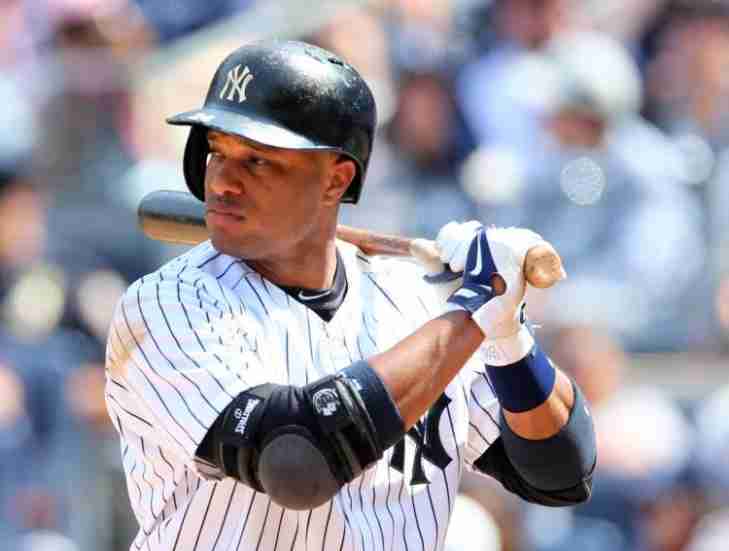
When Robinson Canó assumed daily second base duties in the Bronx in May 2005, manager Joe Torre noted that the rookie's smooth and effortless presence at the plate reminded him of Hall of Famer Rod Carew. Canó not only met those high expectations but also spent nine seasons showcasing a rhythmic, pure hitting style that made him one of the most visually appealing and effective second basemen to step into a Yankee Stadium batter's box.
Canó showcased a relaxed yet precise hitting style. His remarkably quick and smooth left-handed swing allowed him to easily line outside fastballs into left field or turn on inside pitches with sudden power, establishing his dominance over American League pitching. During his time in New York, he surpassed the .300 batting average seven times and narrowly missed the AL batting title in 2006 with an impressive .342 average. Each year, he acted as a key, high-pressure hitter in the heart of the lineup, consistently accumulating high hit totals, including four straight seasons (2009-2013) with over 190 hits.
While Canó's contact rate was truly impressive, he also brought a lot of power to the middle infield. He surpassed 25 home runs in five straight seasons, hitting a career-high 33 home runs and batting in 94 RBIs in 2012, his standout year. As a key player on the 2009 World Series-winning team, he boosted the franchise with a .320 batting average and 204 hits during the regular season, contributing to their 27th world championship.
On the grass, his defensive skills were just as smooth. Canó displayed a remarkably relaxed and loose glove style, often making seemingly impossible backhand catches or off-balance throws across his body appear effortless. He confidently led the double-play pivot, earning two Gold Glove Awards and two Wilson Defensive Player of the Year honors, solidifying his reputation as a top two-way player in the American League.
The 2013 schedule marked a sudden end to his run in pinstripes. The free-agent superstar, seeking a historic decade-long deal that the New York front office hesitated to offer, shocked baseball by signing a 10-year, $240 million contract with the Seattle Mariners. It was a sad moment for Bronx fans as they saw their homegrown star leave in his prime.
With the Yanks, Canó compiled 1,649 hits, 375 doubles, 204 home runs, and a spectacular .309 batting average alongside five All-Star selections and five Silver Slugger Awards. While his subsequent career narrative grew heavily convoluted due to multiple performance-enhancing drug suspensions later in his journey, the sheer, unadulterated brilliance of his peak performance in pinstripes remains an indelible chapter of modern Yankee lore.
19. Willie Randolph
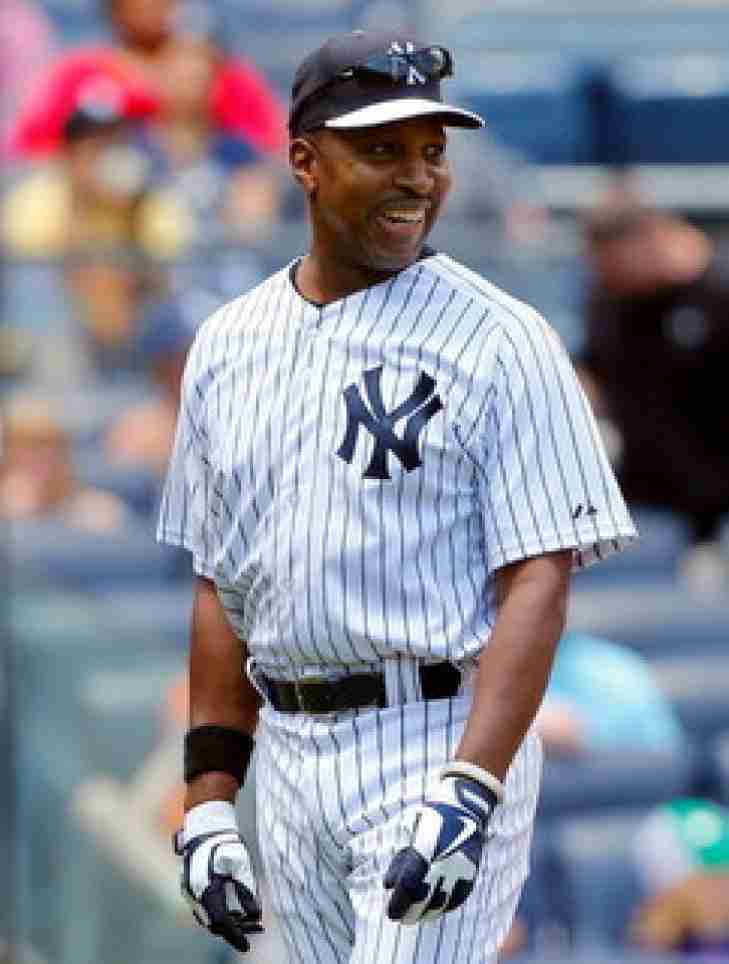
The Pittsburgh Pirates traded Willie Randolph to the Bronx prior to the 1976 season in what was the shrewdest trade by the Yankees brass in the 1970s. While the headlines and back pages were routinely dominated by the larger-than-life personalities of Reggie Jackson, Billy Martin, and George Steinbrenner, the 21-year-old rookie from Brooklyn quickly established himself as the quiet, unshakable foundation of the entire infield. He anchored second base for 13 consecutive seasons, displaying a level-headed professionalism that offered maximum stabilization during one of the most volatile stretches in franchise history.
Primarily batting second, Randolph epitomized selfless, high-quality situational hitting. While he lacked the raw, stadium-rousing power, his advanced plate discipline and excellent eye made him a top-tier catalyst for the power hitters behind him. His exceptional zone awareness enabled him to work deep counts, regularly exceeding the 80-walk mark and finishing as the American League's leading position player with 119 walks in 1980. He combined this remarkable on-base skill with proficiency in small-ball plays, executing bunts with precision and using his speed to steal 251 bases during his time with the Yankees.
His defensive skills truly made him stand out, transforming his value from just solid to legendary. Randolph was like a defensive wizard, with perfect positioning, quick footwork, and expert handling of the double-play pivot, making him one of the top second basemen of his era. Advanced stats strongly support his impact, with an impressive 19.4 defensive bWAR during his time in New York. Even with his consistent excellence in regular seasons, many still consider him arguably the greatest defender in modern history who never received a Gold Glove, a fact local fans still debate.
His quiet, lead-by-example approach earned him great respect across the clubhouse, culminating in management naming him the 12th franchise captain alongside Ron Guidry in March 1986. Randolph played a key role in the back-to-back World Series wins in 1977 and 1978, and his strong bond with the organization lasted well beyond his playing career. He returned as a coach in the Bronx under Buck Showalter and Joe Torre, helping steer the team to four more World Series titles, reaching a total of six championships with the Yankees.
His tenure with the Yankees concluded after the 1988 season when he signed with the Dodgers as a free agent. Over his 13 seasons in Bronx, he amassed 1,731 hits, scored 820 runs, and posted an impressive .373 on-base percentage. On June 15, 2015, during the Yankees' annual Old-Timers' Day, a bronze plaque was officially unveiled in his honor inside Monument Park, permanently honoring Randolph among the legendary figures of Bronx baseball.
17. Andy Pettitte
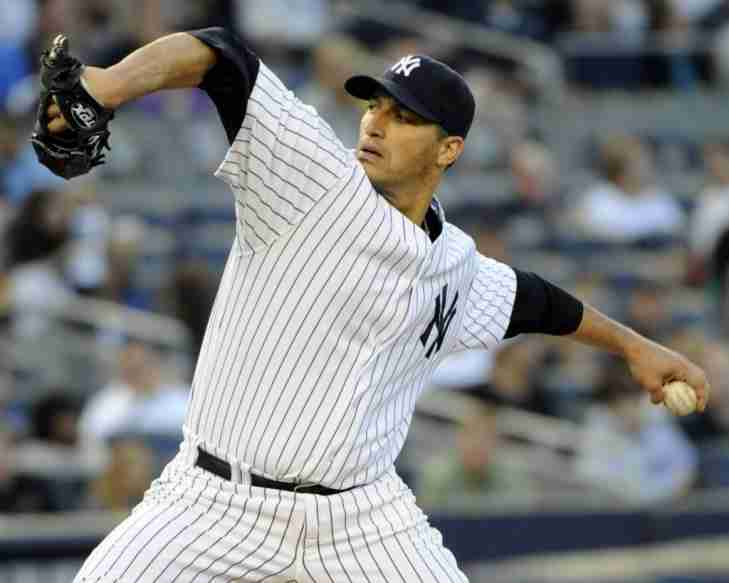
Andy Pettitte's arrival in spring 1995 didn't signal a hero's entrance, but his presence quickly established the core of the modern Yankees. As a rookie left-hander from Texas, he quietly earned a spot in the veteran rotation, known for his icy, focused stare over his glove and a deadly pickoff move to first base. That summer, he won 12 games, hinting at a durable, unyielding competitor who would, almost two decades later, become a symbol of pinstriped resilience.
His development from a dependable young pitcher to a top-tier competitor was evident by 1996. Pettitte delivered an outstanding regular season, leading the American League with 21 wins and pitching 221 innings, earning him the runner-up spot for the Cy Young Award. More critically, he proved himself as the ultimate clutch performer when the stakes were highest in October. In Game 5 of the World Series against the formidable Atlanta Braves, with elimination on the line, Pettitte pitched 8.1 innings without allowing a run in a famous 1-0 battle, changing the series dynamics and helping secure the first of four championships in a five-year span.
During the late 1990s and early 2000s, Pettitte was the backbone of the pitching rotation, thanks to his consistent, steady performance. He wasn't a strikeout pitcher who relied on high velocity, but he effectively limited opposing offenses and pitched deep into games. He earned four top-ten finishes in Cy Young voting in the Bronx and set the gold standard for postseason reliability. Whenever the Yankees faced a losing streak or needed a crucial win, Joe Torre often trusted him with the ball. He ended his career with an unprecedented 19 postseason wins, 18 with the Yankees, a record that still stands unmatched.
A short, three-year break to Houston interrupted his career, but he returned to the Bronx in 2007 to wrap up his playing days. During this second period, his legacy faced its greatest challenge. When the Mitchell Report implicated him in late 2007 for using human growth hormone to heal an elbow injury, Pettitte didn't evade questions or make vague excuses. Instead, he held a press conference alone at spring training, took full responsibility, apologized sincerely to fans and teammates, and answered every question honestly. By being completely transparent, he maintained the utmost respect from the clubhouse and fans.
His return was validated in 2009 when veteran Pettitte proved to be the steady force for a redesigned team, leading them to division, pennant, and World Series wins, ultimately securing the franchise’s 27th championship. After a brief retirement following 2010, he returned for two more tough but successful seasons before retiring for good in September 2013 with 219 wins and 2,020 strikeouts in pinstripes.
His status as a crucial symbol of the dynasty was solidified in August 2015, when the Yankees honored him by dedicating his plaque in Monument Park and permanently retiring his number 46 jersey.
18. Charlie Keller
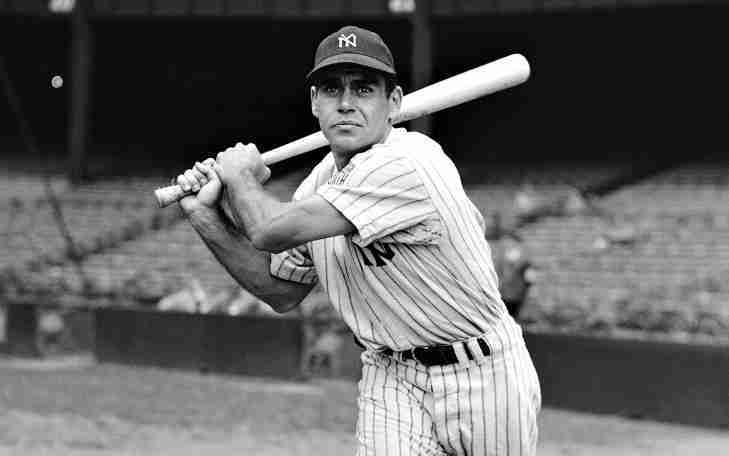
In spring 1939, when Charlie Keller earned his spot on the Bronx starting lineup, he teamed up with Joe DiMaggio and Tommy Henrich to create a formidable, championship-quality outfield trio. The heavily muscled 22-year-old left fielder from the University of Maryland, recognized for his broad shoulders and dark, thick eyebrows, was quickly dubbed "King Kong"—a nickname he detested, preferring to let his refined and patient batting style speak for itself.
While the sporting audience focused on his raw, muscular strength, Keller’s true skill was in his highly disciplined strike zone management, which effectively balanced his role as a run producer. He deliberately did not expand his zone against aggressive pitchers, drawing walks with the precision of a top-of-the-order hitter while still providing the power needed for a cleanup hitter, as demanded by manager Joe McCarthy. Keller surpassed 100 walks in four different seasons and led the American League twice in free passes. This exceptional plate discipline resulted in seven seasons with an on-base percentage over .400, including six finishes among the league's top ten.
He combined disciplined, everyday play with powerful extra-base hitting. Keller surpassed 20 home runs five times during his main tenure in New York, with his peak season in 1941 when he hit 33 homers and had a career-high 122 RBIs, helping the team become world champions. His offensive strength was clearly confirmed in 1943; despite wartime roster challenges reducing the talent pool, Keller dominated the league by hitting 31 home runs, drawing 106 walks, and leading the American League with a .922 OPS, guiding the Yankees to another pennant.
He was a fierce big-game performer who approached the Fall Classic as if it were an afternoon game. In the 1939 four-game sweep of Cincinnati, the rookie outfielder batted .438 with three home runs. Over 19 World Series games for the Yankees, Keller achieved a remarkable .611 slugging percentage, with five homers and 18 RBIs, playing a key frontline role in winning five world titles (1939, 1941, 1943, 1947, and 1949).
Tragically, severe, chronic back injuries combined with a mandatory stint in the Merchant Marines during World War II completely robbed him of his ultimate career longevity, restricting his explosive physical movement just as he entered his athletic prime. Following a brief two-year stint in Detroit, he returned to the Bronx for a sentimental, two-game final farewell in 1952 before retiring to his Maryland farm.
While his overall traditional numbers might seem somewhat lower than those he his ranked ahead of, his overall value to the Yankees can’t be underestimated, though it often is. Keller had 184 Home Runs with a Slash Line of .286/.410/.518 as a Yankee.