
Site Admin
32. Tommy Henrich
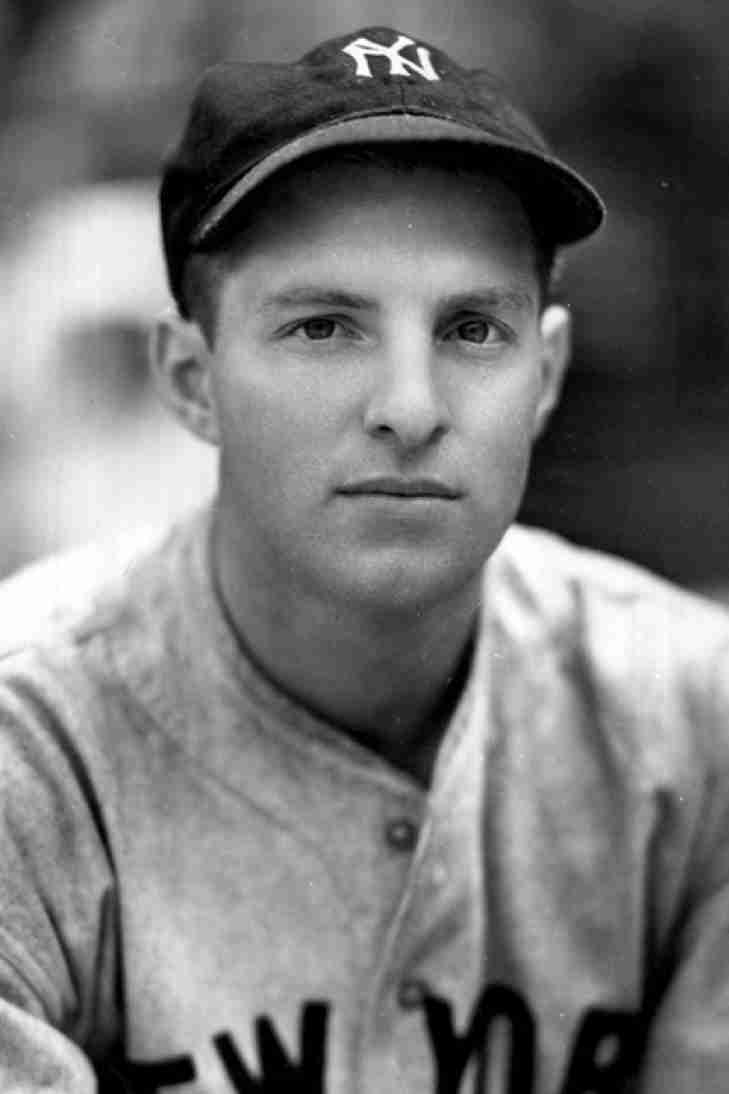
When legal issues in spring 1937 freed Thomas David Henrich from the Cleveland Indians' minor league system, a heated bidding war arose for the talented young outfielder. It was only through a personal meeting with Yankees business manager Ed Barrow that Henrich, a native of Ohio, agreed to sign with New York. This move proved to be a strategic victory for the franchise. By teaming up with Joe DiMaggio and Charlie Keller, Henrich completed the legendary outfield trio and proved himself to be the ultimate teammate, often saving his best performances for the most important moments.
His teammates and the New York press called him "Old Reliable" not just out of politeness. Henrich approached hitting with a calculated, intelligent approach, perfectly adjusting his smooth left-handed swing to take advantage of the short porch in right field at Yankee Stadium. He was an exceptional table-setter and run-producer, surpassing 20 home runs in four separate seasons and demonstrating impressive plate coverage that boosted his career on-base percentage to an outstanding .382. When he wasn't hitting home runs, he used an advanced visual clock to create scoring opportunities, leading the American League in triples twice and finishing the 1948 season with 138 runs scored, showcasing his all-around offensive prowess.
However, his regular-season stats only tell part of the story. Henrich's real legacy lies in his legendary capacity to perform under pressure. He was a dominant force on baseball's biggest stage, guiding the Yankees to four World Series titles (1938, 1941, 1947, and 1949).
His postseason achievements include a legendary performance in Game 1 of the 1949 Fall Classic against the Brooklyn Dodgers. In a scoreless, intense pitching duel during the ninth inning, Henrich faced Don Newcombe and hit a towering home run over the right-field wall. This was the first walk-off home run in World Series history, dramatically shifting the series momentum.
Similar to many of his contemporaries, his career was greatly affected by World War II, during which he gave up three peak seasons from 1943 to 1945 to serve in the United States Coast Guard. After returning to the Bronx in 1946, he quickly resumed his role as the dependable, professional backbone of the team.
A five-time All-Star, Henrich spent his entire 11-year major league career exclusively in a pinstriped uniform, retiring after the 1950 schedule with 1,297 hits, 183 home runs, and a spectacular, robust .282/.382/.491 slash line.
30. Mike Mussina
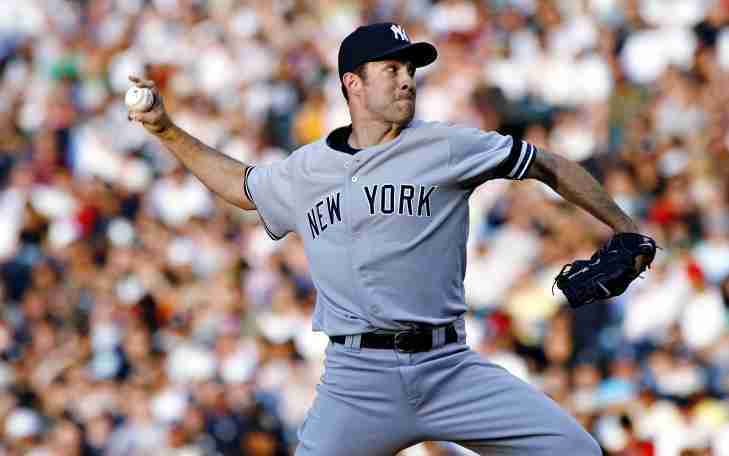
Mike Mussina joined the New York Yankees as a free agent in December 2000, after a decade with the Baltimore Orioles. Moving from Oriole Park to Yankee Stadium didn't change his relentless, efficient style. With an Ivy League-caliber mind, an elite visual clock, and a signature knuckle-curveball, "Moose" spent eight seasons delivering durability during a transitional era for the Yankees’ pitching staff.
He didn't rely solely on raw, overpowering velocity to dominate American League lineups. Instead, he carefully dissected hitters by consistently varying eye levels and adjusting his pitch speeds. During his time in New York, he surpassed 200 innings four times, providing a reliable and steady presence for manager Joe Torre. Interestingly, despite his significant regular-season contributions, he was never chosen for an All-Star team while with the Yankees, a rare quirk largely due to the strength of AL pitching in mid-summer rather than his performance. He focused on winning, piling up five seasons with over 15 victories and recording 1,278 strikeouts in a Yankees uniform.
On the grass, his execution set the standard for defensive excellence. Mussina showcased lightning-fast reflexes and superb spatial awareness, transforming into a highly effective fifth infielder immediately after releasing the ball. He earned three Gold Glove Awards as a Yankee (2001, 2003, and 2008), regularly halting opposing running attempts and ensuring the infield defense remained solid during critical moments.
Throughout his entire stay in New York, he demonstrated exceptional skill, and his final on-field appearance in 2008 served as a memorable, mic-drop moment. At age 39, pitching in the highly competitive American League East, Mussina delivered a masterful display of durability and accuracy. He started 34 games, pitched 200.1 innings, and confused opponents to earn exactly 20 wins for the first time in his impressive 18-year career. Instead of using this historic achievement to pursue lucrative late-career contracts, he chose to retire on his own terms at the peak of his abilities.
In pinstripes, Mussina had a 123–72 record, alongside a 3.88 ERA across his 244 starts. Mussina was elected into the Baseball Hall of Fame in 2019.
29. Earle Combs
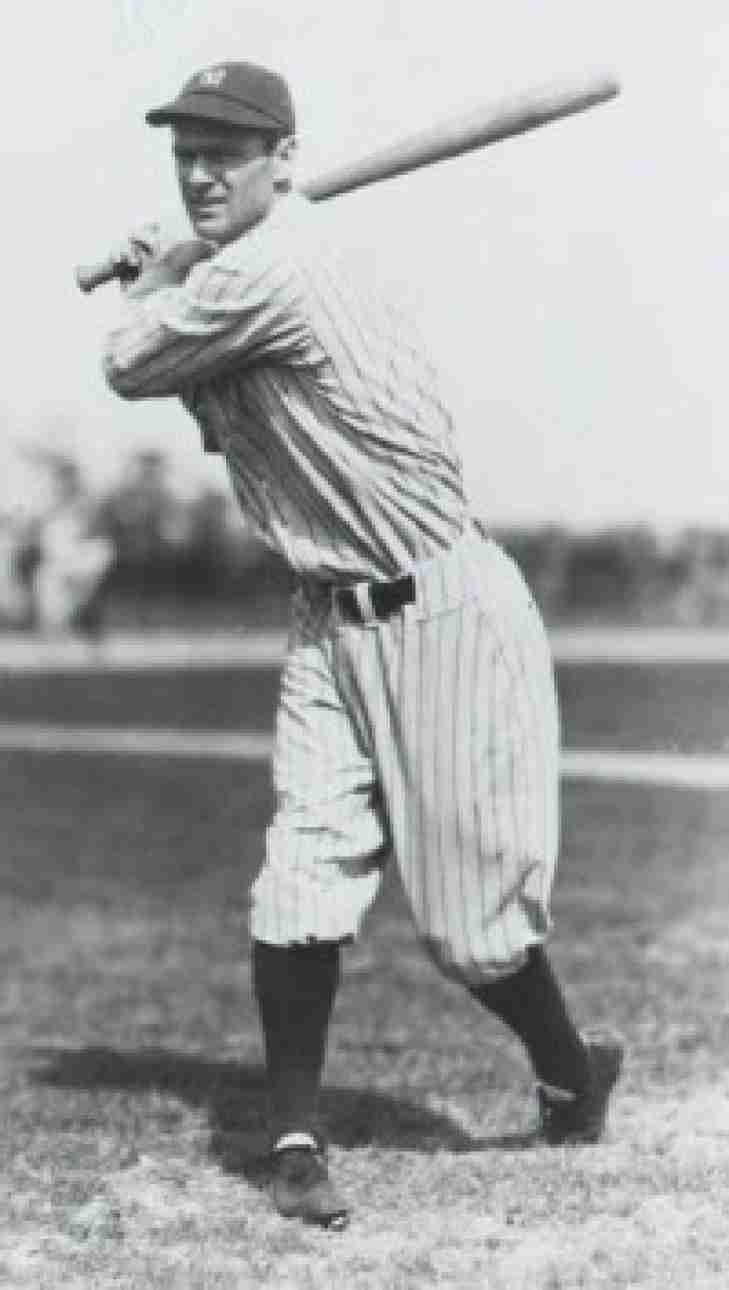
Earle Combs exuded a calm, scholarly dignity that sharply contrasted with the lively, flamboyant personalities of the roaring twenties. A former Kentucky schoolteacher who only made his major league debut at 24, "The Kentucky Colonel" quickly became a key figure in forming the most formidable lineup ever. As the regular center fielder and leadoff hitter for the legendary 1927 "Murderers' Row,” his main role was straightforward yet vital: to reach base before Babe Ruth and Lou Gehrig.
Debuting in 1924, Combs performed with remarkable, consistent efficiency, establishing himself as one of baseball's top table-setters. His quick, level left-handed swing allowed him to systematically dismantle junior league pitching. Achieving over a .300 batting average for eight straight seasons, he finished with an impressive career average of .325. Combining this elite contact ability with disciplined plate discipline and an exceptional visual sense, he surpassed the .400 on-base percentage mark six times.
Though primarily a traditional table-setter, Combs had a lively, high-speed running style that transformed ordinary hits into additional bases. He excelled at exploiting the wide open spaces of Yankee Stadium, leading the American League in triples three times. His best season was in 1927, when he amassed a league-high 231 hits and 23 triples, and scored 137 runs, providing a constant, high-pressure edge for the middle of the lineup.
On the grass, his defensive range was legendary. Combs covered center field with a swift, gliding stride that allowed him to swallow up line drives and track down deep fly balls with complete confidence. His flawless execution provided maximum stabilization for three World Series championship rosters as a player (1927, 1928, and 1932).
Tragically, his playing career was cut short by a terrible on-field accident. On July 24, 1934, while chasing a fly ball against the St. Louis Browns in the heat, Combs collided with the unpadded concrete wall at Sportsman's Park. He suffered a fractured skull, broken shoulder, and knee injury that nearly killed him. Despite battling back to play briefly in 1935, the damage forced his early retirement at 36.
He left the diamond with 1,866 hits, 309 doubles, 154 triples, and a.397 on-base percentage. His knowledge and dedication kept him in the Bronx as a respected coach for another decade. As a trusted observer for managers Joe McCarthy and Bucky Harris, Combs helped guide future stars like Joe DiMaggio to six more championships, earning nine World Series rings in a New York uniform.
In 1970, the Veterans Committee officially elected Combs into the National Baseball Hall of Fame.
27. Roy White
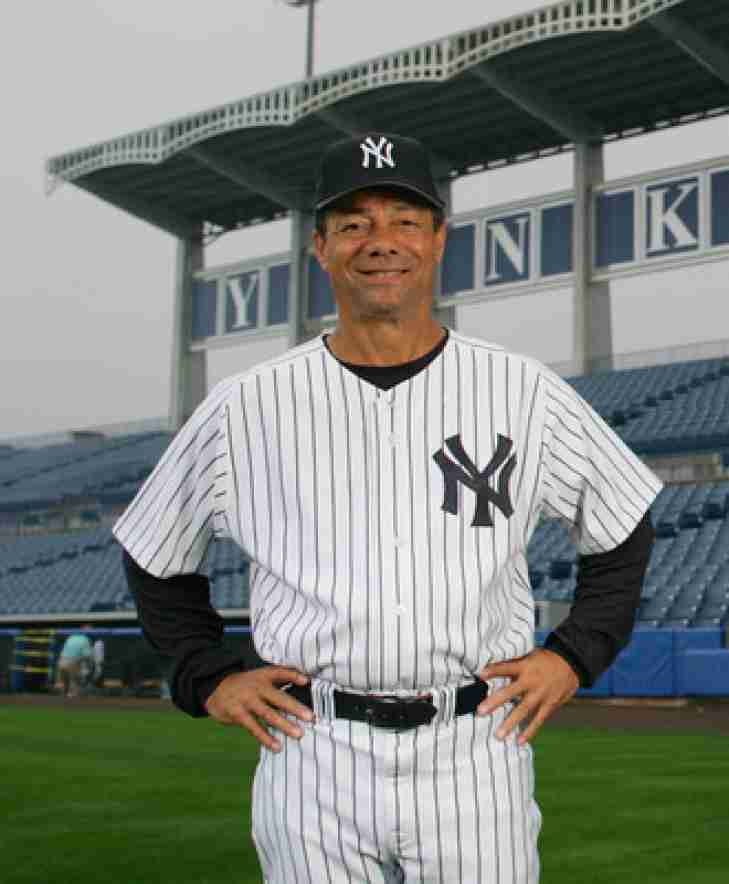
Roy White entered the Bronx clubhouse in September 1965, during the Yankees’ decline from their mid-century dynasty. While fans lamented the team's fall, White, a switch-hitter from Los Angeles, quietly became a steady bridge between two championship eras. With dignity, he endured rebuilding years before winning October titles.
White exemplified a masterful, quiet approach to situational hitting, balancing discipline and patience at the plate. With a highly disciplined visual clock and a rare patience, he avoided expanding his strike zone to appease impatient pitchers. During his time with the Yankees, he exceeded 70 walks seven times, including a standout 1972 season when he led the American League with 99 walks and posted an impressive .384 on-base percentage. Additionally, White demonstrated a unique ability to manufacture runs for his team; in 1971, he set a league record with 17 sacrifice flies, exemplifying a consistent, team-oriented focus that kept the offense active.
While his keen eye was his main weapon, White enhanced his play with a lively, multi-faceted presence on the bases and unexpected pop in his bat. He surpassed 15 home runs five times, including a career-high 22 during a remarkable 1970 All-Star season, when he also scored 109 runs and drove in 94. Once on base, he employed a highly effective running style that placed him in the junior circuit's top ten in power-speed seven times, leveraging his speed to amass 233 career stolen bases while playing for New York.
On the grass, his defense was the ultimate benchmark for late-game security. White held down left field with graceful, flawless movement, eventually appearing in 1,521 games at the position, the highest number by any left fielder in the franchise's long and star-studded history. His positioning and consistent play offered crucial stability as the team grew into a powerhouse again in the late 1970s. White was the experienced, professional presence that anchored the back-to-back World Championship teams in 1977 and 1978, providing vital steadiness alongside the more flamboyant, prominent figures of the "Bronx Zoo.”
He ended his 15-year major league career after 1979, then went to Japan to play with the Yomiuri Giants. He left the Bronx with notable stats: seventh in games played (1,881), eighth in walks (934), and career totals of 1,803 hits, 160 home runs, and a .360 on-base percentage.