
Site Admin
46. Granny Hamner
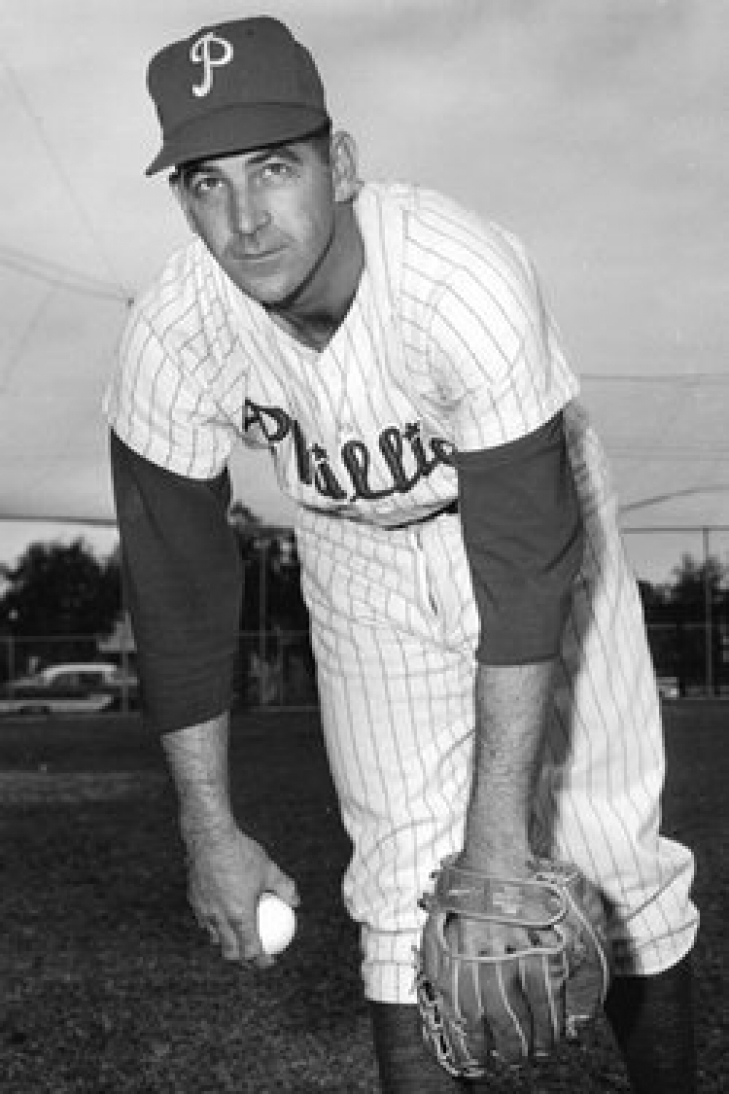
The wartime roster shuffle of the mid-1940s prompted many organizations to fast-track prospects before they were fully physically or tactically ready. Granny Hamner serves as a compelling example. Signed from Virginia as a very raw 17-year-old talent, he was thrown into the major leagues during the 1944 season and set an unbreakable record in 1945 as the youngest player to start on Opening Day. Although these early appearances revealed his developmental gaps, Hamner worked systematically to improve, earning the regular shortstop position by 1948. He quickly matured into the gritty, vocal leader and team captain of the popular 1950 "Whiz Kids”.
His consistent presence at the middle of the field during the franchise's golden era showcased unmatched durability. Hamner made taking the field a daily habit, anchoring the infield during a remarkable period from 1949 to 1954, when he ranked among the top ten shortstops in the National League for defensive assists and double plays.
Far from a passive defender, his advanced efficiency filters were highly effective; his perfect positioning and raw arm strength earned him steady recognition among the top defensive bWAR anchors in the Senior Circuit, helping stabilize the field for elite arms like Robin Roberts and Curt Simmons.
However, measuring Hamner’s impact only by his defensive stats overlooks the highly effective middle-of-the-order power he consistently displayed at his peak. He recorded six straight seasons with at least 150 hits and was a key run-scorer, finishing with over 80 RBIs four times, a significant amount of production for an infielder in the post-war period.
His national profile and local prominence reached their peak during a remarkable three-year period from 1952 to 1954, when he was selected for the National League All-Star team three consecutive years. Notably, he secured starting positions at two different positions: shortstop in 1952 and second base in 1954.
Although his elite regular-season performance was a key factor for the team, his reputation in crucial games became legendary during the 1950 Fall Classic against the highly favored New York Yankees. Even though the young Whiz Kids were ultimately swept in four close games, Hamner delivered an outstanding offensive display, dominating the Bronx bombers with a remarkable .429 batting average and three extra-base hits.
The main reason his overall historical valuation hits a ceiling under modern analysis is his low-efficiency on-base approach. Known for his aggressive, high-velocity swing, Hamner seldom sought free passes, resulting in a lengthy 1,501-game career in red pinstripes with a modest .305 on-base percentage that significantly limited his run-creation potential.
Evaluating his extensive real estate in franchise history solely by traditional stats like on-base percentage fails to capture the powerful influence of his leadership and long career. He ultimately left via a trade to Cleveland halfway through the 1959 season, leaving an outstanding record of 1,518 hits and 103 home runs.
In 1987, he was chosen for the Philadelphia Wall of Fame.
Hit the Road Jack
October 9 – 22, 1961
Ray Charles
Hit the Road Jack
42. Al Orth
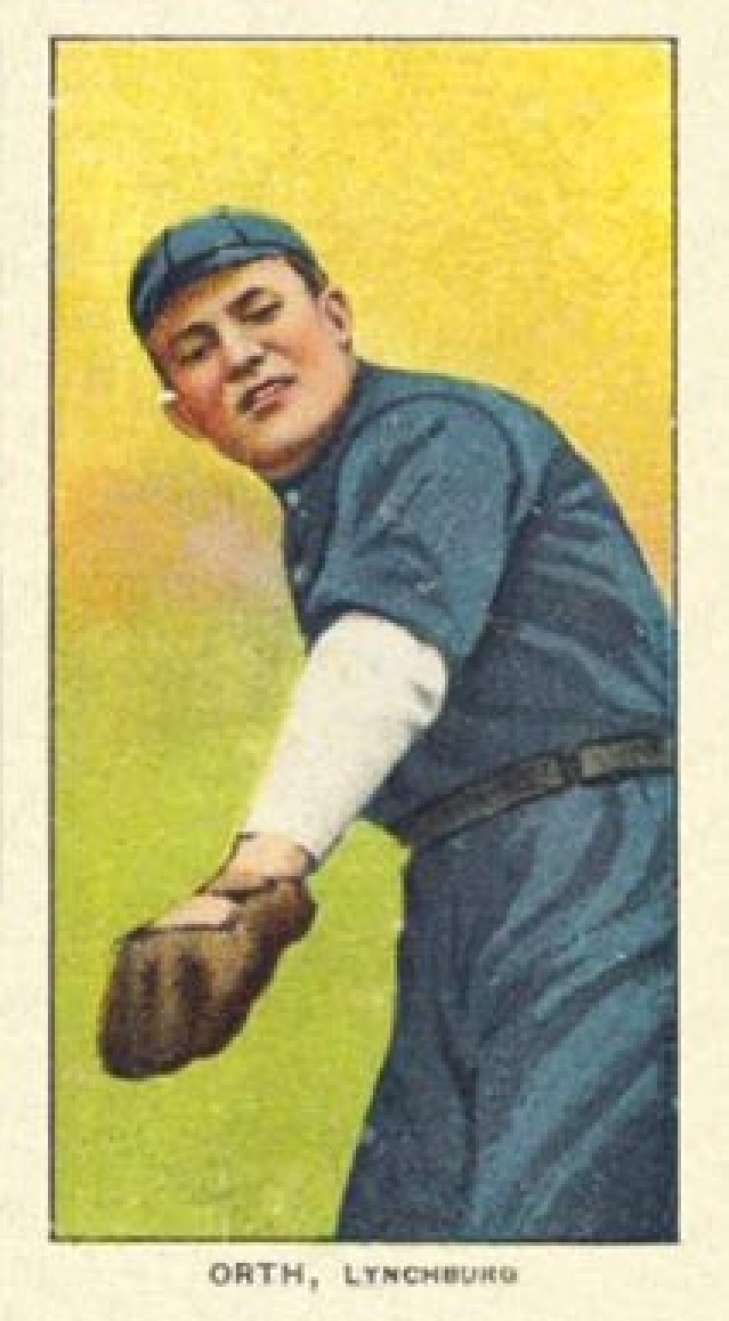
Historians often identify the early roots of the franchise as a transitional period around the 20th century. However, Albert Lewis Orth shaped that era with exceptional pitching accuracy. Known as "The Curveless Wonder," the right-handed control ace challenged typical practices of his time. Unlike competitors who relied on powerful breaking balls, Orth systematically broke down National League lineups by expertly varying pitch speeds, precisely placing his pitches, and conserving his bullpen's stamina.
Moreover, his most notable season didn't come late with the New York Giants; instead, his peak occurred with the New York Highlanders (later known as the Yankees), when he achieved a 27-win season in 1906. However, the crucial foundation of his 204-win major league career was entirely built during his time with Philadelphia's team, wearing pinstripes.
Entering the Virginia League midway through the 1895 season, Orth quickly established himself as an effective pitcher, achieving wins with apparent ease and consistency. He started strong with an impressive streak of eight straight wins, and concluded his first summer in the majors with a record of 8-1. What followed was an exceptional, high-volume display of consistency that firmly places him among the organization's top leaders. Orth then achieved six consecutive regular seasons with at least 14 wins for the Phillies, demonstrating reliability as a dependable starter who took the mound without hesitation.
The absolute pinnacle of his Phillies run converged during the historic 1901 campaign, where his advanced efficiency metrics reached a spectacular, league-wide peak. Orth cruised to a brilliant 20-12 record across 33 starts, executing a masterclass in run prevention to the tune of a career-best 2.27 ERA.
He didn't just suppress runs; he effectively shut down the free-pass market. Orth led all of Major League Baseball by posting an outstanding 1.000 WHIP and a tiny 1.0 walks per nine innings, giving up only 32 walks over 281.2 tough innings.
What truly made Orth an iconic figure of the Deadball Era was his remarkable skill with a bat. He was a formidable left-handed hitter who took great pride in his offensive contributions, often serving as a high-leverage pinch-hitter and occasionally playing in the outfield or the left side of the infield to stay active at the plate. Over his seven winters on Broad Street, he excelled against opposing pitchers, posting a superb .294 batting average, highlighted by a standout 1895 season where he hit .356.
Like many key players from that early roster, Orth moved to the fledgling American League before the 1902 season, signing with the Washington Senators. He left Philadelphia with an impressive record of 100 wins and 72 losses, supported by 140 complete games and a solid 3.47 ERA.
45. Elmer Flick
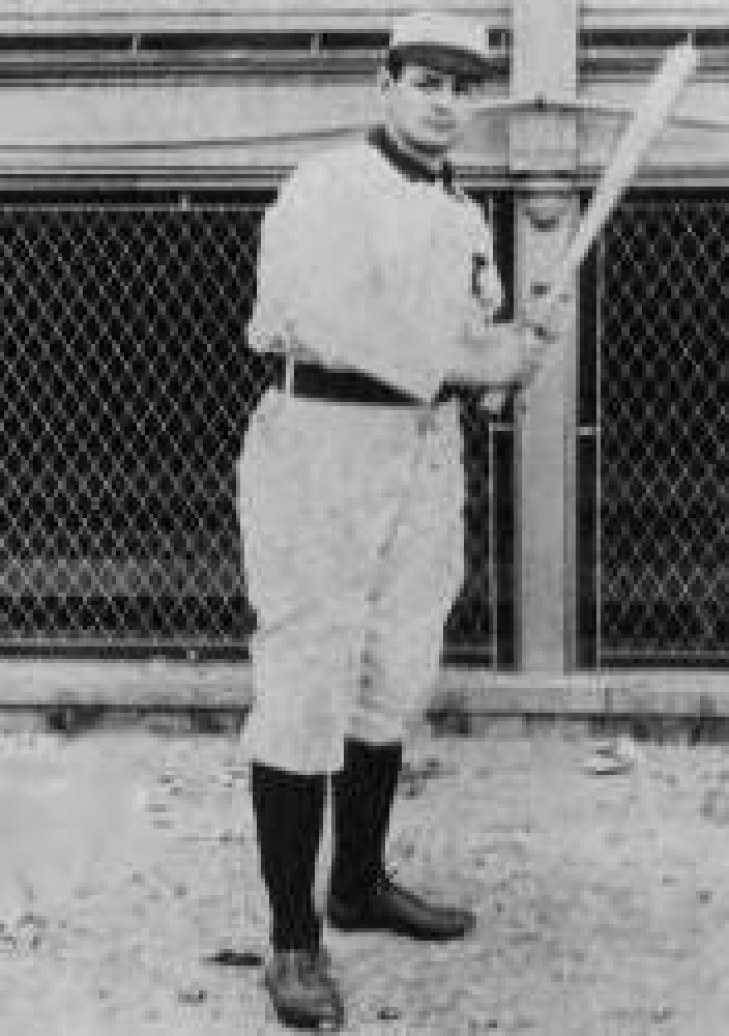
The detailed historical record of early 20th-century baseball features legendary figures deeply connected to the American League's origins. However, Elmer Flick’s greatness was built entirely during his time in Philadelphia. Although history primarily recalls "The Demon of the Stick" as a Cooperstown hero who reached his peak in Cleveland, it overlooks the exceptional and efficient debut he had in the majors during his four years with red pinstripes.
Arriving in 1898 to replace the injured Sam Thompson, the stocky, quick outfielder from Ohio not only survived but also mounted a vigorous offensive against National League pitching.
Flick turned offensive run creation into an absolute regular-season routine from the moment he arrived on Broad Street. Over his brief 537-game tenure with the Phillies, he orchestrated a breathtaking, high-volume .338/.419/.487 slash line, accumulating 683 hits, 102 doubles, and 57 triples.
The highlight of his time in Philadelphia was during a historic 1900 season, where he stood out as a top league performer. Flick delivered an outstanding offensive performance, hitting .367 with 11 home runs and a personal best of 200 hits, while leading the Senior Circuit with 110 RBIs. He paired his powerful middle-of-the-order batting with impressive speed, stealing 35 bases and successfully outpacing opponents.
Despite his impressive individual record, Flick’s time in Philadelphia was dramatically interrupted by intense political rivalry between the established National League and the emerging American League. After a stellar 1901 season where he scored 112 runs, he was drawn by the lucrative prospects of the new league and, along with teammate Napoleon Lajoie, transferred to Connie Mack’s Philadelphia Athletics before the 1902 season.
The transaction led to an immediate and historic legal upheaval. Enraged by losing his top players, Phillies owner Colonel John I. Rogers sued, leading to a case that reached the Pennsylvania Supreme Court. In April 1902, the court issued a broad injunction preventing the defecting players from playing for any team other than the Phillies within Pennsylvania.
After Flick logged a mere 11 games in an Athletics uniform, American League president Ban Johnson executed a brilliant, low-variance loophole. Recognizing that the state injunction was unenforceable beyond Pennsylvania's borders, the league abruptly assigned Flick and Lajoie to the Cleveland Bronchos (later the Naps). He would play the rest of his career in Cleveland, and in 1963, he was elected to the Baseball Hall of Fame.