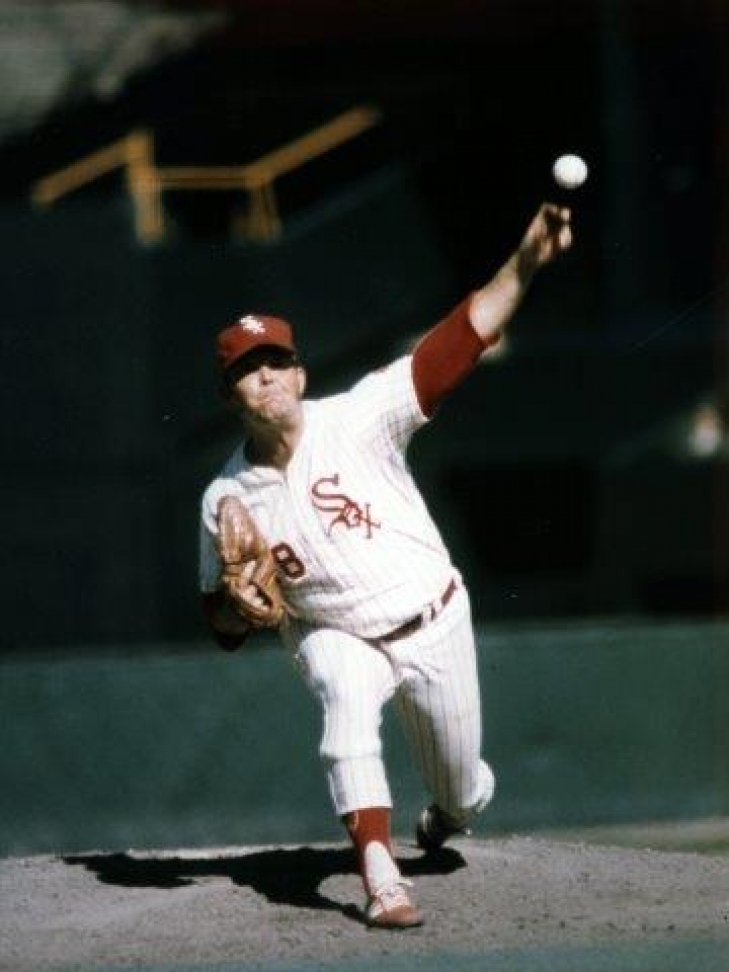
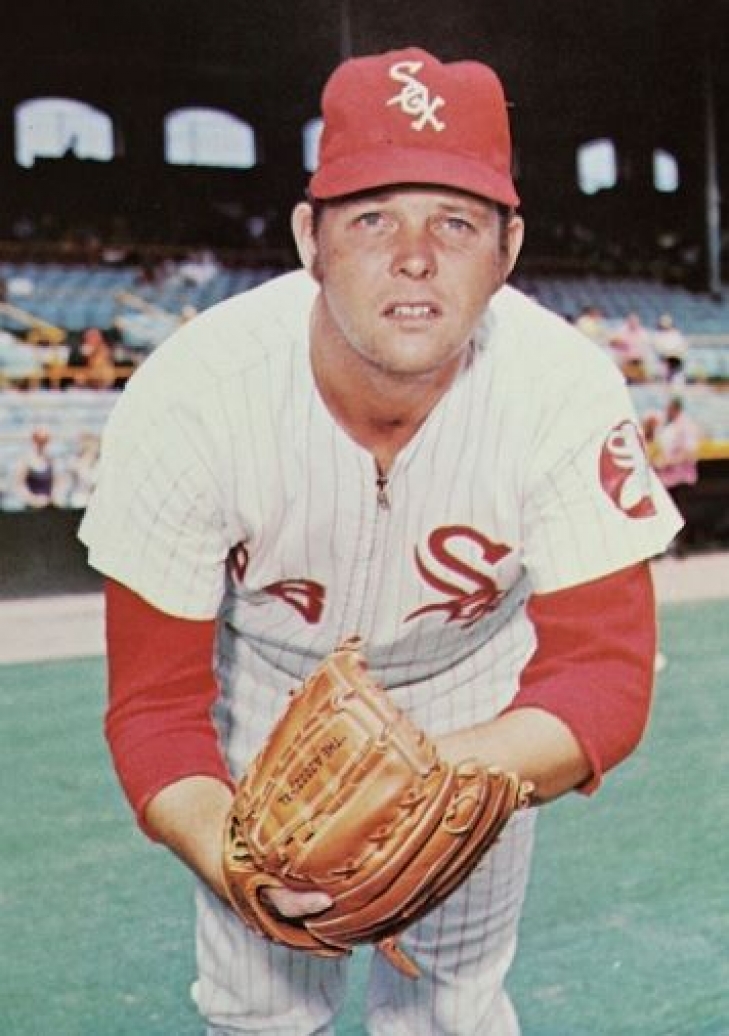
When Wilbur Wood was acquired from the Pittsburgh Pirates in 1966 for a player to be named later, the transaction barely registered as a footnote in the local papers. He arrived as a 25-year-old who had spent years oscillating between the majors and minors, unable to find a permanent home or a consistent out-pitch. However, the trajectory of his career changed forever when he crossed paths with the legendary Hoyt Wilhelm. Under Wilhelm’s tutelage, Wood fully committed to the knuckleball, a decision that would transform him from a roster afterthought into the busiest man in baseball.
His initial residency in Chicago was defined by a record-breaking stint in the bullpen. Starting in 1968, Wood became the league’s most frequent visitor to the mound, leading the American League in appearances for three consecutive seasons. In '68 alone, he set a then-Major League record by pitching in 88 games, proving that his knuckleball didn't just dance, it allowed him to throw nearly every other day without the typical wear and tear of a power pitcher. He was the ultimate safety net for the South Side pitching staff, a man who arrived as a specialist and left the bullpen as a statistical outlier.
The middle chapter of Wood’s tenure saw a daring transition as the White Sox moved their relief ace into the starting rotation in 1971. The results were immediate and historic. Over the next four years, Wood embarked on a run of durability that feels like a relic from the Deadball Era. He rattled off four consecutive 20-win seasons, twice leading the league in victories with 24. In 1972 and 1973, he eclipsed 350 innings pitched in each campaign—numbers that are virtually extinct in the modern game. He was an All-Star fixture and a perennial Cy Young contender, peaking as the runner-up in 1972, serving as the stoic anchor for a franchise that relied on his ability to take the ball every three days.
The final walk toward the exit was dictated not by a fading arm, but by a freak accident. In May of 1976, a screaming line drive off the bat of Ron LeFlore shattered Wood’s kneecap, an injury that robbed him of the stability required to drive his signature pitch. While he showed immense grit by returning to the mound, the magic of the knuckleball had lost its edge. He retired after the 1978 season with 163 wins and over 2,500 innings in a White Sox uniform. He arrived as an anonymous trade piece and left as one of the most prolific hurlers in franchise history, the man who proved that a dancing pitch could carry an entire organization on its back.