Menu
A+ A A-

The 2028 Baseball Futures are up!

As always, at Notinhalloffame.com, we are moving forward. Our Baseball Futures Section now includes those eligible for the National Baseball Hall of Fame in 2028.

The entire list of candidates in 2028 is here, but individually, they are:

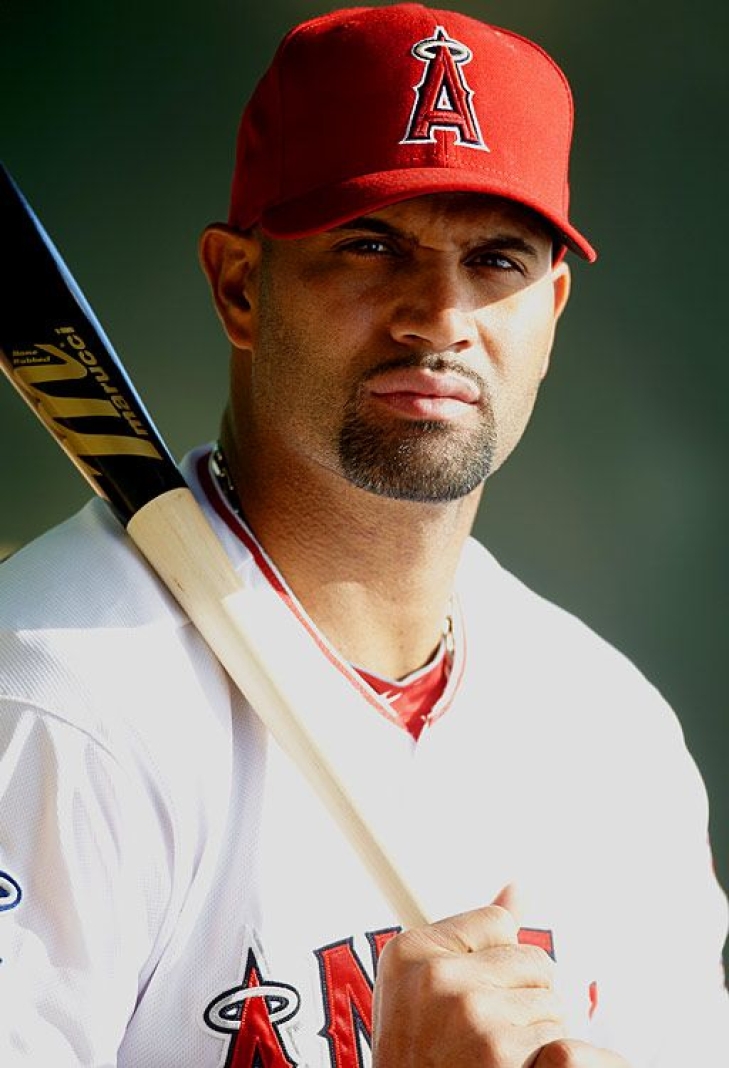
Albert Pujols:  A lock for the Baseball Hall as a potential unanimous pick, Pujols won two World Series Rings with the St. Louis Cardinals, won three MVPs, six Silver Sluggers, two Gold Gloves, and was an 11-time All-Star.  He left the game with 703 Home Runs, 2,218 RBIs, and 3,384 Hits with a lifetime .544 Slugging Percentage.

Alcides Escobar:  A Shortstop who won a World Series Title with the Kansas City Royals, Escobar was a one-time All-Star.  He is also a former ALCS MVP and had nearly 1,500 Hits.

Andrelton Simmons:  Simmons was an excellent defensive Shortstop who won four Gold Gloves a Platinum Glove, and was a three-time league leader in Defensive bWAR.

Anibal Sanchez:  Sanchez had his best years with the Detroit Tigers but won a World Series with the Washington Nationals in his last season.  The Venezuelan Pitcher had a lifetime record of 116-119 and 1,774 Strikeouts.

Chris Archer:  Archer was a two-time All-Star as a Pitcher who fanned 1,454 batters.

David Price:  A Cy Young winner with the Tampa Bay Rays in 2012, Price was also a five-time All-Star who later won a World Series with the Boston Red Sox.  He had an overall record of 157-82 with 2,076 Strikeouts.

Dee Strange-Gordon:  Strange-Gordon won three Stolen Base Titles, was twice named an All-Star, and won a Silver Slugger and Gold Glove.  DSG also captured the NL Batting Title in 2012.

Greg Holland:  A three-time All-Star on Kansas City’s 2015 World Series Championship, Holland was The Sporting News Pitcher of the Year in 2013 and the Mariano Rivera Award winner in 2014.  He had 220 career Saves.

Jed Lowrie:  Lowrie went to one All-Star Game and had 1,185 career Hits.

Joe Smith:  The long-time middle reliever appeared in over 800 Games and had 176 Games Finished.

Justin Upton:  Upton was a four-time All-Star, compiling 1,754 Hits, 325 Home Runs, and 1,003 RBIs.

Kurt Suzuki:  Suzuki went to one All-Star Game, and the Catcher would win a World Series with Washington in 2019.  He had 1,421 Hits.

Lorenzo Cain:  Cain was a two-time All-Star, winning a Gold Glove and a World Series Title with the Royals in 2015.

Mark Melancon:  Melancon twice led his league in Saves and was named by The Sporting News as their NL Pitcher of the Year in 2015.  He is also a four-time All-Star.

Oliver Perez:  Peres pitched for 20 seasons in the Majors and was the NL leader in 2004 in SO/9.

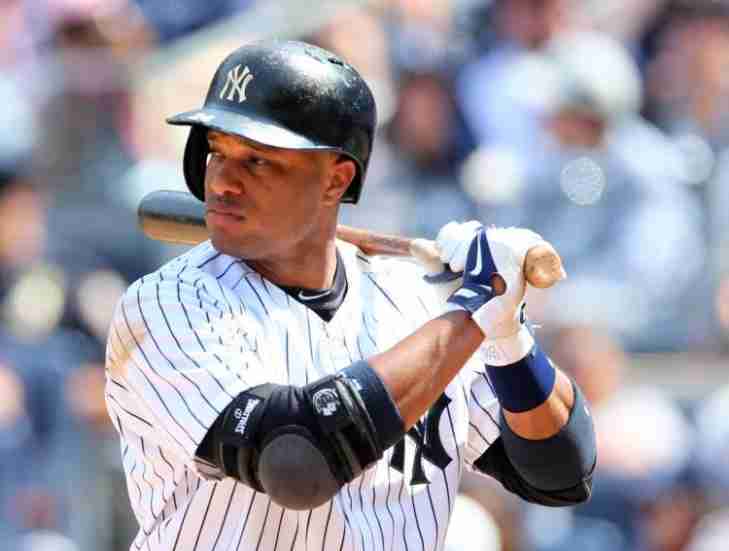
Robinson Cano:  Cano had a long career where he won a World Series with the Yankees, was an eight-time All-Star, and won five Silver Sluggers and two Gold Gloves.  He also had 2,639 career Hits.

Sean Doolittle:  A relief pitcher who twice was an All-Star, Doolittle retired as a champion with the Nationals in 2019.  He had 112 Saves.

Sergio Romo:  Best known for his three World Series rings with the San Francisco Giants, Romo was a one-time All-Star who appeared in 821 Games.

Steve Cishek:  Cishek had a long career coming out of the bullpen where he appeared in 737 Games.

Steven Strasburg:  Strasburg was the World Series MVP for Washington when they won their first World Series.  The oft-injured hurler went to three All-Stars and had a record of 113-62.

Tyler Clippard:  Clippard was a 16-year veteran who was a two-time All-Star Relief Pitcher.

Yadier Molina:  Molina played his entire career with the St. Louis Cardinals, where the Catcher won two World Series Titles, nine Gold Gloves, four Platinum Gloves, one Silver Slugger, and was a ten-time All-Star.

Zack Britton:  Britton won the 2016 Sporting News Pitcher of the Year in 2016 as well as the Rivera Reliever Award.  The two-time All-Star had 154 career Saves.

You know what we want you to do!

Your votes and opinions are crucial in shaping the future of these candidates. We value your input and look forward to hearing your thoughts!

As always, we thank you for your support.

Robinson Cano

Robinson Cano, a phenomenal infielder from San Pedro de Macoris in the Dominican Republic, was signed by the New York Yankees in 2001. He made his debut in the pinstripes in 2005 and was the runner-up for American League Rookie of the Year. In the following year, Cano was an All-Star and Silver Slugger after batting .342. He played solidly for the next three seasons and helped the Yanks win the 2009 World Series. Although it was Cano's ultimate accomplishment in baseball, his best individual years were yet to come.

From 2010 to 2013, Cano was New York's best player, winning four Silver Sluggers and two Gold Gloves. He had at least 27 home runs and 94 RBIs in all those seasons. Cano kept his OPS well over .880 over this stretch and was also a perennial All-Star. Despite being a proven superstar, Cano left New York for Seattle in 2014.

Cano remained an upper-tier player for Seattle, earning All-Star spots in three of his first four years and finishing fifth in MVP voting in 2016 when he had 39 home runs and 103 RBIs. However, Seattle was going nowhere, and Cano was traded to the Mets. But at over 35 years old, he was clearly in decline. After an oft-injured 2019, Cano was much better in 2021, batting .316 in the shortened season. However, he lost the entirety of 2021 due to a PED suspension, which raises questions about his performance. Cano limped back with brief stints in New York (NL), San Diego, and Atlanta before quietly exiting the Majors after the 2022 season.

Cano's stats (2,639 hits, 335 HR, 1,306 RBI & 68.1 bWAR) make him worthy of the Hall of Fame. However, the fact that he was suspended twice for performance-enhancing drugs (PEDs) may prevent him from being inducted as no two-time or even one-time PED-suspended player has come close to being inducted into the Baseball Hall of Fame.

12. Robinson Cano

When a brave and ambitious front office team is eager to show that their franchise is ready to move past rebuilding and start competing with the top teams, they make a bold statement in the open market. In December 2013, the Seattle Mariners did just that, surprising the baseball world by signing star second baseman Robinson José Canó with a huge 10-year, $240 million deal. Coming to the Pacific Northwest with five All-Star appearances and a 2009 World Series ring from his time with the New York Yankees, this talented player, already over 30 years old, still had plenty of top-level skills to share with the fans in Emerald City. Over five intense seasons, he became the smooth, highly effective heartbeat of the Mariners' lineup, showing off his amazing hitting skills and graceful defense.

His first season in 2014 with the Mariners was truly impressive, showcasing his immediate impact and skill. Canó turned hitting into an art, smoothly adapting to Safeco Field’s big dimensions by collecting 187 hits and 37 doubles. He skillfully dismantled American League pitchers, achieving a fantastic .314 batting average, driving in 82 runs, and using his keen zone awareness to draw 61 walks. His efficient play powered the team’s offense, earning him his sixth straight All-Star nod and a proud fifth-place finish in the American League Most Valuable Player voting.

Despite dealing with serious gastrointestinal issues and a sports hernia that affected his power during a transitional summer in 2015, Canó truly reached his peak in an unforgettable 2016 season. Fully healthy and confidently swinging his signature, effortless left-handed bat, he showcased impressive power in the middle of the lineup. Over 161 games, he consistently worked deep counts and demonstrated his strength by setting a career high with 39 home runs, along with 195 hits, 33 doubles, and 103 RBIs. His excellent slash line of .298/.350/533 resulted in a strong .883 OPS and a 138 OPS+, proving that even as an experienced second baseman, his powerful bat speed remained highly dangerous. He continued this form with another remarkable season in 2017, hitting 23 home runs and driving in 97 RBIs, highlighted by a memorable All-Star Game MVP performance where he hit a game-winning, 10th-inning home run in Miami.

The final chapter of his time in Seattle reached a highly turbulent, legacy-altering crossroads in 2018. Just as he was putting together a stellar campaign, a fractured bone in his right hand from a hit-by-pitch was immediately followed by a shocking, 80-game suspension for violating Major League Baseball's Joint Drug Prevention and Treatment Program. Though he returned later that summer to finish with a robust .303 average and 10 home runs in 80 games, the organizational fallout prompted a sudden, blockbuster roster reconstruction.

Seeking to clear future financial obligations, the front office packaged the veteran star with closer Edwin Díaz in a large trade to the Mets that December, ending his residency. Canó left Seattle with a remarkable stats record, including 821 hits, 159 doubles, 107 home runs, and 411 RBIs over 704 games, with a .296/.353/472 slash line.

21. Robinson Cano

When Robinson Canó assumed daily second base duties in the Bronx in May 2005, manager Joe Torre noted that the rookie's smooth and effortless presence at the plate reminded him of Hall of Famer Rod Carew. Canó not only met those high expectations but also spent nine seasons showcasing a rhythmic, pure hitting style that made him one of the most visually appealing and effective second basemen to step into a Yankee Stadium batter's box.

Canó showcased a relaxed yet precise hitting style. His remarkably quick and smooth left-handed swing allowed him to easily line outside fastballs into left field or turn on inside pitches with sudden power, establishing his dominance over American League pitching. During his time in New York, he surpassed the .300 batting average seven times and narrowly missed the AL batting title in 2006 with an impressive .342 average. Each year, he acted as a key, high-pressure hitter in the heart of the lineup, consistently accumulating high hit totals, including four straight seasons (2009-2013) with over 190 hits.

While Canó's contact rate was truly impressive, he also brought a lot of power to the middle infield. He surpassed 25 home runs in five straight seasons, hitting a career-high 33 home runs and batting in 94 RBIs in 2012, his standout year. As a key player on the 2009 World Series-winning team, he boosted the franchise with a .320 batting average and 204 hits during the regular season, contributing to their 27th world championship.

On the grass, his defensive skills were just as smooth. Canó displayed a remarkably relaxed and loose glove style, often making seemingly impossible backhand catches or off-balance throws across his body appear effortless. He confidently led the double-play pivot, earning two Gold Glove Awards and two Wilson Defensive Player of the Year honors, solidifying his reputation as a top two-way player in the American League.

The 2013 schedule marked a sudden end to his run in pinstripes. The free-agent superstar, seeking a historic decade-long deal that the New York front office hesitated to offer, shocked baseball by signing a 10-year, $240 million contract with the Seattle Mariners. It was a sad moment for Bronx fans as they saw their homegrown star leave in his prime.

With the Yanks, Canó compiled 1,649 hits, 375 doubles, 204 home runs, and a spectacular .309 batting average alongside five All-Star selections and five Silver Slugger Awards. While his subsequent career narrative grew heavily convoluted due to multiple performance-enhancing drug suspensions later in his journey, the sheer, unadulterated brilliance of his peak performance in pinstripes remains an indelible chapter of modern Yankee lore.

Awards = HOF? Part Seven: The Silver Slugger (Second Base) (MLB)

We here at Notinhalloffame.com thought it would be fun to take a look at the major awards in North American team sports and see how it translates into Hall of Fame potential.

Needless to say, different awards in different sports yield hall of fame potential.  In basketball, the team sport with the least amount of players on a roster, the dividend for greatness much higher.  In baseball, it is not as much as a great individual season does not have the same impact.
Subscribe to this RSS feed