
- Published in Not in Hall of Fame News
The Pro Football Hall of Fame Revisited Project: 1950 FINAL VOTE
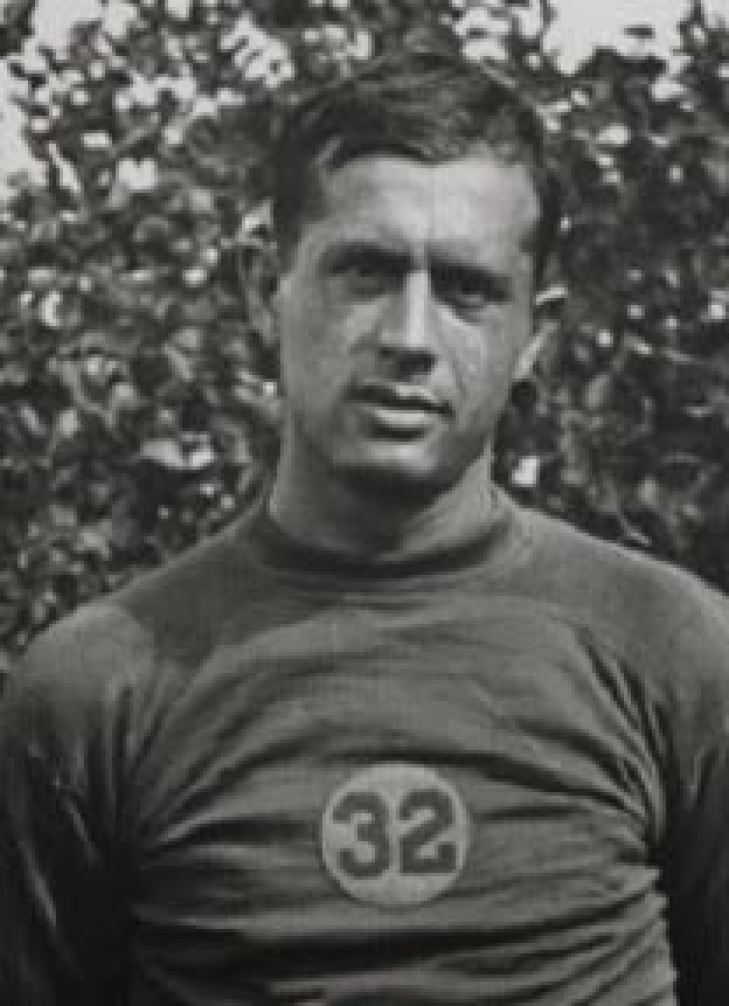
1950 Pro Football Hall of Fame Revisited Project Class.
Here we are! Again!!
If you have been following our Pro Football Hall of Fame Revisited Project, you know that we have asked the rhetorical question…what if the PFHOF began in January of 1946?
After soliciting and obtaining a passionate group of football fans and historians, we sent out a ballot for a Preliminary Vote, which we asked each voter to give us 25 names as their semi-finalists, and 5 in the Senior Pool. Following that, we asked the group to vote for their 15 Finalists in the Modern Era, and 3 in the Senior Category. The final stage was to vote for their five Modern Era inductee, one Senior inductee and one Coaches/Contributor inductee.
This is the result of the fifth official class;
Below, are the final results of this project based on 31 votes:
This is for the “Modern Era”
*Bold indicates they have been elected to the Pro Football Hall of Fame Revisited Class of 1950:
|
Player |
Year of Eligibility |
Vote Total |
|
Clark Hinkle FB-LB-HB-DB |
4 |
22 |
|
Verne Llewellen B |
13 |
17 |
|
Mike Michalske G-T-LB-BB |
8 |
15 |
|
Cliff Battles TB-FB-WB-DB |
8 |
14 |
|
Joe Guyon WB-TB-BB-FB |
18 |
13 |
|
Dutch Sternaman HB-QB-FB |
18 |
12 |
|
Ray Flaherty E-DE |
10 |
9 |
|
Bill Hewitt E-DE |
2 |
9 |
|
Ox Emerson G-C |
7 |
8 |
|
Jimmy Conzelman HB-TB-BB-E |
16 |
7 |
|
Tuffy Leemans FB-TB-DB-QB |
2 |
7 |
|
Red Badgro E-DE |
9 |
6 |
|
George Musso G-T |
1 |
5 |
|
Steve Owen T-G |
12 |
4 |
|
Walt Kiesling G-T |
7 |
3 |
This is for the “Senior Era”
As none of the Senior Candidates obtained 50 percent of the vote, no Senior Candidate was chosen. This is the first year where this rule was instituted. Please note that voters could also opt out of this vote, as per the request of members of the voting body.
|
Blondy Wallace |
5 |
11 |
|
Henry McDonald |
5 |
7 |
|
Gull Falcon |
5 |
4 |
This is for the Coaches/Contributors
*Bold indicates they have been elected to the Pro Football Hall of Fame Revisited Class of 1950:
|
Bert Bell |
1 |
15 |
|
Ralph Hay |
1 |
9 |
|
Joseph Carr |
1 |
6 |
About the 1950 Inductees:
Clark Hinkle FB-LB-HB-DB, GNB 1932-41: Inducted in 1950 on his 4th Ballot. Was inducted into the actual Pro Football Hall of Fame in 1964.
Clark Hinkle played all ten of his NFL seasons with the Green Bay Packers where his hard-nosed running style made him an indispensable part of the Packers offense. Often dueling with Chicago’s Bronko Nagurski, their battles were what Football in the upper mid-west was made of. Hinkle rushed for 3,860 Yards and 35 Touchdowns and was a First Team All-Pro four times. He also played at Linebacker, and was also Green Bay’s Punter and Kicker.
Verne Lewellen B, GNB 1924-27 & 1928-32, NYY 1927: Inducted in 1950 on his 5th Ballot (technically his 13th year of eligibility). Was never inducted into the actual Pro Football Hall of Fame.
One of the early stars of the Green Bay Packers, Verne Lewellen, was an all-purpose Back who did it all for Green Bay. The product of Nebraska (the state and the University) would be named to four straight First Team All-Pro squads (1926 to 1929) and was a large part of their three consecutive NFL Championships (1929 to 1931). While there is no video of Lewellen's lay to draw from, legendary figures like Art Rooney and George Halas extolled his virtues, and while stats were not well kept, it is believed he would have done well in box scores. We do know that he scored 37 Touchdowns, an incredible number for his day.
Mike Michalske G-T-LB-BB, NYY 1927-28, GNB 1929-35 & 1937: Inducted in 1950 on his 5th Ballot (technically his 8th year of eligibility). Was inducted into the actual Pro Football Hall of Fame in 1964.
Mike Michalske began his career with the New York Yankees, where the Penn State alumni was a First Team All-Pro in both of his seasons there. Michalske joined the Green Bay Packers where he revolutionized the Guard position by suggesting the Packers Coach, Curly Lambeau, that Fullbacks could be used in that role. An excellent blocker and hole producer, Michalske earned three more First Team All-Pros in Green Bay, and he won three straight NFL Championships (1929-31).
Cliff Battles TB-FB-WB-DB, BOS-WAS 1932-37: Inducted in 1950 on his 5th Ballot (technically his 8th year of eligibility). Was inducted into the actual Pro Football Hall of Fame in 1968.
Cliff Battles was an original member of the Washington Commanders (then-named Boston Braves), joining the team in their first year of existence, 1932, after the Akron native joined following college at West Virginia Wesleyan. Battles led the NFL in Rushing with 578 Yards as a rookie and was second in his sophomore year with 737. A First Team All-Pro in 1933 and 1934, Battles saved his best year for last. That was 1937, the first of the teams' relocation to Washington, and Battles won his second Rushing Title (874 Yards) and had the most Rushing Touchdowns with five. A substantial weapon in Sammy Baugh's offense, Battles helped lead Washington to the NFL Championship, and he was a First Team All-Pro for the third time.
Joe Guyon WB-TB-BB-FB, CAN 1920, CLE 1921, WAS 1921, OOR 1922-23, RII 1924, KAN 1925, NYG 1927: Inducted in 1950 on his 5th Ballot (technically his 18th year of eligibility). Was inducted into the actual Pro Football Hall of Fame in 1965.
A teammate of Jim Thorpe at Carlisle, Joe Guyon would be named to the 1920’s All-Decade Team after an eight-year career that saw him play for seven different NFL Teams. The Back helped the New York Giants win the NFL Championship in 1927.
Bert Bell: Inducted in 1950 on the 1st Coaches/Contributor Ballot. Was inducted into the actual Pro Football Hall of Fame in 1965.
Bert Bell was the owner of the Philadelphia Eagles (1933-40), and later the co-owner of the Philadelphia Eagles (1941-46), but his induction was based on his role as the NFL Commissioner. Bell took on that role in 1946, and oversaw his league in their rivalry against the AAFC. He would broker the merger of the two leagues at the end of the 1949 Season (adding the Cleveland Browns, San Francisco 49ers and Baltimore Colts) and he was vehemently against gambling, ensuring repercussions to anyone who might tarnish the game by keeping the game’s integrity. Bell’s biggest contribution was his foresight in regards to the new medium of television. To ensure fans would go to the games, he initiated televised blackouts, and pioneered television “timeouts.” He recognized the NFL Player’s Union, against the will of the owners, realizing that it was for the betterment of the game. He remained the NFL Commissioner until he died in 1959. Under Bell, the game grew astronomically. Following his passing, the Maxwell Football Club (which was founded by Bell) awards their version of the MVP, which is named after Bell.