

Site Admin
35. Harry Howell
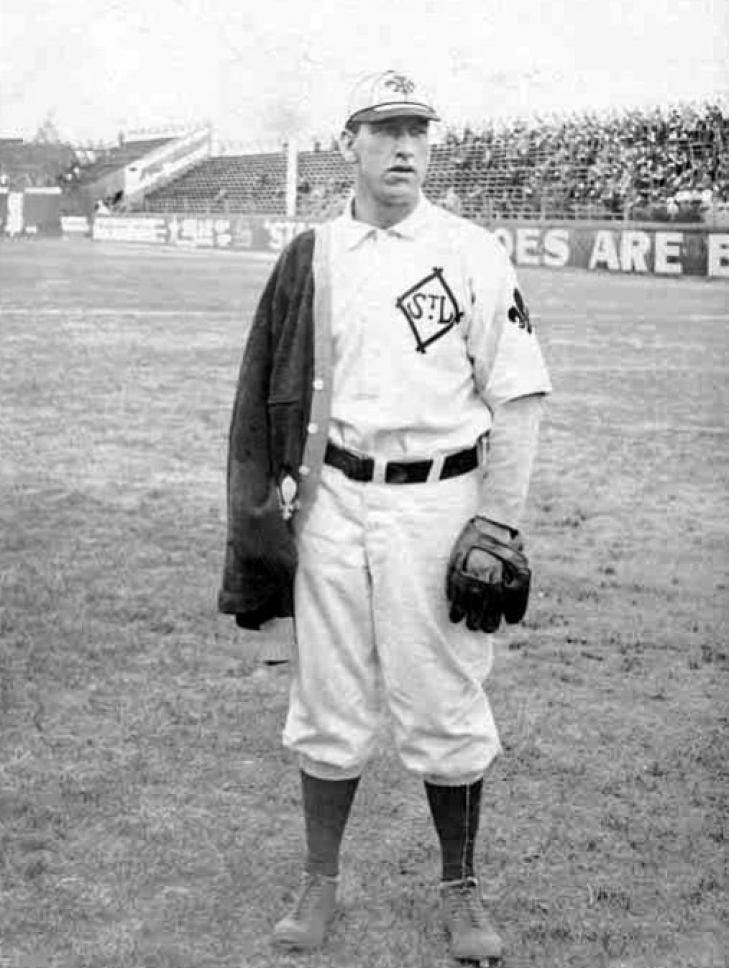
Acquired from the New York Highlanders in 1904, Harry "Handsome Harry" Howell quickly established himself as the premier arm of a struggling St. Louis Browns rotation. Armed with one of the most effective—and dampest—spitballs in the history of the game, Howell embarked on a five-year run of dominance that statistical leaderboards often obscure due to his team's lack of offensive support.
Howell’s consistency was nothing short of elite. From 1904 to 1908, he was a fixture in the American League's top ten for ERA, recording three seasons with a microscopic mark under 2.00. In 1905, he led the league with 35 complete games, an incredible display of durability in which he posted a 1.98 ERA despite losing 22 games—a testament to the "floundering Browns" lineups behind him. During this peak, his WHIP remained consistently under 1.10, proving he was one of the few pitchers who could match the era's legends strike-for-strike.
Beyond the mound, Howell was a versatile athlete who began his career as a legitimate two-way threat, possessing the agility to fill in at third base or the outfield when called upon. However, his legacy took a permanent hit in 1910. Involved in the infamous "Chalmers Award" scandal, Howell was accused of attempting to bribe an official scorer with a new suit to credit a hit to Nap Lajoie, an effort to help Lajoie beat out Ty Cobb for the batting title.
The scandal effectively ended his career in the Majors. Howell left St. Louis with a record of 78–91, 712 strikeouts, and a 2.06 career ERA with the Browns—a mark that, strictly by the numbers, remains one of the lowest in the history of the franchise
43. Miguel Tejada
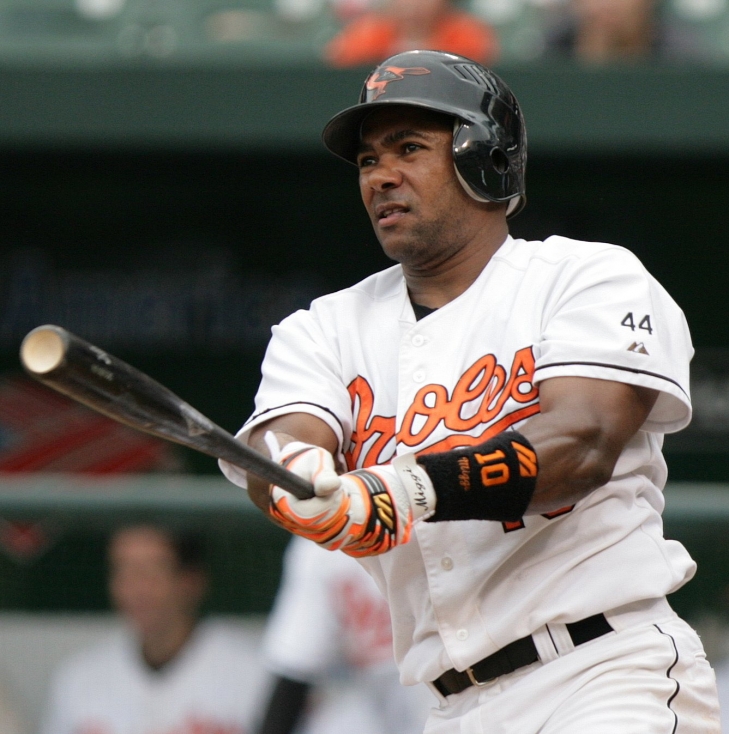
Miguel Tejada arrived in Baltimore in 2004 with the pedigree of a superstar, having already secured an AL MVP award in Oakland. As the centerpiece of a high-profile free-agent class, "Miggi" immediately transformed the Orioles' lineup, providing a level of offensive production from the shortstop position that the franchise had rarely seen since the prime of Cal Ripken Jr.
Tejada’s first season in Maryland was nothing short of historic. In 2004, he shattered expectations by leading the American League with a career-high 150 RBIs—a staggering total for a middle infielder. He tied his personal best with 34 home runs that year, earning an All-Star nod and a Silver Slugger Award. This dominance wasn't a fluke; Tejada was named an All-Star in each of his first three seasons in Baltimore and secured back-to-back Silver Sluggers (2004–2005), maintaining a batting average north of .300 while serving as the durable heartbeat of the infield.
Beyond the gaudy home run and RBI totals, Tejada was a quintessential "Iron Man" in his own right, famously playing in 1,152 consecutive games—a streak that spanned his transition from Oakland to Baltimore. Though he was traded to Houston following the 2007 season and returned for a brief veteran cameo in 2010, his legacy in Baltimore is defined by that initial four-year peak of offensive brilliance.
Tejada left Baltimore with 876 hits, 109 home runs, and a stellar .305 batting average.
36. Milt Pappas
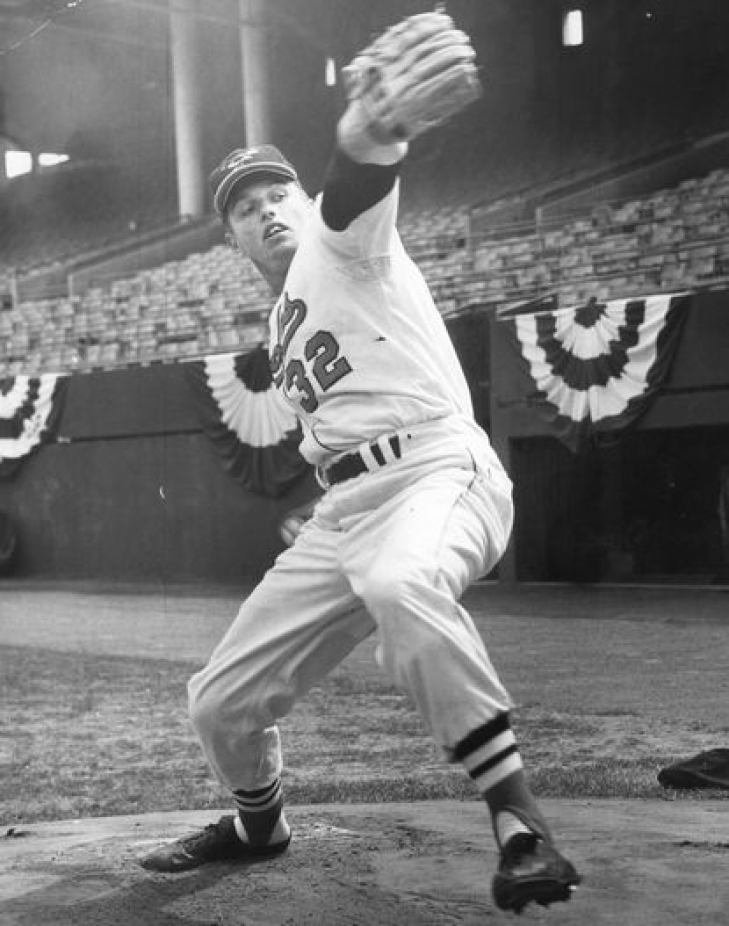
Milt Pappas arrived in Baltimore as a high school sensation in 1957, making his Major League debut as a teenager against the powerhouse Yankees. While most players his age were still navigating the minors, Pappas was quickly ascending the ranks of the Orioles' rotation, becoming the staff ace before he was old enough to rent a car.
Pappas’s tenure in Baltimore was a masterclass in durable, high-level consistency. A three-time All-Star (including both games in 1962 and starting the 1965 classic), he served as the bridge between the "Baby Birds" era and the championship years. He famously never posted a losing record in a Baltimore uniform, finishing in the top ten in ERA six times and top ten in WHIP four times. His 1964 campaign was particularly dominant, as he led a 97-win team with 16 victories and a career-best 1.08 WHIP.
His time in Baltimore ended in December 1965 in what remains one of the most famous trades in baseball history. Sent to Cincinnati for Frank Robinson, Pappas became the footnote to an "all-time heist" that saw Robinson win the Triple Crown. While the trade was undoubtedly lopsided in hindsight, it took a pitcher of Pappas's elite caliber—a 26-year-old with 110 wins—to pry a superstar like Robinson away from the Reds.
Pappas left the Orioles as one of the most successful pitchers in franchise history, totaling 110 wins, 944 strikeouts, and a sterling 3.24 ERA. Inducted into the Orioles Hall of Fame in 1985, he remains a symbol of the elite scouting and development that defined the early days of "Oriole Magic."
42. Nels Potter
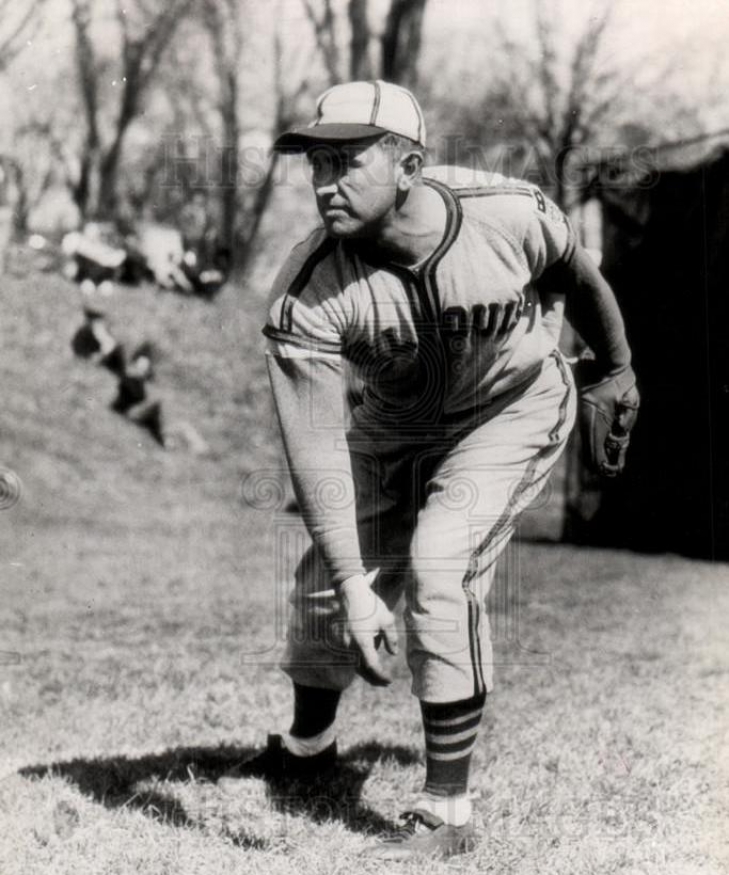
Nels Potter arrived in St. Louis as a 31-year-old journeyman, a screwball specialist who had struggled to find consistency until the Browns plucked him from the Red Sox organization in the 1942 Rule 5 Draft. In the high-pressure environment of wartime baseball, Potter didn't just find a home; he became the statistical engine that drove the Browns to their greatest heights.
Potter’s 1944 campaign remains a landmark in franchise history. As the Browns battled for their first American League Pennant, Potter delivered a 19–7 record and a career-best 5.7 bWAR, finishing ninth in the MVP voting. Though he was famously the first pitcher ever suspended for using a "foreign substance" (the spitball) earlier that year, he returned to lead the club into the World Series. On the game's biggest stage, he was nearly flawless, posting a 0.93 ERA in the Fall Classic—a performance that cemented his status as a big-game anchor.
While skeptics point to the diluted talent pool of the WWII era, Potter’s 1945 season silenced the critics. He was arguably even more dominant, posting a 2.47 ERA and a league-leading 1.097 WHIP, which earned him a staggering 7.2 bWAR—the second-highest mark in the American League. It was a masterclass in finesse and control that proved his success was rooted in skill, not just circumstance.
Age and the return of pre-war stars eventually slowed his momentum, leading to his sale back to the Athletics in 1948. However, Potter’s legacy is etched in the history books as the man who pitched the Browns into their only World Series.