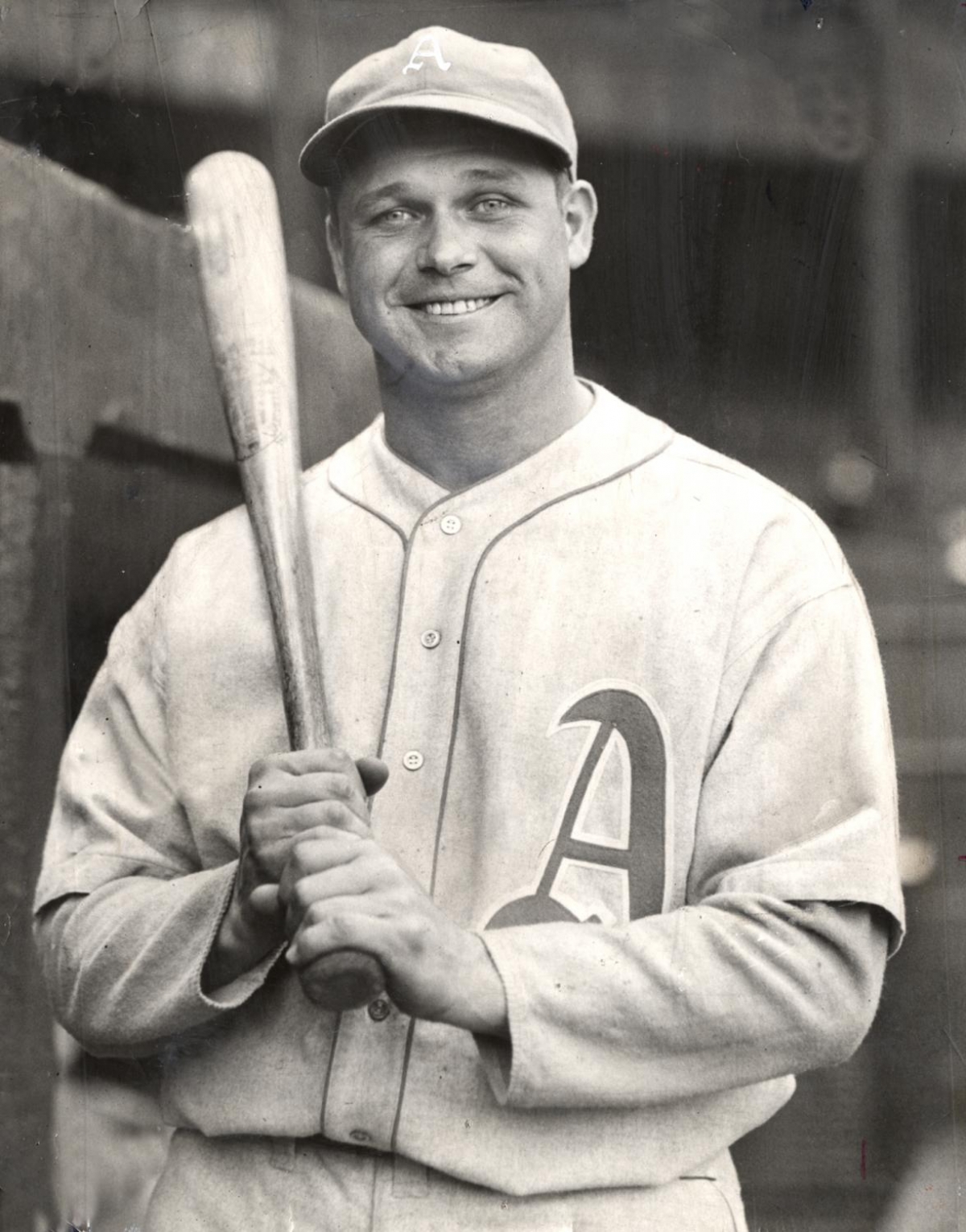
Jimmie Foxx came to Philadelphia in 1925 as a 17-year-old farm boy. He was signed by Connie Mack after being recognized as a local sensation in Maryland. Renowned for his extraordinary physical strength and a swing that generated legendary distance, he was considered the most formidable right-handed hitter of his time. During his 11 seasons with the Athletics, he functioned as the primary source of power for the concluding significant Philadelphia dynasty.
In 1929, Foxx achieved a historic milestone by hitting 33 home runs and leading the league with a .463 on-base percentage. His clutch performance drove the Athletics to their first World Series win in fifteen years, notably batting .350 in the Fall Classic against Chicago. Throughout the franchise's two consecutive championships, he demonstrated complete command of the postseason, finishing with a .344 World Series batting average with the A’s.
In 1932, Foxx achieved a peak of personal productivity, delivering one of the most statistically impressive seasons in sports history. He topped the American League in home runs with a career-best 58, just missing the single-season all-time record, while also leading in RBIs (169), slugging percentage (.749), and OPS (1.218). This exceptional display earned him his first MVP Award, an honor he secured again in 1933 after achieving a Triple Crown with a .356 batting average, 48 home runs, and 163 RBIs. At this height, he was a formidable power hitter, combining raw strength with a strategic approach that enabled him to lead the league in both batting and slugging.
If there was a weakness with Foxx, it was that he struck out a lot and led the league in that less-than-desirable metric five times as an Athletic.
Due to budgetary reasons, the First Baseman was traded to the Boston Red Sox after the 1935 season, and he would continue to be a great player, winning the AL MVP for the third time in 1938. As an Athletic, Foxx would post a sick Slash Line of .339/.440/.640 with 1,492 Hits and 302 Home Runs.
Foxx would enter the Baseball Hall of Fame in 1951, and was chosen for the Philadelphia Baseball Wall of Fame in 1979. Decades later, in 2021, Foxx was elected into the Athletics Hall of Fame.
Comments powered by CComment