
Site Admin
10. George Scott
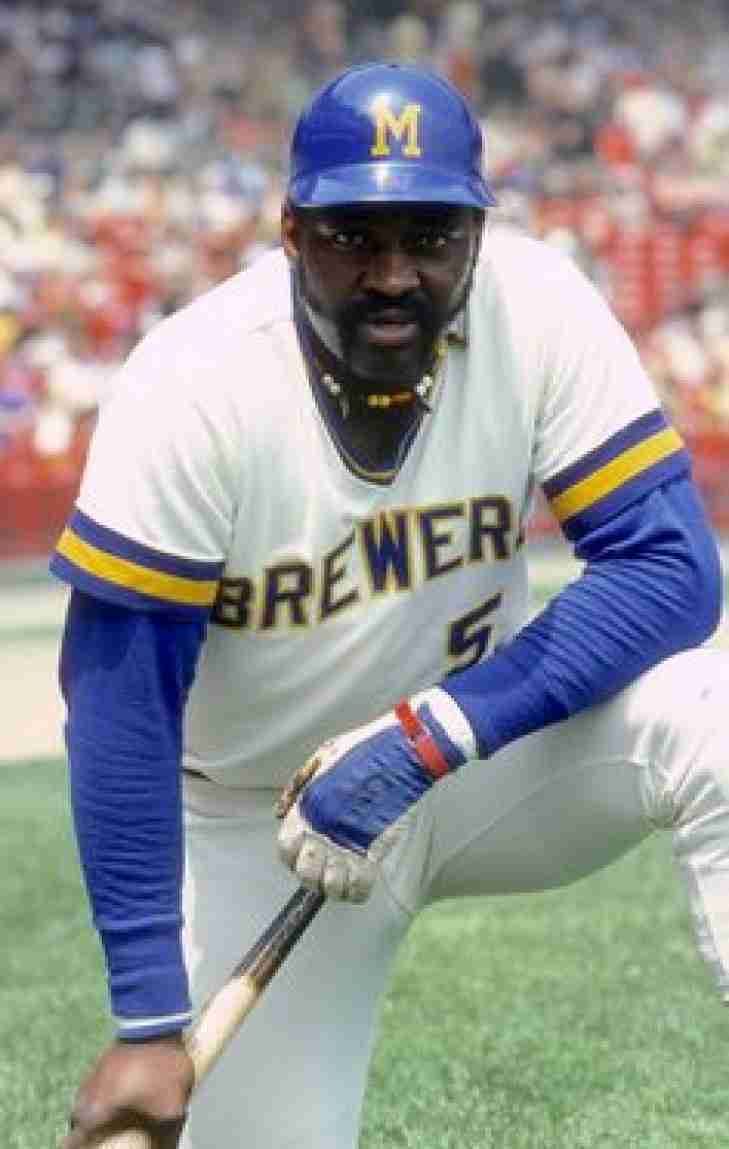
George Scott arrived in Milwaukee in late 1971 as part of a ten-player trade with the Red Sox, bringing a charismatic, powerful first baseman to the Brewers. Nicknamed "Boomer" for his power, Scott quickly became the team's offensive and defensive leader.
Scott showcased a glove that was nearly a vacuum at first base, earning a Gold Glove each season he played for the Brewers (1972–1976). His defense was stellar, and his bat was also strong; he had over 150 hits and 20 home runs in his debut season. This period established him as an elite two-way player who earned MVP votes each year, providing the Brewers with star power for their roster.
During the 1975 season, he led a decorated franchise campaign, mastering AL pitching by hitting 36 home runs and 109 RBIs, earning an All-Star and ranking eighth in MVP voting. He called his home runs “taters," a famous nickname for his power., and a term still used today.
After the 1976 season, he was traded back to the Boston Red Sox in a deal that brought future franchise icon Cecil Cooper to the Brewers. With Milwaukee, Scott had 851 hits, 115 home runs, and 5 Gold Glove Awards.
7. Prince Fielder
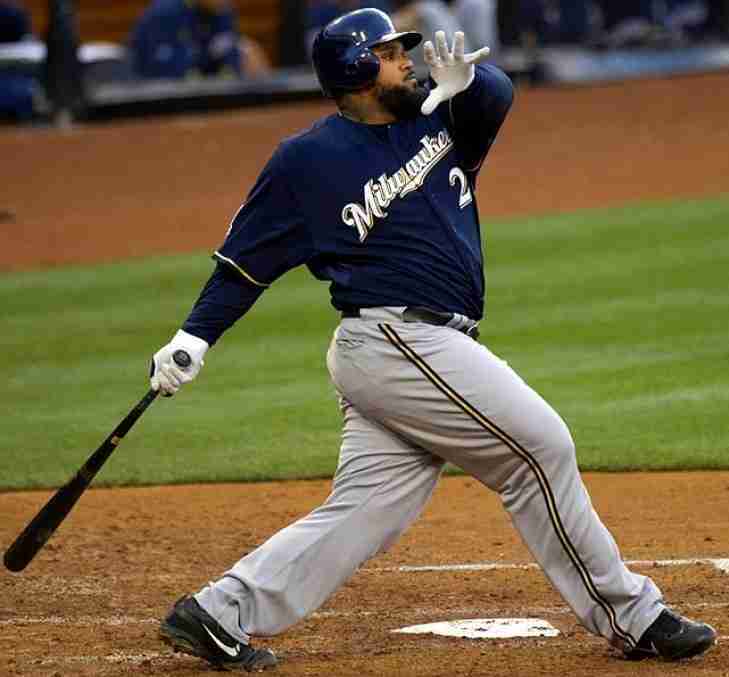
A highly touted first-round pick in 2002, Prince Fielder was a physically imposing left-handed slugger who had spent his childhood taking batting practice in big league stadiums alongside his father, Cecil. Debuting in 2005, he quickly became the centerpiece of a young, explosive core that aimed to bring winning baseball back to the shores of Lake Michigan.
In 2007, his second full season, Fielder blasted 50 home runs, making him the youngest player in baseball history to reach that plateau and surpassing the franchise record previously held by Gorman Thomas. This early stretch served as the formal introduction to a player who paired elite strength with a surprising technical discipline at the plate, earning him his first of three Silver Slugger Awards and a third-place finish in the MVP voting. Basically, like father, like son!
In 2009 and 2011, Fielder established himself as a top power hitter. In 2009, he led the National League with 141 RBIs and was the first Brewer to win the Home Run Derby. In 2011, he hit 38 home runs and drove in 120 runs, securing his spot as a perennial All-Star. His high offensive level included an on-base percentage over .400 in three seasons.
Between 2006 and 2011, he was a fixture in the middle of the diamond, famously playing in 162 games in three seasons. While mainly known for power, he showed versatility with a .299 batting average as a Brewer, proving he's a complete hitter rather than a one-dimensional slugger. His stats include 230 home runs and 656 RBIs, reflecting a high-volume contribution during the team's most successful era.
After helping the Brewers reach the 2011 NLCS, he departed in free agency for the Detroit Tigers. Fielder was inducted into the Brewers Wall of Honor in 2018 and the Walk of Fame in 2022.
9. Ben Sheets
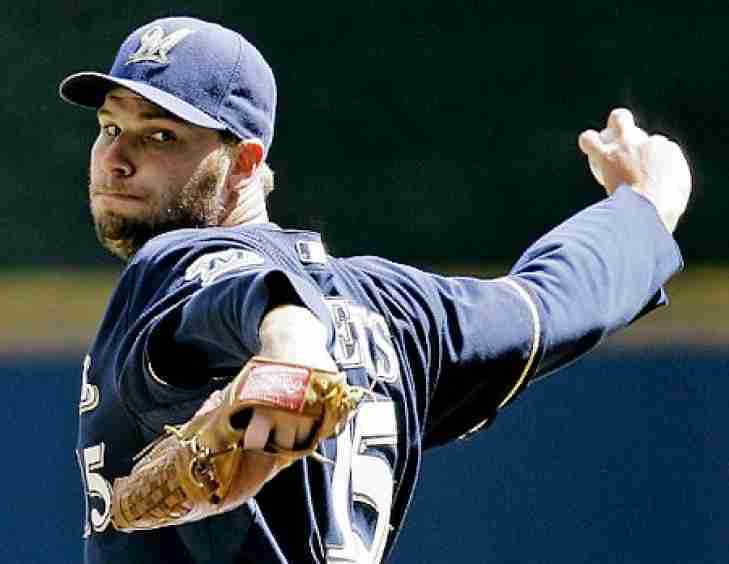
Ben Sheets arrived in Milwaukee as the tenth overall selection in the 1999 draft, but he earned national fame before ever throwing a pitch at Miller Park. After dominating the 2000 Sydney Olympics, where he tossed a three-hit shutout against Cuba to secure the first gold medal in U.S. Olympic baseball history, he made his debut in 2001.
In 2001, Sheets demonstrated he belonged at the highest level, earning an All-Star selection as a rookie and finishing the year with 11 wins. While the Brewers struggled as a club during the early 2000s, he remained a professional mainstay, logging over 200 innings in 2002 and 2003 and establishing himself as a solid power pitcher.
Sheets peaked in 2004, with a highly efficient season. He controlled the strike zone, striking out 264 batters and walking 32. Despite a 12-14 record due to poor run support, his 2.70 ERA and league-leading 8.25 strikeout-to-walk ratio earned him eighth in Cy Young voting. That year, on May 16, he struck out 18 Braves, setting a team record and solidifying his elite status.
Following his 2004 campaign, Sheets faced mound struggles and injuries but had bright spots. He earned his fourth All-Star in 2008, starting the Midsummer Classic for the NL, while dealing with shoulder and elbow issues. He helped the Brewers reach their first postseason in 26 years in 2008, but his arm gave out before playoffs. He underwent Tommy John Surgery and missed the 2009 season, but when he returned, he did so with the Oakland Athletics.
Sheets compiled an 86-83 record, a 3.72 ERA, and 1,206 strikeouts for Milwaukee.
298. Radim Vrbata