

Site Admin
13. Keith Hernandez
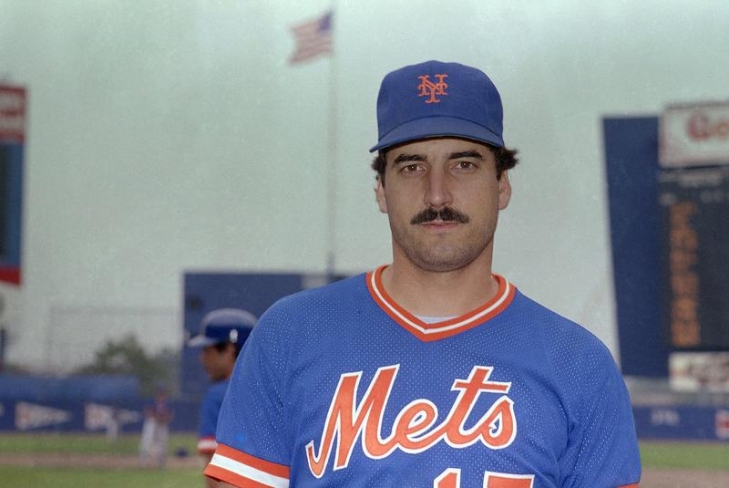
Keith Hernandez joined the Mets in June 1983 through a major trade from St. Louis, a deal that significantly impacted both teams. After Whitey Herzog, Cardinals manager, famously called him a clubhouse cancer, Hernandez, the 1979 NL MVP and 1982 World Series winner, found himself relegated to a struggling New York team. This was a pivotal moment for both the player and the franchise, yet Hernandez still had plenty of energy and skill left.
Hernandez discarded the negative labels, took on the role of clubhouse leader, and became the first official team captain in Mets history. He served as the strategic mind and emotional core of the legendary 1986 championship team, demonstrating exceptional situational hitting and leadership that helped the team achieve 108 regular-season wins and win the Fall Classic. Although he didn't win a second MVP award in New York, his influence was widely acknowledged by his peers; he was the MVP runner-up in 1984 and achieved two more top-ten finishes while playing in Queens.
At the plate, Hernandez was an extremely skilled pure hitter, combining a disciplined approach with an elite ability to hit to all fields. He demonstrated remarkable consistency by batting over .300 four times for the Mets and achieved an impressive on-base percentage above .400 in three different seasons. Defensively, he reached a level of excellence that still sets the standard for the position. He played first base with a fierce, high-energy style, aggressively charging bunts and diving to cut off throws like an extra infielder, earning him six consecutive Gold Glove Awards as a Met.
After the 1989 season, Hernandez left via free agency to play one final season in Cleveland. Oh, and he was in a Seinfeld episode. Basically, we are saying this is a New York City icon.
As a Met, he had 939 hits, 80 homers, and batted .297. The team selected Hernandez for its Hall of Fame in 1997
7. Mike Piazza
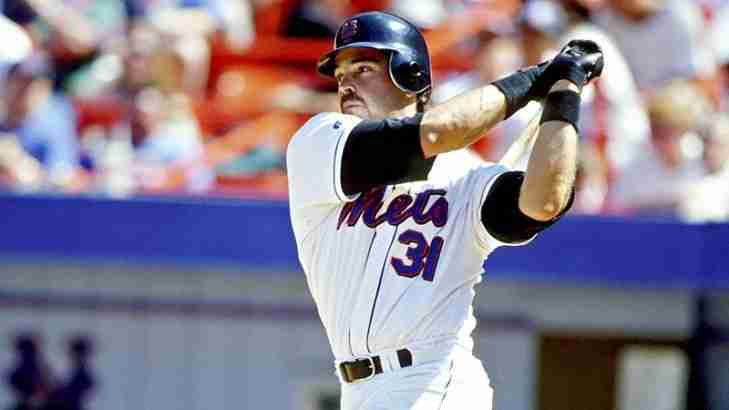
Mike Piazza arrived in Queens in 1998 following a whirlwind week that saw him traded twice in eight days, first from the Dodgers to the Marlins, and then finally to the Mets. While he had already established himself as a superstar in Los Angeles, his arrival in New York fundamentally shifted the trajectory of the franchise, giving them a Hall of Fame centerpiece and a powerhouse offensive engine they hadn't seen since the 1980s
In 1999, during his first full season with the club, Piazza delivered an incredible performance, smashing 40 home runs and driving in 124 runs while maintaining a .303 batting average. His stellar play helped lead the Mets to their first postseason appearance in eleven years, providing clutch moments that allowed the "Amazin's" to secure the National League Wild Card. This season truly showed that he was a top-tier run producer capable of carrying an entire lineup on his back, demonstrating that he could excel even under the intense pressure of the New York media spotlight.
His next season (2000) was even better. He finished the year with a 1.012 OPS, 38 home runs, and 113 RBIs, finishing third in the National League MVP voting. He spearheaded the Mets' charge to the National League Pennant, famously helping the team navigate the "Subway Series" against the Yankees. During this peak, he was a giant at the plate whose presence alone forced opposing managers to alter their entire pitching strategy, eventually leading to his third Silver Slugger Award in a Mets uniform.
Beyond the box score, his residency reached a historic emotional plateau on September 21, 2001. In the first sporting event held in New York City after the 9/11 attacks, Piazza hit a go-ahead, two-run home run in the eighth inning that lifted the spirits of an entire city and country.
After eight years as the face of the franchise, his tenure ended at the end of the 2005 season, when his seven-year contract expired, and the organization opted to move in a younger direction under new leadership. His final game at Shea Stadium was an emotional farewell, capped by an eight-minute standing ovation from the Flushing faithful. Piazza departed with 1,028 hits, 220 home runs, and a .542 slugging percentage for the Mets.
After his playing career ended, he proved his heart belonged in Flushing by entering the National Baseball Hall of Fame in 2016 as a Met rather than as a Dodger. The organization retired his No. 31 that same year.
9. Jon Matlack
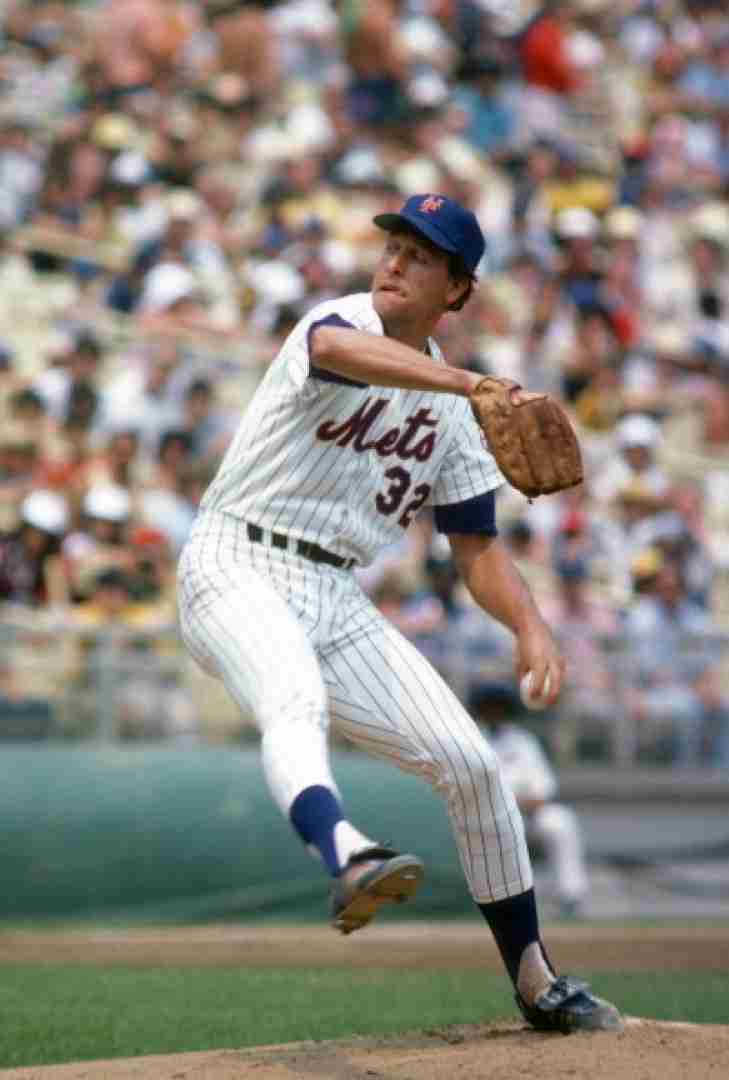
A first-round draft pick in 1967, Jon Matlack was a left-hander whose arrival signaled the birth of the "Big Three" alongside Tom Seaver and Jerry Koosman. While he wasn't on the active roster for the 1969 miracle, he served as the crucial final piece of the rotation that would define the franchise's excellence over the next decade.
Matlack appeared in 1971 for a few games, but in 1972, Matlack delivered a brilliant debut campaign, winning 15 games with a 2.32 ERA to secure the National League Rookie of the Year award. He reached a historic summit during the 1973 "Ya Gotta Believe" season, authoring a legendary postseason performance. After helping the club capture the NL East, he dominated the Reds in the NLCS and famously outpitched the Oakland A’s in the World Series, throwing a complete-game three-hitter in Game 4. The Mets lost the Fall Classic, but Matlack had arrived.
Between 1974 and 1976, Matlack was statistically one of the top pitchers despite receiving little run support. In 1974, he demonstrated a relentless ability to shut down opponents, leading the National League with seven shutouts and posting a 2.36 FIP. He continued this trend by leading the league in shutouts again in 1975 and earning three straight All-Star selections. His dominance was particularly evident in the 1975 All-Star Game, where he shared MVP honors after striking out the side in his appearance.
His run in Queens ended in the winter of 1977 following a difficult season for a struggling Mets squad. In a complex, four-team blockbuster trade, the organization sent him to the Texas Rangers. Matlack overall went 82- 81 with a 3.03 ERA with the Mets. The team inducted Matlack into their Hall of Fame in 2021.
12. Jose Reyes
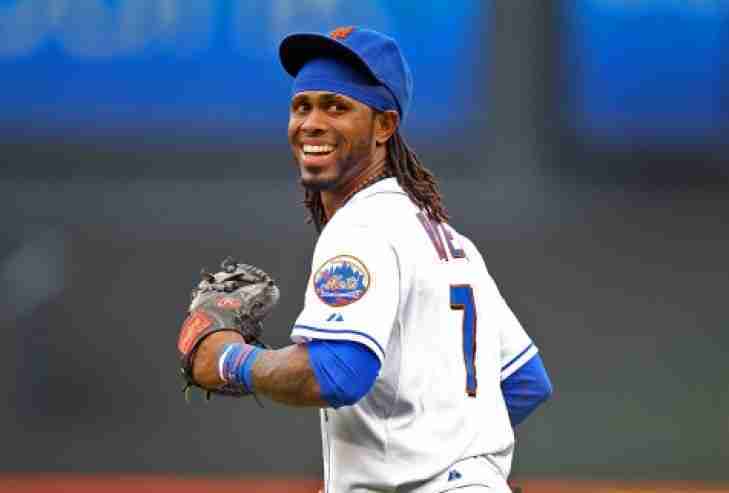
From the Dominican Republic's infield factory, Jose Reyes debuted for the Mets at age 20 in 2003. Two years later, he was cemented as the team's starting Shortstop.
By 2005, Reyes had reached an absolute summit of speed, leading the National League in triples (10) and stolen bases (60). He showcased a comprehensive mastery of the basepaths over the subsequent three seasons, establishing a record of specialized dominance by leading the league in steals for three consecutive years, culminating in a historic 78 stolen bases in 2007. Although he was not a conventional power hitter, he reached a significant milestone in 2006 by hitting 19 home runs and recording 81 RBIs. This performance earned him a Silver Slugger Award and his first of four All-Star selections.
Reyes's peak was 2011 when he won the NL Batting Title with a .337 average, led the league in triples (16), and was an All-Star. After that season, amid a rebuilding phase, he left New York to sign a six-year, $106 million deal with the Miami Marlins in December 2011.
After that year, he was traded to the Miami Marlins. He came back in 2016 for three final seasons as a Met. With the team, he would have 1,534 Hits, batted .282, and had 408 Stolen Bases.