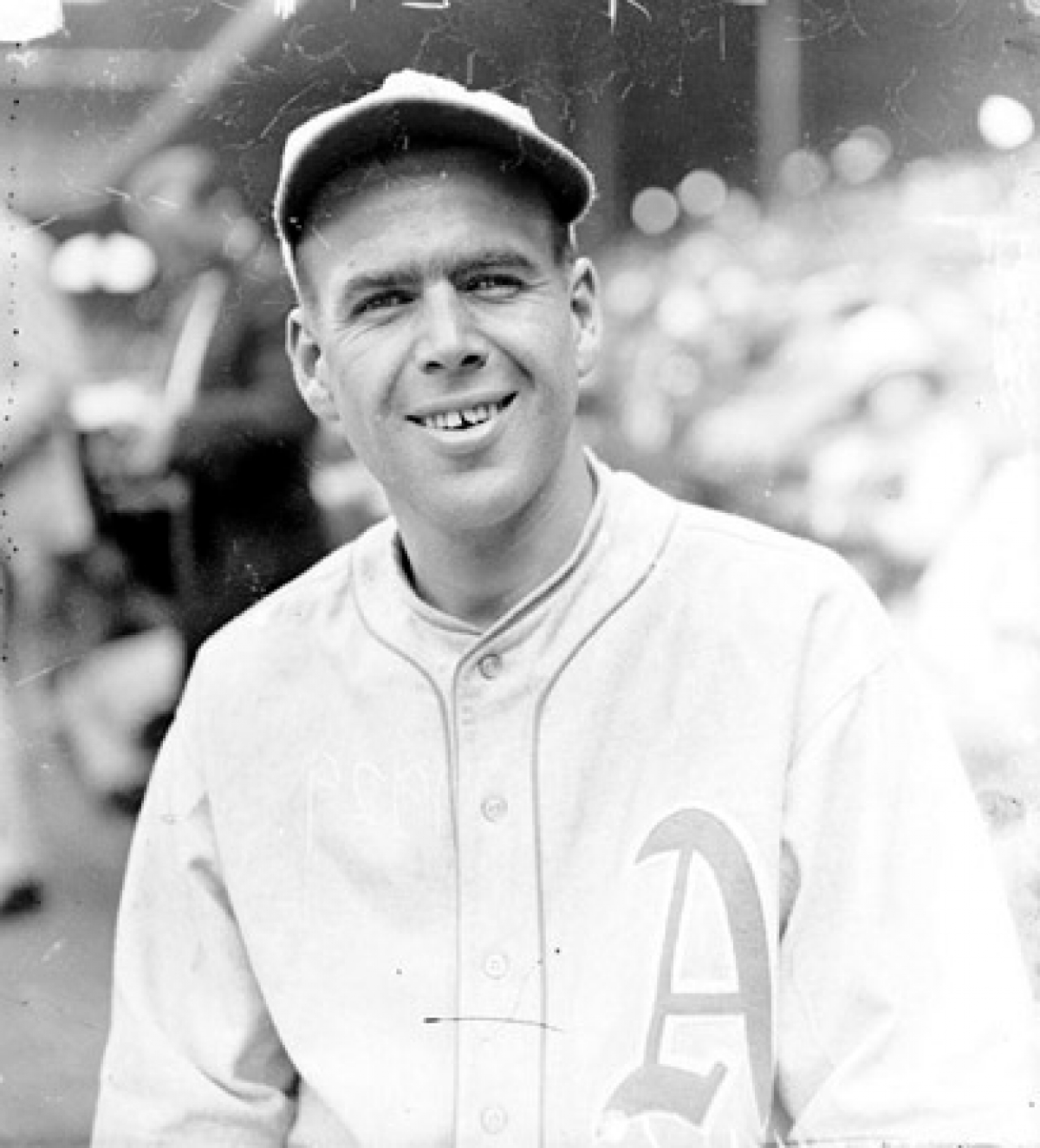
George Earnshaw took an unconventional path to major-league stardom. Because he prioritized finishing his college education and then spent several years refining his arsenal in the minor leagues, he didn't officially debut in the big leagues until he was 28 years old. But once the towering 6-foot-4 right-hander finally stepped onto a big-league mound, he wasted no time proving he belonged at the front of a rotation.
Connie Mack had personally scouted Earnshaw dominating hitters for the legendary Baltimore Orioles of the International League, and he aggressively pulled the trigger to secure his contract. Earning the nickname "Moose" due to his massive physical frame, Earnshaw joined the Philadelphia Athletics mid-season on June 1, 1928, turning in a respectable 7-7 introduction that merely hinted at the absolute dominance to come.
By the 1929 campaign, Mack had assembled an incredibly talented roster, with Earnshaw serving as its powerful, high-velocity engine. That summer, he dominated junior circuit lineups, leading the American League with an impressive 24-8 record and 21 complete games. He served as the key frontline pitcher alongside Lefty Grove, guiding the Athletics to the American League pennant and maintaining his strong performance into October, ultimately helping Philadelphia win the 1929 World Series against the Chicago Cubs.
Far from a single-season wonder, "Moose" proved to be an absolute workhorse over the next two individual campaigns, racking up 22 wins in 1930 and 21 victories in 1931 to form arguably the greatest one-two pitching punch of the era. The absolute peak of his baseball journey arrived during the 1930 postseason defense.
Earnshaw delivered an outstanding performance in the 1930 Fall Classic against the St. Louis Cardinals, participating in three games and pitching 25 impressive innings. He dominated the Cardinals' lineup, earning two complete-game wins, including a five-hit shutout in the pivotal Game 6, and achieved a remarkable 0.72 ERA to help secure consecutive world championships.
He pushed through to achieve yet another prolific 19-win season in 1932, but the heavy, continuous workload of innings eventually severely strained his right arm. Earnshaw experienced a sharp and sudden decline in 1933, finishing with a disappointing 5-10 record as his ERA rose to 5.97.
Due to the financial strain of the Great Depression, Mack had to break up his famous core team. After a tough 1933 season, Earnshaw was sold to the Chicago White Sox as a way to cut costs. As an Athletic, he had a 98-58 record and was later selected for the Philadelphia Baseball Wall of Fame in 2000.
Comments powered by CComment