
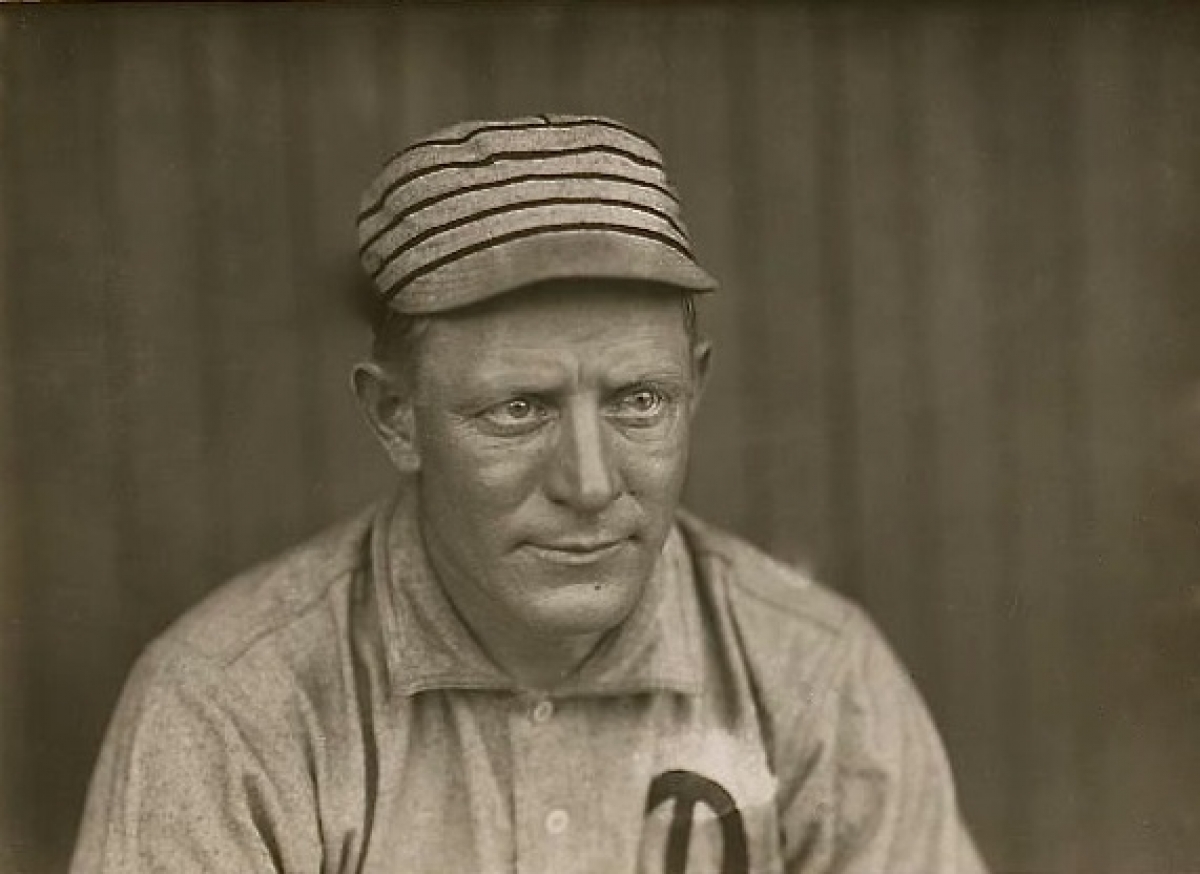
Connie Mack aimed to quickly turn his newly established Philadelphia Athletics into a dominant American League team. He sought a particular kind of player, one who was smart, disciplined, low-maintenance, and unaffected by a deep count. Tully Frederick "Topsy" Hartsel served as the ideal model for this approach.
After an impressive 1901 season with the Chicago Orphans in the National League, where he made 187 hits and maintained a .335 batting average, Hartsel decisively moved to the emerging junior circuit. Mack promptly placed the short, 5-foot-5 outfielder at the top of the batting order, establishing a leadoff strategy that would challenge opposing pitchers for the following decade.
Hartsel demonstrated exceptional proficiency as a leading offensive contributor from the moment he took to the field at Columbia Park. His debut season in 1902 with Philadelphia served as a distinguished example of excellence in the top of the batting order, as he led the American League in runs scored (109), walks (87), and stolen bases (47).
Although a severe hand injury and the inherent friction characteristic of the dead-ball era impeded his ability to attain that astronomical stolen base threshold again, his rapid baserunning continued to be remarkably effective, as he successfully stole double-digit bases in each successive summer through 1908.
Mainstream publications of the era occasionally mischaracterized Hartsel as a light hitter because he crossed the conventional .300 batting average threshold only once while wearing pinstripes, achieving a .309 batting average in 1903. However, evaluating his offensive prowess solely based on hits significantly underestimates his true skill. Possessing an exceptionally disciplined approach within a highly restricted strike zone, an advantage largely facilitated by his modest stature, Hartsel regarded a walk with the same respect as a line drive.
He demonstrated exceptional plate discipline from 1905 to 1908, leading the American League in walks for four consecutive seasons and winning the junior circuit's on-base percentage title twice. His consistent ability to generate traffic resulted in an impressive .402 on-base percentage during this peak period, ensuring that the power hitters batting behind him constantly received intentional bases on balls with runners in scoring position.
While his regular-season volume and sheer patience kept the Athletics in fierce contention throughout the 1900s, his role naturally evolved as Mack’s first great dynasty matured. During the historic 1910 championship run, the veteran outfielder was relegated to a part-time role, appearing in just one Fall Classic game as Philadelphia captured the world title. By the 1911 season, his transition away from the active roster was complete; he spent the summer as a highly respected player-coach under Mack rather than a daily lineup fixture, quietly securing his second World Series ring from the dugout steps before hanging up his cleats.
Hartsel concluded his brilliant ten-year run in Philadelphia with 1,087 hits, 725 walks, and a highly advanced .393 on-base percentage

Comments powered by CComment