

Site Admin
The Buck Stops Here -- The NFL 100
42. Eduardo Escobar
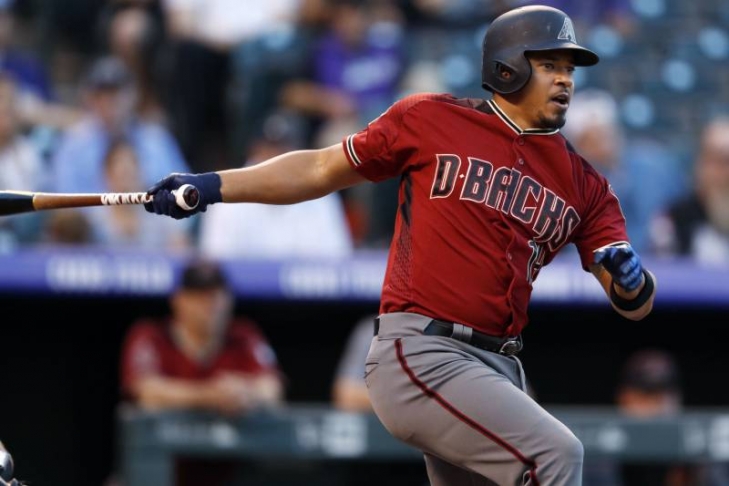
Eduardo Escobar was traded late in the 2018 season, after debuting with the Chicago White Sox in 2011 and playing for the Minnesota Twins since 2012.
Escobar had good years with Minnesota, but the versatile infielder’s best season was 2019, his first full year with the Diamondbacks. He would post career-highs in Hits (171), Home Runs (35), and RBIs (118), and he led the NL in Triples (10). After the 2020 COVID-19 season, Escobar did well in 2021 and was chosen for the All-Star Game, but was traded midway through the year to the Brewers, as he was slated to become a Free Agent after the season.
Escobar had 69 Home Runs with 358 Hits as a Diamondback.
22. Nick Ahmed
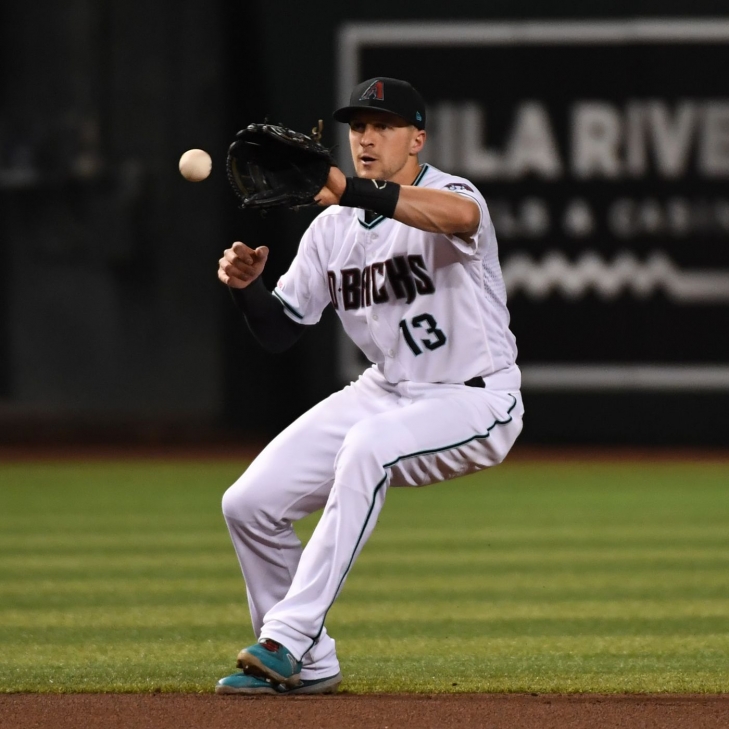
Nick Ahmed never played with the team that drafted him, the Atlanta Braves, as he was dealt as a prospect to the Arizona Diamondbacks, which to date is the only pro team he has ever played for.
Ahmed first made the D-Backs in 2014, appearing in 24 Games, and he would win the starting Shortstop role the following year, although injuries prevented him from showing off what he could do in a full season from 2015-17. This changed in 2018, when he was healthy, and his defensive skills were on full display: he won his first Gold Glove and led the National League in Defensive bWAR. Ahmed won the Gold Glove again in 2019, with a fifth-place finish in Defensive bWAR.
Ahmed was not known for his hitting, and his career Batting Average is only .234, and he has an On Base Percentage below .300. He had two straight years of at least 16 Home Runs (2018 & 2019), so the Shortstop did have some value with his bat, though it is his glove that kept him in the dance. At least it did until September 9, 2023, when his diminished skills led to his release. Sadly, this meant that the first player to log ten years with the team was not there for their playoff run.
Overall, Ahmed had 678 Hits and a Defensive bWAR of 12.4.
23. Whit Merrifield
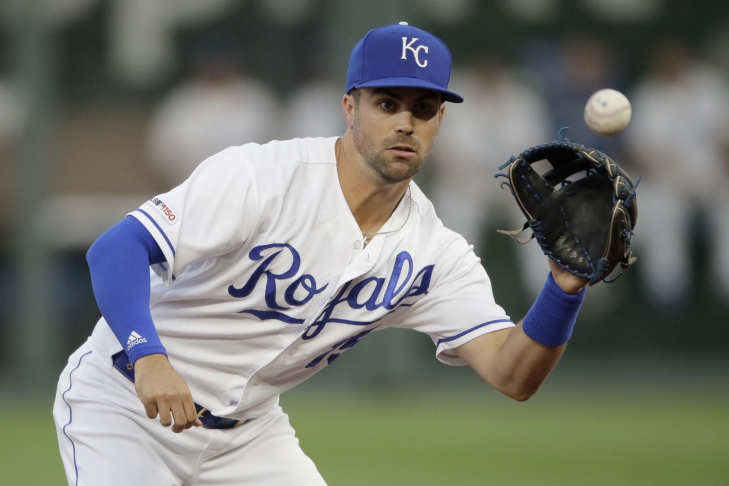
Whit Merrifield joined the Kansas City organization as a ninth-round selection in the 2010 draft, famously arriving with a championship pedigree after driving in the winning run for South Carolina in the College World Series. A quintessential late-bloomer, he spent six seasons grinding through the minors before finally making his debut in 2016 at the age of 27.
After seizing the starting second base job in late 2016, he demonstrated a specialized ability to dictate the pace of a game from the top of the order. He surged into the league lead in stolen bases in 2017 with 34, a feat he followed up in 2018 by leading the entire major leagues in both hits (192) and steals (45). This period of rapid growth served as the essential lead-in to his status as the "hit king" of the American League, showing the organization that he was a foundational winner who simply refused to take a day off.
He led the AL in hits in back-to-back seasons, while also topping the American League in triples (10) in 2019 and doubles (42) in 2021. He earned two All-Star selections during his time in Missouri, proving that his skill set was as sharp in the field as it was on the basepaths.
With the club moving toward a younger core, Merrifield was traded to the Toronto Blue Jays in August in exchange for Max Castillo and Samad Taylor. Merrifield compiled 1,001 hits, a .286 average, and three AL stolen base titles as a Royal.