

Site Admin
45. Ken Caminiti
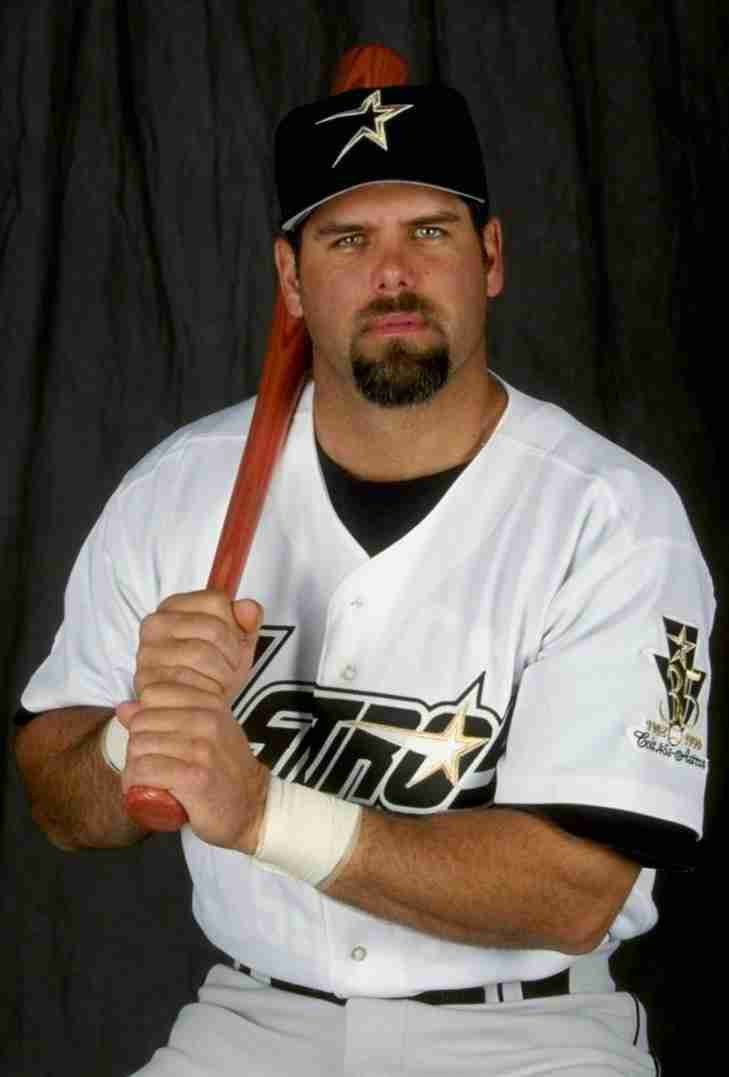
A third-round selection in 1984, Ken Caminiti was a physically imposing third baseman with a specialized defensive range and a throwing arm that some thought could be legendary.
Debuting for the Astros in 1987, Caminiti might have won an MVP in San Diego later in his career, but his run in Houston can not be forgotten. In 1994, he earned his first career All-Star selection and his first Gold Glove Award, batting .283 with 18 home runs in the strike-shortened season. From 1989 to 1991, he appeared in at least 152 Games, but following the 1994 season, everything was about to change.
Caminiti was part of a 12-player trade to San Diego. With the Astros, Caminiti compiled 1,034 hits and 103 home runs.
3. Jose Altuve
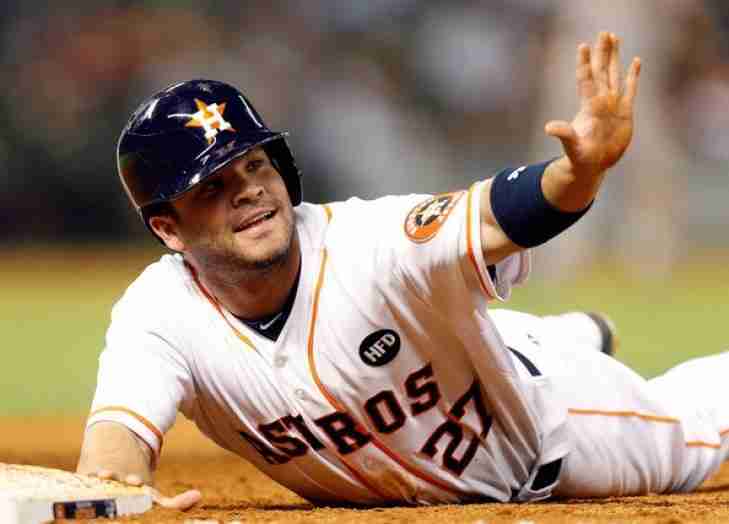
If Jeff Bagwell and Craig Biggio built the foundation of the Houston Astros, Jose Altuve is the man who raised the banners. Standing just 5'6", the Venezuelan second baseman has spent his entire career defying every physical expectation placed upon him, evolving from a "free agent" afterthought into the definitive superstar of the most successful era in franchise history. For over a decade, Altuve has served as the sparking plug of the Houston offense, a hitting machine whose blend of contact, power, and speed has rewritten the organization's record books and cemented his status as a future Hall of Famer.
Altuve’s journey in Houston was defined by an immediate and relentless offensive efficiency. After arriving in 2011, he quickly established himself as a model of high-frequency production, capturing three American League batting titles and leading the league in hits for four consecutive seasons starting in 2014. In 2017, a summer in which he hit .346 with 204 hits and 24 home runs to secure the American League MVP award. He served as the tactical engine of the squad that captured the franchise's first World Series title, proving that his specialized ability to put the barrel on any pitch made him the most dangerous high-leverage threat in the sport.
The middle chapters of his tenure were marked by professional resilience, as he adapted as the league began to shift. While his batting average fluctuated, his power profile expanded, leading to multiple 30-home-run campaigns. He authored a spectacular "renaissance" season in 2022, a year in which he hit .300 with 28 home runs and earned his sixth Silver Slugger Award. He was the emotional heartbeat of the 2022 championship run, providing the veteran poise required to secure his second World Series ring. He showed the city that even as the roster around him changed, his focused intensity remained the one constant in the Houston clubhouse.
The final seasons of his current arc, spanning 2024 and 2025, were a testament to his longevity and his place in the historical record. In 2024, he remained a premier force, batting .295 with 185 hits and earning his ninth All-Star selection. By the time the 2025 campaign concluded, Altuve had navigated through a more inconsistent year, splitting time between second base and left field while hitting .265, but he still managed to blast 26 home runs and cross the 300-stolen base threshold. He finished 2025 with 2,388 career hits, moving ever closer to the 3,000-hit plateau that would mirror his predecessor, Craig Biggio.
Through the 2025 season, Altuve has compiled 255 home runs and 325 stolen bases while securing an MVP and two World Series titles.
40. Richard Hidalgo
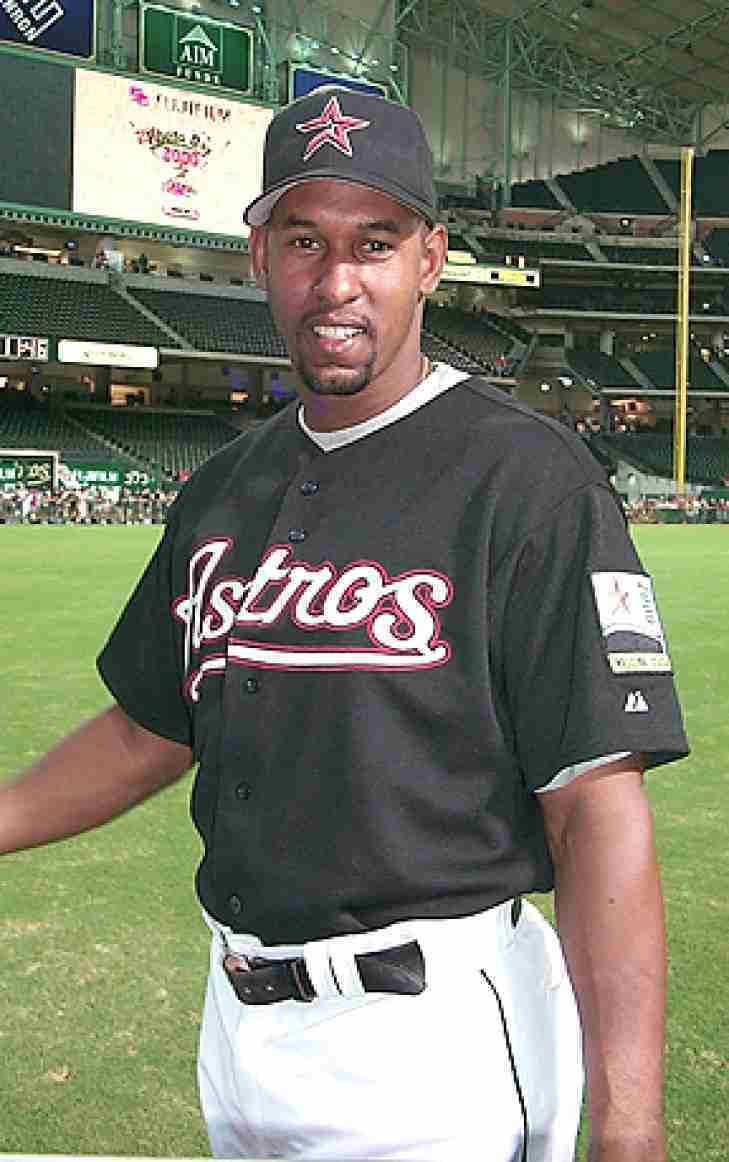
Richard Hidalgo arrived in the Houston organization as an amateur free agent in 1991, a highly touted prospect with a physical profile that promised both power and a cannon for an arm. He debuted in 1997 and had his breakout in 2000. That year, he belted 46 home runs and recorded 122 RBIs while maintaining a .314 batting average. He showed the organization he was a foundational superstar by posting a massive 1.028 OPS, a performance that earned him a top-20 finish in the MVP voting and solidified his place alongside the "Killer B’s" in the Houston lineup.
The subsequent years of his Astros run were defined by a struggle to replicate that season as a series of knee injuries began to sap his lower-half explosiveness. Despite the physical setbacks, he remained a high-frequency contributor, recording 28 home runs and 80 RBIs in 2003. He showed the organization he was a foundational professional by pairing his offensive flashes with a specialized defensive reputation, particularly an elite throwing arm from right field that forced baserunners across the league to hold their positions.
The run in Houston ended in a June 2004 trade to the New York Mets, as the Astros sought to shake up their roster during a sluggish start to the season. He left behind frustrated potential but still had 134 home runs and a .287 batting average while wearing the star.
32. Turk Farrell
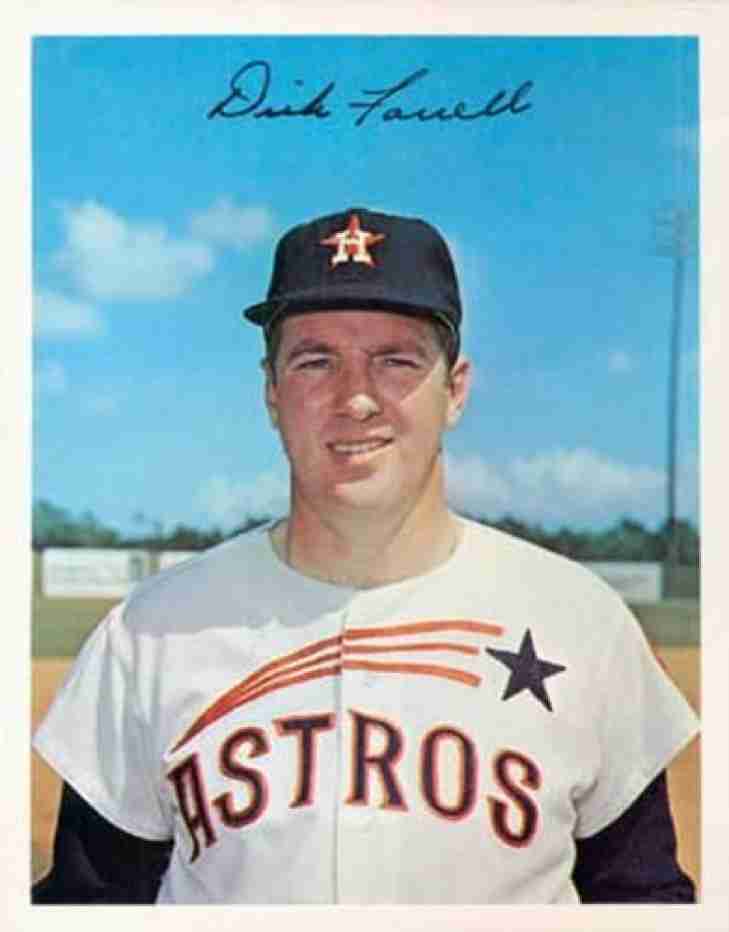
Turk Farrell joined the Houston organization in late 1961 as a foundational pick in the expansion draft, a high-velocity right-hander whom the club plucked from the Dodgers with the 40th overall selection. After years of serving as a "wild child" reliever for the Phillies and Dodgers, he was immediately transitioned into a starting role for the inaugural Colt .45s
Farrell logged over 240 innings in his debut season with the club. He surged into the spotlight in 1962, earning selections to both All-Star Games that year and finishing with a 3.02 ERA, ranking among the league's elite. This period of rapid growth served as the essential lead-in to his status as the "face" of the early Houston staff.
Through the 1962 through 1965 campaigns. During this stretch, he evolved into a perennial All-Star, representing Houston in the Midsummer Classic three times (1962, 1964, and 1965). He famously made history in April 1965 by starting the first-ever game in the newly opened Astrodome, surrendering a home run to Mickey Mantle that stood as the first indoor longball in major league history. He was Houston’s workhorse, recording three seasons with at least 198 innings pitched while wearing the Houston colors. Despite a losing record that reflected the struggles of an expansion roster, he possessed a focused intensity that saw him strike out 203 batters in 1962, a franchise record that stood until the arrival of the next generation of aces.
Farrell had a reputation for being a fierce competitor who refused to back down. Between 1962 and 1967, Farrell was a statistical standout for the Colt .45s and Astros, amassing 53 wins and over 1,000 innings of work. He reached a peak for veteran-like poise in 1963, winning a career-high 14 games despite pitching for a team that finished 33 games under .500.
In 1967, Farrell returned to the Philadelphia Phillies, leaving behind a 53-64 record, 716 strikeouts, and three All-Star selections.