
Site Admin
38. Billy Butler
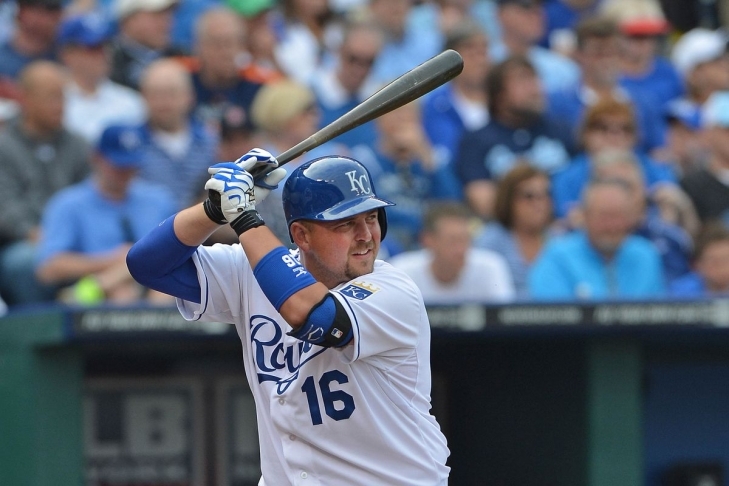
Billy Butler arrived in the Kansas City organization as a first-round selection in 2004, a hitter whose natural affinity for the gaps made him one of the most prolific doubles machines in franchise history. While his defensive limitations eventually led to a permanent role as a designated hitter, he became the club’s primary offensive engine during the lean years of the late 2000s.
Debuting for the Royals in 2007, Butler recorded a career-high 29 home runs and 107 RBIs while batting .313. That season, he won his first career All-Star selection and won the Edgar Martinez Award as the American League’s premier designated hitter. This performance was the crown jewel of a five-year stretch (2009–2013) where he consistently delivered at least 15 home runs and 80 RBIs.
He had three seasons in which he batted .300, and in 2014, his veteran presence helped the Royals reach the World Series, but that was when his Kansas City run came to an end. Butler signed with the Oakland Athletics, though he would never have a season as he did in powder blue.
As a Royal, Butler compiled 1,273 hits, 127 home runs, and the 2012 Silver Slugger Award.
44. Al Cowens
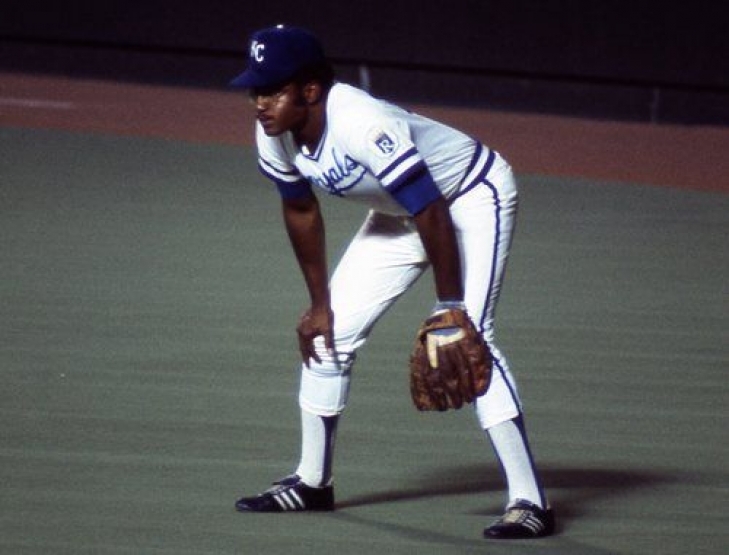
Al Cowens arrived in the Kansas City organization as a 75th-round draft pick in 1969, a staggering underdog story for a player who would eventually become a cornerstone of the franchise's first great era. He secured the starting right-field job by 1974, and in 1977, Cowens exploded with one of the best offensive seasons in franchise history of the 1970s.
That year, Cowens recorded career highs in home runs (23), RBIs (112), and batting average (.312). He showed the organization he was a foundational superstar by finishing as the runner-up for the American League MVP, falling just short of Rod Carew. His value was equally high on the grass, where he led the league in Total Zone Runs and earned a Gold Glove Award, cementing his reputation as a premier two-way threat.
While many remember his long-standing feud with pitcher Ed Farmer, sparked by a broken jaw sustained in a 1979 pitch and culminating in a famous 1980 brawl, his real legacy in the Heartland was built on his durability and steady offensive production. Cowens was traded to the California Angels after the 1979 season.
With the Royals, Cowens amassed 784 hits with 80 stolen bases and a .282 batting average.
42. Mike Macfarlane
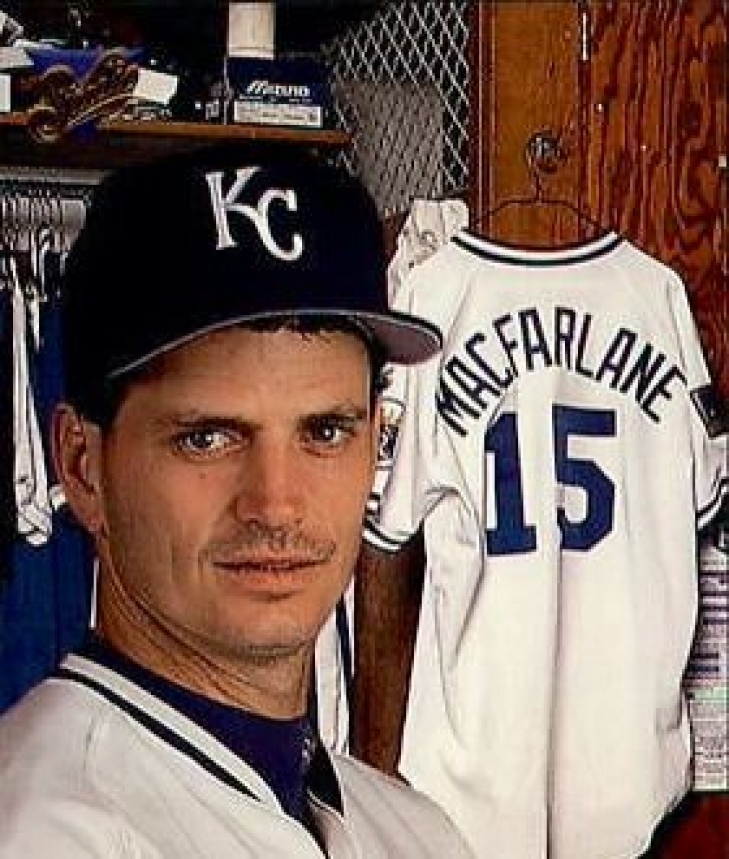
Mike Macfarlane arrived in the Kansas City organization as a fourth-round selection in 1985, a physically sturdy catcher with a reputation for intense preparation and a "blue-collar" approach to the game. He debuted in 1987 and eventually outlasted several high-profile competitors to become the team’s primary signal-caller.
Known mostly for his defensive ability, Macfarlane could occasionally help with his bat. During the 1993 campaign, a season in which he emerged as one of the premier power-hitting catchers in the American League, he belted a career-high 20 home runs and recorded 67 RBIs. He was also willing to sacrifice his body for the team, leading the league in hit-by-pitches in 1992, a category he would again lead in 1994.
Macfarlane was also a favorite of many of the Royals’ staff. He may have been a light hitter, but he had enough power in his bat to gain him at-bats. Macfarlane departed for Boston as a free agent after the 1994 season, but that was short-lived; he returned in ’95 for a second run that lasted until a mid-season 1998 trade to Oakland.
As a Royal, he compiled 717 hits, 103 home runs, and a reputation as a master handler of pitching staffs.
41. Joe Randa
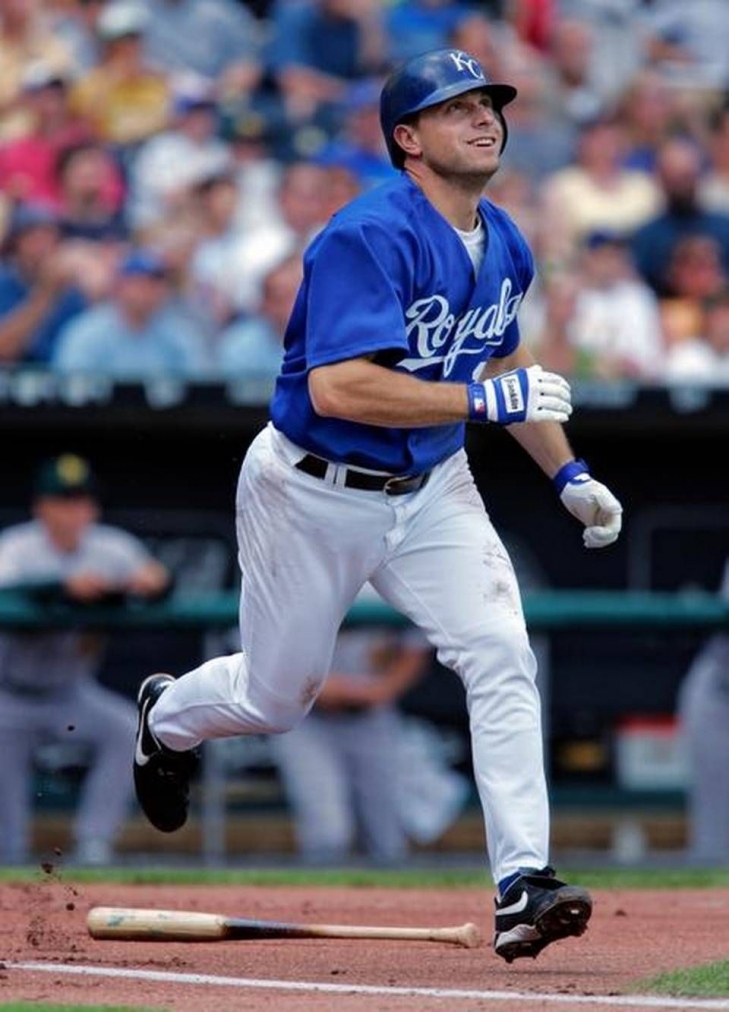
Joe Randa arrived in the Kansas City organization as an 11th-round selection in 1991, but his path to becoming a franchise fixture was anything but linear. After debuting in 1995 and appearing to be a casualty of the team's high-frequency roster turnover, moving through Pittsburgh, Detroit, and the Mets in short order, he returned to the Heartland in 1999.
In his first year back in Kansas City, he demonstrated a specialized ability to spray the ball across the turf at Kauffman Stadium, recording a career-high 197 hits and a .314 batting average, along with 16 home runs and 84 RBIs. This breakout performance served as the lead-in to 2000, where he evolved into a premier run-producer, driving in a career-high 106 runs and maintaining a .304 average.
His tenure was equally defined by his specialized defensive consistency and by a reputation as the emotional heartbeat of the clubhouse. Known as "The Joker" for his ever-present smile, he demonstrated a tactical reliability at third base, setting a franchise record in 2003 by going 75 consecutive games without an error. Even during lean years, he was producing, highlighted by a historic 2004 performance where he became one of only three Royals to collect six hits in a single game.
After the 2024 season, Randa departed for the Cincinnati Reds as a free agent. With Kansas City, he collected 1,084 hits, 563 RBIs, and a .288 batting average.