
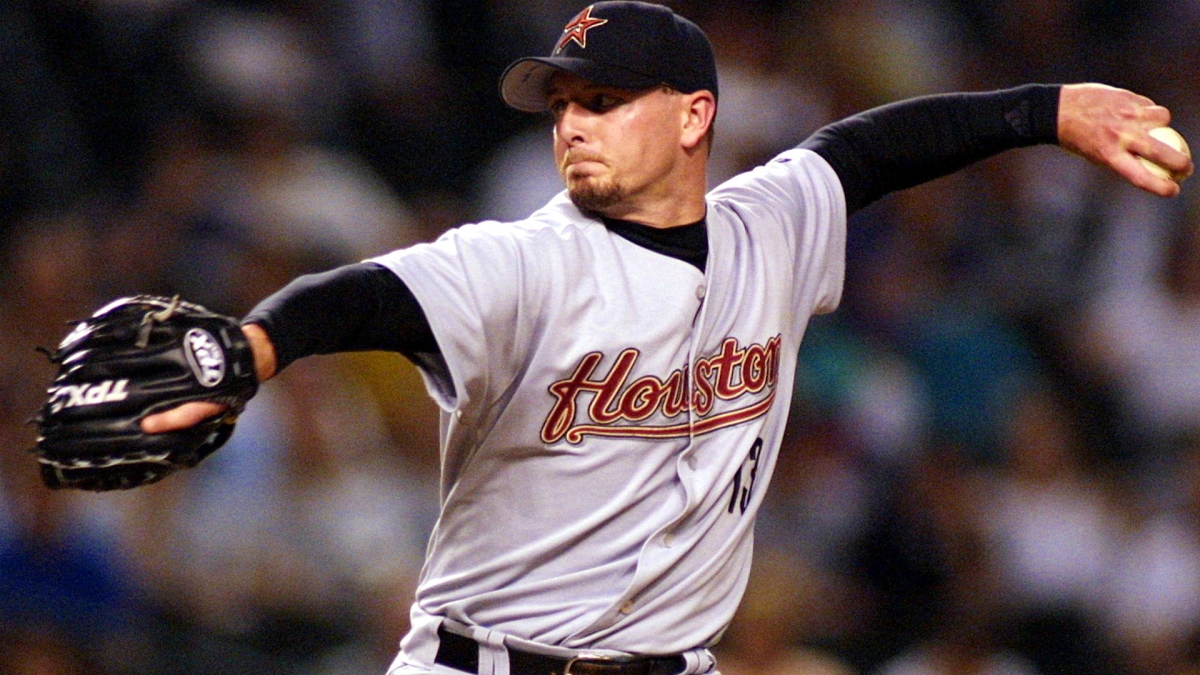
Of course, there are two ridiculously-qualified candidates who are ostensibly first-ballot locks, but PED Penitents Manny Ramirez and Álex Rodríguez are not "normal" because they epitomize the "predictable" and "unsurprising" voting trends of BBWAA voters, the majority of whom will not vote for players with performance-enhancing drug (PED) issues—and both Man-Ram and especially A-Rod are among the most egregious offenders despite posting stratospheric career numbers, admittedly inflated by PED usage, that otherwise scream Hall of Famer.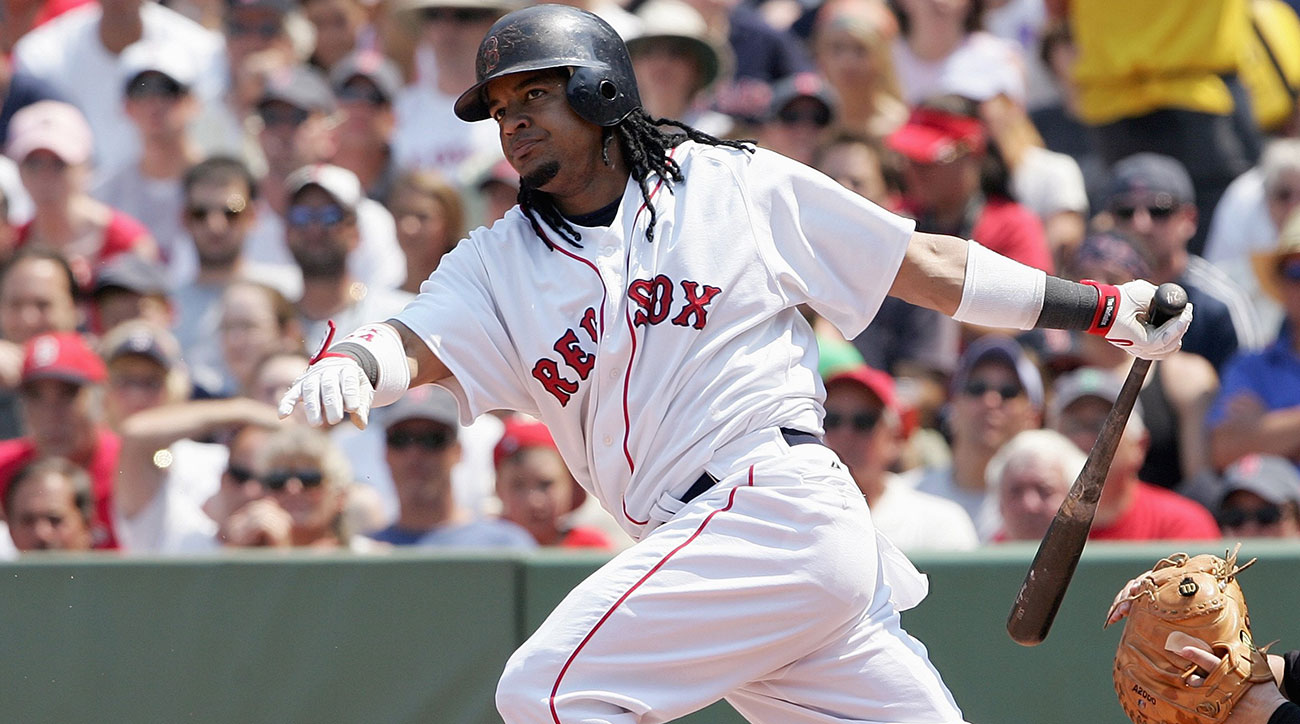
Manny won't be being Manny much longer: Manny Ramirez's chances for the Hall of Fame are as gone as that ball he just hit. Fellow PED Penitent Álex Rodríguez is in the same boat.
Speaking of cheaters, Carlos Beltrán, not an overwhelming first-ballot pick, is hoping that the third time will be a Cooperstown charm for him as he pays his penance for being the ringleader of the sign-stealing scandal that tarnished the Houston Astros' 2017 World Series championship. Meanwhile, Omar Vizquel, a borderline Hall of Famer, has seen what support he had crumble beginning in 2022 as allegations of domestic abuse and sexual harassment surfaced, causing voters to abandon him as if he had cooties.
Known or suspected PED usage is a contentious issue that I have repeatedly and vociferously challenged, and it is an issue that is not going away any time soon: Lots of luck, Robinson Canó, whenever you get onto your first BBWAA ballot. In a nutshell, I object to the punishment of players exclusively when not only did Major League Baseball ignore, then slow-walk, the PED issue because it rejuvenated baseball following the 1994 work stoppage, it rewarded the "PED enablers"—managers, executives, and particularly then-presiding commissioner of baseball Bud Selig, all of whom willingly turned a blind eye toward the PED influence on the game—with near-automatic Hall of Fame inductions.
But the PED issue happened during a player's career and affected his on-field performance. More disturbing is the increasingly censorious trend by BBWAA voters to blackball a candidate for his behavior off the field and after his playing career was over. In addition to Vizquel, Curt Schilling was blackballed for his toxic political views on social media, which won't prevent you from becoming president of the United States—quite the opposite—but it will keep you out of the Baseball Hall of Fame.
Moreover, the recent death of Pete Rose reminds us once more that baseball's all-time hit leader is not in the Hall of Fame, nor is its all-time home run leader or one of its all-time greatest pitchers (hint: third in strikeouts, ninth in wins, nicknamed "the Rocket").
In fact, the National Baseball Hall of Fame seems to have taken to heart Hall of Famer Joe Morgan's 2017 pearl-clutching plea to not vote for known or suspected PED users so that visits to Cooperstown will yield (paraphrasing) "a feel-good family experience" untainted by the presence of those who "cheated the game."
Thus the drive to make the Hall of Fame baseball's Disneyland is turning it into a Hall of Saints as voters increasingly judge a candidate's morality while assessing his baseball qualifications; that is, at least in part, enough to spur one qualified voter, noted sports writer Howard Bryant, to state that he began abstaining from the Hall of Fame voting process altogether five years ago in his reflection on Pete Rose, which notes the hypocrisy of continuing to ban Rose for his gambling on games now that baseball, like the rest of the Big Four North American team sports, heartily endorses legalized gambling.
This by no means condones Omar Vizquel's alleged behavior or legitimizes Curt Schilling's opinions, which are diametrically opposed to my own although I've maintained since 2011 that he is a no-doubt Hall of Famer. Moreover, it is not simply a matter of divorcing a candidate's playing career—which, presumably, is all that matters in terms of memorializing his accomplishments during that career—from his post-playing-career life. Domestic abuse, sexual harassment, prejudice, bigotry, inflammatory speech, and any other transgressions not listed here are not new.
How many of those already inducted into the Baseball Hall of Fame are guilty of any of those transgressions that seem to obsess current voters? Should previous Hall of Famers be investigated to determine if they are guilty? If they are found liable or guilty, will the Hall take any action to remove or at least censure them for their transgressions? It all becomes a proverbial slippery slope, doesn't it? However, the Hall and its voters have already lifted the lid to Pandora's box, and now they have to deal with the consequences of their actions because it's too late to try to stuff them back into the box and close the lid.
All of which has made Hall of Fame voting increasingly complicated, which may be why Howard Bryant has decided to forego his opportunity to help decide which players might be inducted into the Hall of Fame. Fortunately, I will never become an actual Hall of Fame voter, so like many baseball fans I will fire in my shots from the cheap seats.
New Candidates
New to the 2025 BBWAA ballot are 14 candidates who reinforce the notion that Hall of Fame voting has returned to normal. None of them have any apparent taint of scandal or misdoing.
As noted previously, only starting pitcher CC Sabathia and right fielder Ichiro Suzuki are likely to be inducted, although neither might not be elected on this ballot despite each having reached vaunted 3000 counting-number career plateaus; for Sabathia, it's strikeouts, and for Ichiro, it's hits. None of the remaining dozen has a compelling Cooperstown case, but a few can make credible cases that can keep them on subsequent ballots.
Joining Sabathia and Suzuki as first-timers are Carlos González, Curtis Granderson, Félix Hernández, Adam Jones, Ian Kinsler, Russell Martin, Brian McCann, Dustin Pedroia, Hanley Ramirez, Fernando Rodney, Troy Tulowitzki, and Ben Zobrist.
In 2020, I posted a ballot forecast for the years 2021 to 2025, and for 2025 I evaluated Granderson, Kinsler, McCann, Sabathia, Suzuki, Tulowitzki, and Zobrist. (At that time, neither Hernández nor Pedroia had announced their retirement; otherwise, I would have included them.)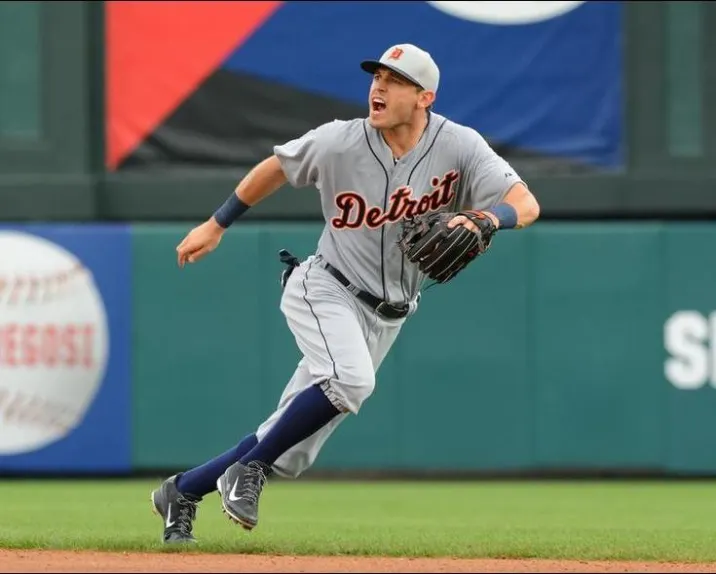
(Photo: Getty Images) Is Ian Kinsler a "one-and-doner"? Or did the excellent two-way second baseman have a career illustrious enough for the Hall of Fame?
I tagged Sabathia and Suzuki as Hall of Famers who probably wouldn't get in on their first ballot, and the rest as one-and-doners save perhaps Tulowitzki, whom I labeled a hard-luck case, and who might garner enough initial support to make it to the next ballot.
To see how the eleven position players, two starting pitchers, and one relief pitcher stack up against the competition already on previous ballots, the following tables detail Hall of Fame statistics for both these new candidates and the returning candidates.
The table below details the Hall of Fame statistics (explained in the legend beneath the table) for new and returning position players on the 2025 Hall of Fame ballot, ranked by bWAR. Position players appearing for the first time on the ballot are in bold type.
|
Hall of Fame Statistics for Position Players on the 2025 BBWAA Hall of Fame Ballot, Ranked by bWAR |
|||||||||
|
Player |
Pos. |
fWAR |
bWAR |
oWAR |
dWAR |
JAWS |
JAWS Rank* |
HoF Mon. (≈100) |
HoF Std. (≈50) |
|
Rodríguez, Álex |
SS |
113.6 |
117.6 |
115.3 |
10.4 |
90.9 |
2 |
390 |
77 |
|
Beltrán, Carlos |
CF |
67.4 |
70.1 |
66.6 |
2.0 |
57.2 |
9 |
126 |
52 |
|
Ramirez, Manny |
LF |
66.3 |
69.3 |
81.8 |
–21.7 |
54.6 |
10 |
226 |
69 |
|
Utley, Chase |
2B |
61.5 |
64.5 |
51.3 |
17.3 |
56.9 |
12 |
94 |
36 |
|
Jones, Andruw |
CF |
67.0 |
62.7 |
39.8 |
24.4 |
54.6 |
11 |
109 |
34 |
|
Abreu, Bobby |
RF |
59.7 |
60.2 |
61.6 |
–10.9 |
50.9 |
22 |
95 |
54 |
|
Suzuki, Ichiro |
RF |
57.5 |
60.0 |
47.8 |
5.4 |
51.9 |
17 |
235 |
44 |
|
Kinsler, Ian |
2B |
47.3 |
54.1 |
44.8 |
15.1 |
46.1 |
21 |
67 |
35 |
|
Pedroia, Dustin |
2B |
44.8 |
51.9 |
41.4 |
15.5 |
46.5 |
19 |
94 |
32 |
|
Hunter, Torii |
CF |
42.9 |
50.7 |
47.4 |
4.0 |
40.7 |
35 |
58 |
34 |
|
Wright, David |
3B |
51.3 |
49.2 |
51.9 |
0.3 |
44.3 |
27 |
74 |
36 |
|
Rollins, Jimmy |
SS |
49.7 |
47.6 |
43.7 |
15.9 |
40.1 |
34 |
121 |
42 |
|
Granderson, Curtis |
CF |
47.0 |
47.2 |
43.6 |
3.8 |
40.9 |
33 |
61 |
28 |
|
Vizquel, Omar |
SS |
42.5 |
45.6 |
32.9 |
29.5 |
36.2 |
45 |
120 |
42 |
|
Zobrist, Ben |
2B |
42.7 |
44.5 |
39.2 |
6.4 |
42.1 |
27 |
22 |
23 |
|
Tulowitzki, Troy |
SS |
37.8 |
44.5 |
34.2 |
17.1 |
42.4 |
28 |
46 |
35 |
|
Martin, Russell |
C |
54.5 |
38.8 |
33.1 |
16.5 |
33.0 |
28 |
54 |
30 |
|
Ramirez, Hanley |
SS |
41.8 |
38.0 |
49.6 |
–8.7 |
36.5 |
42 |
64 |
36 |
|
Jones, Adam |
CF |
29.1 |
32.6 |
37.3 |
–0.6 |
29.2 |
81 |
36 |
19 |
|
McCann, Brian |
C |
52.1 |
32.0 |
34.2 |
7.9 |
28.3 |
35 |
84 |
35 |
|
González, Carlos |
LF |
25.0 |
24.4 |
22.5 |
–2.7 |
24.1 |
94 |
44 |
22 |
fWAR: Career Wins Above Replacement as calculated by FanGraphs.
bWAR: Career Wins Above Replacement as calculated by Baseball Reference.
oWAR: Career Wins Above Replacement, offensive value only (from Baseball Reference)
dWAR: Career Wins Above Replacement, defensive value only (from Baseball Reference)
JAWS: JAffe War Score system—an average of a player's career WAR and his seven-year WAR peak.
JAWS Rank: The player's ranking at that position by JAWS rating. (*) In this table, JAWS rank is for the player at his primary position only and is not a ranking of all position players.
Hall of Fame Monitor: An index of how likely a player is to be inducted to the Hall of Fame based on his entire playing record (offensive, defensive, awards, position played, postseason success), with an index score of 100 being a good possibility and 130 a "virtual cinch." Developed by Baseball Reference from a creation by Bill James.
Hall of Fame Standards: An index of performance standards, indexed to 50 as being the score for an average Hall of Famer. Developed by Baseball Reference from a creation by Bill James.
For the most part, value assessments by Baseball Reference and FanGraphs for position players fall within five or fewer wins above replacement except for catchers Russell Martin and Brian McCann, with both ranked within the top 15 receivers all-time by Fangraphs (Martin 11th, McCann 15th), while Baseball Reference's JAWS ranks Martin 28th and McCann 35th. (FanGraphs places a greater emphasis on peripheral statistics than does Baseball Reference, which in some instances results in wider variances between the two calculations.)
The table below details the Hall of Fame statistics for all the starting pitchers on the 2025 BBWAA Hall of Fame ballot, ranked by bWAR. Starting pitchers appearing for the first time on the ballot are in bold type.
|
Hall of Fame Statistics for Starting Pitchers on the 2025 BBWAA Hall of Fame Ballot, Ranked by bWAR |
||||||||
|
Player |
fWAR |
fWAR Rank |
bWAR |
S-JAWS |
S-JAWS Rank |
ERA+ |
HoF Mon. (≈100) |
HoF Std. (≈50) |
|
Sabathia, CC |
66.5 |
39 |
61.8 |
50.8 |
55 |
116 |
128 |
48 |
|
Pettitte, Andy |
68.2 |
35 |
60.7 |
47.2 |
82 |
117 |
128 |
44 |
|
Buehrle, Mark |
52.3 |
80 |
60.0 |
47.4 |
79 |
117 |
52 |
31 |
|
Hernández, Félix |
54.0 |
71 |
49.9 |
44.1 |
97 |
117 |
67 |
31 |
S-JAWS: Starter JAWS. JAWS adjusted to offset WAR generated by pitchers with a significant number of appearances as a starting pitcher. (Modern pitchers tend to have an S-JAWS identical to their JAWS.)
ERA+: Earned run average league- and park-adjusted and indexed to 100, which indicates league-average.
Variance of pitchers' WAR between Baseball Reference and FanGraphs tends to be greater because Baseball Reference is rooted in runs allowed and innings pitched while FanGraphs leans on fielding-independent pitching (FIP), whose factors are the Three True Outcomes: home runs, bases on balls, and strikeouts. Thus, it's not surprising that Félix Hernández, Andy Pettitte, and CC Sabathia, all of whose career strikeout totals are north of 2400, have a higher fWAR than bWAR while Mark Buehrle, with 1870 strikeouts in 3283.1 innings pitched, takes an fWAR hit.
The table below details the Hall of Fame statistics for the relief pitchers appearing on the 2025 BBWAA Hall of Fame ballot, ranked by bWAR. Relief pitchers appearing for the first time on the ballot are in bold type.
|
Hall of Fame Statistics for Relief Pitchers on the 2025 BBWAA Hall of Fame Ballot, Ranked by bWAR |
||||||||
|
Player |
fWAR |
fWAR Rank |
bWAR |
R-JAWS |
R-JAWS Rank |
ERA+ |
HoF Mon. (≈100) |
HoF Std. (≈50) |
|
Wagner, Billy |
24.0 |
7 |
27.8 |
24.9 |
6 |
187 |
107 |
24 |
|
Rodríguez, Francisco |
16.3 |
21 |
24.2 |
21.1 |
13 |
148 |
124 |
16 |
|
Rodney, Fernando |
8.6 |
115 |
7.4 |
4.8 |
326 |
110 |
86 |
7 |
R-JAWS: Reliever JAWS. JAWS adjusted to reflect a reliever's pitching environment. Calculated as the average of bWAR, Win Probability Added (WPA), and WPA divided by Leverage Index (LI) (WPA/LI).
With a strikeouts per nine innings pitched of 9.1 (943 strikeouts in 933.0 innings pitched), Fernando Rodney gets a WAR boost from FanGraphs as do the high-strikeout starting pitchers above, but his triple-digit rankings by either WAR method suggest that his making the ballot was a nod to his longevity rather than his effectiveness.
Outfielders
Starting with the outfielders new to the 2025 BBWAA ballot, Curtis Granderson and Adam Jones join three center fielders rolled over from the previous ballot—Carlos Beltrán, Torii Hunter, and Andruw Jones (no relation to Adam)—and while "position crowding," having a number of candidates at the same position, shouldn't be a factor in evaluating any single candidate, having Beltrán and Andruw Jones as "comps" hands the newcomers no favors.
The corner positions aren't as impacted, which likely makes evaluating left fielder Carlos Gonzales and right fielder Ichiro Suzuki less position-conscious.
Carlos Gonzalez
Considered a left fielder although he actually played 217 more games as a right fielder, Carlos Gonzalez spent the bulk of his 12-year career with the Colorado Rockies, where he made a splash in his first full season in 2010 but never matched, let alone exceeded, that performance.
Career Achievements: Three-time All-Star. Three Gold Glove Awards. Two Silver Slugger Awards. One batting title.
Career Highlights: Carlos Gonzalez's 2010 breakout season saw the Rockies' left fielder lead the National League with a .336 batting average and 197 hits, which included 34 doubles and 34 home runs, and lead the Majors with 351 total bases—no small feat considering that he was battling Albert Pujols and Joey Votto for NL Most Valuable Player honors. (Votto won; Gonzalez came in third behind Pujols.) "CarGo" also amassed a career-high 5.9 bWAR.
Gonzalez, benefiting from playing his home games at very hitter-friendly Coors Field, was a solid hitter for a seven-year stretch from 2010 to 2016, posting a .296/.353/.535/.888 slash line and a 123 OPS+, with seasonal averages of 143 hits, 28 doubles, 26 home runs, 82 runs scored, 86 RBI, 13 stolen bases, and 3.1 bWAR. But after experiencing a marked drop-off in production in 2017, he lasted just one more year in Colorado before ending his career with a handful of games for the Cleveland Indians and Chicago Cubs.
Verdict: With a career slash line of .285/.343/.500/.843, Carlos Gonzalez generated a 112 OPS+ and 24.4 bWAR, which is essentially his JAWS of 24.1 that ranks him 94th among all left fielders. CarGo might get a hometown vote or two before exiting the BBWAA ballot after his only appearance.
Curtis Granderson
Beginning his 16-year career with the Detroit Tigers in 2004, Curtis Granderson moved to New York in 2010 for significant stints with the Yankees and Mets. Despite being among career leaders in strikeouts, the center fielder led the league just once early in his career and never exceeded 200 strikeouts in a season. In fact, the "Grandy Man" was sneaky-good: He remained a center fielder for much of his career, generating 3.8 in career dWAR with 34 defensive runs saved overall as he slugged 346 doubles and 344 home runs while adding 95 triples and 153 stolen bases in 203 attempts, a power-speed combination that found him batting leadoff about half the time for his 2027 total games played.
Career Achievements: Three-time All-Star. One Silver Slugger Award. One Roberto Clemente Humanitarian Award.
Career Top 100 Leaderboards:
Offense: Strikeouts: 1916 (13th).
Defense (center field only): Fielding percentage: .993 (12th). Games: 1254 (56th). Putouts: 2989 (60th).
Career Highlights: Enjoying a banner year in 2007, Curtis Granderson posted a .302/.361/.552/.913 slash line, good for a 135 OPS+, from career highs in hits (185), doubles (38), and a Major League-leading 23 triples; moreover, by adding 23 home runs, the Detroit Tigers' center fielder became one of only six players in the exclusive "20-20-20" doubles-triples-home runs club—and by stealing 26 bases, he became only one of four players to reach that "20-20-20-20" mark. The Grandy Man's 7.6 bWAR was another career high and the first of three years with a seasonal bWAR of 5.0 or better.
With the Yankees in 2011, Granderson led the American League in runs batted in (119) and the Majors in runs scored (136); he finished fourth in AL Most Valuable Player voting and earned his only Silver Slugger Award with 41 home runs to go with 26 doubles and ten triples. He was in his decline phase when he joined the cross-town Mets in 2014, his age-33 season, although he still hit at least 24 doubles and 20 home runs a season from 2014 to 2017 before bowing out after 2019.
Verdict: Never a marquee presence, Curtis Granderson was a valuable two-way center fielder, later moving to right field, with a strong power-speed one-two punch who accumulated 47.1 bWAR over his career. His 40.9 JAWS ranks 33rd all-time, which won't get him into the Hall of Fame but it might keep him on the ballot for a few more years.
Adam Jones
Bookended by his two-year start with the Seattle Mariners beginning in 2006 and his final year as an Arizona Diamondback in 2019, Adam Jones was a durable fixture in center field for the Baltimore Orioles from 2008 to 2018, contributing both in the field and at the plate although he was never a league-leader in any significant category.
Career Achievements: Five-time All-Star. Four Gold Glove Awards. One Silver Slugger Award.
Career Top 100 Leaderboards:
Offense: Hit by pitch: 103 (96th).
Defense (center field only): Games: 1590 (28th). Putouts: 3964 (29th). Assists: 96 (49th). Errors: 56 (69th). Range factor/game: 2.55 (65th).
Career Highlights: By 2008, Adam Jones was the Orioles' starting center fielder, and for a five-year stretch from 2011 to 2015, Jones slashed .281/.318/.482/.800, generating a 116 OPS+, as he posted seasonal averages of 154 games played, 653 plate appearances, 172 hits including 31 doubles and 29 home runs, 87 runs scored, 90 runs driven in, ten stolen bases, and 4.1 bWAR. Named to five All-Star squads; he finished his 14-year MLB career with 336 doubles, 282 home runs, a .454 slugging percentage, and a 106 OPS+.
Verdict: Adam Jones is in the top ten for several Orioles records and is certain to be inducted into the storied franchise's hall of fame. However, except for a hometown vote or two, his sojourn on the BBWAA will be brief.
Ichiro Suzuki
The first Japanese superstar in American Major League Baseball, right fielder Ichiro Suzuki caused a sensation as soon as he suited up for the Seattle Mariners in 2001, joining Fred Lynn as the only player to win Rookie of the Year and Most Valuable Player honors in the same year. A perennial All-Star and Gold Glove Award recipient for a decade, Ichiro, who had come to the United States at age 28 after nine spectacular years in Nippon Professional Baseball, hung on for several seasons to collect 3000 hits in MLB, a goal he finally attained although he was shell of his former self after doing so.
Career Achievements: Rookie of the Year. Most Valuable Player Award. Ten-time All-Star; one-time All-Star MVP. Ten Gold Glove Awards. Three Silver Slugger Awards. Two batting titles. Single-season record for hits (262).
Career Top 100 Leaderboards:
Offense: Singles: 2514 (6th). Hits: 3089 (25th). Intentional walks: 181 (28th). At-bats: 9934 (32nd). Stolen bases: 509 (35th). Games: 2653 (38th). Outs made: 7152 (46th). Plate appearances: 10,734 (49th). Stolen base percentage: 81.31 (55th). Times on base: 3791 (70th). Caught stealing: 117 (74th). Runs created: 1501 (89th). Total bases: 3994 (90th).
Defense (right field only): Total Zone runs: 127 (6th). Fielding percentage: .992 (7th). Putouts: 4005 (8th). Games: 1970 (12th). Range factor/game: 2.08 (23rd). Assists: 100 (57th). Double plays turned: 22 (73rd).
Career Highlights: So much ink has been spilled over Ichiro Suzuki's career since Day One (I've written about his Hall of Fame chances first in 2012 and then again in 2016) that we'll skip a recap to look at the stark contrast between Peak Ichiro and Weak Ichiro, his first ten years versus his last nine years.
From 2001 to 2010, in 1588 games and 7339 plate appearances, Ichiro delivered a slash line of .331/.376/.430/.806, producing a 117 OPS+, while he averaged, per season, 224 hits, 105 runs scored, 38 stolen bases, and 5.5 bWAR. Over ten years, that amounted to 2244 hits, 1047 runs scored, and 383 stolen bases. For voters drawn to volume, Suzuki's counting numbers might seem light, and by continuing to play for nine more years, he did reach plateaus in hits (3089), runs scored (1420), and stolen bases (509). But as a career peak, Ichiro's ten-year run is a remarkable accomplishment.
How remarkable it is can be glimpsed by Suzuki's career bWAR of 60.0, with most of it, 54.8, generated during this peak. For the nine-year remainder of his career, he generated 5.2 bWAR, which was almost as much as he generated in a single average peak season.
From 2011 to 2019, in 1065 games and 3395 plate appearances, Ichiro delivered a slash line of .268/.309/.342/.652, producing an 83 OPS+. Granted, Suzuki was a part-time player during his last six seasons, collecting at least 300 plate appearances three times and at least 400 only once—but that is the point: Ichiro Suzuki was at best a replacement-level player for nearly half of his MLB career and, in all likelihood, would have been designated for assignment long before he called it quits had he not been Ichiro Suzuki.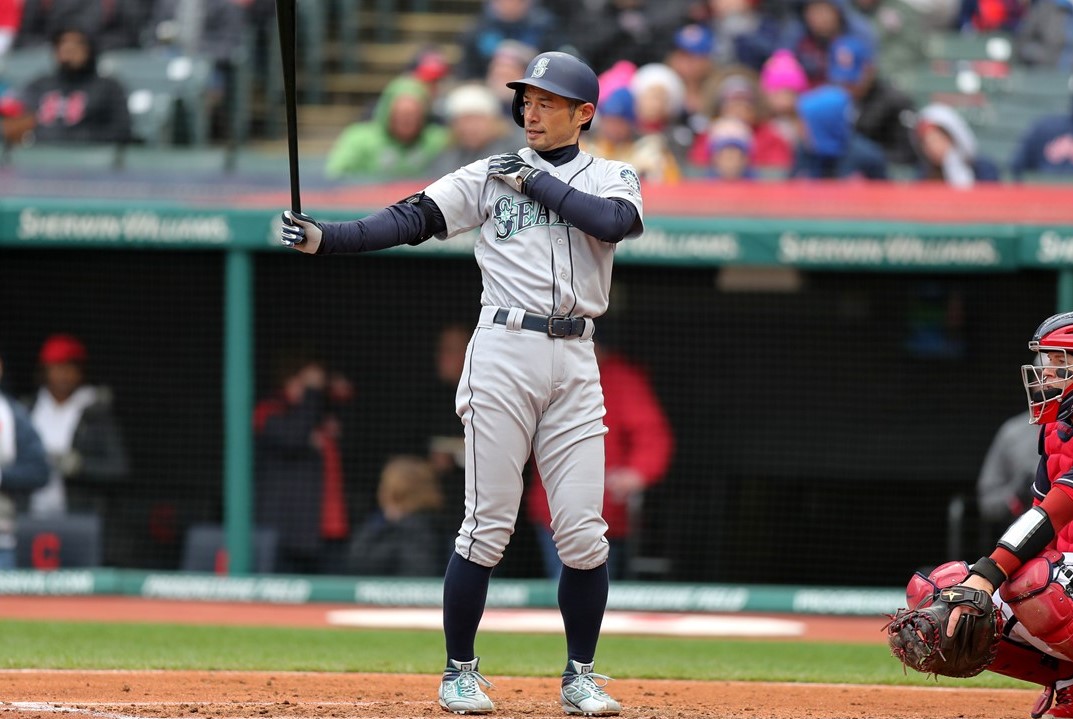
Will Ichiro Suzuki be a first-ballot Hall of Famer? Or will Peak Ichiro be held back by Weak Ichiro, the mediocre second half of his career that contrasts with his brilliant first half?
Verdict: Ichiro Suzuki will be inducted into the Hall of Fame, although it might not be on this ballot even if he is a member of the 3000-hit club. As noted above, Peak Ichiro and Weak Ichiro offer such a stark contrast that voters might penalize him for hanging on so long after his effectiveness had eroded. Still, Ichiro's tremendous peak and its attendant bling is auspicious enough to set him to writing his induction speech. Well, sometime, anyway.
Infielders
As with the center fielders, the middle infielders new to this ballot drive up the talent compression and in turn the "position crowding." Returning second baseman Chase Utley is joined by three new second basemen: Ian Kinsler, Dustin Pedroia, and Ben Zobrist, although Zobrist's versatility may be looked at differently given that he was a "super scrub" who could fill in at several positions.
With three shortstops—Alex Rodríguez, Jimmy Rollins, and Omar Vizquel—already on the ballot, Hanley Ramirez and Troy Tulowitzki will invite comparisons to them (although Rodríguez also spent significant time at third). And with returning David Wright the only third-base candidate, the corner infield positions look sparse; in fact, this ballot marks the first time this century that there hasn't been a full-time first baseman candidate.
Ian Kinsler
Like Curtis Granderson, Ian Kinsler was sneaky-good. How sneaky-good? After the 2013 season, the Detroit Tigers traded Prince Fielder to the Texas Rangers to acquire the second baseman and even threw in $30 million in cash to cover some of the salary differential. An excellent two-way second baseman, Kinsler spent the first eight years of his 14-year career with the Rangers, playing for the 2010 and 2011 American League Pennant winners during their back-to-back World Series losses, before his move to Detroit. Late in his career, he did win a World Series ring with the 2018 Red Sox.
Career Achievements: Four-time All-Star. Two Gold Glove Awards. World Series champion (2018).
Career Top 100 Leaderboards:
Defense (second base only): Total Zone runs: 80 (8th). Double plays turned: 1291 (13th). Games: 1828 (20th). Putouts: 3397 (45th). Assists: 5219 (81st). Errors committed: 168 (90th).
Career Highlights: As a minor leaguer, Ian Kinsler won a Diamond in the Rough Award before he debuted with the Texas Rangers in 2006. By 2008, that diamond began to shine as he was named to the first of four All-Star squads by rapping out a .319/.375/.517/.892 slash line that yielded a career-high 134 OPS+ bolstered by 41 doubles and 18 home runs, while he scored 102 runs, the first of six 100-run seasons.
He joined the 30-30 club first in 2009 with 31 home runs and 31 stolen bases, and again in 2011 with 32 dingers and 30 swipes. And although his two Gold Gloves came later, Kinsler led the Major Leagues in Total Zone total fielding runs above average for second-sackers with 14 in 2009 and the American League with 12 Total Zone runs two years later.
In 2014, his first year with the Tigers, "Kins" paced the Majors in plate appearances (726) and at-bats (684) as he hit 40 doubles for the third time and established career highs in hits (188) and runs batted in (92) while making his fourth and final All-Star team. Winning his first Gold Glove in 2016, his age-34 season, Kinsler was dealt to the Red Sox in 2018 for their pennant push that resulted in Boston's fourth World Series victory of the century; in addition to the Series ring, Kinsler won his second Gold Glove. With five seasons with 5.0 bWAR or more, Ian Kinsler amassed 54.1 bWAR and 15.1 dWAR, 18th all-time among second baseman.
Verdict: Frankly, I'm more impressed with Ian Kinsler now than I had been in 2020, when I labeled him a one-and-doner. That's what sneaky-good will do for you. Kinsler's JAWS of 46.1 places him 21st all-time, just ahead of four current Hall of Fame second basemen with at least 40.0 JAWS, although with Dustin Pedroia debuting on this ballot as well, Ian Kinsler may find himself waiting to be discovered as a diamond in the rough again.
However, he does deserve that chance to be re-evaluated, and I hope at least five percent of this year's voters feel the same way too as a second look at Kinsler does reveal more about this quietly impressive second baseman.
Dustin Pedroia
Speaking of the devil, Dustin Pedroia didn't need to be uncovered in order to shine—his dazzling began once he became the American League's Rookie of the Year in 2007 and then the AL's Most Valuable player the following season. In a 14-year career all spent with the Boston Red Sox, "Laser Show" established the foundation for a Hall of Fame career right off the bat, but health woes starting in 2010 hampered him until he finally announced his retirement in 2021.
Career Achievements: Rookie of the Year. Most Valuable Player Award. Four-time All-Star. Four Gold Glove Awards. One Silver Slugger Award. Two-time World Series champion (2007, 2013).
Career Top 100 Leaderboards:
Defense (second base only): Fielding percentage: .991 (3rd). Total Zone runs: 98 (5th). Games: 1492 (41st). Double plays turned: 940 (42nd). Assists: 4004 (51st). Putouts: 2574 (92nd).
Career Highlights: Dustin Pedroia burst into prominence as Boston's regular second baseman in 2007, earning AL Rookie of the Year honors with a .317/.380/.442/.823 slash line while hitting 39 doubles, the first of eight seasons in which he hit 30 or more doubles, and helping the Red Sox to their second World Series championship since 2004; facing off against the Colorado Rockies' Jeff Francis in the first inning of Game One, Pedroia became the first rookie to lead off a World Series by hitting a home run and only the second-ever batter to do so after Don Buford.
"Petey" literally doubled down in 2008 as his slash line of .326/.376/.493/.869 yielded a 123 OPS+ while he led the AL in runs scored (118) and paced the Major Leagues with 213 hits and 54 doubles. Earning his first All-Star selection, first Gold Glove Award, and his only Silver Slugger Award in 2008, Pedroia was also named the AL's Most Valuable Player. In addition, he swiped 20 bases, the first of four years with 20 or more steals, while getting caught just once.
Leading the AL in runs scored (115) again in 2009, Dustin Pedroia seemed on course for a Hall of Fame career, but a foot injury in 2010 halved his playing time while proving a portent of his future health woes. He rebounded in 2011 with a career-high 8.0 bWAR, and in 2016 he slashed .318/.376/.449/.825 while generating a 117 OPS+ and 5.4 bWAR, but knee surgery after the 2017 season effectively ended his career.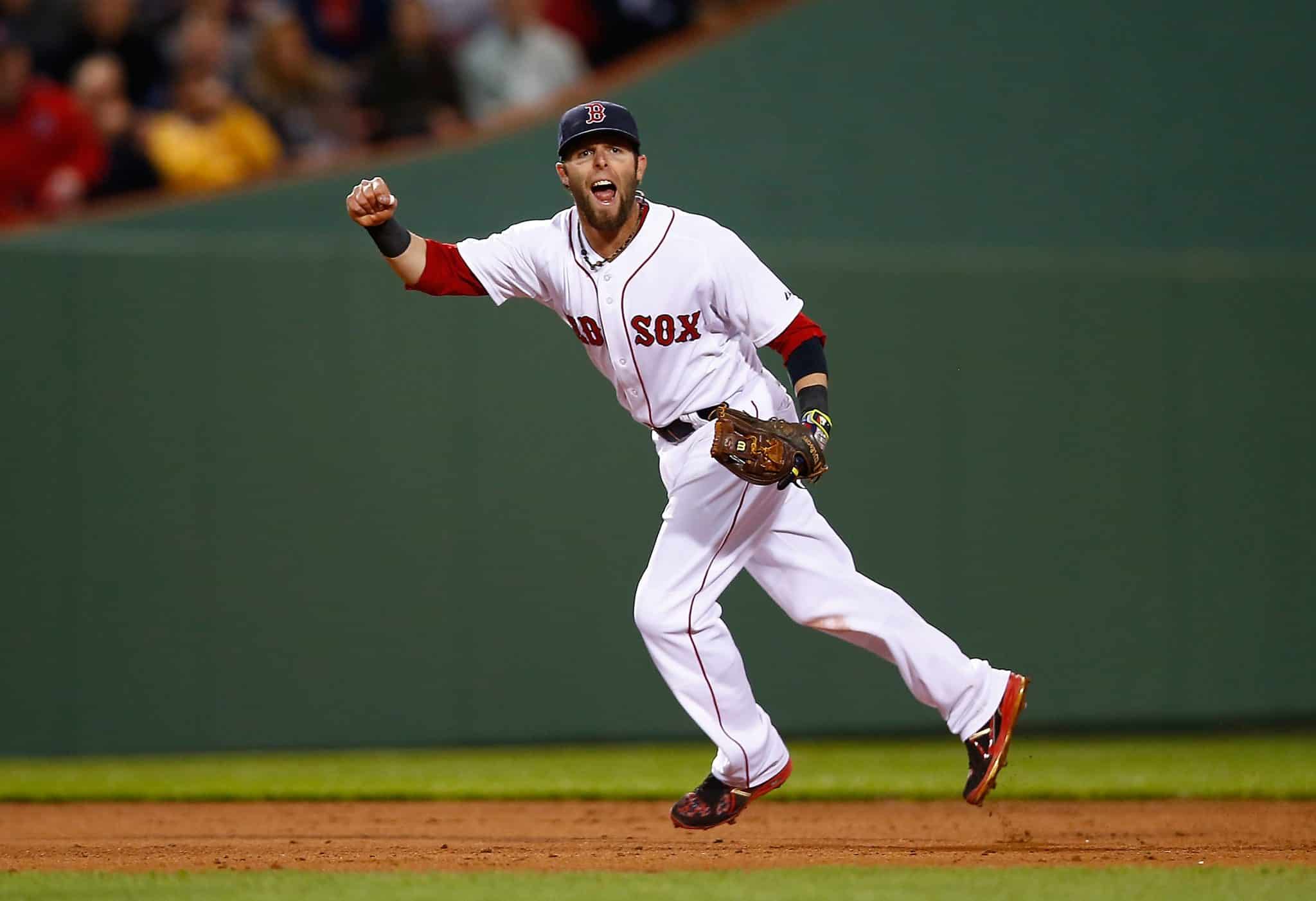
A Rookie of the Year, then a Most Valuable Player, second baseman Dustin Pedroia burst out of the gate en route to the Hall of Fame before injuries slowed his career to a halt.
Verdict: Like countless players before (and after) him, Dustin Pedroia launched his career with a flourish until the physical toll of top-flight baseball competition felled him. And like Ian Kinsler, who is a fraction behind Pedroia when measured by JAWS (46.1 compared to Pedroia's 46.5), Petey deserves at least five percent of the vote to keep him eligible for further Hall of Fame consideration, although both are overshadowed by Chase Utley, whose JAWS rating is a full ten wins better than both. Still, Pedroia's bling—MVP, Rookie of the Year, two World Series rings (one better than Kinsler and Utley)—might give him an edge, but only if voters keep his chances alive for a few more years.
Hanley Ramirez
Much like Dustin Pedroia, Hanley Ramirez attracted attention out of the box as the 2006 Rookie of the Year shortstop for the Florida Marlins before winning a batting title and coming in second in National League Most Valuable Player voting to another otherworldly season by Albert Pujols. Again like Pedroia, Ramirez began to battle injuries as his career progressed, but unlike the Red Sox second baseman, Ramirez was strictly an offensive shortstop whose limited defensive skills soon eroded, pushing him to various other positions as his career meandered across three other teams before ending after the 2019 season.
Career Achievements: Rookie of the Year. Three-time All-Star. Two Silver Slugger Awards. One batting title.
Career Highlights: Hanley Ramirez first made his mark in 2006 in Florida, where he displayed excellent power-speed numbers in his first full season as the Marlins' shortstop, hitting 46 doubles and 17 home runs while stealing 51 bases en route to being named the National League's Rookie of the Year.
From 2006 to 2010, Ramirez hit .300 or better and generated a 136 OPS+ from a slash line of .313/.385/.521/.906 while averaging, per season, 187 hits including 40 doubles and 25 home runs, 112 runs scored, 78 runs driven in, 39 stolen bases, and an All-Star-caliber 5.2 bWAR as he indeed was named to three All-Star teams. He led the Majors in runs scored (125) in 2008 before pacing the NL with a .342 batting average the following year; Ramirez also garnered a Silver Slugger Award for each of those two seasons.
But as injuries began to plague him starting in 2010, Ramirez drifted to the Los Angeles Dodgers and then to the Boston Red Sox, who put him in left field in 2015, a position he had never played before. Compounded by the unique challenges of Fenway Park's Green Monster, the experiment was a disaster as Ramirez was rated the worst left fielder defensively while injuries also limited him to 105 games worth –0.7 in bWAR. A move to first base in 2016 found him hitting 30 home runs while knocking in a career-high 111 runs, his last gasp as he fell below average for his last three seasons before retiring.
Verdict: Never a defensive ace particularly at shortstop, Hanley Ramirez was worth –8.7 in dWAR over his career at all positions while posting –40 Total Zone total fielding runs above average and –76 defensive runs saved as a shortstop. That put the onus on his offensive capabilities, and he did collect 1834 hits including 375 doubles and 281 home runs. His 36.5 JAWS ranks 42nd all-time among shortstops, below marginal Hall of Famers Travis Jackson, Phil Rizzuto, and Rabbit Maranville, and Ramirez will likely fall significantly below the five-percent threshold necessary to stay on a second ballot.
Troy Tulowitzki
On this ballot, Troy Tulowitzki is the poster child for how injuries can sabotage a Hall of Fame career. "Tulo" was a scary-good two-way shortstop from the mold of Cal Ripken, Jr., and Alex Rodríguez, and he would have posted similar stratospheric numbers, whether clean (Ripken) or tainted (Rodríguez) and even from playing most of his 13-year career with the Colorado Rockies (albeit post-humidor to normalize the baseballs), had he been able to play at least 140 games a season more than three times.
Career Achievements: Five-time All-Star. Two Gold Glove Awards. Two Silver Slugger Awards.
Career Top 100 Leaderboards:
Defense (shortstop only): Fielding percentage: .985 (2nd). Total Zone runs: 122 (36th). Double plays turned: 871 (61st). Defensive WAR: 17.1 (83rd). Games: 1268 (95th).
Career Highlights: By 2007, Troy Tulowitzki was the Colorado Rockies' starting shortstop posting career highs in games played (155), plate appearances (682), at-bats (609), hits (177), runs scored (104), and bWAR (6.8) as the Milwaukee Brewers' Ryan Braun bested Tulowitzki by a sliver for National League Rookie of the Year recognition; Tulo also went to his only World Series in 2007 as the Rockies were swept by the Boston Red Sox.
But the rangy shortstop's battle with injuries began in 2008, initiating his up-and-down fortunes that plagued him until his retirement. In 2009, he did have career highs in home runs (32), stolen bases (20), and bases on balls (73), and the following year his slash line of .315/.381/.568/.969 produced a 138 OPS+, 32 doubles, 27 home runs, 89 runs scored, and 95 RBI in just 122 games and 529 plate appearances as he made his first All-Star squad and earned his first Gold Glove and Silver Slugger Awards.
His 2011 season marked the last time he would play at least 140 games and make at least 600 plate appearances while banging out 162 hits, including 36 doubles (a career high) and 30 home runs, scoring 81 runs, and driving in 105 more, another career high, as he repeated his All-Star, Gold Glove, and Silver Slugger honors.
However, groin surgery in 2012 ultimately saw him manage just three seasons with at least 120 games played before he retired. Playing 1268 games at shortstop, Tulo was worth 122 Total Zone total fielding runs above average, 99 defensive runs saved, and 17.1 dWAR. He led all Major League shortstops in putouts, assists and double plays turned once and in fielding percentage twice, and he paced NL shortstops in fielding percentage and double plays turned two more times each.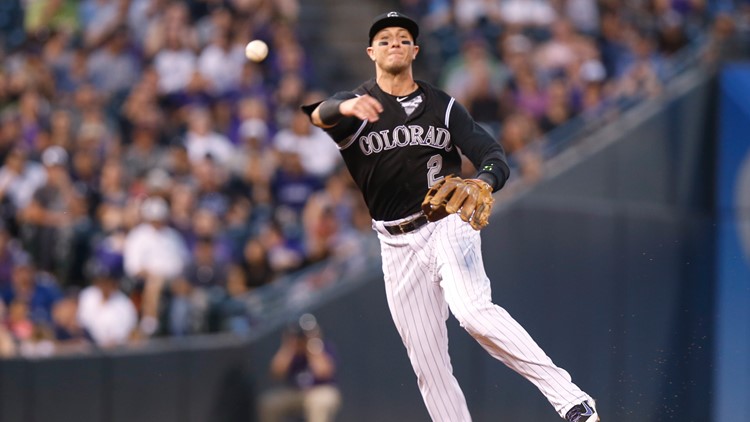
Like Dustin Pedroia, shortstop Troy Tulowitzki seemed destined for Cooperstown, but his only on-field handicap was trying to stay healthy enough to play.
Verdict: A no-doubt Hall of Fame shortstop on both sides of the ball when he could stay healthy, Troy Tulowitzki is one of the toughest hard-luck cases in recent years. His 42.4 JAWS ranks 28th all-time for shortstops, just south of borderline Hall of Famers Joe Tinker, Dave Bancroft, and Luis Aparicio. It's problematic to induct a player for what he might have been, but Tulo might attract the same support that David Wright, another injury-prone hard-luck case, had done last year.
Ben Zobrist
Is Ben Zobrist the face of the new Hall of Fame position player? Does he in fact have a chance to be elected to the Hall? During his 14-year career, the versatile switch-hitter played over half of his games at second base, but he also logged significant time at shortstop and at the corner outfield positions, first for Joe Maddon's Tampa Bay Rays teams and then for Maddon again in Chicago, where Zobrist was named the World Series Most Valuable Player in 2016 as the Cubs ended their century-long championship.
Whatever Zobrist's fate might be on this ballot or any subsequent ones, his inclusion as what used to be dismissed as a mere utility player suggests a fundamental change in how we assess player candidates for the Hall of Fame.
Career Achievements: Three-time All-Star. Two-time World Series champion (2015, 2016); one-time World Series Most Valuable Player (2016).
Career Top 100 Leaderboards:
Defense (total outfield only): Fielding percentage: .993 (18th).
Defense (second base only): Fielding percentage: .987 (28th).
Career Highlights: By 2008, Ben Zobrist had become a true utility player for the Tampa Bay Devil Rays, playing at least four innings at every position (including designated hitter) except pitcher and catcher, before his 2009 breakout season split primarily between second base and right field. Slashing .297/.405/.543/.949 with a 149 OPS+, all career bests, "Zorilla" hit 28 doubles and a career-high 27 home runs while scoring 91 runs and knocking in 91 more runs, another career high, while his 8.6 bWAR, another career best, was tops in the American League and helped to earn him his first All-Star appearance. In addition, he walked 91 times, the first of four seasons with 90 or more bases on balls.
While Zobrist never had another single season as lofty, he did establish an impressive six-year peak in Tampa Bay between 2009 and 2014 with a slash line of .270/.364/.437/.801, resulting in a 123 OPS+ and 36.1 of his career 44.5 bWAR including an equally notable 8.6 dWAR over those six seasons, further proving his value on both sides of the ball as a reliable defender at multiple positions. In 2015, he became the Kansas City Royals' starting second baseman as they defeated the New York Mets in five games for their second World Series championship.
A year later, Zobrist arrived in Chicago to play primarily at second base, hitting 31 doubles, scoring 94 runs, and walking 96 times against only 82 strikeouts in 631 plate appearances, good for a 121 OPS+ and 3.4 bWAR, while earning his third All-Star appearance and proving integral to the Cubs' first World Series victory in 108 years—indeed, he was named the World Series' Most Valuable Player. In 2018, he hit .305, his only .300-plus season, in 520 plate appearances while adding 3.5 bWAR in value to the Cubs before retiring after the 2019 season.
Verdict: With a JAWS of 42.1, Ben Zobrist ranks 27th all-time among second basemen, just below Hall of Famers Bobby Doerr and Nellie Fox, but Zobrist is more than just a second baseman. By traditional standards, Ben Zobrist did not establish a Hall of Fame career at any one position; rather, he helped to redefine what it means to be a position player in a game that has significantly, if not radically, redefined itself since the Hall began inducting players in 1936.
Zobrist played where he was needed to help his team win games, and he played on two teams that went all the way to win a World Series, becoming the Series' MVP in one of those. In that respect, Zobrist would be a singular, if not unique, Hall of Famer, and he at least deserves to get five percent of the vote to enable his intriguing case to be evaluated further.
Catchers
Last year, Joe Mauer was elected to the Hall of Fame on his first ballot, the third of three catchers inducted into Cooperstown in the last decade, joining Mike Piazza, elected on his fourth try in 2016, and Ivan Rodríguez, a first-ballot pick in 2017, which brings the total number of receivers in the Hall to 20. Russell Martin and Brian McCann represent this crucial position this year.
Russell Martin
An excellent defensive catcher, Russell Martin also showed promising hitting skills when he came up with the Los Angeles Dodgers in 2006, hitting .280 or better and posting an OPS+ of 100 or better in his first three seasons. But his bat wilted starting in 2009 although he showed a resurgence in the mid-2010s. In his 14-year career, Martin was also the backstop for the New York Yankees, Pittsburgh Pirates, and Toronto Blue Jays before returning to the Dodgers for his final season in 2019.
Career Achievements: Four-time All-Star. One Gold Glove Award. One Silver Slugger Award.
Career Top 100 Leaderboards:
Offense: Hit by pitch: 107 (83rd).
Defense (catcher only): Putouts: 11,612 (8th). Range factor/game: 7.95 (21st). Games: 1579 (27th). Fielding percentage: .993 (49th). Stolen bases allowed: 840 (55th). Assists: 941 (60th). Total Zone runs: 17 (84th). Defensive WAR: 16.5 (92nd).
Career Highlights: When Russell Martin became the Los Angeles Dodgers' full-time catcher in 2007, he delivered at the plate, slashing .293/.374/.469/.843, good for a 116 OPS+ and 5.6 bWAR, as he established career highs for hits (158), doubles (32), RBI (87), stolen bases (21), and total bases (253) while he made his first All-Star team and collected his only Gold Glove and Silver Slugger Awards. However, Martin's offensive production dipped steadily for the rest of his career even though he remained a solid defensive catcher.
After two seasons with the New York Yankees starting in 2011, Martin made a good impression with the Pittsburgh Pirates in 2013 by posting a career-high 21 defensive runs saved and pacing the Majors both in assists by catchers with 103, and, with just two errors in 990 chances, in fielding percentage with .998—resulting in a career-high dWAR of 2.4 that contributed to his overall 4.1 bWAR, his best mark since 2008. Moreover, his offense returned the next year with a .290/.402/.430/.832 slash line that generated career highs in OPS+ (135) and bWAR (5.7).
Martin, a French-Canadian born in Toronto's East York suburb, returned to Canada in 2015 and made his third and final All-Star squad with the Blue Jays while hitting a career-high 23 home runs. But after three progressively declining years in Toronto, he played his final season in 2019 with the Dodgers before formally announcing his retirement in 2022.
Verdict: Following a modest but promising start, Russell Martin proved to be an outstanding defensive catcher, producing 16.5 in dWAR, 14th all-time after Hall of Famer Carlton Fisk, and collecting 17 Total Zone total fielding runs above average and 120 defensive runs saved. With a 33.0 JAWS that ranks him 28th all-time among catchers, Russell Martin might pick up a hometown (or home-country) vote or two, but this is the only Hall of Fame ballot he will be on.
Brian McCann
Brian McCann is the reverse image of Russell Martin, an excellent-hitting catcher whose defense could be suspect. Spending two-thirds of his 15-year career with his local team the Atlanta Braves, the Georgia-born McCann also caught for the New York Yankees and for the Houston Astros, joining them in time for their first-ever World Series championship, albeit one tainted by the sign-stealing scandal that has seemingly delayed teammate Carlos Beltrán's election to the Hall of Fame. Whether McCann, the first Astro after Beltrán to undergo scrutiny by Hall voters, will feel any opprobrium from that remains to be seen although his name has not been floated in connection to the scheme.
Career Achievements: Seven-time All-Star; one-time All-Star Most Valuable Player. One-time World Series champion (2017). Six Silver Slugger Awards.
Career Top 100 Leaderboards:
Defense (catcher only): Putouts: 12,048 (6th). Range factor/game: 7.93 (22nd). Games: 1612 (24th). Stolen bases allowed: 897 (46th). Fielding percentage: .993 (56th). Double plays turned: 84 (85th). Assists: 729 (95th).
Career Highlights: Brian McCann debuted with the Atlanta Braves in 2005 as the personal catcher for future Hall of Famer John Smoltz before becoming the Braves' full-time catcher the following season, banging out a robust .333/.388/.572/.961 slash line, which yielded a career-best 143 OPS+, as he hit 34 doubles and 24 home runs, the first of ten 20-plus home run seasons overall, while scoring 61 runs and knocking in 93 more as he made his first All-Star team and garnered his first Silver Slugger Award.
In 2008, McCann posted career-highs in bWAR (5.5), hits (153; good for a .301 batting average), doubles (42), and runs scored (68). From 2006 to 2011, McCann posted a slash line of .287/.359/.491/.850, producing a 123 OPS+, with per-season averages of 137 games played, 138 hits, 32 doubles, 22 home runs, 60 runs scored, 86 runs batted in, and 3.4 bWAR.
With the New York Yankees in 2014, McCann had career highs in home runs (26) and RBI (94; tying his 2009 total) in 2015, but having hit his decline phase, he was soon relegated to designated-hitter duties. Dealt to the Houston Astros for the 2017 season, he was the Astros' starting catcher in all seven World Series games against the Los Angeles Dodgers, scoring five runs and hitting one home run to earn his championship ring.
Verdict: Ranked 35th with 28.3 JAWS among catchers all-time, and despite the recognition for his offensive prowess, Brian McCann's oWAR of 34.2, ranked 28th all-time, is just 1.1 wins better than Russell Martin's 33.1, 30th all-time, with Martin considered primarily a defensive catcher. McCann, who had led the Majors in catcher errors twice early in his career, tightened up his defensive game to produce a career 17 defensive runs saved. Like Russell Martin, though, Brian McCann will get token nods from hometown writers on his only Hall of Fame ballot.
Starting Pitchers
Not only do starting pitchers face a tough time on the mound during their playing days, they don't seem to get much respect on the BBWAA ballot. The writers voted in a half-dozen starters between 2014 and 2019, but Curt Schilling, seemingly certain to be elected before shooting himself in the foot, failed to gain entry into the Hall while Mark Buehrle and Andy Pettitte, on this current ballot, have kept alive but little more as they pass through their ballot decline phase.
Félix Hernández and CC Sabathia, both first-time starting-pitcher candidates on this ballot, each won a Cy Young Award while neither Buehrle nor Pettitte ever did, but whether that will help their cause remains to be seen.
Félix Hernández
When Félix Hernández won the American League Cy Young Award in 2010, his win-loss record of 13–12 was just one win above .500, which signaled a sea change in evaluating a pitcher's value that devalued both games won and winning percentages in favor of advanced statistics. Hernández's Seattle Mariners had lost 101 games in 2010, which means his 13 wins represented one-fifth of the team's wins, but his Major League-leading 2.27 earned run average would have looked just as impressive even if the Mariners had been a winning ballclub.
Career Achievements: Six-time All-Star. One Cy Young Award. Two earned run average titles.
Career Top 100 Leaderboard:
Wild pitches: 156 (31st). Strikeouts: 2524 (37th). Win probability added: 25.7 (69th). Strikeouts per nine innings pitched: 8.322 (70th). Strikeouts to bases on balls: 3.135 (71st). Hits by pitch: 105 (79th). Home runs allowed: 264 (96th).
Career Highlights: Debuting with the Seattle Mariners in 2005, Félix Hernández hit his stride by 2007, launching a nine-year stretch during which "King Félix" held court as one of baseball's premier pitchers, averaging, per season, 14 wins, 9 losses, a .605 win-loss percentage, 32 games started, 221 innings pitched, 210 strikeouts, a 3.00 ERA, a 131 ERA+, a 3.15 FIP, 8.6 strikeouts per nine innings pitched, a 3.45 strikeout-to walk ratio (SO/BB), and an All-Star-caliber 5.1 bWAR.
In 2009, Hernández led the Majors in wins and win percentage (.792) with a sterling 19–5 win-loss ratio capped by his 2.49 ERA and 174 ERA+ as he made his first All-Star squad and finished second in Cy Young voting to Zack Greinke. He took that Cy Young Award the following year as he led the American League in games started (34), innings pitched (249.2), and bWAR for pitchers (7.2) while leading the Majors with a sparkling 2.27 ERA (while his 174 ERA+ was a career high) and in batters faced (1001). Although he didn't make the AL All-Star team in his Cy Young season, he did in 2011, the first of five consecutive years that found him at the Midsummer Classic.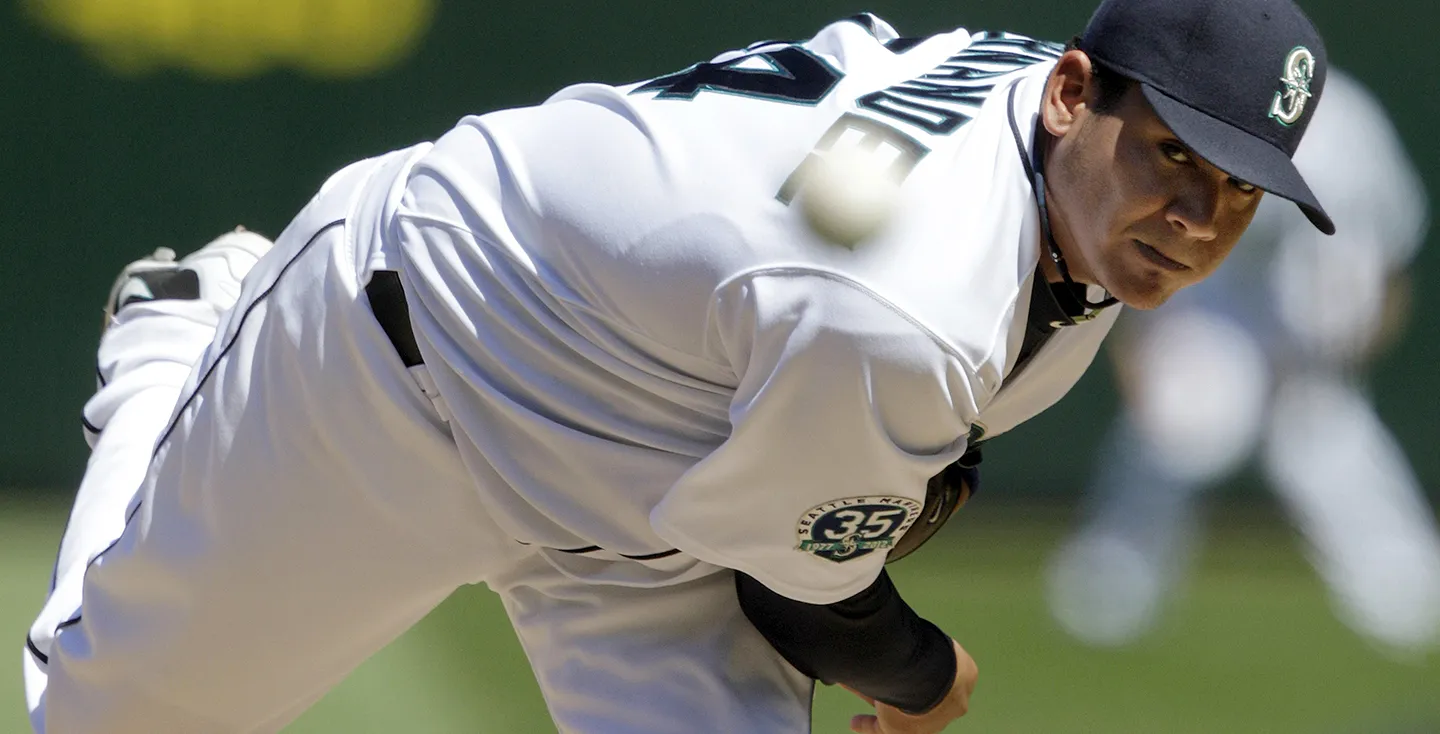
"King Félix" Hernández's 2010 Cy Young was a crowning achievement that stressed non-traditional measurements of starting-pitcher excellence. Will that help him get into Cooperstown?
The King was in regal form in 2012, leading MLB with five shutouts while pacing the AL with a 2.84 FIP as he posted the fourth of six consecutive years with 200 or more strikeouts and seven consecutive years of ten years overall with an SO/BB of 3.00 or better; he finished his career with an SO/BB of 3.14. Crowning his regal season was his perfect-game no-hitter in Seattle against the Tampa Bay Rays, striking out 12 batters in a 1–0 game.
The King's reign continued through 2014, when he was runner-up to Corey Kluber for the AL Cy Young in close voting helped by his league-leading (and career-high) 2.14 ERA while he also paced the AL with a 0.915 WHIP (walks and hits per innings pitched) and 6.5 hits allowed per nine innings pitched. However, by 2015, his age-29 year, his decline began to set in before his final season in 2019.
Verdict: With a career S-JAWS (JAWS adjusted for starting pitchers) of 44.1 that ranks 97th all-time among starters, Félix Hernández must rely on his peak to convince voters that he is a Hall of Famer. That worked for Sandy Koufax, who is one tick above King Félix in S-JAWS, but it might not fly for Félix although he is sure to become a fixture on subsequent ballots as voters deliberate his Hall of Fame fate.
CC Sabathia
Coming on like an economy-sized James "Hippo" Vaughn, burly CC Sabathia piled up old-school-like counting numbers, at least compared to the current era, although the intimidating left-hander has also been compared to Andy Pettitte, who has yet to muster widespread support on the BBWAA ballot. Yet Carsten Charles Sabathia can add some bling, namely, a Cy Young Award, to go with milestones including, like Pettitte, at least 250 wins while Sabathia also reached the vaunted 3000-strikeout plateau. Pitching eight seasons of his 19-year career with the Cleveland Indians, he spent three more than that with the New York Yankees as he transitioned from being a power pitcher to a control pitcher, while in 2008 he had a brief but memorable half-season stint with the Milwaukee Brewers.
Career Achievements: Six-time All-Star. One-time World Series champion (2009). One Cy Young Award.
Career Top 100 Leaderboard:
Home runs allowed: 382 (18th). Strikeouts: 3093 (18th). Earned runs allowed: 1485 (42nd). Wins: 251 (47th). WAR for pitchers: 61.8 (55th). Innings pitched: 3577.3 (64th). Bases on balls: 1099 (77th). Hits allowed: 3404 (80th). Win probability added: 22.8 (91st).
Career Highlights: As a rookie in 2001, CC Sabathia started 33 games, the first of 12 seasons with 30 or more starts, and won 17 of 22 decisions for a .773 win-loss percentage while striking out 171 batters in 180.1 innings pitched; he may very well have been the American League's Rookie of the Year had not Ichiro Suzuki bested him. Pitching in the teeth of the steroids era, "Dub" was a workhorse who pitched 180 innings or more for the first 13 years of his career including a string of seven consecutive seasons with 200 or more innings pitched from 2007 to 2013. Honing his craft by 2006, Sabathia posted a 3.22 ERA, a 139 ERA+, and a 3.30 FIP while striking out 172 batters against just 44 bases on balls for a sparkling 3.91 SO/BB.
In 2007, Sabathia won 19 games against just seven losses in 34 starts and a Major League-leading 241.0 innings pitched while practically replicating his 2006 run-prevention numbers—3.21 ERA, 141 ERA+, and 3.14 FIP—and reaching the 200-strikeout plateau for the first of three times with 209 punch-outs while walking only 37 batters for an MLB-best 5.65 SO/BB; his sterling effort won him the AL Cy Young Award. Traded midseason the following year to the Milwaukee Brewers, he delivered another Cy Young-caliber effort, winning 11 games while losing only two in 17 starts with a remarkable 1.65 ERA, 255 ERA+, and 2.44 FIP in 130.2 innings pitched; between the Brewers and Indians he had a combined 10 complete games and five shutouts as the southpaw's tremendous effort steered the Brewers into the postseason.
In 2009, CC Sabathia joined the New York Yankees and helped them to their first World Series victory in nine years. In his first four years in the Bronx, he won 74 games, pacing the Majors in that category in 2009 and 2010, while losing just 29 games for a .718 win-loss percentage as he averaged, per season, 32 starts, 226 innings pitched, 205 strikeouts against 62 walks for a 3.34 SO/BB, a 3.22 ERA, a 135 ERA+, a 3.28 FIP, and 5.2 bWAR. From 2010 to 2012, he made the AL All-Star Team every year.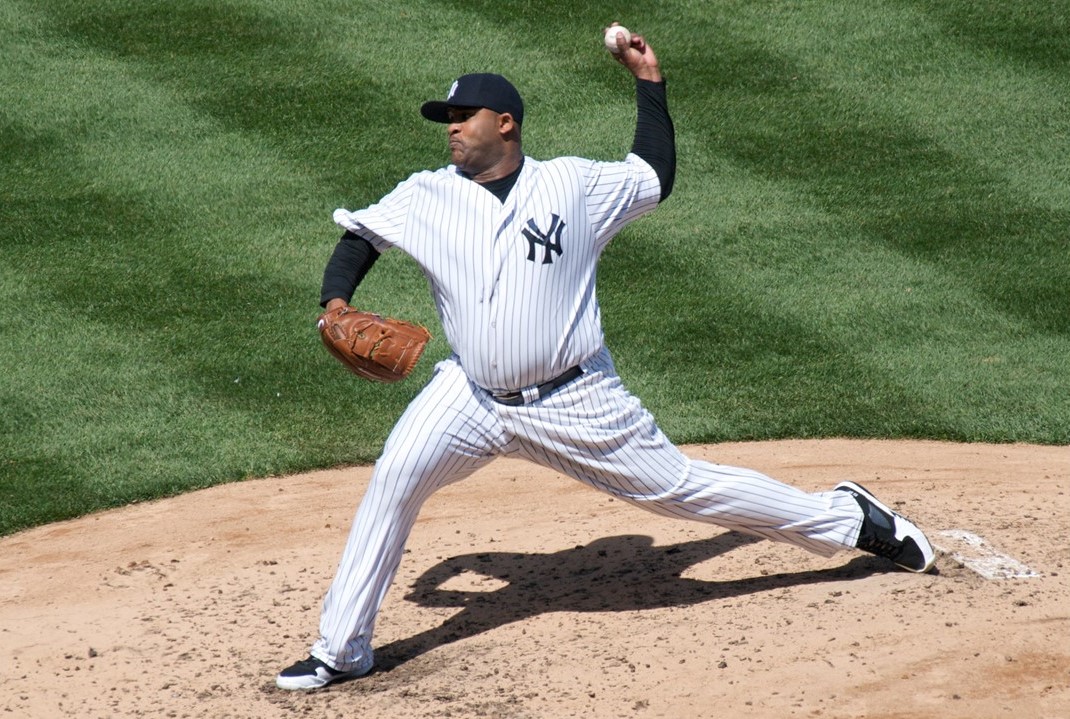
With an old-school approach to contemporary starting pitching, CC Sabathia achieved milestones that included 3000 career strikeouts. Will that nudge him into the Hall of Fame?
By 2013, though, injuries, knee surgery, and struggles with alcohol were taking their toll; before the 2019 season, he announced his retirement after the season was over. His final appearance in Game Four of the 2019 AL Championship Series against the Houston Astros, in which his pitching shoulder gave out, saw him literally throwing until he could throw no longer.
Verdict: With a career record similar to Andy Pettitte's, CC Sabathia's 50.8 JAWS rating, which ranks 55th among starting pitchers, nudges ahead of Pettitte's 47.2, ranked at 82nd, but the similarity between the two left-handers is so close that it's not hard to see Sabathia stalling on the ballot in the same way Pettitte has been doing. Differentiators such as Sabathia's Cy Young Award, his 3000-strikeout milestone, and his half-season of dominance in 2008 with the Brewers might be enough to push him across the Hall of Fame threshold, but it probably won't be on this ballot, and it may not come soon after this one, either.
Relief Pitchers
The good news is that six of the eight Hall of Fame pitchers considered relievers have been inducted since the turn of the century; even better, Billy Wagner, who fell five votes shy last year, is very likely to be voted into Cooperstown on this ballot—which is also his tenth and final opportunity.
The not-so-good news is that with the cream of the crop already in the Hall, the bar to admission has been set high, and a number of high-profile (e.g., Jonathan Papelbon) or sleeper (e.g., Joe Nathan) relief-pitcher candidates have already fallen by the wayside.
Fernando Rodney
With 327 saves, 19th all-time, Fernando Rodney occupied the closer slot with a few of the 11 teams he pitched for during his 17 Major League seasons. The right-hander who wore his cap askew and took to shooting an imaginary arrow into the air after clinching a save pitched in 951 games, all in relief and 20th all-time, as are his 590 games finished, and he capped (ahem) his career by winning a World Series with the Washington Nationals in his final year.
Career Achievements: Three-time All-Star. One World Series championship (2019).
Career Top 100 Leaderboards:
Saves: 327 (19th). Games: 951 (20th). Games finished: 590 (20th).
Career Highlights: It took Fernando Rodney a decade of toiling in the bullpen for the Detroit Tigers, then the Los Angeles Angels, before he enjoyed a brief halcyon period with the Tampa Bay Rays starting in 2012. That season, he was out of this world in 76 appearances, allowing just two of 18 inherited runners to score and allowing a mere five earned runs in 74.2 innings pitched, which included 76 strikeouts, for a miniscule 0.60 ERA—the lowest ERA ever by a qualifying relief pitcher—and a Dennis Eckersley-like 641 ERA+ as he posted a career-high 48 saves; he finished fifth in AL Cy Young voting and was named to his first All-Star team while his bWAR value of 3.7 accounts for half of his 7.4 career bWAR.
Rodney's hot streak continued into 2014 with the Seattle Mariners as he paced the AL with 64 games finished and the Majors with 48 saves, matching his career high and setting the Mariners' franchise record while striking out 76 hitters in 66.1 innings pitched; his 2.85 ERA would be his last sub-3.00 ERA. But by 2015 he was struggling again. A literal and figurative journeyman for his last four seasons, Fernando played for seven teams before making his final stop with Washington Nationals in 2019, where he won a World Series ring.
Verdict: Longevity that enabled Fernando Rodney to compile substantial career number including membership in the 300-save club is what put him on the 2025 BBWAA ballot as his 4.8 R-JAWS (JAWS adjusted for the reliever role) ranks him 326th all-time among relief pitchers. Given that he played for 11 teams, he might not even get a hometown vote.
Returning Candidates
As noted previously, there are no more no-doubt Hall of Famers returning from the 2024 BBWAA ballot except for two ridiculously-qualified candidates who would have been elected on their first and only ballot were it not for their pesky performance-enhancing drugs problem.
However, what makes Hall of Fame ballot assessment worthwhile are the "bubble guys," the players with outstanding careers but whose lack of acclaim or recognition presents a challenge to their being inducted into the Hall of Fame. Or not. In that respect, there are several returning candidates who have made encouraging progress toward Cooperstown including one, delivered to the doorstep last year, who has just one more shot to make it through the door. Talk about a cliffhanger.
Outfielders
It's been a half-decade since BBWAA voters elected an outfielder to the Hall of Fame—and in 2020 Larry Walker got in by the skin of his teeth: 76.6 percent of the vote in his final year of eligibility. Along with first-time candidate Ichiro Suzuki, there are three returning outfielders with solid Hall of Fame cases—Bobby Abreu, Carlos Beltrán, and Andruw Jones—or even four if you count the steroids guy.
Bobby Abreu
Having squeaked past the five-percent minimum threshold on his first ballot in 2020, Bobby Abreu has at least tripled that support on his last two ballots, but that 15-percent mark means he must quadruple that vote tally in his next five attempts (assuming he remains on a BBWAA ballot until 2030). However, unlike Larry Walker, who was at a similarly moribund spot by his fifth ballot, sabermetric darling Abreu doesn't have a Most Valuable Player Award or three batting titles to burnish his record as does Walker, who made extraordinary leaps on his last three ballots to nose across the Hall of Fame line with 76.6 percent of the vote in his final year.
Career Achievements: Two-time All-Star. One Gold Glove Award. One Silver Slugger Award.
Career Top 100 Leaderboards:
Offense: Bases on balls: 1476 (20th). Strikeouts: 1840 (22nd). Doubles: 574 (25th). Times on base: 3979 (49th). Runs created: 1708 (52nd). Extra-base hits: 921 (61st). Stolen bases: 400 (74th). Games played: 2425 (81st). Plate appearances: 10,081 (82nd). Runs scored: 1453 (82nd). Sacrifice flies: 85 (82nd). On-base percentage: .395 (83rd). Runs batted in: 1363 (89th). Offensive bWAR: 61.6 (92nd).
Defense (right field only): Games: 1990 (11th). Putouts: 3733 (11th). Assists: 130 (28th). Errors committed: 71 (28th). Double plays turned: 21 (76th). Range factor/game: 1.94 (81st). Fielding percentage: .982 (94th).
Career Highlights: After two seasons riding the bench with the Houston Astros in 1996 and 1997, Bobby Abreu established himself in Philadelphia as their starting right fielder. In his eight full seasons with the Phillies, from 1998 to 2005, he brandished a .305/.415/.519/.933 slash line, generating a 141 OPS+, as, per season, he averaged 157 games played, 173 hits including 40 doubles and 23 home runs, 104 runs scored, 94 runs batted in, 107 walks, 29 stolen bases, and 5.6 bWAR. But despite leading the Majors in triples (11) in 1999 and the National League in doubles (50) in 2002, Abreu made just two All-Star teams as the Phillies' secret star remained hidden behind Ryan Howard, Jimmy Rollins, and Chase Utley.
Dealt to the New York Yankees at the 2006 trading deadline, Abreu helped the Yankees into the postseason. During his two full seasons, 2007 and 2008, in the Bronx, Abreu produced a 116 OPS+ derived from a .289/.370/.458/.828 slash line while scoring at least 100 runs and knocking in 100 more. Now into his decline phase, he played for the Los Angeles Angels from 2009 to the start of 2012, when the team let him go; his roster spot went to Mike Trout. Bobby Abreu had 12 consecutive seasons with 150 or more hits; 12 seasons with 30 or more doubles, ten of them consecutively; nine seasons with 20 or more home runs; eight seasons with 100 or more RBI, seven of them consecutively; and eight consecutive seasons with 100 or more walks.
Verdict: Tucked between Hall of Famers Dave Winfield and Vladimir Guerrero (his Angels teammate), Bobby Abreu's 50.9 JAWS ranks 22nd all-time among right fielders. Overlooked and underrated, Abreu better hope that the easing of the ballot logjam will make him more visible to voters if he is to make greater headway on the ballot in the years he has left.
Carlos Beltrán
Having served penance on his first two ballots for his involvement in the Houston Astros' sign-stealing scandal of 2017, Carlos Beltrán nevertheless garnered 46.5 percent during his 2023 debut and snagged 57.1 percent of the vote last year, which might have been his fate even without the scandal as Beltrán, despite winning Rookie of the Year honors in 1999, is not a first-glance Hall of Famer until you look at his accomplishments. He might not make an 18-point leap this year, but any appreciable increase should set his trajectory into Cooperstown sooner rather than later.
Career Achievements: Rookie of the Year. Nine-time All-Star. Three Gold Glove Awards. Two Silver Slugger Awards. Roberto Clemente Award. World Series champion (2017).
Career Top 100 Leaderboards:
Offense: Stolen base percentage: 86.43 (10th). Sacrifice flies: 110 (16th). Doubles: 565 (20th). Extra-base hits: 1078 (25th). Strikeouts: 1795 (27th). Outs made: 7423 (34th). Total bases: 4751 (34th), Plate appearances: 11,031 (39th). At-bats: 9768 (39th). Runs batted in: 1587 (41st). Games: 2586 (46th). Home runs: 435 (47th). Runs created: 1731 (48th). Runs scored: 1582 (53rd). Times on base: 3860 (59th). Hits: 2725 (62nd). WAR, position players: 70.1 (70th). Offensive WAR: 66.6 (74th). Bases on balls: 1084 (90th). Win probability added: 35.8 (98th).
Defense (center field only): Range factor/game: 2.70 (22nd). Putouts: 4133 (23rd). Games: 1572 (31st). Double plays turned: 28 (34th). Assists: 108 (35th). Errors committed: 60 (58th).
Career Highlights: A September call-up for Kansas City in 1998, Carlos Beltrán ran away with American League Rookie of the Year honors the following season as the Royals' starting center fielder knocking out a career-high 194 hits including 27 doubles, seven triples, and 22 home runs, while stealing 27 bases, scoring 112 runs, and driving in 108 more runs. From 2001 to 2003, Beltrán posted a .295/.365/.512/.876 slash line, producing a 125 OPS+, as he averaged, per season, 174 hits including 30 doubles, ten triples, 26 home runs, 107 runs scored, 102 RBI, 36 stolen bases, and 5.6 bWAR.
The Royals dealt Beltrán to the then-National League Houston Astros midway through 2004; between the two clubs, he boosted his power numbers with 36 doubles and 38 home runs, producing then-season bests in slugging percentage (.548), OPS (.915), OPS+ (133), and runs scored (121) while establishing his career high in stolen bases (42), which also put him into the 30-30 club for home runs and steals. Essentially a season rental in Houston, he delivered like a franchise player as the Astros advanced to a seven-game NL Championship Series with the St. Louis Cardinals, hitting four home runs each in the NL Division Series against the Atlanta Braves and the NLCS to tie Barry Bonds for most home runs in a single postseason.
Beltrán then signed a seven-year, $119 million contract with the New York Mets starting in 2005. In six full years in Queens, Beltrán posted a slash line of .279/.366/.499/.864, good for a 126 OPS+, yet in 2006 he established career highs in home runs (41), runs scored (127), RBI (116), and walks (95) while hitting three home runs in another seven-game NLCS against the Cardinals, although with the bases loaded and two out in the bottom of the ninth inning of Game Seven, Adam Wainwright memorably struck him out looking to end the Mets' season. Beltrán trod the end-of-career circuit with stints for five teams including his final-year reunion with the Astros for their notorious World Series championship.
Verdict: Ranked ninth among center fielders all-time with 57.2 JAWS, Carlos Beltrán, although not as celebrated perhaps because he split the bulk of his 20-year career between the Royals and the Mets while serving time with five other teams, put up the numbers and delivered enough highlights to take his place in Cooperstown. He has served his penance for the Astros' sign-stealing scandal, and he should be voted into the Hall of Fame on this ballot.
Torii Hunter
An excellent although not elite two-way center fielder in his prime, Torii Hunter has proved to be surprisingly resilient on four Hall of Fame ballots so far even if he has yet to exceed his debut percentage of 9.5. With the addition of Curtis Granderson and Adam Jones on this year's ballot, there are now five center fielders in contention for the Hall of Fame, and while "position crowding" shouldn't be a factor, it might impact Hunter's ability to retain the support he has mustered so far.
Career Achievements: Five-time All-Star. Nine Gold Glove Awards. Two Silver Slugger Awards.
Career Top 100 Leaderboards:
Offense: Grounded into double plays: 262 (30th). Doubles: 498 (67th). Extra-base hits: 890 (70th). Runs batted in: 1391 (80th). Total bases: 4087 (82nd). Games: 2372 (96th). Home runs: 353 (96th).
Defense (center field only): Fielding percentage: .993 (19th). Putouts: 3948 (30th). Range factor/game: 2.64 (30th). Games: 1523 (33rd). Assists: 78 (73rd). Double plays turned: 18 (91st).
Career Highlights: By 2001, center fielder Torii Hunter had come into his own with the Minnesota Twins, hitting 32 doubles, the first of nine years with 30 or more, 27 home runs, the first of nine seasons with 20 or more, and driving in 92 runs, the first of eight seasons with 90 or more, while winning the first of nine consecutive Gold Glove Awards.
Replicating his offensive output while upping his OPS+ from 102 to 124 in 2002, he made his first All-Star team while also swiping a career-high 23 bases, the first of three years with 20 or more steals. The next year saw him drive in 102 runs, the first of two times he would break the 100-RBI mark. With the Los Angeles Angels for five years starting in 2008, Hunter, had two years with a bWAR of 5.0 or greater, the only times he had reached that 5.0 plateau.
With the Detroit Tigers in 2013 and 2014, Hunter earned his second Silver Slugger Award and his fifth and final All-Star slot as he batted .304 before returning to the Twins for his final big-league year in 2015; he announced his retirement at season's end.
Verdict: With 40.7 JAWS, Torii Hunter is ranked 35th all-time among center fielders, just ahead of Earle Combs, who played seven fewer seasons than Hunter. Frankly, I had him pegged as one-and-done in my 2020 ballot forecast, but he has hung in there as he reaches his midpoint on the BBWAA ballot. Hunter might continue to rally some support, but he is unlikely to become a serious candidate for the Hall of Fame.
Andruw Jones
Like Torii Hunter, Andruw Jones garnered marginal support during his first two ballots starting in 2018 before making decile leaps his next four years until he neared 60 percent in 2023. However, his incremental increase to 61.6 percent last year might signal the limit of his support as he faces just three more chances to reach the vaunted 75-percent mark needed for induction into the Hall of Fame.
Career Achievements: Five-time All-Star. Ten Gold Glove Awards. One Silver Slugger Award.
Career Top 100 Leaderboards:
Offense: Strikeouts: 1748 (33rd). Home runs: 434 (48th). At-bats per home run: 17.5 (77th). Extra-base hits: 853 (89th).
Defense (center field only): Total Zone runs: 230 (1st). Putouts: 4456 (15th). Games: 1724 (19th). Defensive WAR: 24.4 (22nd for all positions; 1st among centerfielders). Fielding percentage: .992 (30th). Range factor/game: 2.64 (31st). Assists: 101 (41st).
Career Highlights: Coming up with the Atlanta Braves as a 19-year-old in 1996, Andruw Jones clouted a home run in each of his first two at-bats in Game One of the World Series against the New York Yankees, becoming the youngest player ever to hit a homer in the World Series and just the second-ever to hit two in his first two at-bats. (Gene Tenace was the first.) By 1998, Jones had become the Braves' everyday center fielder and came into his own.
For nine years, from 1998 to 2006, Jones slashed .270/.347/.513/.860, generating a 119 OPS+ and averaging, per year, 31 doubles, 35 home runs, 99 runs scored, 104 runs batted in, and 6.1 bWAR. In 2005, he led the Majors with 51 home runs, the most ever by a Braves hitter in a single season—no small feat on a franchise graced by Hall of Fame sluggers Hank Aaron and Eddie Mathews—and his 128 RBI paced the National League as he was named to the fourth of his five All-Star squads and was the runner-up to Albert Pujols for the NL's Most Valuable Player Award.
But as impressive as his offensive output was, Jones's defensive prowess in center field was peerless—and may be the greatest in baseball history. From 1998 to 2002, he made at least 400 putouts every year, leading the NL in 2002 and the Major Leagues in the four previous years; in addition, he paced the NL in Total Zone runs in 2002 and the Majors in the four previous years as well. In 2007, he led the NL in putouts again with 396. During Jones's nine-year stretch, he accumulated 22.0 of his career 24.4 dWAR, truly deserving of the Gold Glove he was awarded in every year of this stretch.
However, Jones, despite winning his tenth Gold Glove in 2007, began his plunge from Mount Olympus as his OPS+ dropped to 87, well below league-average. He finished his career with disappointing stints for four MLB team and even played two years in Japan before attempting MLB comebacks in 2015 and 2016, but in 2016 he finally called it quits.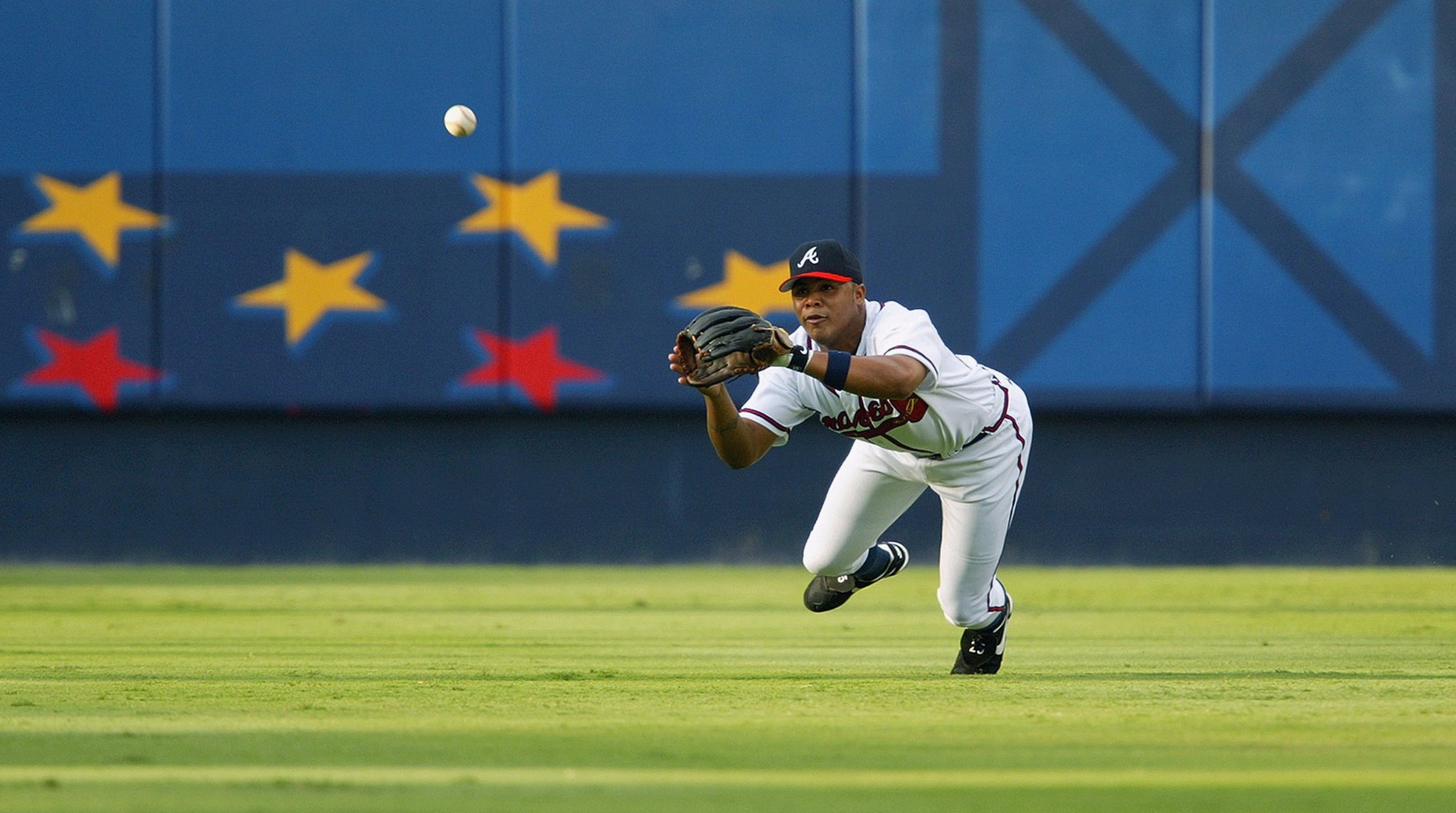
By any measure, Andruw Jones is one of baseball's greatest defensive center fielders. But will that and a nine-year hitting peak convince voters to check his box for the Hall?
Verdict: With 54.6 JAWS, Andruw Jones ranks 11th all-time among center fielders, but his viability as a Hall of Famer hinges on how impactful was his nine-year peak from 1998 to 2006, which saw him generate 54.5 of his career 62.7 bWAR. Initially, I did not consider Jones a Hall of Famer, but I have been on the peak-heavy bandwagon since. This year will see if more writers are jumping aboard, or if he has hit the outfield wall in term of support.
Manny Ramirez
Time is running out for Manny Ramirez, who has yet to attract more than one-third of the vote in eight attempts. As one of the first players to run afoul of Major League Baseball's revamped drug policy in the latter half of the 2000s, he had no valid excuse to offer, and given that the attitude of voters has stiffened into resolute resistance to player candidates connected to performance-enhancing drugs, Manny will continue to be out-of-luck Manny for two more years before disappearing into PED limbo.
Career Achievements: Twelve-time All-Star. Nine Silver Slugger Awards. One batting title. Two-time World Series champion (2004, 2007); one-time World Series Most Valuable Player (2004).
Career Top 100 Leaderboards:
Offense: Slugging percentage: .585 (12th). On-base plus slugging percentages: .996 (12th). Home runs: 555 (15th). At-bats per home run: 14.9 (16th). Extra-base hits: 1122 (18th). Runs batted in: 1831 (20th). Runs created: 2005 (22nd). Strikeouts: 1813 (25th). Total bases: 4826 (30th). Adjusted OPS+: 174 (31st). Win probability added: 56.1 (31st). Doubles: 547 (34th). Offensive WAR: 81.8 (34th). On-base percentage: .411 (35th). Bases on balls: 1329 (41st). Grounded into double play: 243 (43rd). Times on base: 4012 (48th). Runs scored: 1544 (61st). WAR position players: 69.3 (74th). Hit by pitch: 109 (78th). Hits: 2574 (91st).
Defense (left field only): Games: 1037 (70th).
Career Highlights: Breaking into the Major Leagues with Cleveland, Manny Ramirez was integral to the Indians' wrecking crews of the 1990s that made it to a pair of World Series in 1995 and 1997 before falling short both times. Signing with the Boston Red Sox, Ramirez again proved crucial to bringing the Sox their first World Series championship in 84 years in 2004, which saw him being named the Series' MVP, and another World Series win in 2007. Along the way, he led the Majors in runs batted in (165) in 1999 with Cleveland, and with Boston he won a batting title (.349) in 2002 and led the American League in home runs (43) in 2004.
Any further career details are beside the point since Manny Ramirez, along with Álex Rodríguez, has no chance of being elected to the Hall of Fame.
Verdict: Manny Ramirez ranks 10th all-time among left fielders with 54.6 JAWS, a meaningless point since, unlike the previous generation of PED Penitents such as Barry Bonds and Roger Clemens who can claim to have resided in the "Wild, Wild West" of the Steroids Era with little clear (no pun intended) delineation or direction, Ramirez knew of (or should have known about) the penalties stipulated by MLB's Joint Drug Prevention and Treatment program. Thus, he is unlikely to be elected to the Hall of Fame by either the BBWAA or a veterans committee.
Infielders
Unlike their brethren in the outfield, infielders have enjoyed Hall of Fame recognition in the last five years with all but second basemen getting the nod at least once. In fact, the writers have elected only three keystone sackers this century, with Craig Biggio the latest one—and he was elected a decade ago. Chase Utley is the sole second baseman returning to the ballot, but he will have competition from two newcomers, Ian Kinsler and Dustin Pedroia, or three if you include Ben Zobrist. As noted previously, there are no full-time first basemen on the writers ballot for the first time since the century began (Todd Helton made sure of that last year).
Shortstop is getting crowded with first-timers Hanley Ramirez and Troy Tulowitzki joining returnees Álex Rodríguez, Jimmy Rollins, and Omar Vizquel, but none of them has a lock on being chosen. Rodríguez is as ridiculously qualified as he is radioactive thanks to PED; Vizquel is almost as toxic and is a borderline case in any event; Ramirez and Rollins can't make convincing arguments; and Tulowitzki is a hard-luck case because of injuries. At third base, David Wright faces no competition, but like Pedroia and Tulo, his kryptonite are the health issues that weakened those two.
Álex Rodríguez
Unlike Manny Ramirez, Álex Rodríguez is on his fourth Hall of Fame ballot and has managed to pull in one-third of the voters on his previous three ballots. But seeing that A-Rod is probably the most egregious PED Penitent extant, having been suspended for an entire season (and it was a reduced suspension), his Cooperstown fate is also a foregone conclusion: Fat chance.
Career Achievements: Fourteen-time All-Star. Three-time Most Valuable Player. Two Gold Glove Awards. Ten Silver Slugger Awards. One batting title. World Series champion (2009).
Career Top 100 Leaderboards:
Offense: Runs batted in: 2086 (4th). Home runs: 696 (5th). Strikeouts: 2287 (5th). Extra-base hits: 1275 (7th). Total bases: 5813 (7th). Runs scored: 2021 (8th). Runs created: 2274 (9th). WAR position players: 117.6 (12th). Offensive WAR: 115.3 (13th). Sacrifice flies: 111 (14th). Hit by pitch: 176 (15th). Plate appearances: 12,207 (16th). Times on base: 4629 16th). Wins Above Replacement: 117.6 (16th). At-bats: 10,566 (19th). Outs made: 7915 (19th). Hits: 3115 (23rd). At-bats per home run: 15.2 (24th). Games played: 2784 (28th). Slugging percentage: .550 (29th). Win probability added: 59.2 (29th). Grounded into double play: 261 (31st). Doubles: 548 (33rd). Bases on balls: 1338 (37th). On-base plus slugging percentages: .930 (43rd). Stolen base percentage: 81.24 (56th). Singles: 1840 (80th). Adjusted OPS+: 140 (84th).
Defense (shortstop only): Fielding percentage: .977 (35th). Double plays turned: 853 (64th). Games: 1272 (94th). Assists: 3605 (99th).
Career Highlights: If only Alex Rodríguez hadn't exceeded his rookie limits with the Seattle Mariners in 1995, he would have been a lock for Rookie of the Year in 1996, when he led the Major Leagues in hitting (.358) and doubles (54) and the American League in runs scored (141) while belting 36 home runs, knocking in 123 runs, and collecting a career-high 215 hits. That seems to be the only award or recognition that eluded A-Rod in his 22-year career.
And if only Rodríguez hadn't been suspended for the entire 2014 season; otherwise, he would have surely slugged more than 700 home runs instead of falling just short at 696 long flies, seemingly the only statistical milestone, barring a .300 batting average, that he didn't achieve among all his fantasy numbers that contribute to the fantasy that his plaque will ever reside in the Hall of Fame.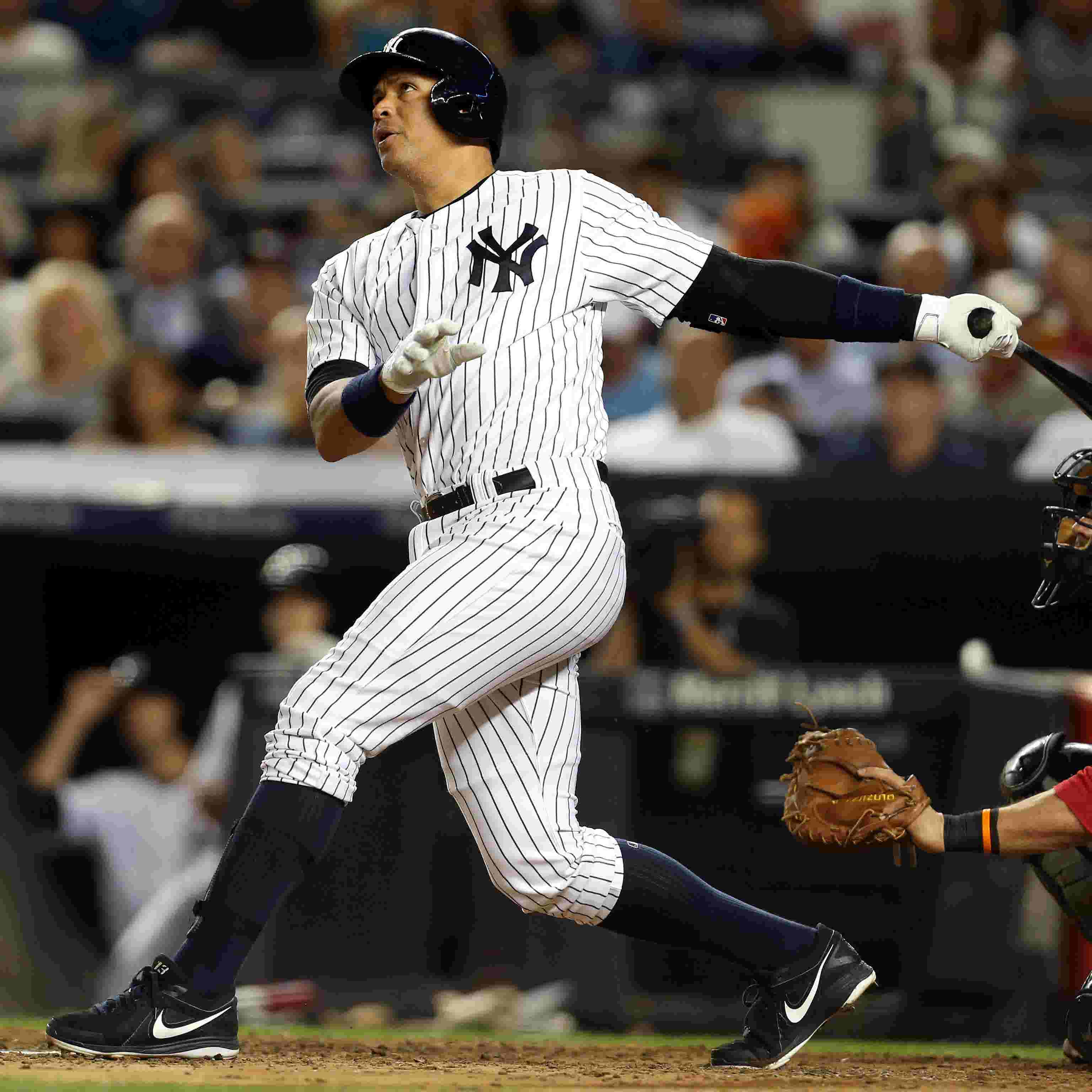
Even with several more years on the ballot likely, Álex Rodríguez has already seen his chances to be elected to the Hall sail over the fence like one of his 696 home-run blasts.
Verdict: Strictly by the numbers, Álex Rodríguez is ridiculously qualified to be a Hall of Famer, with a good chance to have been a unanimous first-ballot choice. It is equally ridiculous to think that he stands a chance to be voted into the Hall by the BBWAA or any subsequent veterans committee. The only relevant option is watching to see if his support remains constant or if it waxes or wanes as, like Prometheus chained to the rock to have his liver eternally eaten by an eagle, he undergoes this charade. The only consolation is that, unlike Prometheus, this will end in a few more years.
Jimmy Rollins
Debuting on the 2022 BBWAA ballot, Jimmy Rollins polled nearly ten percent and made incremental gains on each of the next two ballots as he attracted just under 15 percent last year. He will have to muster greater support to make the 75-percent minimum by his tenth try, so this ballot, even with six more after this one (assuming his support doesn't fall below five percent), is one on which he should be developing a groundswell.
Career Achievements: Three-time All-Star. Most Valuable Player. Four Gold Glove Awards. One Silver Slugger Award. Roberto Clemente Award. World Series champion.
Career Top 100 Leaderboards:
Offense: Outs made: 7175 (44th). Stolen bases: 470 (46th). Stolen base percentage: 81.74 (49th). Doubles: 511 (56th). At-bats: 9294 (58th). Plate appearances: 10,240 (72nd). Extra-base hits: 857 (85th). Runs scored: 1421 (88th).
Defense (shortstop only): Fielding percentage: .983 (4th). Games: 2227 (6th). Double plays turned: 1249 (12th). Assists: 6139 (20th). Putouts: 2982 (46th). Total Zone runs: 38 (53rd).
Career Highlights: Jimmy Rollins played with the Phillies for 15 of his 17 years in the Majors, and for five years, from 2004 to 2008, the switch-hitting shortstop who batted leadoff posted a .286/.342/.468/.811 slash line, yielding a 105 OPS+, while averaging, per season, 189 hits including 40 doubles, 12 triples, 18 home runs, 115 runs scored, 73 RBI, 39 stolen bases, 5.1 bWAR, and 2.0 dWAR, capping off the 2008 season with a World Series ring as he helped the Phillies to their second-ever world championship. He led the National League in triples four times and in runs scored and stolen bases once each.
Offensively, "J-Roll" hit his stride in 2007 with his .296/.344/.531/.875 slash line, which produced a 119 OPS+; all save his .344 on-base percentage were career highs as were his 212 hits, 20 triples, 30 home runs, 139 runs scored, and 94 runs driven in. By hitting 30 homers and stealing 41 bases, he joined the 30-30 club, and by hitting 38 doubles and 20 triples, he joined the even more exclusive 20-20-20-20 club whose only other members are Frank Schulte, Willie Mays, and Curtis Granderson, who also joined in 2007.
Rollins's offense dipped in 2008, although winning a World Series was undoubtedly just compensation even if the Phillies could not defend their title in the 2009 World Series against the New York Yankees. He finished his 17-year career by playing a year each with the Los Angeles Dodgers and Chicago White Sox.
Verdict: With a career JAWS of 40.1, Jimmy Rollins ranks 34th all-time among shortstops, just ahead of marginal Hall of Famers Travis Jackson, Phil Rizzuto, and Rabbit Maranville. In my 2020 to 2025 ballot forecast, I figured J-Roll to be a one-and-done, but he has rallied enough support to stay on the ballot so far. This year may tell just how solid that support may be.
Chase Utley
Although he doesn't have the same bling as his double-play partner Jimmy Rollins, Chase Utley garnered 28.8 percent of the vote on his first ballot last year, and only seeing how well he does this year can begin to plot his trajectory. Like his other teammate on the ballot, Bobby Abreu, Utley is a sabermetric darling, albeit one who has made the strongest start toward the Hall of Fame finish line than the other two.
Career Achievements: Six-time All-Star. Four Silver Slugger Awards. World Series champion.
Career Top 100 Leaderboards:
Offense: Stolen base percentage: 87.50 (6th). Hit by pitch: 204 (9th). WAR position players: 64.5 (98th).
Defense (second base only): Total Zone runs: 60 (17th). Games: 1743 (26th). Assists: 4535 (38th). Putouts: 3426 (40th). Defensive WAR: 17.3 (80th). Fielding percentage: .982 (92nd).
Career Highlights: Swiftly fulfilling expectations, Chase Utley became the Phillies' starting second baseman midway through 2005, and for a full decade, from 2005 to 2014, the "Silver Fox" knocked out a .288/.374/.492/.866 slash line, producing a 127 OPS+, as for ten years every season he averaged 147 hits, 31 doubles, 21 home runs, 88 runs scored, 81 runs batted in, 13 stolen bases, 16 hits by pitch, 6.0 bWAR, and 1.7 dWAR while making five consecutive All-Star squads and winning four consecutive Silver Slugger Awards.
Utley was also crucial to the Phillies back-to-back World Series appearances in 2008 and 2009. In the Phillies' five-game victory over the Tampa Bay Rays in 2008, he hit two home runs, scored five runs, knocked in four more, walked five times, and stole three bases while delivering a late-inning defensive gem in Game Five that cemented the Phillies' second-ever World Series championship. And while the Phillies lost their title defense to the New York Yankees in 2009, Utley did his part: All six of his hits were for extra bases, with five of those hits home runs as he tied Reggie Jackson for most home runs in a single World Series.
Entering his age-36 season in 2015, Chase Utley played for the Los Angeles Dodger until he retired after the 2018 season.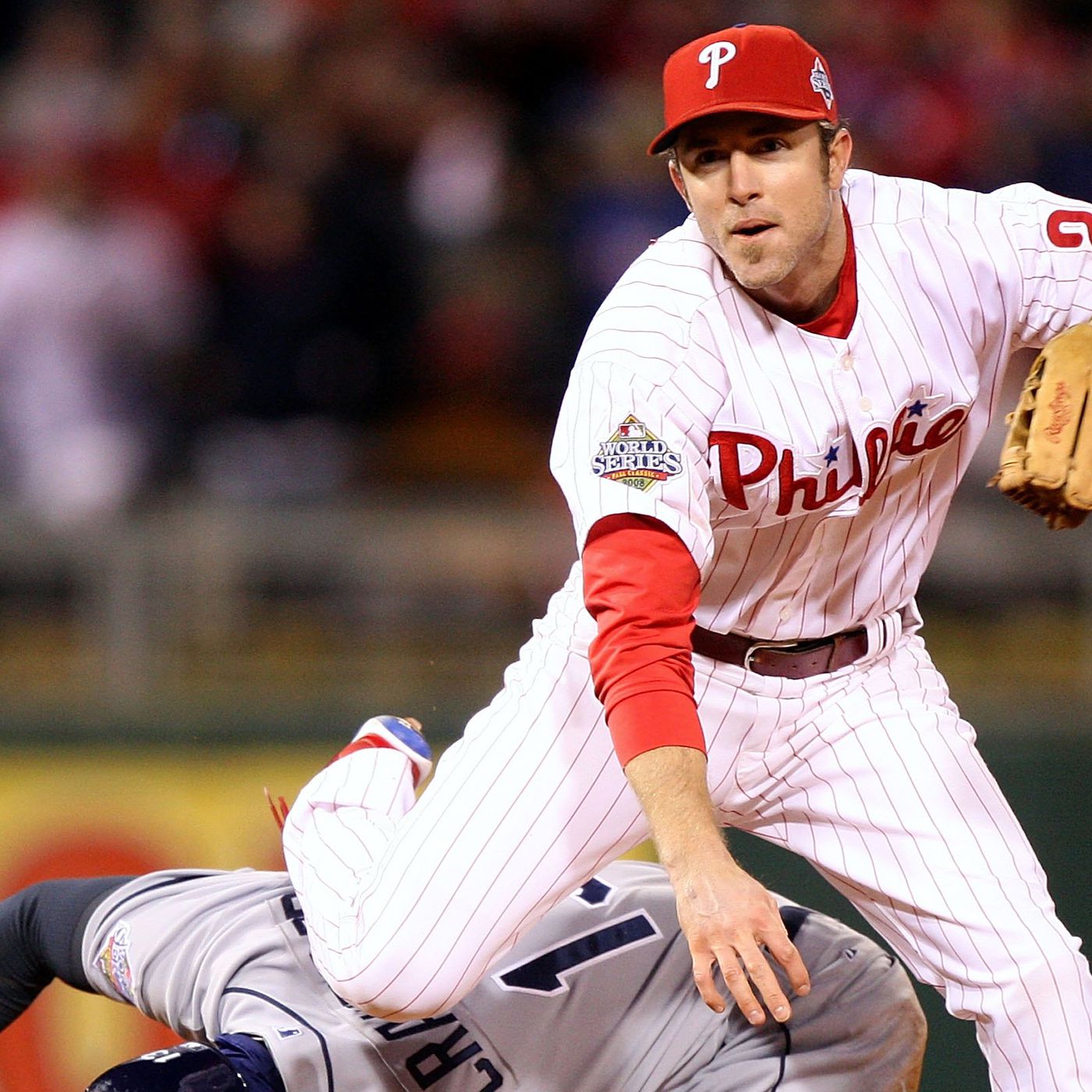
Like his former teammate Bobby Abreu, second baseman Chase Utley's Hall of Fame case rests on being a sabermetric darling, although the old "eye test" might boost his chances.
Verdict: Ranked 12th all-time among second baseman with 56.9 JAWS, Chase Utley's chances for the Hall of Fame rest equally on advanced metrics and the old "eye test" since his only notable league-leading offensive mark is 131 runs scored in 2006, although he did lead the Majors in hits by pitch from 2007 to 2009 en route to 204 career potentially painful tickets to first base, ninth all-time.
Omar Vizquel
Even before scandals began to erode Omar Vizquel's Hall of Fame support, the switch-hitting shortstop was always going to be a tough sell, and with just three more chances to have the writers elect him, that train to Cooperstown may have already left without him. "Little O" was an old-school shortstop whose defensive play was paramount as he typically batted second in the lineup, an old-school table-setter who led the league in sacrifice bunts four times while chalking up 256 in his career, 35th all-time. The advent of "super shortstops" such as Cal Ripken, Jr., Álex Rodríguez, and Derek Jeter, who combined offensive power with defensive skills, rendered him quaint, if not obsolete; nevertheless, Vizquel played for just under a quarter-century and across four decades.
Career Achievements: Three-time All-Star. Eleven Gold Glove Awards.
Career Top 100 Leaderboards:
Offense: Outs made: 8433 (8th). Games: 2968 (13th). Singles: 2264 (17th). At-bats: 10,586 (18th). Caught stealing: 167 (19th). Plate appearances: 12,013 (22nd). Sacrifice hits: 256 (35th). Hits: 2877 (44th). Sacrifice flies: 94 (53rd). Stolen bases: 404 (72nd). Runs scored: 1445 (83rd).
Defense (shortstop only): Double plays turned: 1734 (1st). Fielding percentage: .985 (1st). Games: 2709 (1st). Assists: 7676 (3rd). Total Zone runs: 130 (5th). Defensive WAR: 29.5 (9th). Putouts: 4102 (11th).
Career Highlights: Beginning his 24-year career with the Mariners in 1989, Omar Vizquel played in at least 136 games in four of his five seasons in Seattle, earning his first Gold Glove in 1993, his final year before being traded to the Cleveland Indians, where he became the everyday shortstop on those powerhouse Cleveland teams that made two World Series appearances in three years from 1995 to 1997.
In his 11 years with the Indians, Vizquel hit his peak offensively at the end of the century: For a five-year stretch from 1996 to 2000, he scratched out a .297/.369/.393/.762 slash line that yielded a 95 OPS+ while he averaged, per year, 170 hits, 30 doubles, 97 runs scored, 36 stolen bases, and 3.8 bWAR. His best year was in 1999, when he established career highs across his slash line (.333/.397/.436/.833), OPS+ (111), hits (191), and bWAR (6.0) while matching his best mark in doubles (36) and making his second All-Star team.
Vizquel also had notable offensive seasons in 2002 as he developed a power stroke with a career-best 14 home runs to go with 31 doubles while driving in a career-high 72 runs, generating a 104 OPS+, the second and last time he was above league-average, while being named to his third and final All-Star squad, and in 2004, when he batted .291, had an OPS+ one tick under the 100 league average, and posted a 4.0 bWAR. Starting in 2005, Vizquel played four seasons for the San Francisco Giants, hitting .295 in 2006 as he was the Giants' everyday shortstop until 2007, when he turned 40. He continued to play as a part-timer until age 45 with the Texas Rangers, Chicago White Sox, and Toronto Blue Jays.
Of course, Omar Vizquel's primary value came as a defensive shortstop, and he is the lifetime leader in games played, fielding percentage, and double plays turned while ranking among the leaders in putouts, assists, Total Zone runs, and dWAR. He also accrued 49 defensive runs saved, notable because DRS wasn't introduced until 2003, when Vizquel was already in his age-36 year. Having won 11 Gold Gloves, nine of them consecutively from 1993 to 2002, he is second only to Ozzie Smith's 13 among shortstops. Smith was elected to the Hall of Fame in 2002, on his first ballot, by 91.7 percent of BBWAA voters.
Shortstop Omar Vizquel's sterling fielding ability still kept him on the Cooperstown borderline before scandal allegations--after his career was over--are likely to keep him out of the Hall.
Verdict: Ranked 45th all-time among shortstops with 36.2 JAWS, Omar Vizquel can only look up to marginal Hall of Fame shortstops Travis Jackson, Phil Rizzuto, and Rabbit Maranville. Ranked by dWAR, Vizquel is seventh, with only Mark Belanger among the top six not in the Hall of Fame, and "the Blade," who batted .228 with 20 home runs in an 18-year career, was a one-and-done in 1988 with just 3.7 percent of the vote.
Extremely few players have been inducted into the Hall primarily for their defensive prowess. Omar Vizquel seemed to be on track for serious Cooperstown consideration before scandals derailed him, and it is unlikely that he will generate enough steam to bring himself into the station before his time on the ballot runs out.
David Wright
Yet another potential Hall of Famer whose journey to Cooperstown was derailed by multiple injuries, David Wright was diagnosed with spinal stenosis in 2015, his age-32 year, and from then until a token two-game valedictory showing in 2018 before retiring, he played in just 77 games while missing all of 2017. "Captain America," earning that moniker for his stellar play in the 2013 World Baseball Classic, managed to garner 6.2 percent of the vote in his ballot debut last year, but whether this is the start of a low-level campaign for serious consideration or a generous nod to an excellent if not Hall of Fame-caliber career will become clearer after this year's ballot results are revealed.
Career Achievements: Seven-time All-Star. Two Gold Glove Awards. Two Silver Slugger Awards.
Career Top 100 Leaderboards:
Defense (third base only): Games: 1572 (38th). Assists: 2946 (45th). Double plays turned: 237 (58th). Putouts: 1087 (79th). Errors committed: 190 (90th).
Career Highlights: Debuting in 2004 with the New York Mets, the only team he ever played with, David Wright was the Mets' full-time third baseman by 2005, posting a robust slash line of .306/.388/.523/.912 with a 140 OPS+, 42 doubles, 27 home runs, the first of five years with 25 or more dingers; 99 runs scored; 102 runs driven in, the first of five years with 100 or more RBI; and 4.8 bWAR; moreover, with 160 games played, he demonstrated durability as he had six seasons with at least 150 games played.
Wright replicated his offensive output in 2006 while the popular Mets star made the first of five consecutive All-Star teams. For a nine-year stretch, from 2005 to 2013, Wright produced a .302/.384/.505/.890 slash line, generating a 138 OPS+, as he averaged, per season, 165 hits, 36 doubles, 23 home runs, 90 runs scored, 93 runs knocked in, 73 walks, 20 stolen bases, and 4.9 bWAR while earning back-to-back Gold Glove and Silver Slugger Awards in 2007 and 2008.
Those Gold Gloves might have been, as the sardonic saying goes, as much for his hitting as for his defense: In 1572 games at third base, Wright finished with –68 Total Zone runs and –24 defensive runs saved while his career dWAR is 0.3.
By 2015, David Wright was struggling to stay on the field, and while he did homer in Game Three of the World Series against the Kansas City Royals, the only game the Mets won, he missed all of 2017 before making his farewell cameo at the end of the 2018 season.
Verdict: Ranked 27th all-time among third basemen with 44.3 JAWS, David Wright is a better bet than marginal Hall of Famers George Kell and Pie Traynor but falls short of a number of deserving hot-corner aces ahead of him on that ranking. His outcome this year may show if last year's support was a fluke or if a groundswell among voters is building, although it is likely that any groundswell will not build to the 75 percent needed for election to the Hall.
Starting Pitchers
After punching the Cooperstown tickets of eight starting pitchers during the 2010s, the BBWAA hasn't elected any starters since 2019. Moreover, of the 14 returning candidates, only two, Mark Buehrle and Andy Pettitte, are starting pitchers—and while the addition of Félix Hernández and CC Sabathia doubles that number, both, particularly Sabathia, could leapfrog over Buehrle and Pettitte by drawing support away from them.
Mark Buehrle
Mark Buehrle's support on the BBWAA ballot—attracting about nine percent of the voters over four years—has been as surprising as the career that put him on the ballot in the first place. Making his debut in the teeth of the Steroids Era, the soft-tossing southpaw proved to be an innings eater par excellence, an old-school battler with 15 consecutive years starting at least 30 games and 14 consecutive years of pitching at least 200 innings while notching 33 career complete games and 10 career shutouts, two of which were no-hitters, with the latter one a perfect game, all capped by helping the Chicago White Sox in 2005 to their first World Series championship in 86 years.
Career Achievements: Five-time All-Star. Four Gold Glove Awards. World Series champion (2005).
Career Top 100 Leaderboards: Double plays turned: 53 (28th). Home runs allowed: 361 (28th). Games started: 493 (54th). Earned runs allowed: 1391 (62nd). Hits allowed: 3472 (66th). Pitcher WAR: 60.0 (66th). Wins: 214 (93rd). Batters faced: 13,705 (99th). Innings pitched: 3283.3 (99th).
Career Highlights: Debuting in 2000 with the Chicago White Sox, Mark Buehrle became a full-time starting pitcher the next year, starting 490 straight games in his 16-year career. For a 12-year stretch, from 2001 to 2012, Buehrle won 170 games with a 3.81 ERA and a 119 ERA+ as he averaged, per year, 33 starts, 219 innings pitched, 124 strikeouts, and just 49 bases on balls—the left-hander walked just 2.0 batters per nine innings pitched for his career—as he posted a 2.54 strikeout-to-walk ratio; during that period, he also recorded 28 complete games and 8 shutouts including his two no-hitters. Buehrle was also named to four All-Star teams while he helped the White Sox into their four-game sweep of the Houston Astros (then in the NL) in the first World Series victory for the South Siders in 86 years.
Late in his career, he was recognized for his outstanding fielding as he won four straight Gold Glove Awards from 2009 to 2012. Buehrle led AL pitchers in assists four times before he led the Majors in assists (47) in 2012. He also completed four seasons without committing an error, and his career fielding percentage of .973 is 20 points higher than the league's .953 during his career. Buehrle also racked up 87 defensive runs saved during the 13 years of his career that DRS had been tabulated.
Mark Buehrle finished his career pitching one year for the Miami Marlins in 2012 and three years with the Toronto Blue Jays, with whom he made his fifth All-Star team in 2014 and reached the 200-win milestone in his final year, 2015, which also saw him pitch four complete games including his tenth and last career shutout, before retiring.
Verdict: With 47.4 S-JAWS, Mark Buehrle ranks 79th all-time among starting pitchers, two ticks above Andy Pettitte, also on this ballot, and one tick above Hall of Famer Joe McGinnity, who pitched just ten seasons during the dead-ball era.
With only one year of Cy Young Award consideration, in 2005, and no high-profile leaderboard presence beyond games started and innings pitched, two years each for league-leadership—and four years leading the league in hits allowed—he was a consummate compiler who, despite amassing 60.0 bWAR, lacked dominance or distinction. Perhaps his modest support is a nod to his old-school profile, and with the ballot logjam easing he might garner more votes, but it's hard to see Mark Buehrle rallying sufficient support to be elected to the Hall of Fame.
Andy Pettitte
If Mark Buehrle was a low-profile compiler, then Andy Pettitte was a high-profile one who was integral to five World Series championships with the New York Yankees. Indeed, Pettitte's career postseason record of 44 starts and 276.2 innings pitched across all brackets, which netted him a 19–11 win-loss record and a 3.81 ERA, is a robust season's worth of work by itself that is a scaled-down mirror of his career output.
But although the left-hander with the Hall of Fame pickoff move—98 runners nailed in his 18-year career—had four top-five Cy Young Award finishes including a close runner-up in 1996, he never seemed to be the go-to arm of the staff. In six BBWAA ballot appearances, Pettitte has managed at best 17.0 percent support in 2023 that dipped slightly last year, which seems to indicate that voters are not convinced that he is a Hall of Fame-caliber starting pitcher. His PED taint from his admitted use of human growth hormone may also be a residual bias factor. While quantum leaps from the doldrums in a candidate's last few ballots is not unheard-of, Andy Pettitte may find himself hoping for an appeal by a veterans committee after striking out with the writers.
Career Achievements: Three-time All-Star. Five-time World Series champion (1996, 1998, 1999, 2000, 2009).
Career Top 100 Leaderboards: Games started: 521 (42nd). Wins: 256 (43rd). Strikeouts: 2448 (46th). Earned runs allowed: 1418 (58th). Pitcher WAR: 60.7 (63rd). Win-loss percentage: .626 (72nd). Hits allowed: 3448 (74th). Win probability added: 24.2 (80th). Batters faced: 14,074 (89th). Innings pitched: 3316.0 (93rd).
Career Highlights: Debuting as a starting pitcher with the New York Yankees in 1995, Andy Pettitte began his 18-year unbroken streak of posting a win-loss percentage of .500 or better while he struck out at least 100 hitters in all but three seasons. In 1996, he led the American League in wins (21) against just eight losses while notching 5.6 bWAR, the first of only three years in which he generated bWAR better than 3.8, and finished second to Pat Hentgen in Cy Young voting; he also made the first of three All-Star teams, all as a Yankee.
Pettitte's 1997 season was even better with a career-best 8.4 bWAR while his 2.88 ERA was just the first of two years with a sub-3.00 ERA (in a qualifying season). In 2004, he jumped to the National League for three years with the Houston Astros and in 2005 he won 17 games and lost just nine, a .654 win-loss percentage, as he delivered a 2.39 ERA, a 177 ERA+, both career bests, and 6.8 bWAR as a key component of the Astros first (and only) NL pennant-winning team, which was swept by the Chicago White Sox in the World Series.
Returning to the Bronx in 2007, Pettitte won his fifth World Series ring in 2009, and the following year he made his third and final All-Star squad in limited action as in 21 starts he posted a sparking 11–3 win-loss record and a 3.28 ERA in 129.0 innings pitched. Pettitte then announced his retirement, and he did sit out the 2011 season, but he returned in Yankee pinstripes for two more seasons before exiting for good after 2013.
Verdict: With a 47.2 S-JAWS, Andy Pettitte ranks 82nd all-time among starting pitchers, a few spots ahead of Yankees left-hander Whitey Ford, with whom Pettitte shares a good deal of postseason glory, but whether that will be enough to convince more voters to check his box remains to be seen. Another intriguing wrinkle is the effect that CC Sabathia's ballot debut will have on Pettitte's chances. As noted previously, Sabathia, another Yankees southpaw, established a career resume that resembles Pettitte's in many aspects including at least 250 career wins, although CC did win a Cy Young Award and passed the 3000-strikeout milestone. Will Sabathia boost Pettitte's stature? Or will Pettitte hold Sabathia down? We'll find out, maybe, in January.
Relief Pitchers
Of the eight relief pitchers elected to the Hall of Fame, all except Lee Smith were voted in by the BBWAA, which came within five votes of electing Billy Wagner last year. And while nothing is ever certain until it happens, Wagner's chances seem strong, and the addition of Fernando Rodney to this year's ballot is unlikely to pose a challenge to them or to Francisco Rodríguez's chances although Rodríguez still has a long way to go.
Francisco Rodríguez
One of eight relief pitchers with at least 400 saves, Francisco Rodríguez led the league in saves three times and set the single-season record with 62 in 2008. "K-Rod" polled nearly 11 percent on his 2023 ballot debut although he dipped three percent last year. That may represent cooling from initial enthusiasm or just year-to-year fluctuation. The addition of Fernando Rodney as another reliever on the ballot shouldn't draw votes from Rodríguez's support, but a push to boost Billy Wagner on his final year on the ballot might.
Career Achievements: Six-time All-Star. World Series champion (2002).
Career Top 100 Leaderboards: Saves: 437 (6th). Games finished: 677 (9th). Games: 948 (21st).
Career Highlights: After electrifying the baseball world as a rookie during the Anaheim Angels' World Series-winning postseason in 2002, Francisco Rodríguez served as Troy Percival's setup man, striking out 123 hitters in 84.0 innings pitched in 2004, before becoming the Angels' closer the following year as his 45 saves led the American League. He put up three more seasons with at least 40 saves and led the Majors in 2006 with 47 and in 2008 with 62, his record-setting year.
In his four years as the Angels' closer, "Frankie" averaged, per year, 69 appearances and 49 innings pitched, 49 saves, and 89 strikeouts while posting a 2.35 ERA, a 190 ERA+, 11.6 strikeouts per nine innings pitched, and 2.7 bWAR. In his seven years in Anaheim, he was selected to three All-Star teams.
As a free agent, Rodríguez joined the New York Mets in 2009, but despite making his first National League All-Star squad, his performance was spotty. Professionally, he rebounded somewhat in 2010, but an off-field domestic altercation, a possibly related injury that required surgery, and a suspension tarnished his reputation. He bounced to the Milwaukee Brewers, then to the Baltimore Orioles, then back to Milwaukee, where he was picked for back-to-back All-Star teams in 2014 and 2015 as he saved 82 games across both seasons. With the Detroit Tigers in 2016, he recorded 44 saves, pushing him across the 400-save threshold, before his Major League career ended after the 2017 season.
Verdict: Mercurial and occasionally brilliant, Francisco Rodríguez ranks 13th all-time with an R-JAWS of 21.1, one tick higher than Hall of Famer Lee Smith, who spent 15 fruitless years on the BBWAA ballot before the veterans committee elected him. Even in the short time between Smith's election in 2019 and now, thinking about the stature of relief pitchers has been changing quickly—even the veterans committee was unanimous in electing Smith—and Rodríguez should poll enough support to keep him on the ballot for continuing evaluation.
Billy Wagner
It's do-or-die time for Billy Wagner as 73.8 percent of the writers delivered him to the doorstep of baseball immortality last year without actually voting him into the Hall of Fame, and unless the fireballing southpaw reliever can muster those additional votes in this, his final year on the BBWAA ballot, his Cooperstown fate will be left in the hands of some future veterans committee. After hovering around ten percent in his first three years, "Billy the Kid" began to build support until he reached the 50-percent threshold in 2022, and barring any kind of last-minute scandal that could adversely influence voters, he may indeed become the ninth relief pitcher to be elected to the Hall. But as another Hall of Famer once noted, it ain't over 'til it's over, so don't hold your breath.
Career Achievements: Seven-time All-Star.
Career Top 100 Leaderboards: Games finished: 703 (6th). Saves: 422 (8th). Games: 853 (41st). Win probability added: 29.1 (48th).
Career Highlights: Appearing in one-third of an inning with the Houston Astros in 1995, Billy Wagner became a full-time roster player in 1997, appearing in 62 games, saving 23 games, and, in 66.1 innings, striking out 106 batters for a 14.4 strikeouts per nine innings pitched, the first of four seasons with 100 or more strikeouts and four seasons with a 14.0 or better SO/9. Indeed, the fireballing left-hander was mowing down hitters with a 100-mph fastball and a 90-mph slider as he never posted an earned run average above 3.00 save for his 2000 season.
In ten seasons in which he made 50 or more appearances and pitched 50 or more innings, Wagner had nine seasons with an ERA+ of 150 or better, and four seasons with a sub-2.00 ERA that generated an ERA+ of 247 or better. And yet Wagner, despite seven All-Star appearances, seemingly flew under the radar, leading the Majors in games finished in two years but amassing 40 or more saves just twice.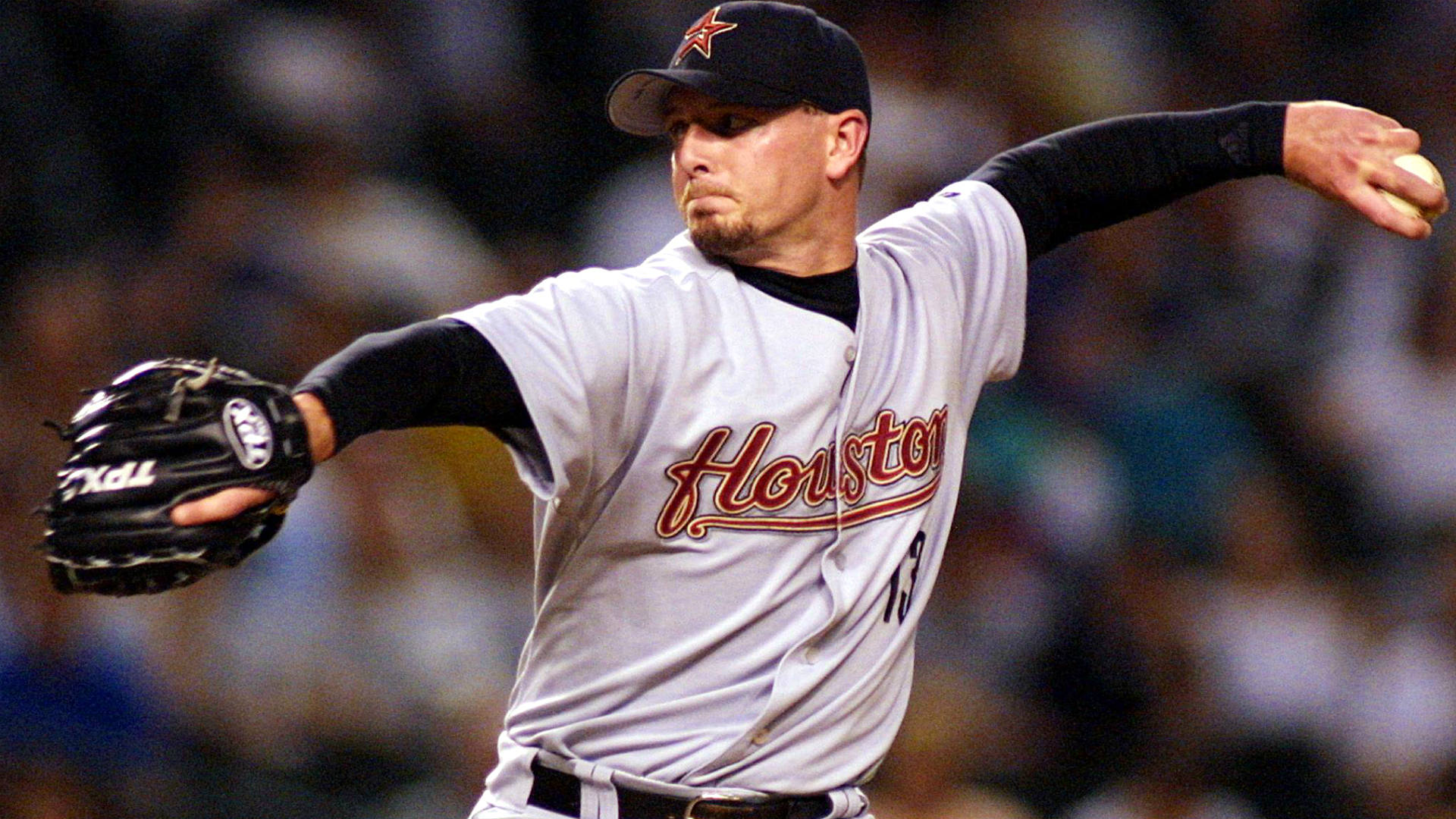
On the threshold of immortality in his final year of eligibility, Billy Wagner knows the pressure of high-leverage situations as the greatest left-handed relief pitcher in baseball history.
In the postseason, he was a disaster, posting a 10.03 ERA in 14 postseason games and 11.2 innings pitched overall. Yet in 853 regular-season games, all in relief, Wagner limited hitters to a .187/.262/.296/.558 slash line while striking out 1196 batters in 903.0 innings pitched for a career 11.9 SO/9, and by issuing just 300 walks, 26 of those intentional, he finished with a shade under a four-to-one strikeout-to-walk ratio.
Verdict: Billy Wagner's R-JAWS of 24.9 ranks him as sixth all-time among relief pitchers. The five above him, ranging from pioneer Hoyt Wilhelm and hybrid Dennis Eckersley to old-school fireman Goose Gossage and modern closers Trevor Hoffman and Mariano Rivera, are all in the Hall of Fame. After a sluggish start, Wagner now finds himself on the doorstep of the Hall of Fame, and it would be a damned shame if a handful of voters cannot be persuaded to check his box for Cooperstown on his final ballot.
My Hypothetical 2025 BBWAA Ballot
Having started this ballot assessment by noting that the "ballot logjam" of the 2010s seems largely to be over, I must now backtrack on my own hypothetical ballot since I do have more than ten of the maximum allowable votes to be cast on the actual BBWAA ballot.
Taking heed of the adage about "wasting water on a dying flower," I am abandoning my support for Manny Ramirez and Álex Rodríguez as I'm resigned to knowing that they will never muster the needed support for induction. That "water" of voting is better spent on nurturing either first-time candidates who might not get support or on returning candidates who have shown that they need support. The remainder of my vote is for candidates who could (should?) have been voted into the Hall of Fame on their first ballot, or who still can be voted in first-time.
Had I been able to, I would have also included Ian Kinsler or Dustin Pedroia, or even both, but as is the constant refrain in sports from time immemorial, they didn't make the cut. However, if either or both manage to make it to next year's ballot, there is always another chance.
My Ten Picks
My ten hypothetical votes for the 2025 Baseball Hall of Fame, in reverse order:
10. Omar Vizquel. Since I'm not voting for any PED Penitents, Vizquel is my sole protest vote. As far as we know, he did nothing wrong during his playing career except to become one of the game's greatest defensive shortstops; call it stubborn old-school thinking if you like, but I believe that should be rewarded.
9. Carlos Beltrán, If indeed his role in the Houston Astros' 2017 sign-stealing scandal is what kept him from being elected on his first try, then indeed let that punishment end this year.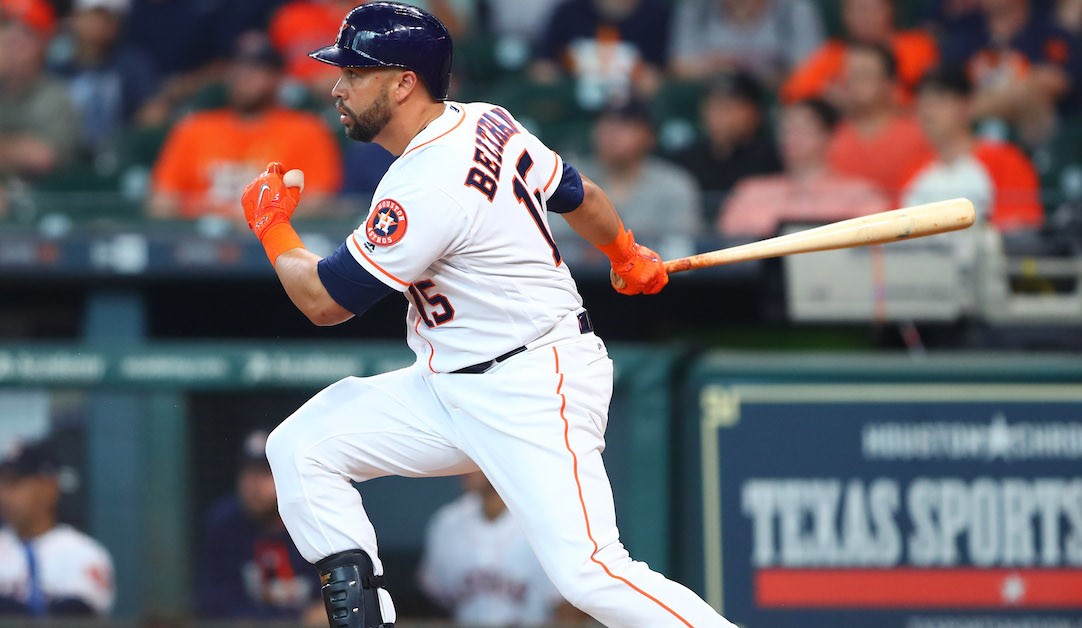
How much penance must Carlos Beltrán pay for his role in the Houston Astros' 2017 sign-stealing scandal? For what it's worth, he was already a Hall of Famer before that occurred.
8. Chase Utley. Already off to a modest but encouraging start, Utley's trek to Cooperstown will take a few ballots, so let's keep the support going.
7. Andruw Jones. It's déjà vu all over again: I feel as if we've been here in the recent past, first with Scott Rolen, then with Todd Helton. Just like them, Jones's support has swelled in recent years, and his end result should be the same as theirs.
6. Félix Hernández. The King won't be voted into the Hall on first ballot, or maybe even his fifth, but that coronation is inevitable as we reassess what it means to be a standout starting pitcher in this contemporary era. Whatever that "it" is, Hernández had it in his prime.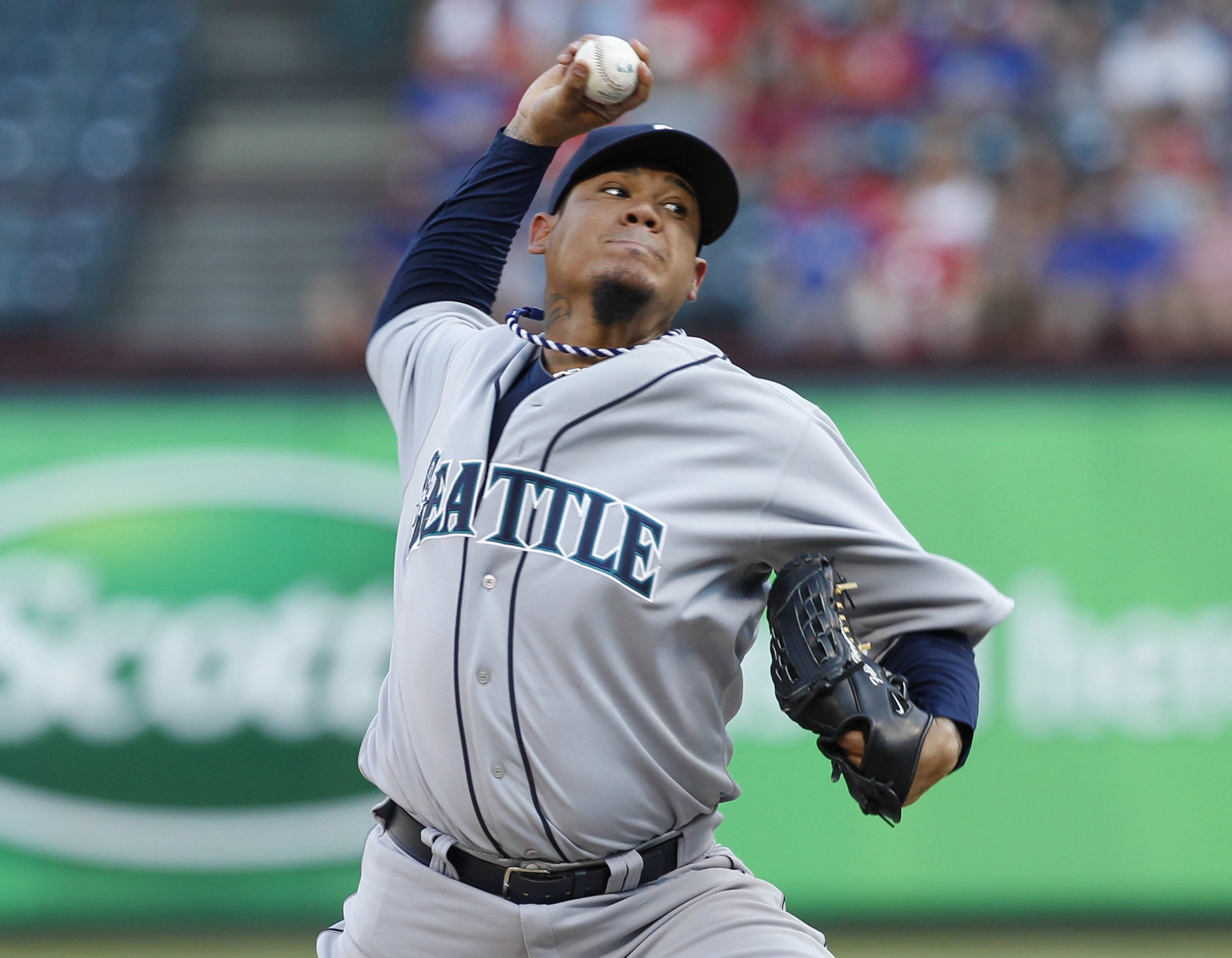
The face of the contemporary Hall of Fame starting pitcher. What's more, Félix Hernández has the career accomplishments to make that case stick even if it's not on this ballot.
5. CC Sabathia. Yes, on first glance his record looks very similar to Andy Pettitte's, but baseball is a game of inches, and CC inches past Pettitte to not only get into the Hall, but to do so on his first ballot.
4. Ichiro Suzuki. If anything, Ichiro is a singular, if not unique, baseball talent, one who stood apart from convention as he pursued his idiosyncratic vision of how to succeed in the sport. As I noted previously, he did hang on too long and it may hurt him on this first ballot, but he is going to Cooperstown sooner rather than later, so let's just make it now.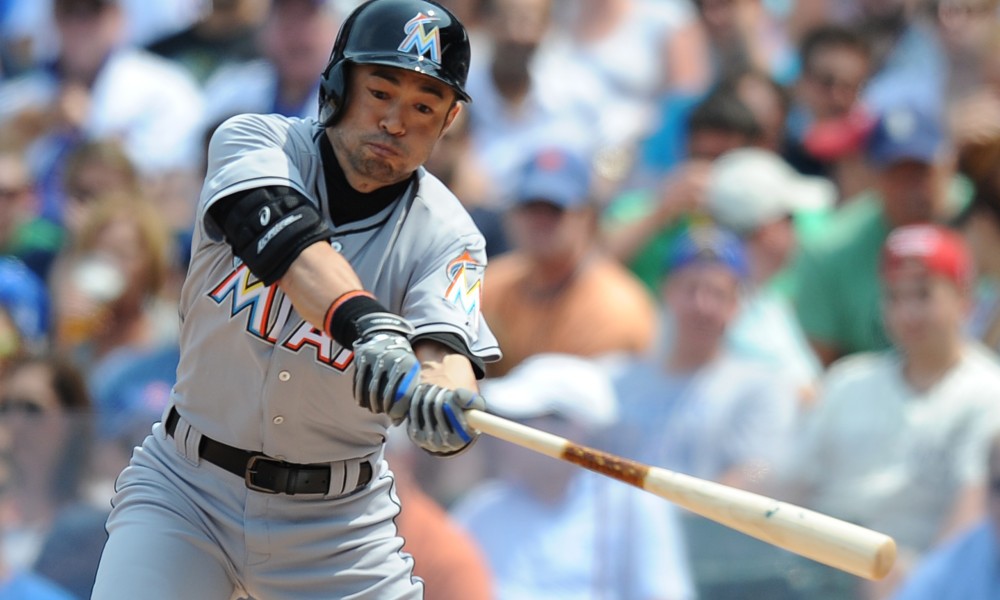
Ichiro Suzuki got his 3000th hit with the Miami Marlins. Did hanging around until he reached that milestone hurt his Hall of Fame chances? Let's hope not.
3. Bobby Abreu. The more I look at Abreu's record, the more I puzzle over how overlooked he was both during his playing days and now that he's toiling to attract support on the ballot. He needs a serious second-half push to 75 percent—and he's worth it.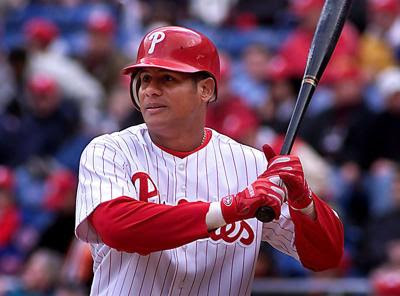
The best right fielder you've never heard of? Put Bobby Abreu into the Hall of Fame and everyone will hear how good he was.
2. Ben Zobrist. My most quixotic vote for sure, but if the portrait of a particular kind of Hall of Famer created by the approach and style of contemporary baseball needs a face, then Ben Zobrist is it. Yes, the game may evolve (devolve?) further in the future, and in fifty years we may look back and wonder how he got into the Hall, but we've been doing that all along (Tommy McCarthy, anyone?), and Zobrist is a stellar example of the "new breed of ballplayer."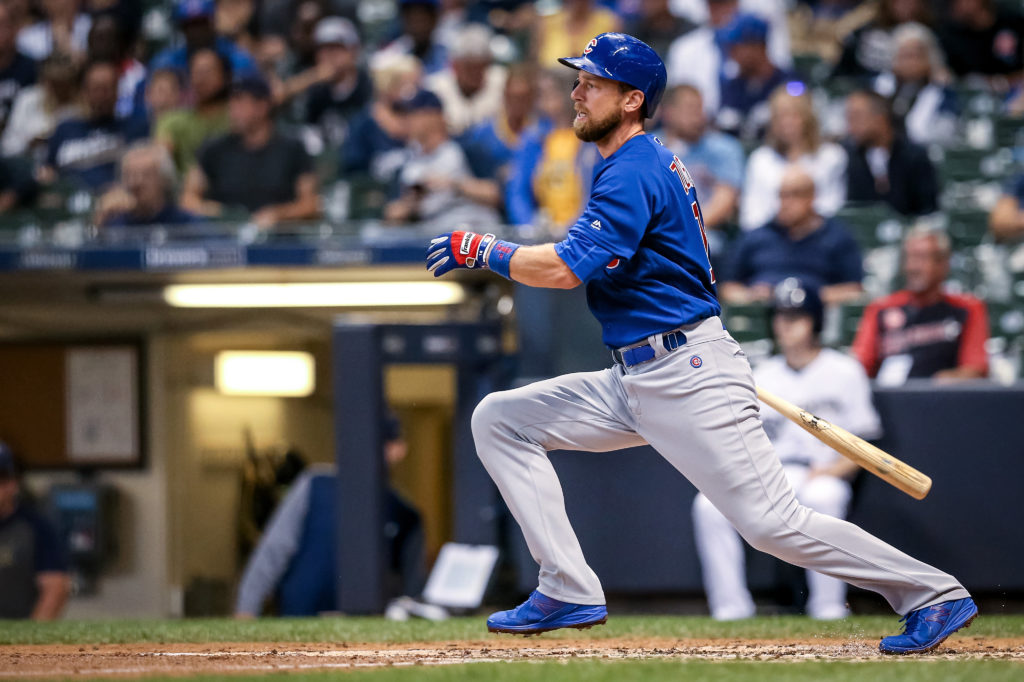
The face of the modern Hall of Famer? Super-utilityman Ben Zobrist is the face of the modern position player, and he's good enough for Cooperstown wherever he played.
1. Billy Wagner. If I had only one vote to make, Billy the Kid gets it. Wagner might have tanked in the postseason, but, seriously, if you had to hand the ball to one relief pitcher in a critical high-leverage situation, he is on a very short list of candidates—and all of them are in the Hall of Fame. Where Billy Wagner belongs.
(Photo: Getty Images) Billy Wagner's game is on the line this year. One of the game's greatest relief pitchers has proved that he has the talent to belong in the Hall of Fame.


Comments powered by CComment