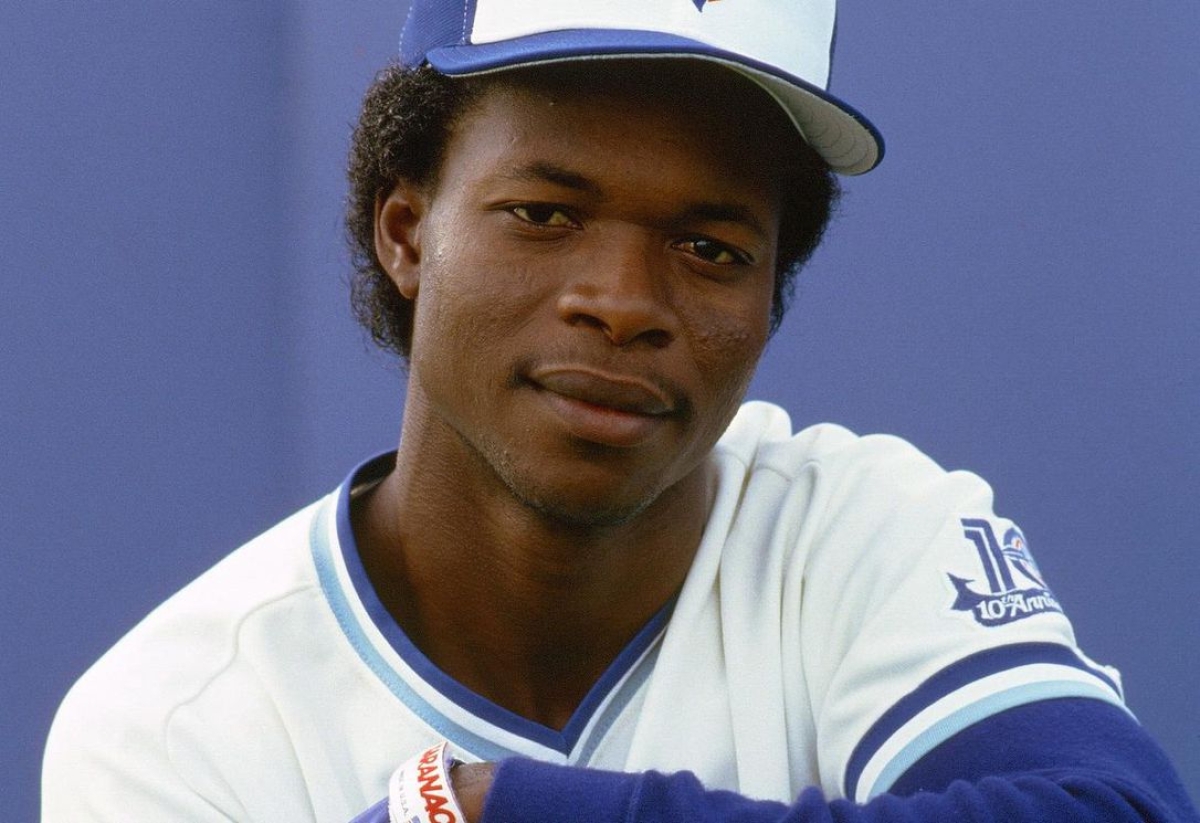
Having discovered and signed out of the renowned shortstop sanctuary of San Pedro de Macorís, Tony Fernandez arrived in Toronto as a slender, highly agile adolescent, destined to redefine the position for an ascending franchise. Making his Major League debut in late 1983, he spent a year in a part-time capacity before definitively assuming the everyday shortstop role in 1985. His timing was impeccable; his first full season at the helm coincided directly with the Blue Jays’ historic breakthrough to their first American League East division title, thereby immediately establishing him as a central figure in the team's transformation from an expansion underdog to a legitimate powerhouse.
From 1985 to 1988, Fernandez established a distinguished period of shortstop performance that garnered the attention of the entire baseball community, earning him consistent votes for the American League Most Valuable Player award. He exemplified exceptional consistency at the plate, achieving at least 160 hits and maintaining a batting average well above .280 in each of those four consecutive seasons. Notably, his 1986 season was extraordinary, during which he recorded a career-high 213 hits—a record for a shortstop in Major League Baseball at that time. His distinctive, low-hand stance and highly disciplined approach rendered him a formidable challenge for opposing pitchers seeking to complete innings.
Although his batting was impressive, it was his defensive prowess on the artificial turf of Exhibition Stadium that elevated his status to that of an icon. Equipped with exceptional flexibility and a unique, sidearm flick throwing motion, Fernandez demonstrated an extraordinary range that enabled him to field ground balls deep in the hole and execute throws across his body with ease. This exceptional defensive skill earned him four consecutive Gold Glove Awards from 1986 to 1989, marking him as the first infielder in Blue Jays history to receive this accolade and supporting a sophisticated defensive strategy that contributed significantly to the success of Toronto's pitching staff.
Fernandez, a three-time All-Star during his initial tenure in Canada, was reluctantly transferred to San Diego following the 1990 season in a major trade intended to reacquire Roberto Alomar and Joe Carter. Nonetheless, his career remained profoundly connected to Ontario. In June 1993, the Toronto Blue Jays orchestrated a mid-season trade to reinstate their cherished shortstop for the final stages of the season. Fernandez responded positively by batting .306 during the concluding period and delivered an exceptional performance in the 1993 World Series, where he set a shortstop record with nine runs batted in, culminating in his first championship victory.
The later stages of his career turned into a nomadic journey through Cincinnati, New York, and Cleveland, but the pull of the True North always brought him back. Fernandez returned for a third stint in 1998, defying Father Time by batting a brilliant .321, followed by a sizzling .328 mark in 1999 that earned him his fifth and final career All-Star appearance. After a brief foray into Japanese baseball, he came full circle in 2001, returning to Toronto one last time to finish his 17-year major league journey exactly where it began, wearing his iconic number 1 uniform.
The Infielder compiled 1,583 Hits, 172 Stolen Bases, and a .297 Batting Average as a Blue Jay and would later be inducted into the Canadian Baseball Hall of Fame. Fernandez is also a member of the Blue Jays Level of Excellence.
Comments powered by CComment