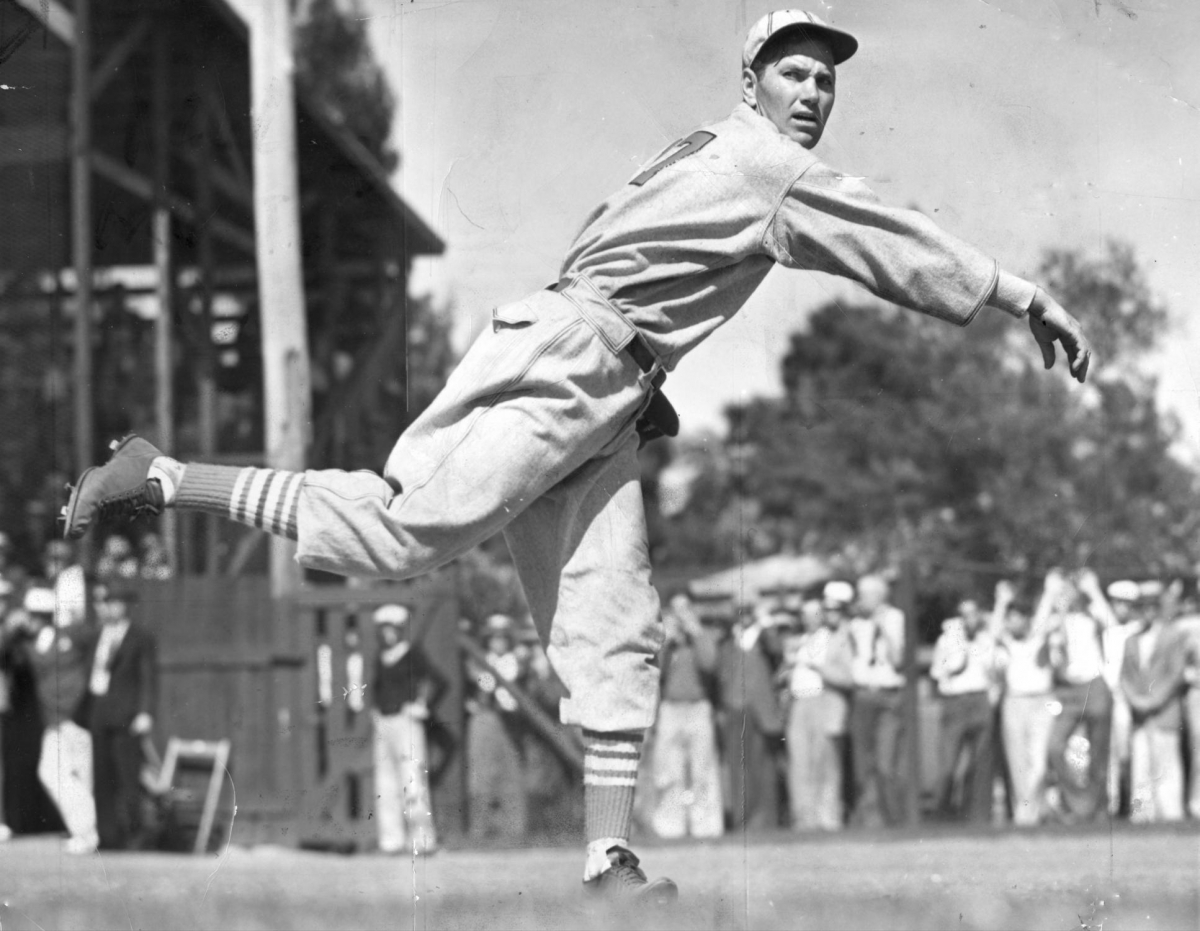
When we declare that Bob Gibson was the preeminent pitcher in the history of the St. Louis Cardinals, we substantiate this assertion; however, longevity and overall career significance constitute separate considerations. If the discussion pertains to the most rapid, overwhelmingly dominant peak performance by a Redbirds pitcher, that accolade unquestionably belongs to another individual. Born Jay Hanna Dean, but widely known as “Dizzy” due to his flamboyant, assertive, and humorously self-assured demeanor, the nation’s prodigious right-hander regarded Major League Baseball as his personal domain. Following a brief debut involving one game in 1930 and a swift stint in the minor leagues for further development, he secured a permanent position in the rotation for the 1932 season. He did not merely take the mound; he became a cultural icon and a high-velocity workhorse who set the pace throughout the National League, leading an enduring multi-era peak that illuminated the sport's history with exceptional brilliance.
His introductory 1932 campaign was a remarkable display of extensive endurance. Dean transformed logging numerous innings into a disciplined daily routine, leading the Cardinals to a competitive record of 18–15 and ranking third among all National League pitchers with a bWAR during his rookie season, owing to his 191 strikeouts and four shutouts over a league-high 286 innings. Advanced analytical metrics strongly substantiate his immediate influence on the team.
He maintained that the frontline trajectory directly into the 1933 schedule, achieving his first 20-win campaign (20–18) and securing another league-leading strikeout crown, thereby paving the way for the historic pinnacle of his career on the mound.
The pinnacle of his hardware-certified legacy was reached during an exceptional 1934 regular-season performance. This period marked the summer when the Cardinals earned the affectionate nickname "Gashouse Gang”, a rugged and dirt-stained assembly of characters, with Dean serving as the unequivocal representative of the franchise. He delivered an exemplary demonstration of defensive mastery, culminating in an impressive 30–7 record, making him the last National League pitcher to achieve 30 wins in a single season. His advanced efficiency metrics dominated the era; he led Major League Baseball with seven shutouts and an outstanding 9.0 bWAR, thereby securing the National League Most Valuable Player award. His prowess in high-stakes games translated directly into world championship titles awarded in October. Dean posted a 2–1 record in the 1934 World Series against Detroit, concluding his performance with a historic, complete-game shutout in Game 7 to definitively secure the championship for St. Louis.
Far from a single-season peak, "Ol' Diz" maintained an unrivaled baseline of elite dominance over the next two summers, finishing as the runner-up for the National League MVP in both 1935 and 1936. He systemically dismantled opposing lineups to win 28 games in 1935 and 24 more in 1936, running his streak of National League strikeout crowns to four consecutive seasons. From 1932 to 1937, he never finished lower than third in pitching bWAR across the Senior Circuit, showcasing a concentrated era of dominance that left opposing managers completely helpless.
A single pitch ultimately led to a sudden, career-altering crossroads during the 1937 All-Star Game. A line drive struck by Earl Averill resulted in Dean sustaining a fractured toe; in an attempt to pitch through the injury prematurely, he modified his mechanics, leading to an immediate arm injury. The organizational departure occurred prior to the 1938 season when the front office traded their declining ace to the Chicago Cubs in exchange for a substantial package of players and cash. Chronic bursitis and a dead arm diminished his effectiveness significantly during his tenure with Chicago, marking a quiet conclusion to his peak years.
Across his 213 appearances as a Cardinal, Dean accumulated exactly 134 wins against just 75 losses, maintaining a brilliant 3.43 ERA, 120 complete games, 23 shutouts, and 924 strikeouts over 1,595.2 innings of work.
Dean would enter the Baseball Hall of Fame in 1953, and 19 years later, his #17 was retired by St. Louis. The franchise also inducted Dean as part of their first Hall of Fame class in 2014.
Comments powered by CComment