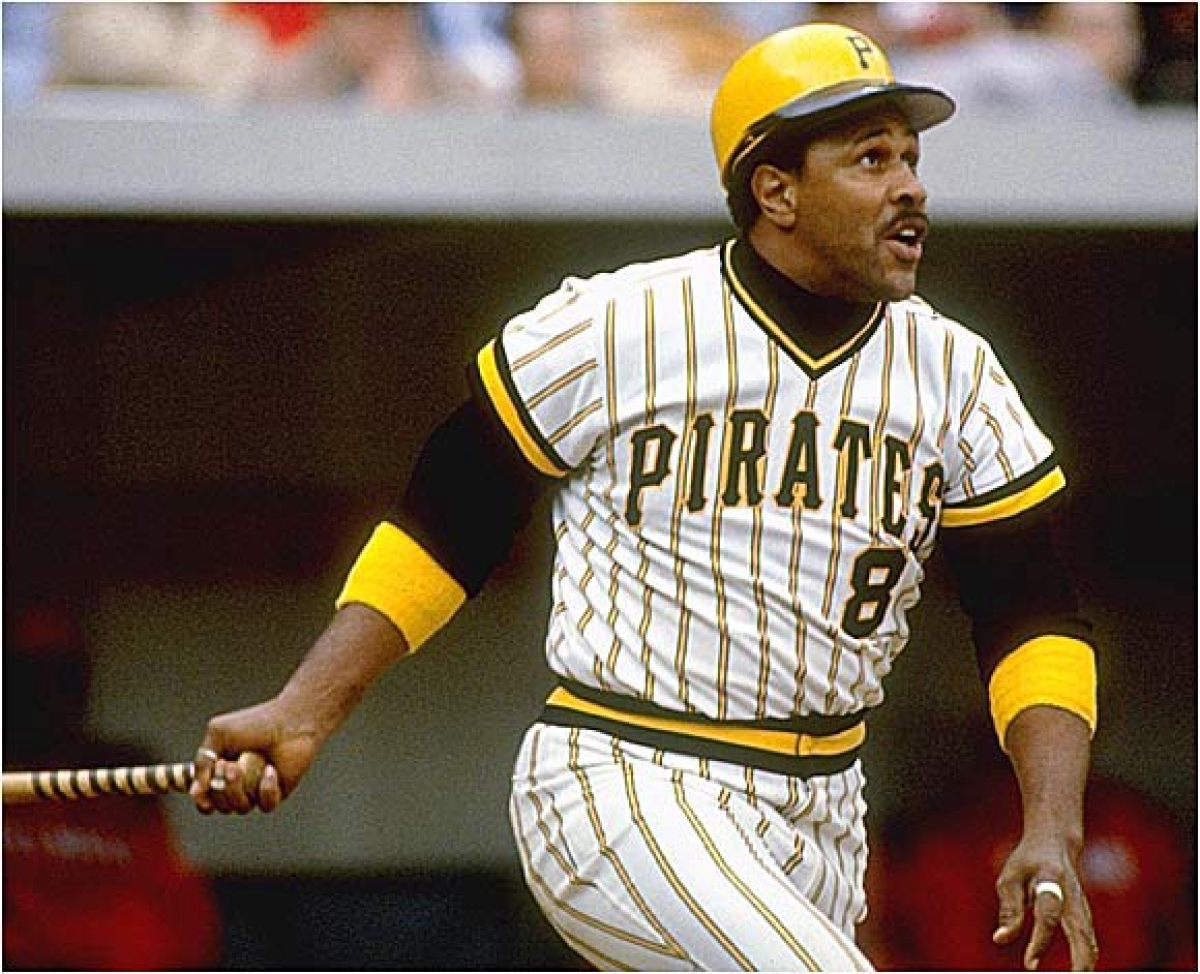
When Willie Stargell debuted for the Pirates in late summer of 1962, he didn't immediately shift the National League's landscape, but the tall left-handed slugger from Oklahoma quickly became a towering presence. Initially playing left field, "Pops" spent the 1960s providing raw power alongside Roberto Clemente. He swung a heavy bat with a distinctive, sweeping motion that struck fear into pitchers, routinely hitting tape-measure home runs over Forbes Field's roofs.
By the 1970s, his influence soared to a historic, league-shaping peak. Stargell won two National League home run titles, hitting a career-best 48 in 1971 and 44 in 1973. In those standout seasons, he also led the league in slugging percentage and narrowly missed the MVP award. As the cleanup hitter for the "Lumber Company" lineup that won the 1971 World Series, his true masterpiece was reserved for the final years of his career.
By the late 1970s, Stargell had moved to first base and became the team's clear leader. Before the famous 1979 season, he changed the clubhouse atmosphere by adding embroidered "Stargell Stars" to the team's unique pillbox caps, giving them to players who performed well in key moments. With his guiding presence, the team embraced Sister Sledge’s song "We Are Family," turning their baseball squad into a symbol of unity and culture.
In the diamond spotlight, the 39-year-old veteran led the team to victory. He shared the 1979 National League MVP award with Keith Hernandez and delivered an impeccable postseason performance. Stargell expertly broke down opposing pitchers, earning both the NLCS and World Series MVP honors. He became the first player in major league history to win all three MVP titles in one season, highlighted by a crucial, go-ahead home run in Game 7 against Baltimore that clinched the world championship.
His physical baseline broke down rapidly under the weight of knee injuries following that magical autumn, limiting his playing time until his permanent retirement at the conclusion of the 1982 schedule. He walked away from the diamond as a lifelong, 21-year one-uniform icon, holding the definitive all-time franchise records with 475 home runs and 1,540 runs batted in.
The Pirates retired his No. 8, and in 1988, he was inducted into the Baseball Hall of Fame on his first ballot. The franchise also unveiled a bronze statue of Stargell outside PNC Park to honor his legacy.
Comments powered by CComment