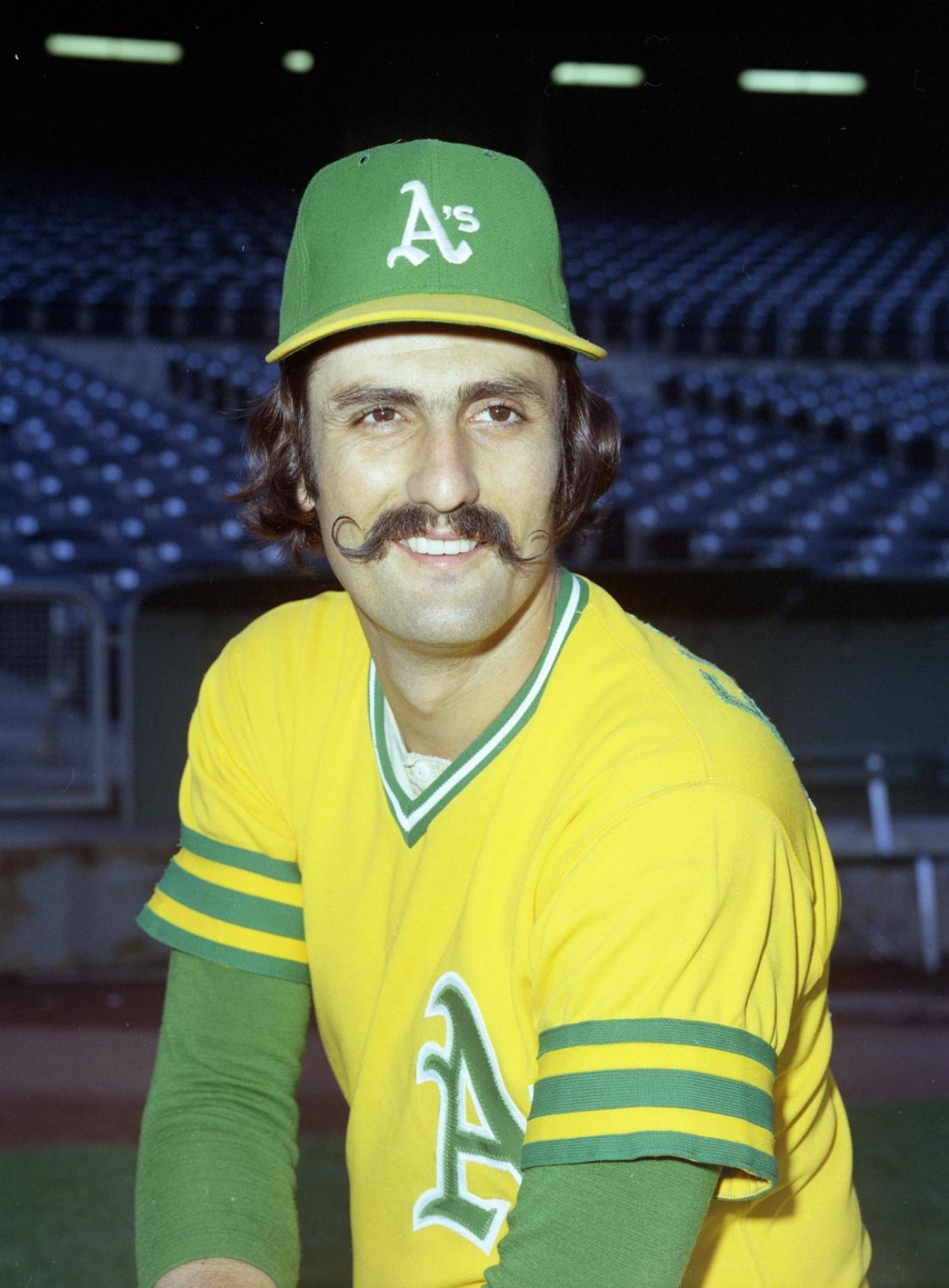
By the late 1960s, the idea of a relief pitcher wasn't new, but Rollie Fingers changed everything when he became the backbone of the Oakland Athletics’ bullpen. Before he stepped into the scene, relievers were often seen as either unsuccessful starters or veteran players nearing the end of their careers, fighting to stay on the team. Fingers broke those old stereotypes, turning the bullpen into an exciting and desirable role, and he was among the first relief pitchers to be celebrated as a true superstar in the sport.
Fingers operated predominantly as a starting pitcher during his tenure in the minor leagues. Upon his official debut in the Major Leagues with Oakland late in the 1968 season, manager Dick Williams ultimately acknowledged that his ability to throw a sharp, sinking fastball and his resilient character made him an ideal candidate for high-pressure, late-inning roles. By 1971, the transition to relief pitching had become permanent, a strategic decision that significantly influenced the course of baseball history.
He quickly became the charismatic face of the franchise’s unique identity, charming fans with his distinctive style. It all started when eccentric owner Charlie Finley encouraged him to grow a fabulous, waxed handlebar mustache. Finley even offered a $300 cash bonus to any player who could sport facial hair for a special promotion. That look, however, quickly became Fingers' signature style for life, endearing him even more to fans.
On the baseball field, he showcased incredible durability, often pitching multiple innings to secure victories long before the era of the single-inning save. From 1971 to 1976, Fingers was remarkably consistent, achieving at least 17 saves in six straight seasons while playing for the green and gold. His impressive rise to fame led to his first All-Star selection in 1973, starting a streak of four straight appearances in the Midsummer Classic as a key member of the renowned "Mustache Gang" team.
His real legacy was established when the regular season ended. Fingers became the ultimate high-pressure weapon for the historic team that won three straight World Series titles from 1972 to 1974; the only non-New York Yankees team to achieve a modern "three-peat." He was completely dominant on the sport's biggest stage, with 8 career postseason saves for the Athletics. The absolute apex of his playoff dominance arrived during the 1974 Fall Classic against the Los Angeles Dodgers. Fingers appeared in four of the five games, weaponizing his heavy sinker to earn a victory and two saves, single-handedly securing the 1974 World Series MVP honors.
Even as the historic core began to splinter under small-market financial strains, he remained a premier bullpen force, finishing third in the 1975 American League Cy Young balloting and eighth in 1976. That final summer in Oakland featured one of the most bizarre corporate episodes in baseball folklore: in June 1976, Finley abruptly sold Fingers and outfielder Joe Rudi to the Boston Red Sox for $1 million during a dramatic fire sale. However, baseball commissioner Bowie Kuhn intervened just three days later, voiding the transaction "in the best interests of baseball" and ordering both players back to Oakland.
Following the conclusion of the 1976 schedule, Fingers exercised his prerogative to evaluate the newly established free-agent market by departing from the East Bay to establish a lucrative contractual agreement with the San Diego Padres. Subsequently, he achieved significant accolades by securing both the American League Cy Young Award and the Most Valuable Player Award with the Milwaukee Brewers in 1981.
Fingers would be elected to the Baseball Hall of Fame in 1992, and was part of the first class of the Athletics Hall of Fame in 2018. With the Athletics, he had 136 saves, 67 victories, and a sharp 2.91 ERA in 502 appearances.
Comments powered by CComment