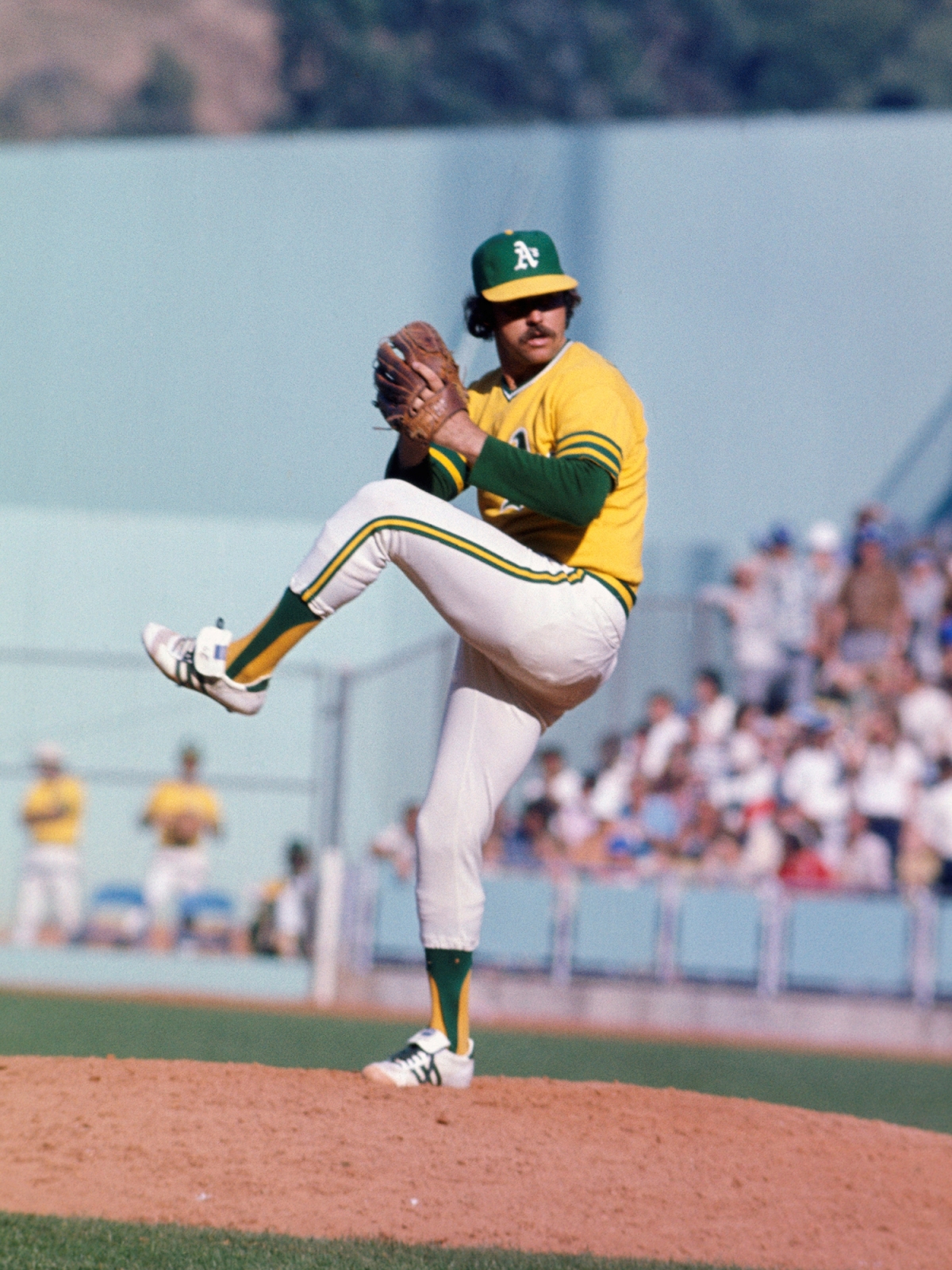
When Jim "Catfish" Hunter arrived in spring 1965, he had an interesting backstory and no minor league experience. Signed as an amateur free agent by Kansas City owner Charlie O. Finley, who quickly gave him the playful nickname because he thought the young pitcher lacked “character”, the 19-year-old right-hander didn't go through the usual farm system. Instead, he went straight to the big league mound, showing moments of precise control and steady confidence that would eventually make him a key player in a baseball dynasty.
He adapted so well to the heavy workload that he earned consecutive All-Star nods in 1966 and 1967 before the franchise moved to Oakland. It was in California that his journey truly changed, from a dependable young starter to a shining marquee star. On May 8, 1968, in front of a modest crowd at the newly opened Oakland Coliseum, Hunter pitched the ninth perfect game in baseball history against the Minnesota Twins, personally driving in three of the four runs in the game and forever making his mark in the record books.
That masterpiece set the stage for a wonderful era of strength and resilience. As the vibrant, mustache-wearing "Mustache Gang" grew into a formidable American League team, Hunter truly became the heartbeat of the rotation. Between 1971 and 1974, he proudly achieved four straight seasons with at least 21 wins, becoming the dependable leader for a tough, high-pressure team that won three consecutive World Series titles. His performance in October was almost perfect, with a 6-2 record and 49 strikeouts in the postseason for Oakland, as though he was simply relaxing and throwing rocks on his North Carolina farm during the sport’s biggest moments.
His regular-season performance really shined brightly in 1974. Hunter delivered an impressive display, leading the league with a personal best of 25 wins. He also took home the American League ERA title with an outstanding 2.49, along with a league-leading 0.986 WHIP. His remarkable skill against opposing lineups earned him the 1974 American League Cy Young Award, firmly establishing him as one of the top pitchers in pro sports.
Nonetheless, the victorious championship summer of 1974 signified the abrupt and dramatic conclusion of his tenure in green and gold. Following a decision by an arbitration panel that Finley had violated his contractual obligations by failing to make punctual payments on an annuity, Hunter was officially declared a free agent in December. This unprecedented ruling instigated a historic, high-stakes bidding war, which ultimately resulted in his transfer to the New York Yankees, representing one of the most significant structural transformations of the modern era.
He left the A's with a 161-113 record and 1,520 strikeouts over ten seasons. The franchise repeatedly honored him as the pitcher who taught them to win. Hunter was inducted into the Hall of Fame in 1987, and on June 9, 1991, they retired his No. 27 jersey, the first in team history. In 2018, he was named to the inaugural Athletics Hall of Fame.
Comments powered by CComment