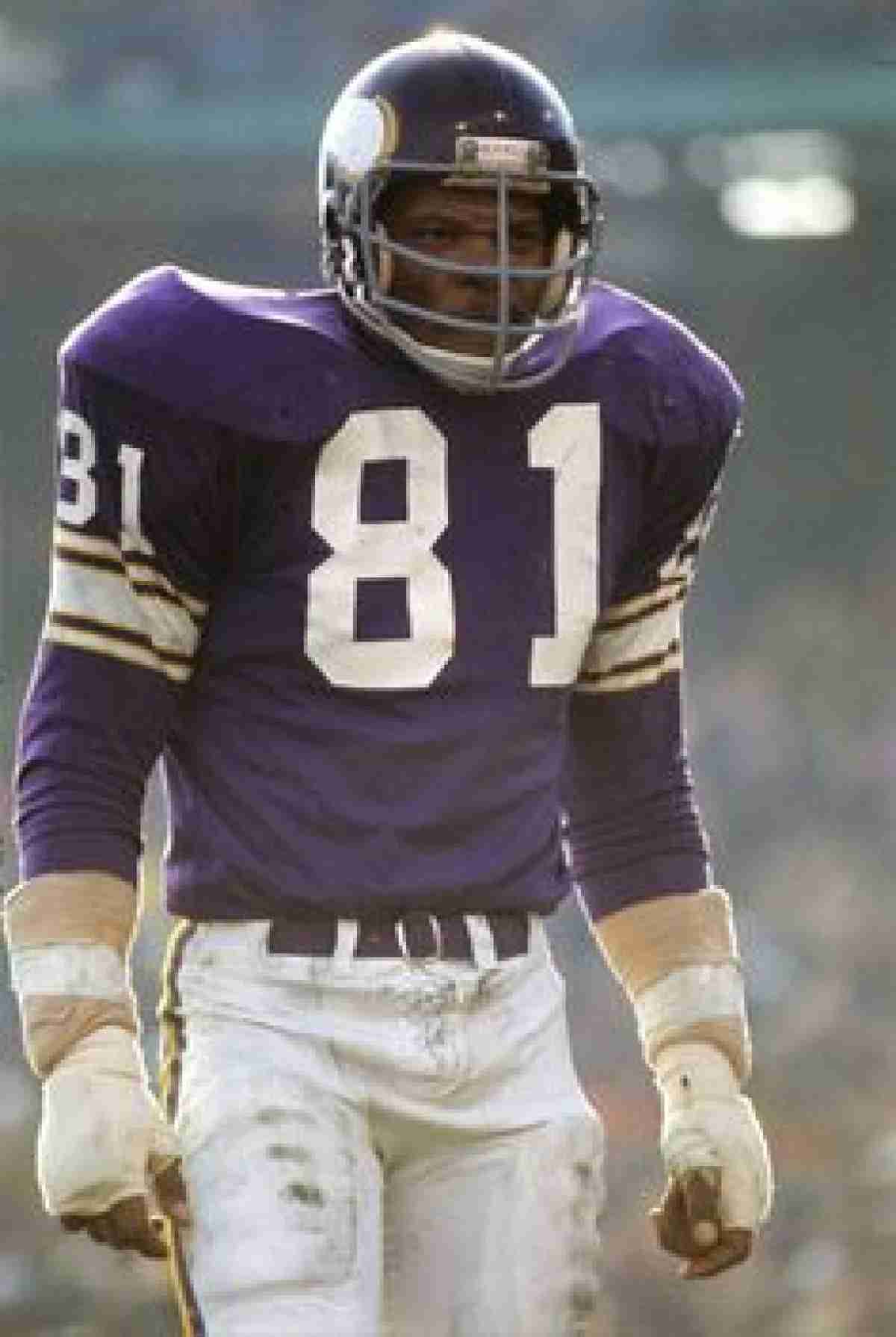
We were so close to putting Carl Eller at the top of this list. Actually, that is how we had it for a while before Alan Page took over. While we elected not to keep Eller at the top, there is no doubt that we are talking about a legend here.
Eller was drafted sixth overall by the Vikings in 1964 out of Minnesota and quickly became a starting defensive end. Extremely quick and mobile for his size at 6-foot-6 and around 250 pounds, he excelled against both the run and the pass. He started nearly every game from the beginning and became a key piece of what became the Purple People Eaters.
The front four of Eller, Page, Jim Marshall, and Gary Larsen defined Minnesota’s defense through the late 1960s and 1970s. Eller was the muscle of the group, a powerful edge presence who could collapse the pocket or chase down plays from behind. His combination with the others created matchup problems few teams could solve.
His peak years came in the late 1960s and early 1970s. In 1969, he recorded a career-high 15 unofficial sacks and co-led the league while helping the Vikings win the NFL championship. Two years later, in 1971, he was named the NEA Defensive Player of the Year as the defense again ranked among the league’s best. Eller was a first-team All-Pro in 1968, 1969, 1970, 1971, and 1973, and he made the Pro Bowl six times during that stretch.
He was a five-time first-team All-Pro and a six-time Pro Bowl selection overall. The Newspaper Enterprise Association voted him the Defensive Player of the Year in 1971, the same year Page won the AP MVP. Eller had seven seasons with more than 10 unofficial sacks and finished as the Vikings’ all-time leader with 130.5. He recovered 23 fumbles during his career and remained a starter through the franchise’s Super Bowl years.
Eller played in all four of Minnesota’s Super Bowls and was a major reason the defense stayed dominant even as the team fell short of a championship. He continued to produce at a high level into the mid-1970s, including stretches where he piled up double-digit sacks. The consistency and physicality never faded during the peak years of the Purple People Eaters.
After 15 seasons with the Vikings, he was traded to the Seattle Seahawks in 1979. He played one final year there before retiring. The move closed a career spent almost entirely in Minnesota, where he had been a fixture on the defensive line for more than a decade.
In Minnesota, he is credited with 130.5 sacks, 23 fumble recoveries, and starts in most of the games he played. He earned five first-team All-Pro selections and six Pro Bowl nods while helping the team reach four Super Bowls. The unofficial sack total remains the franchise record. Eller entered the Pro Football Hall of Fame in 2004, two years after his induction into the Vikings Ring of Honor. He was also named to the NFL’s 1970s All-Decade Team and the Vikings’ 50 Greatest list.
Comments powered by CComment