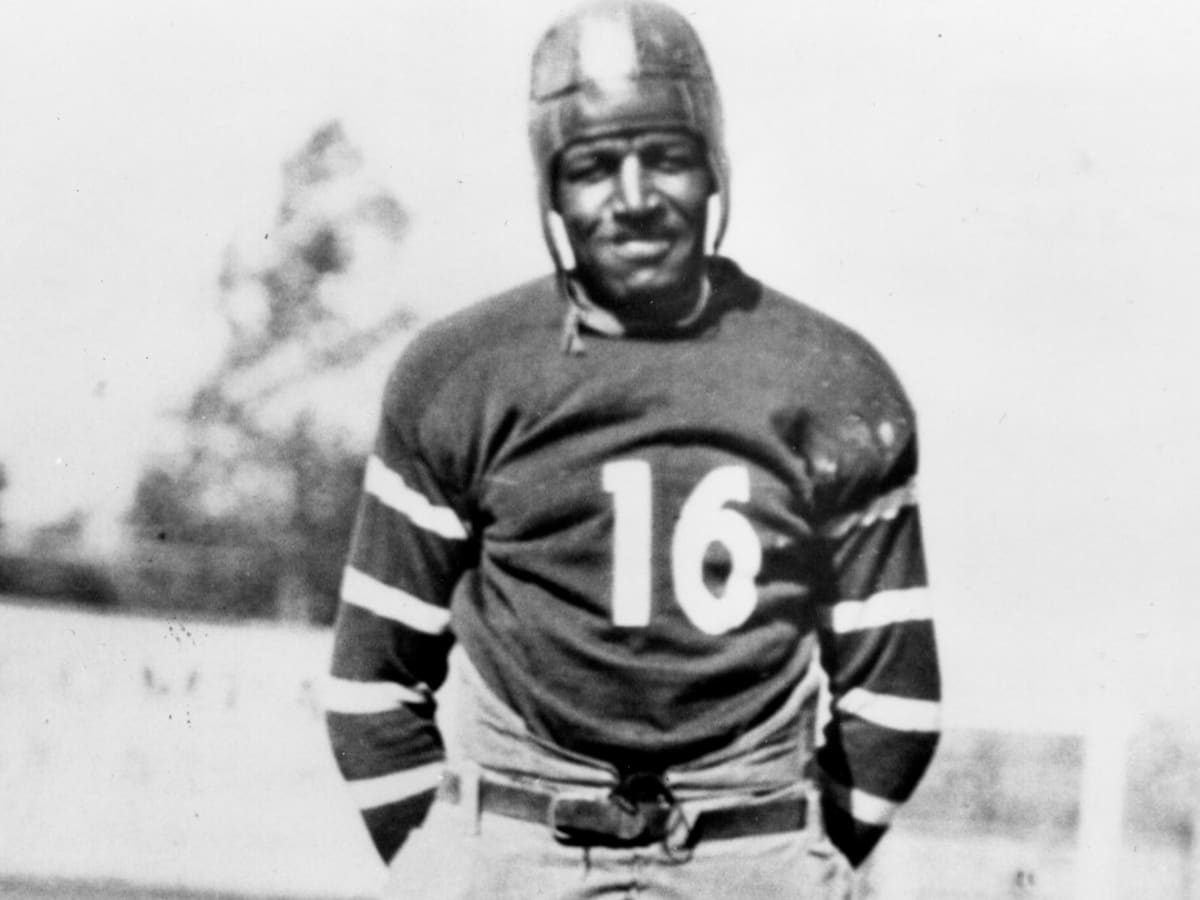
Long before the modern gridiron era of professional football, Duke Slater emerged as a formidable figure who transformed line play. An All-American at the University of Iowa and a leader in guiding the Hawkeyes to a national championship, Slater contributed exceptional strength and leverage to early professional football. He joined the Rock Island Independents, becoming the first African-American lineman in NFL history. Later, with the Chicago Cardinals, he again broke barriers as the first Black player for a franchise that still exists in the NFL today.
Operating in an era of constant 60-minute two-way trench warfare, he played both offense and defense nonstop. His powerful drive-blocks opened large running lanes for stars like Ernie Nevers and Jim Thorpe. On defense, his quick initial punch and ability to shed blocks made it nearly impossible for opponents to run to his side. His dominance led Chicago Bears founder George Halas to famously call him a "one-man line.”
During his time with the Cardinals, Slater was regarded as the top tackle in the league. His most notable performance came on Thanksgiving Day in 1929, when he played the full 60 minutes on the icy field of Comiskey Park. In that game, Slater effectively shut down the edge to support teammate Ernie Nevers' remarkable 40-point game against the Bears, setting an NFL single-game scoring record that remains unbroken.
Over ten years in the professional league, Slater received All-Pro honors for seven straight seasons (1923–1929), establishing himself as an unstoppable force on the line. During many of those years, he was the only Black player in the entire league, persistently breaking barriers through his exceptional skill until an unofficial color barrier temporarily arose after his departure. Slater made history as the first lineman in NFL history to be named All-Pro for seven consecutive seasons, consistently anchoring the offensive or defensive line for a full 60 minutes.
Off the field, Slater combined intelligence and strong work ethic with his athletic achievements. During his NFL seasons, he also attended law school and graduated in 1928. After ending his football career in 1931, he started a legal practice in Chicago, eventually serving as an assistant district attorney. He made history as one of Chicago's earliest Black judges. In 2020, Slater was inducted into the Pro Football Hall of Fame as part of the Centennial Class, posthumously.