
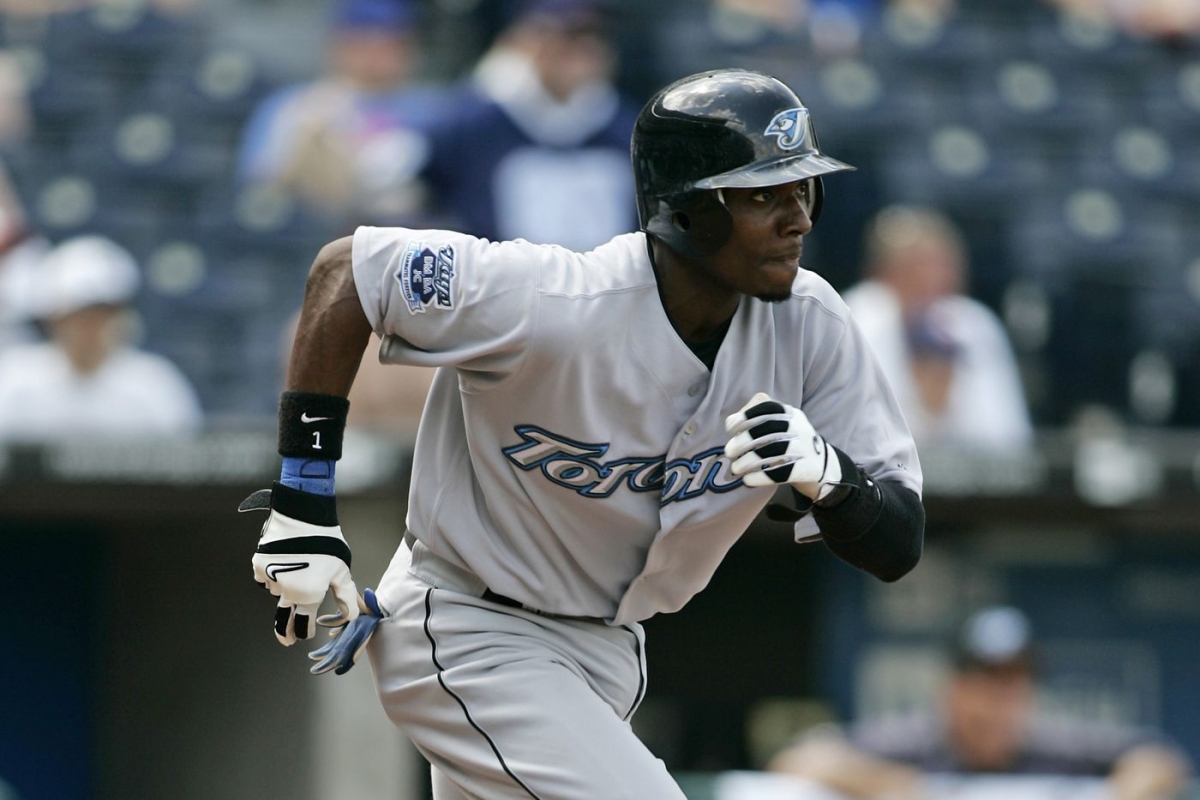
A player drafted in the 43rd round—an extremely late position that barely exists in today's draft—rarely makes it to the major leagues, much less has an eleven-year, decorated career. However, Orlando "O-Dog" Hudson defied these expectations completely. Coming out of Spartanburg Methodist College as a late-round pick in 1997, this switch-hitting second baseman relied on his exceptional defensive skills and a lively, energetic personality to reach the Rogers Centre field. His impact transformed how Toronto fans perceive defensive skill in the middle infield.
His transition to the big leagues was a masterclass in athletic adaptation. Stepping into the starting second base job full-time during a highly productive 2003 campaign, Hudson immediately established himself as a dynamic, run-saving force. He combined a steady .268 batting average with a superb 1.5 defensive bWAR, turning the area behind first and second base into a complete dead end for opposing hitters.
He elevated his defensive execution to an elite, league-leading apex during a brilliant 2004 campaign. That summer remains Hudson's individual masterpiece in a Blue Jays uniform. He completely paralyzed opposing offenses, leading the entire American League with an astronomical 2.7 defensive bWAR, making spectacular diving stops and acrobatic, high-leverage throws. At the plate, he added genuine mid-lineup value, setting career-highs with 32 doubles, 12 home runs, and a .270 average. While the national media inexplicably bypassed him for a Gold Glove that autumn, his spectacular efficiency had already cemented him as one of the premier second basemen in the game.
Justice finally arrived during the 2005 campaign. With the same elite range and a pristine .991 fielding percentage, Hudson officially captured his first American League Gold Glove Award.
Yet, with the front office eager to inject elite power into the middle of their lineup, the veteran infielder was packaged in a blockbuster trade to the Arizona Diamondbacks in December 2005, along with pitcher Miguel Batista, in exchange for third baseman Troy Glaus. Hudson would immediately continue his spectacular, gold-standard defensive showcase in the desert, eventually earning three more National League Gold Gloves and consecutive All-Star selections, cementing his legacy as a true defensive icon of his generation.
In Toronto, Hudson accumulated 437 hits, 88 doubles, 23 triples, 35 home runs, 201 RBIs, and a 7.5 dWAR.

Comments powered by CComment