
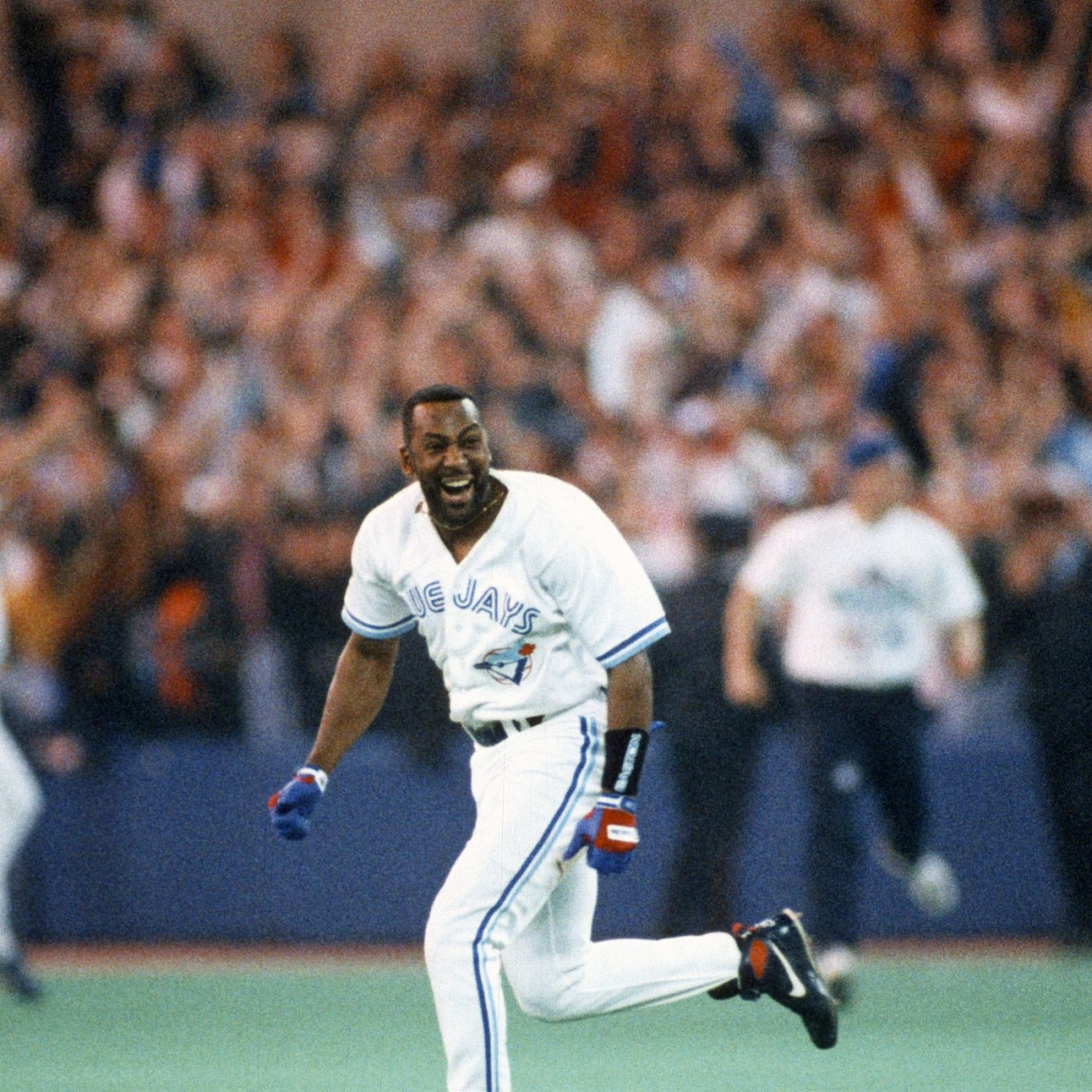



Assessing Joe Carter’s legacy in Canada involves balancing striking cinematic imagery with the concrete realities of contemporary baseball statistics. To many fans, he represents the quintessential symbol of the franchise's zenith. However, upon closer examination of his overall contribution through advanced metrics, a nuanced picture appears of a largely imperfect run-producer whose legendary stature significantly exceeds his analytical impact.
Arriving alongside Roberto Alomar in the historic December 1990 trade that sent Fred McGriff and Tony Fernández to San Diego, Carter immediately provided the Toronto Blue Jays with a formidable, high-profile middle-of-the-order hitter. He delivered precisely what the front office requested: sustained, formidable power. During a seven-season tenure in Ontario, the resilient outfielder averaged nearly 30 home runs annually, culminating in 203 home runs and 736 RBIs. Traditional award voters appreciated his impressive counting statistics; Carter’s consistent performance near the top of the American League in home runs and RBIs earned him two Silver Slugger Awards and consecutive top-five finishes in the AL MVP voting (fifth in 1991 and third in 1992).
His place in baseball immortality, however, was forged entirely in October. After helping propel Toronto to its first world championship in 1992, Carter led the lineup in the 1993 repeat charge. In the bottom of the ninth inning of Game 6 of the 1993 World Series, he connected on a low-and-inside slider from Philadelphia’s Mitch Williams, launching a majestic walk-off three-run home run into the left-field seats to clinch the title. Accompanied by broadcaster Tom Cheek's immortal call—"Touch 'em all, Joe! You'll never hit a bigger home run in your life!"—it remains the defining, most celebrated moment in Canadian sports history.
Yet, looking past the ticker-tape parades reveals the statistical paradox that keeps Carter from reaching the absolute top tier of franchise greats. While he hit cleanup for a powerhouse, his overall offensive efficiency was surprisingly limited. He had an incredibly aggressive, free-swinging approach; in no single season as a Blue Jay did he draw 50 walks or push his on-base percentage above .330. Because he routinely failed to get on base at an elite clip, his overall OPS in Toronto hovered around a sub-.800 mark—an incredibly low baseline for a premier 1990s slugger.
Furthermore, advanced metrics are unkind to his defensive work. Whether stationed in the outfield corners or filling in at first base, Carter was a severe defensive liability, routinely allowing runs. That combination of a low on-base ceiling and negative defensive value severely limited his overall contributions, leaving his lifetime bWAR in Toronto well under 10.
Carter remained an indispensable emotional leader for the club through the mid-1990s transition before finally hitting the open market and signing with the Baltimore Orioles following the 1997 campaign.
While analytical models will always view his overall efficiency with a critical eye, baseball is ultimately a game of moments—and Carter authored the grandest one of all. To ensure his permanent standing as a towering pillar of the organization's identity, the Blue Jays inducted him into the Level of Excellence at Rogers Centre, and he was proudly enshrined in the Canadian Baseball Hall of Fame. Carter had accumulated 1,051 hits, 203 home runs, and 736 RBIs while generating a .257/.310/.473 slash line (104 OPS+) for the club.

Comments powered by CComment