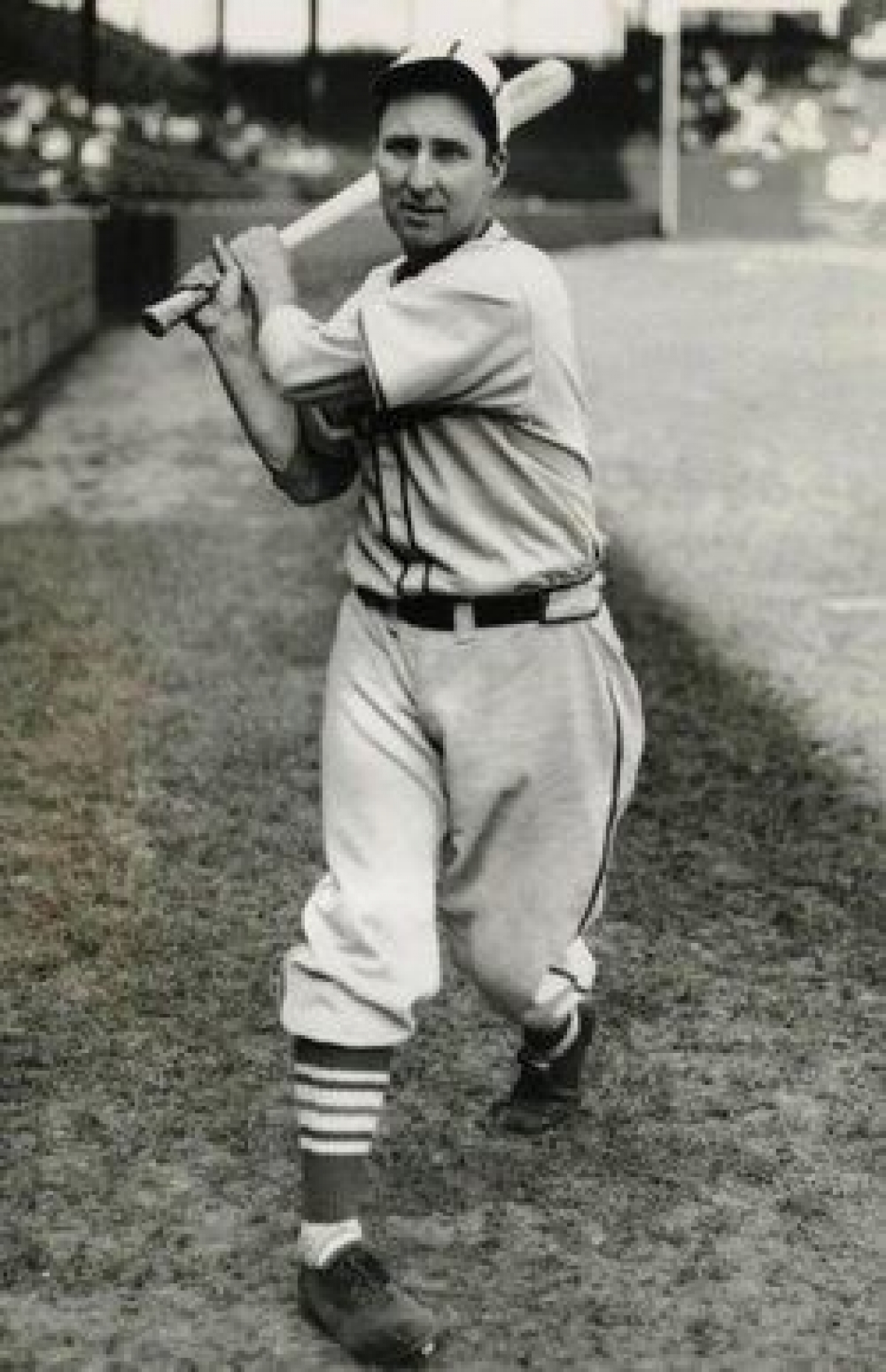
Ripper Collins gained his intimidating nickname as a minor leaguer when a line drive from his bat tore the cover off a baseball. However, when he stepped into the major leagues full-time, fans were taken aback to learn that the powerful hitter was actually a modest 5-foot-9, 165-pound player. Despite his average size, this switch-hitting first baseman compensated with lightning-quick wrist movements and a fierce style of play that perfectly suited the rough and unpolished culture of the 1930s "Gashouse Gang."
His journey to the big leagues officially started with a supporting role, as he appeared in 89 games as a rookie during the Cardinals' 1931 World Series victory. Recognizing his potential, St. Louis management traded veteran Jim Bottomley to make way for Collins. By 1932, he had become the regular first baseman, winning over fans at Sportsman's Park with his energetic play and playful clubhouse antics.
Everything came into a historic alignment during the remarkable 1934 season. Collins assembled an exceptional offensive performance, dominating National League pitching with a .333 batting average, a league-leading .615 slugging percentage, and an OPS of 1.008. He hit 35 home runs, tying Mel Ott for the league lead—making Collins the inaugural switch-hitter in Major League history to surpass 30 home runs in a single season. This extraordinary achievement earned him sixth place in the National League Most Valuable Player voting and propelled the Cardinals to another World Series appearance. In the 1934 World Series against Detroit, he demonstrated unwavering determination, batting .367 and achieving four hits in the decisive Game 7 victory, thereby securing his second world championship ring.
The intensive production persisted throughout the subsequent two summers, resulting in Collins securing a pair of All-Star selections in 1935 and 1936 as he upheld his reputation as a premium run producer. Nevertheless, as Branch Rickey's renowned developmental pipeline began to overflow with younger talent, the management seized the opportunity to leverage Collins' high trade value by trading him to the rival Chicago Cubs prior to the 1937 season. Given that his peak period in St. Louis lasted only six seasons before transferring to Chicago and Pittsburgh, his cumulative totals are somewhat modest compared to those of players with careers spanning multiple decades. Nonetheless, the exceptional and historic peak of his 1934 performance remains one of the most dynamic single-season displays in the extensive history of the franchise.
Across six seasons in St. Louis (1931–1936), Collins played 777 games, with 852 hits, 106 home runs, and 516 RBIs. He posted a .307/.370/517 slash line, with a 134 OPS+.
Comments powered by CComment