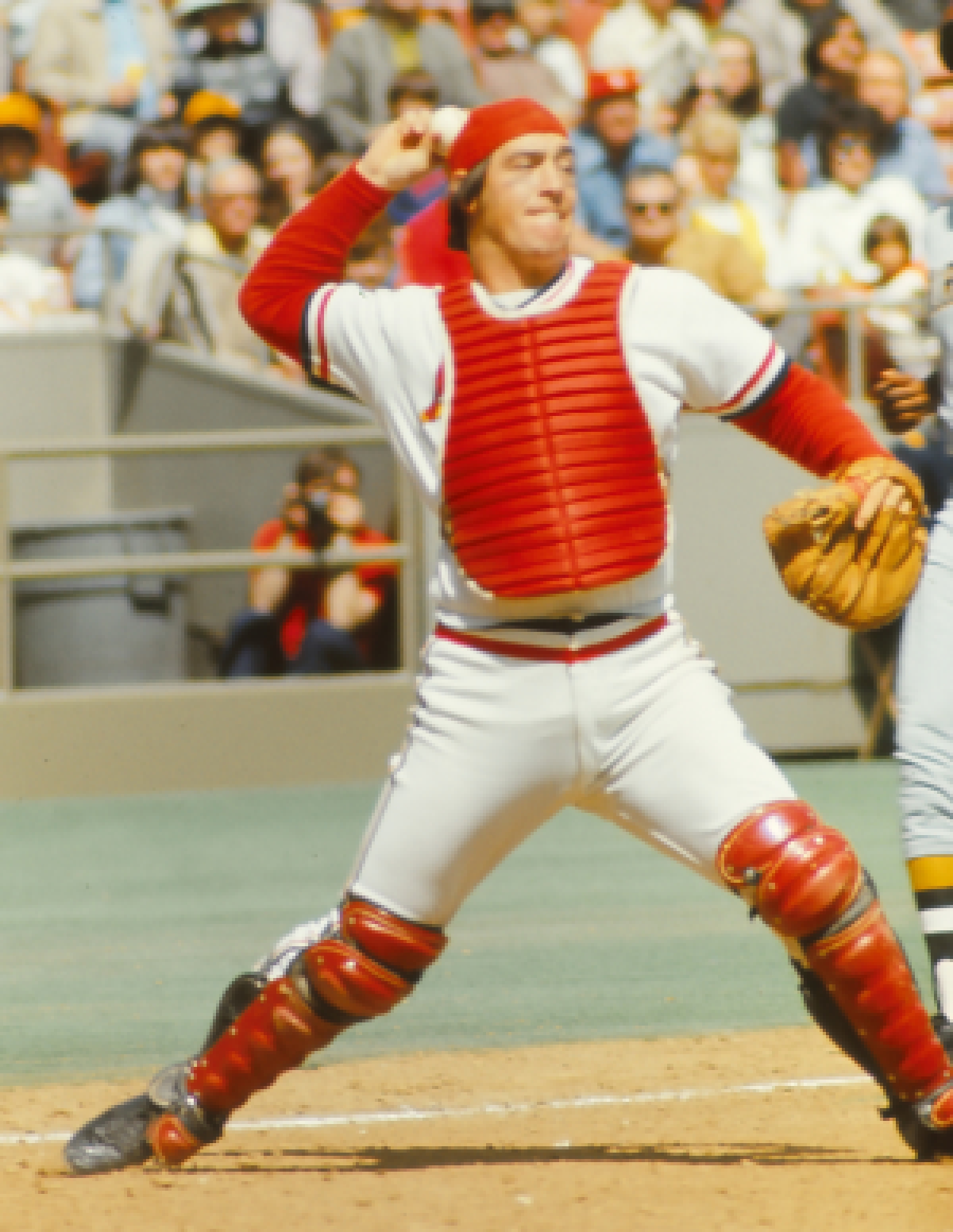
When modern baseball analysts look back at the 1970s, they often realize that traditional metrics overlooked a revolutionary offensive force behind the plate. For decades, Ted Simmons was viewed as an excellent player who shared an era with Johnny Bench and Carlton Fisk. But as sabermetrics changed how we value run production, the baseball world saw that the switch-hitter was one of the most productive offensive catchers ever.
Selected by the front office in the first round of the 1967 draft, "Simba" quickly emerged as a hitting prodigy. He did not merely survive the grueling physical demands of catching; he anchored the middle of the St. Louis batting order for over a decade, turning the batter's box into a personal showcase and rewriting the rules of what a backstop could provide at the plate.
Following a period of scouting work from 1968 to 1970, his initial tenure as the primary starting catcher in 1971 immediately redefined the standard benchmark for National League catchers, as he achieved an impressive batting average of .304. Simmons consistently transformed powerful line drives from both sides of the plate into a rigorous daily routine. He demonstrated an extensive display of contact proficiency and plate discipline, surpassing the .300 batting threshold on six occasions while wearing a Cardinals uniform. Each of these seasons secured a position within the top ten in the National League, notably highlighted by an exceptional 1975 regular season in which he posted a batting average of .332, culminating as the runner-up for the senior circuit batting title.
His value-dense offensive profile represented an exceptional anomaly for his era; Simmons secured a position within the top ten rankings in both on-base percentage and slugging percentage on four occasions, while reliably leveraging his outstanding gap-to-gap power to achieve top-ten rankings in doubles seven times. He combined that exemplary contact ability with authentic middle-of-the-order power, producing five individual seasons with at least 20 home runs for the Redbirds.
Because he was a natural hitter first, traditional pundits frequently contrasted his glove work with that of contemporary elite defenders. Yet, his legendary pitchers—including Bob Gibson—vehemently defended his game-calling and immense physical durability, as Simmons routinely logged heavy workloads, catching over 130 games a year.
His relationship with management grew tense at the end of 1980 when Simmons, in a dispute with Whitey Herzog over contract control, was suddenly traded to the Milwaukee Brewers in a major deal. Over his 13 seasons strictly representing the Cardinals, he accumulated exactly 1,704 hits, 332 doubles, 172 home runs, and 929 runs batted in, entirely validated by a spectacular .298 localized batting average and a robust .366 on-base percentage.
While the baseball writers initially dropped him from the Cooperstown ballot after just one year in 1994, the historical record was beautifully righted decades later. Simmons was triumphantly elected to the St. Louis Cardinals Hall of Fame in 2015, followed by his long-awaited, emotional induction into the National Baseball Hall of Fame via the Modern Baseball Era Committee in 2020. Serving as the final, beautiful punctuation on his immortal legacy, the Cardinals permanently retired his iconic number 23 target behind the plate.
Comments powered by CComment