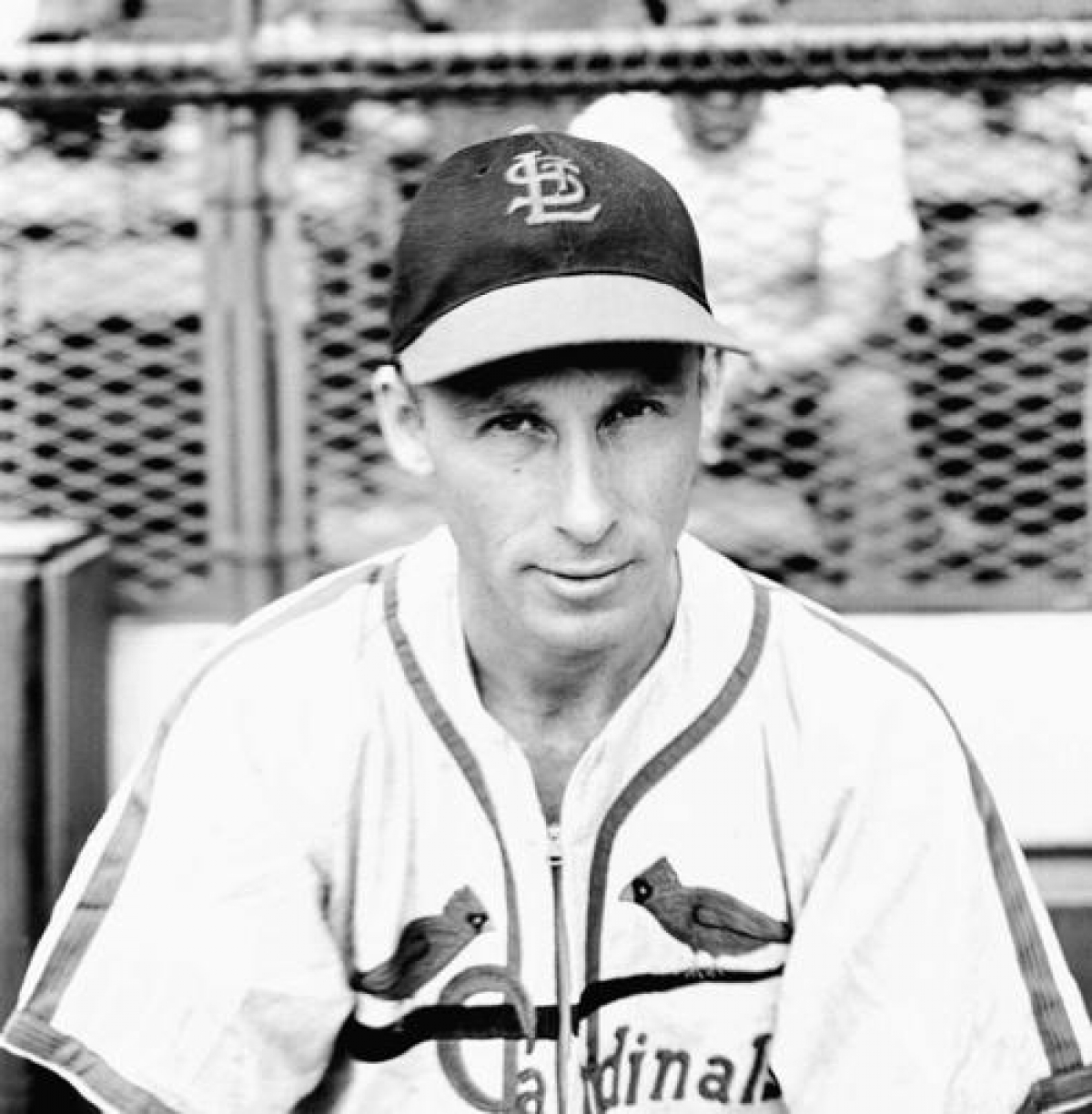
Harry David Brecheen spent his early twenties climbing through the minor leagues with careful deliberate steps, but he joined the major league roster permanently in 1943 and immediately made a significant impact on the pitching staff. He was just 5'10" and 160 pounds, earning the long-lasting nickname "The Cat" for his quick, feline-like reflexes when fielding bunts off the mound. With a perfect combination of a screwball and curveball, the southpaw built a ten-year career of excellence, excelling as a consistent regular-season performer and becoming an immortal legend in the postseason.
His early role as a key part of the rotation came during an exciting period for the team in the mid-to-late 1940s. Brecheen made a consistent effort to keep National League lineups in check by encouraging weak contact and focusing on control. He was impressively dependable, winning 14 or more games across six consecutive summers, offering valuable stability along with Mort Cooper and Red Schoendienst, and helping lead the team to two world championships.
The individual's peak performance during the regular season was exemplified by a remarkable 1948 achievement that received commendation. During that summer, “The Cat” demonstrated an outstanding ability in preventing runs, leading the Senior Circuit with an impressive 20–7 record and a league-leading 2.24 ERA. He impeded hitters throughout the season, leading the National League in strikeouts (149), shutouts (7), FIP (2.49), WHIP (1.037), and achieving an exceptional 3.04 strikeout-to-walk ratio, resulting in a fifth-place finish in the National League MVP voting.
While his strong regular-season performance established his important role in the front line, it’s his incredible achievements in October that truly secured his legendary status in baseball history. Brceheen saved his best performances for the brightest stages. He proved to be an essential player during the 1944 Fall Classic against the nearby St. Louis Browns, delivering an outstanding game in Game 4 where he gave up only one run, helping secure a key victory. Two years later, he delivered an amazing and historic performance against the powerful Boston Red Sox in the famous 1946 World Series. He took control of the game and became the first left-handed pitcher in baseball history to win three games in a single Fall Classic. During 20 intense innings in the postseason that October, he outperformed Boston's top hitters with an incredible 0.45 ERA and a 0.950 WHIP—winning Game 2, pitching a complete-game masterpiece in Game 6, and famously stepping out of the bullpen on zero days' rest to throw two scoreless innings during Game 7, helping to secure the championship with Enos Slaughter’s famous "Mad Dash’.
Brecheen departed from the Sportsman's Park rubber, leaving an impressive statistical record that garners considerable respect among analytical purists. During his eleven active seasons solely representing the Cardinals, he achieved exactly 128 wins against 79 losses, complemented by an outstanding 2.91 ERA, 122 complete games, and 25 career shutouts—still the franchise record for left-handed pitchers. The organization beautifully added the final, definitive punctuation to his legacy in 2018; the Red Ribbon Committee officially righted the historical record by triumphantly enshrining Harry Brecheen into the St. Louis Cardinals Hall of Fame.
Comments powered by CComment