
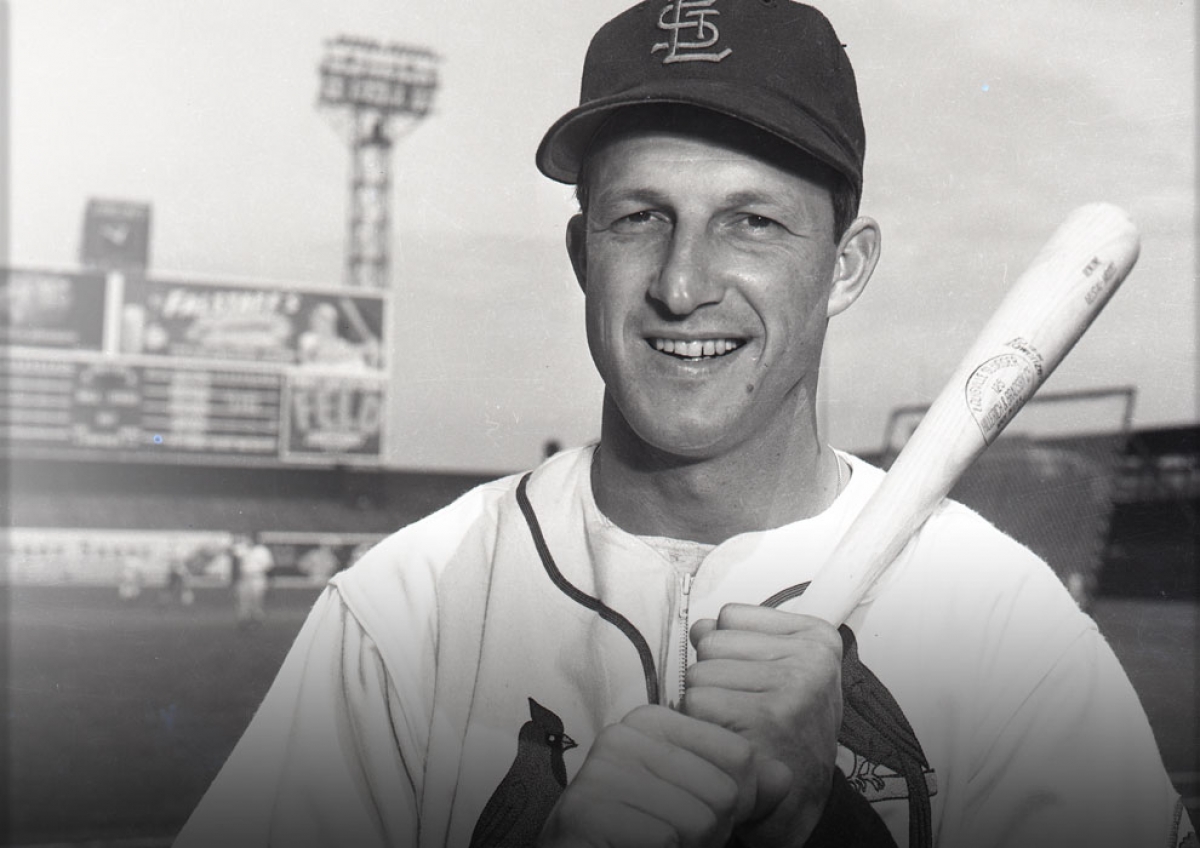







When exploring the core of baseball greatness, discussions about the most consistently excellent hitters often highlight a beloved figure from Western Pennsylvania. Stan Musial didn’t just play baseball; he demonstrated 22 seasons of offensive skill and consistency, dedicating his illustrious career to a single franchise. Originally coming up through the St. Louis Cardinals as a left-handed pitcher, a serious shoulder injury led to a permanent shift to the outfield. This turn of events established a legendary legacy under the Midwestern sun, featuring a distinctive crouched batting stance that intimidated National League pitchers over three decades.
The defining feature of the man known as "Stan the Man" was his exceptional spatial awareness and consistent mechanics, almost to the point of statistical legend. Musial amassed an impressive 3,630 career hits, which still ranks fourth on Major League Baseball’s all-time list and sets a remarkable standard for any player loyal to a single franchise. In a nearly poetic showcase of perfect balance, his hits were evenly split: exactly 1,815 at home and 1,815 on the road. He set the pace in the Senior Circuit by winning six batting titles and came close to more, finishing second three times and third twice.
With his exceptional contact skills, Musial dominated the National League batting race, turning it into his personal domain. He won seven batting titles—achieving the honor in 1943, 1946, 1948, 1950, 1951, 1952, and 1957—a record only matched by a few in baseball history. His smooth swing made a .300 batting average seem routine rather than difficult. It wasn't until his 18th season in the majors, late in his career, that his average fell below that mark for the first time, showcasing decades of consistent adjustments against multiple generations of pitchers.
While some historic high-average hitters solely focused on putting the ball in play without optimizing their patience, Musial combined his excellent eye with strict strike-zone control. He led the Senior Circuit in on-base percentage six times, showing a strong tendency to avoid expanding his zone or chasing high-velocity pitches outside the strike zone. He consistently surpassed a .400 on-base percentage in 14 seasons, finishing with an impressive lifetime average of .417, which kept him a constant, clutch presence on the bases. Even more remarkably, his aggressive yet disciplined batting approach led to more career walks (1,599) than strikeouts (696), a ratio that remains astonishing to today's hitters.
Far from a one-dimensional contact hitter, Musial combined his artistic skill with powerful, gap-to-gap hitting that frequently shattered outfield walls. Although he never secured a league home run title due to the absence of a single-season explosion, he surpassed 30 home runs six times and finished his career with an impressive 475 long balls. His true impact was reflected in total bases and extra-base hits. He led the National League in doubles eight times, triples five times, and was a two-time RBI leader, achieving ten seasons with over 100 runs scored. An exceptional extra-base hitter, he consistently drove the ball into the gaps with a sharp line-drive, ignoring stadium boundaries.
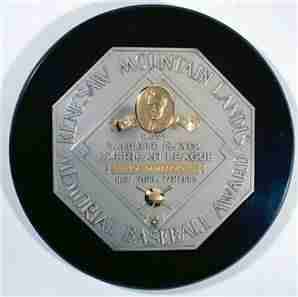
To put his historical dominance into proper context, Musial was undeniably the premier, defining player of the 1940s. He functioned as the emotional and statistical heartbeat of a St. Louis dynasty that captured three World Series championships in a five-year span, hoisting the title banner in 1942, 1944, and 1946. His hardware-certified authority reached its peak with a trio of National League Most Valuable Player Awards, securing the trophy in 1943, 1946, and 1948. He came tantalizingly close to adding further hardware to his trophy case, finishing as the MVP runner-up on four separate occasions in 1949, 1950, 1951, and 1957. His unmatched peers consistently recognized his elite status, selecting him for an incredible 24 All-Star appearances.
His legendary 1948 regular-season performance remains one of the most statistically dominant single-season displays in baseball history. Musial delivered an outstanding showing against National League pitchers, setting career highs with a .376 batting average, 230 hits, 46 doubles, 18 triples, 131 RBIs, and 39 home runs. He led in almost every key offensive category, missing the Triple Crown by just one home run after a rainout wiped out a home run from his totals. Advanced analytics highlight this peak, with his 1948 summer marked by an impressive 11.3 position-player bWAR.
When Musial decided to retire after the 1963 season, he left with the rare 3/4/5 slash line. He finished his career with a .331 batting average, a .417 on-base percentage, and a .559 slugging percentage. Modern analytics strongly affirm his status as an inner-circle Hall of Famer, securing his legacy with a remarkable 128.5 career bWAR, one of the highest in baseball history. He also held numerous Major League and National League records, setting the gold standard for offensive excellence.
The bond between the player, the city, and the uniform was so strong that it established a precedent for how the organization commemorates its history. Accordingly, the front office permanently retired his legendary number 6 right after his retirement in 1963, making Musial the first player in St. Louis Cardinals history to receive this honor. A large bronze statue was placed outside the stadium gates, acting as a lasting symbol of a legacy that went beyond the game, embodying his timeless elegance for future fans passing through.
Musial was selected to the Baseball Hall of Fame in 1969 in his first year of eligibility, and in 2014 was inducted into the inaugural Cardinals Hall of Fame.

Comments powered by CComment