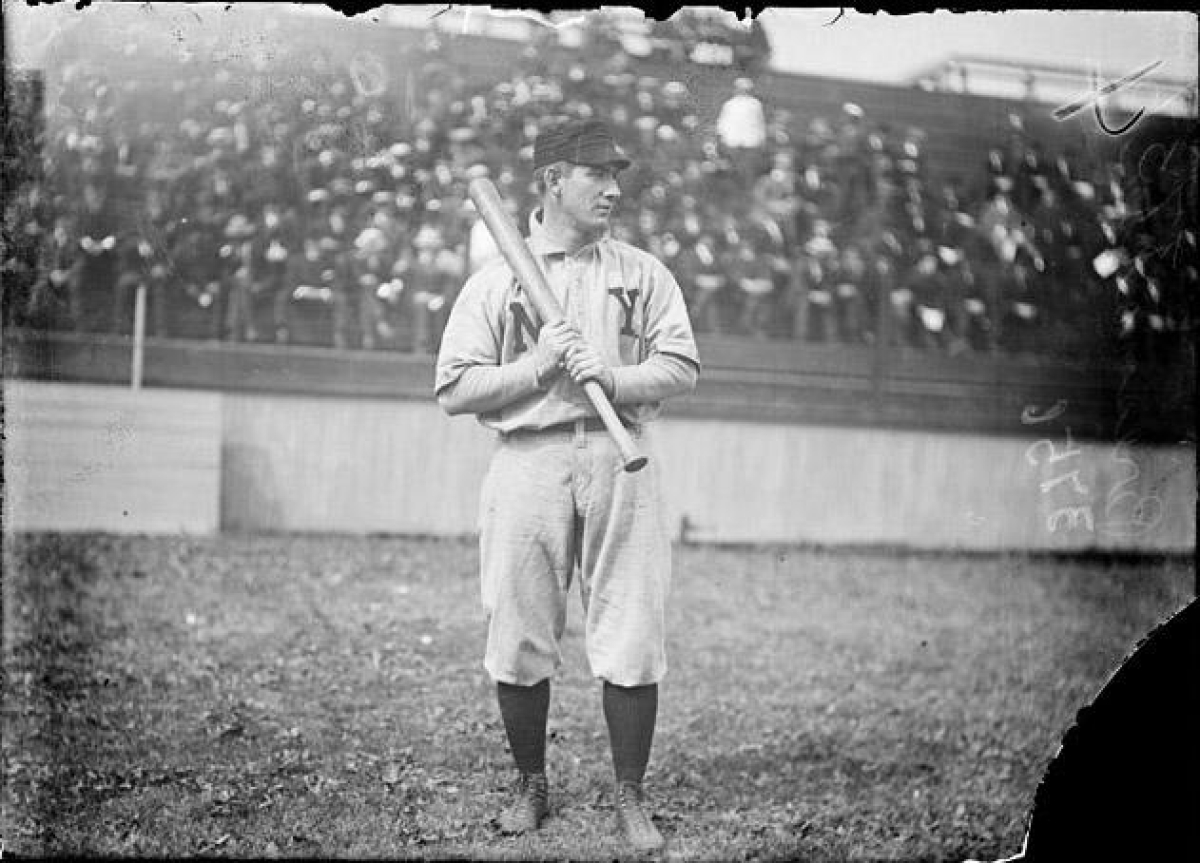
The evolution of the catcher position from a defensive afterthought into a strategic weapon can be traced to Roger Bresnahan. Originally a pitcher, Bresnahan became a versatile player for the Baltimore Orioles in 1901. When the Orioles faced financial troubles in 1902, he was released and joined the New York Giants with manager John McGraw. At the Polo Grounds, Bresnahan would permanently redefine the modern catcher.
Bresnahan’s remarkable individual achievement was realized during his inaugural full summer in Manhattan in 1903. Demonstrating a remarkably versatile skill set for a player of the dead-ball era, he transcended the conventional stereotype of a sluggish-footed catcher by posting a superior batting average of .350, his career high, while leading the Giants with 142 hits and an impressive 34 stolen bases. Although the passionate McGraw notably chose to boycott the newly established World Series that autumn, Bresnahan remained determined and proactive. He substantiated this commitment by batting .302 in 1905, serving as the reliable and elite game-caller for Christy Mathewson's distinguished pitching staff, and participating in every inning of the five-game World Series victory over the Philadelphia Athletics.
While his bat brought stardom, Bresnahan’s brilliant mind altered the sport forever. Tired of the physical destruction behind the plate, he introduced shin guards to the major leagues on Opening Day in 1907 and later developed the first crude, leather-padded batting helmet, providing the sport with its very first functional safety gear.
Although the physical demands of catching hindered his ability to surpass the .300 batting average again while playing for the Giants, his composed approach at the plate remained exceptionally distinguished. He demonstrated mastery in enduring challenging at-bats, regularly adjusting his grip on the bat to fatigue opposing pitchers. He concluded his tenure in New York with an impressive, high-efficiency on-base percentage of .403, culminating in the 1908 season where he led the entire National League by drawing a career-high total of 83 walks.
Following that 1908 season, McGraw traded his brilliant, hyper-intelligent field general to the St. Louis Cardinals so that Bresnahan could fulfill his dream of becoming a player-manager, later concluding his legendary 17-year playing career with the Chicago Cubs.
Bresnahan concluded his notable seven-year tenure in New York, during which he accumulated 731 hits, 381 runs scored, and 224 RBIs over 682 games. Within the framework of Project Diamond, his legacy is recognized as a distinguished outlier in franchise history—a seamless blend of peak-era efficiency and legendary franchise identity. The culmination of his significant contributions to the sport was formally acknowledged in 1945, when the Old Timer’s Committee formally inducted Roger Bresnahan into the National Baseball Hall of Fame.
Comments powered by CComment