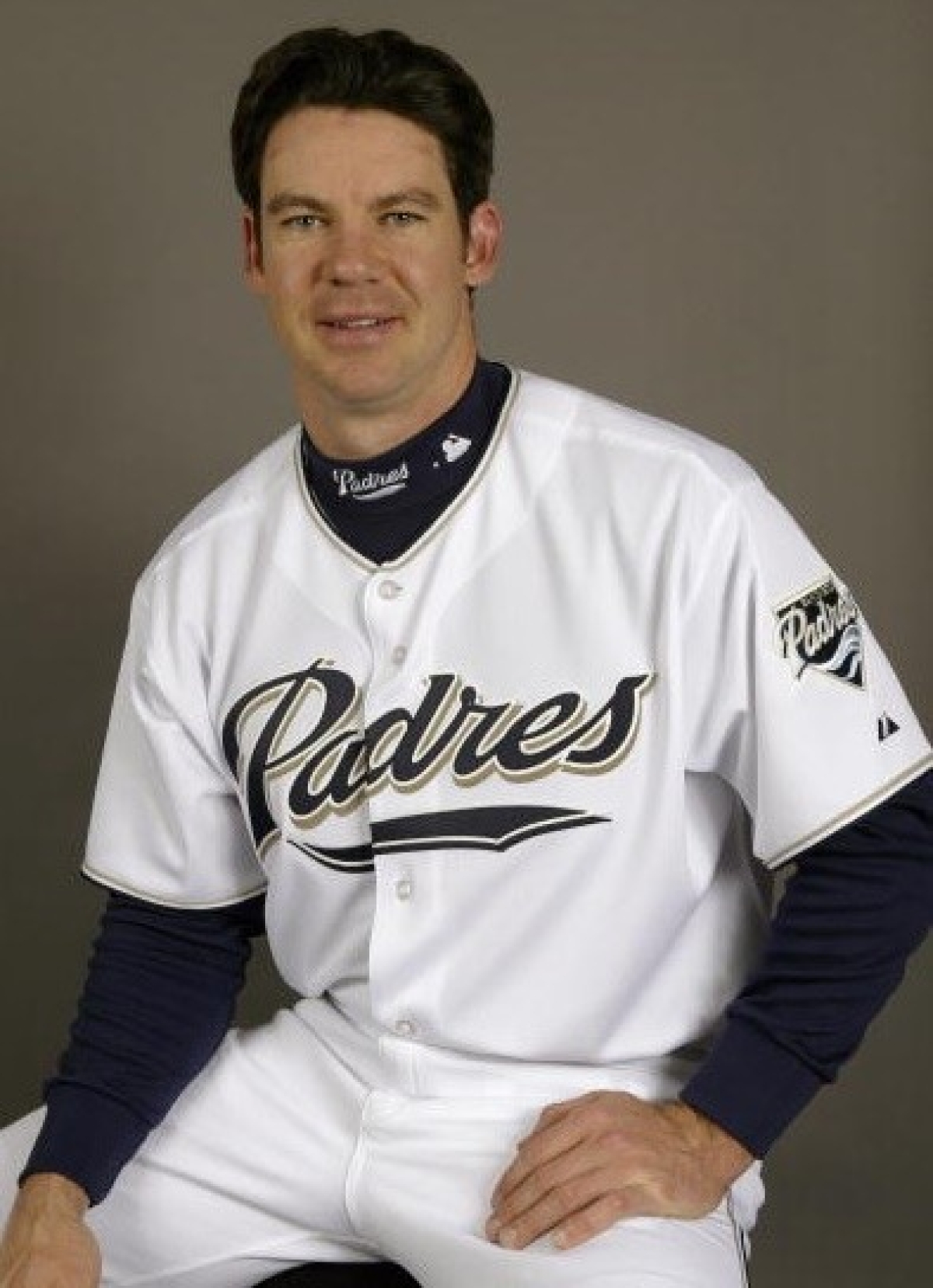
The 2004 season marked a major change as the club moved from Jack Murphy Stadium to the new Petco Park, designed for pitching and defense. Fans wondered who would boost the offense, and the answer was a skilled, cerebral right-handed infielder who had spent eight years as a versatile utility player for the Milwaukee Brewers. He was signed to a modest free-agent deal before the 2003 season.
In 2003, he quickly set a high standard with outstanding top-of-the-order performance, smoothly settling into the West Coast vibe. He finished the season with a solid .314 batting average, 185 hits, 28 doubles, and 13 home runs. Loretta made hitting line drives into a daily habit, earning the team's local Most Valuable Player honors, showcasing his dedication and talent.
Nevertheless, that initial achievement served merely as a preparatory indication for the momentous, award-winning breakthrough he revealed during the notable 2004 stadium inauguration. In simple terms, Loretta produced a regular-season performance of exceptional quality that skillfully emulated the renowned batting style of Tony Gwynn himself. Loretta employing a concise, line-drive swing to lead the senior league with an outstanding, career-high of 208 hits—joining Gwynn as the sole players in franchise history to surpass the distinguished 200-hit mark in a single season.
Loretta concluded that the remarkable 2004 season, during which he achieved career bests across all statistical categories: 108 runs scored, 47 doubles, 16 home runs, and 76 runs batted in, was notably anchored by an impressive .335/.391/495 slash line. He notably struck out only 45 times in 707 plate appearances, a testament to his efficiency, and finished third in the National League batting race. These outstanding achievements readily earned him his first career All-Star selection, a well-deserved National League Silver Slugger Award, and an exceptional ninth-place finish in the National League Most Valuable Player balloting.
Before the 2005 campaign, a severe thumb ligament injury required complex surgery, reducing his leverage and costing nearly two months of play. Despite returning to 105 games, his power dropped to three home runs and 38 RBIs, with a batting average of .280. He was traded to the Red Sox after the season.
With San Diego, Lorreta had 506 hits, 91 doubles, 32 home runs, and 186 runs batted in, entirely validated by an exceptional .314 batting average and a pristine .377 on-base percentage.
Comments powered by CComment