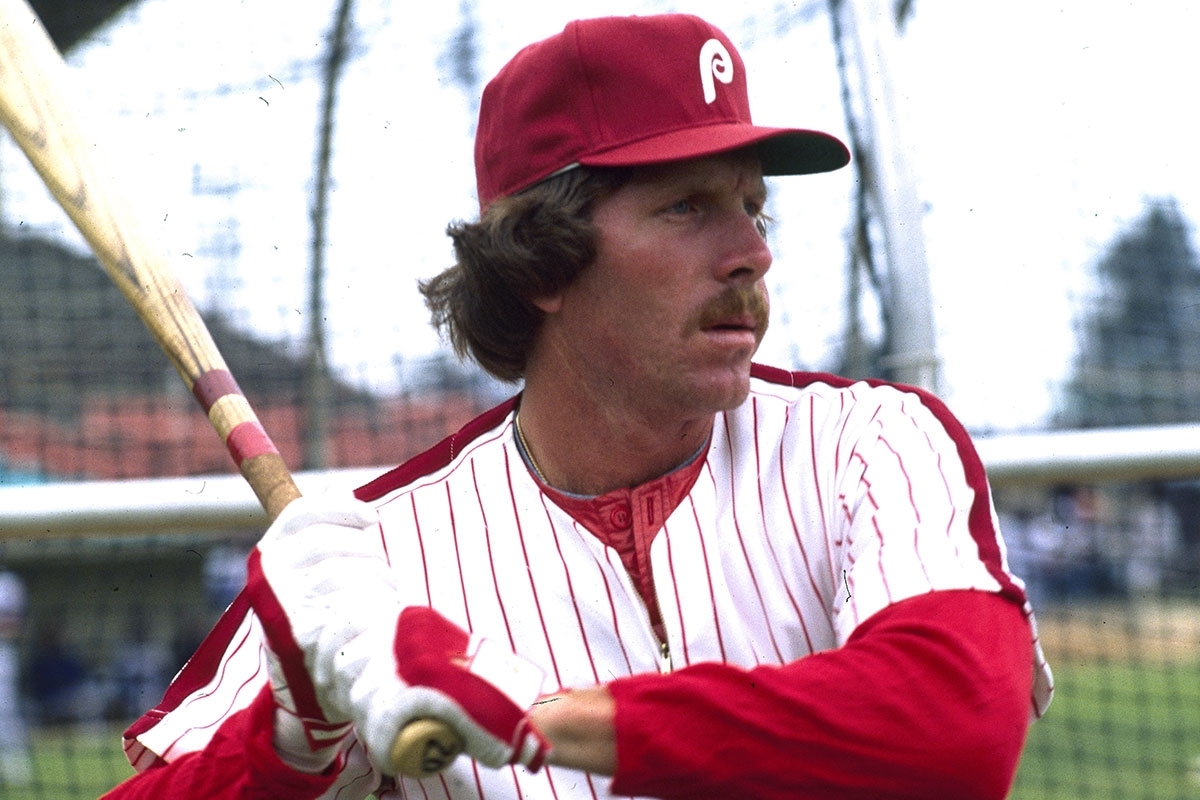
Mike Schmidt first stepped onto the Veterans Stadium turf in September 1972, a second-round draft choice out of Ohio University tasked with manning the hot corner for a struggling franchise. Initially, he appeared thoroughly overmatched by big-league pitching, struggling to a meager .196 batting average during his first full year. Yet, beneath those early growing pains lived a fiercely determined, flawlessly balanced athlete who would systematically revolutionize his position and define a franchise.
After initial struggles as a rookie, Schmidt improved significantly, leading the NL with 36 home runs, along with 116 RBIs, 108 runs, and 106 walks, earning a 9.7 bWAR. He maintained this level of performance for the next two years, hitting 38 homers in both 1975 and 1976. The 1976 season marked a turning point: Schmidt won his first Gold Glove, helped the Phillies reach 101 wins, and ended a 26-year postseason drought. He continued his success in 1977, with 38 homers, 101 RBIs, and a career-high 114 runs, as the Phillies secured the division title again.
After a slight decline in 1978, Schmidt reached a peak in 1980 both individually and as a team. That summer, he delivered an outstanding performance, hitting a career-high 48 home runs and driving in 121 runs to lead the league in both categories, while maintaining a 1.004 OPS. This earned him his first National League MVP Award through a unanimous vote. Significantly, he carried that success into October, hitting two home runs and driving in seven runs, helping the Phillies win the World Series and secure their first franchise championship.
During the strike-shortened 1981 season, he achieved a level of raw efficiency that many consider his peak structural campaign. In just 102 games, Schmidt hit 31 home runs—seven more than any other player in the league, and led the National League in runs (78), RBI (91), walks (73), on-base percentage (.435), and slugging (.644), securing his second straight NL MVP Award. Over the next three years, he continued to dominate the Senior Circuit, winning consecutive home run titles in 1983 (40) and 1984 (36), and regularly leading the league in walks to maintain a high on-base percentage.
His final great season was in 1986, a late-career resurgence when he moved back to third base after a brief stint at first. At 36, Schmidt won his eighth home run crown with 37 homers and led the league with 119 RBI, striking out just 84 times, the fewest in a full season. This high-leverage performance earned him his third National League MVP Award, joining an elite group of icons.
Declining afterward, Schmidt elected to call it a career in May of 1989 at a very emotional press conference. He walked away as one of the rare legends to exceed 100 career bWAR (106.9) entirely with one franchise, leaving behind 2,234 hits, 1,595 RBI, and 548 home runs.
To no surprise, Schmidt was a first ballot Baseball Hall of Fame inductee in 1995. The Phillies inducted Schmidt to their Wall of Fame in 1989, and the franchise retired his number 20 the year after.
Comments powered by CComment