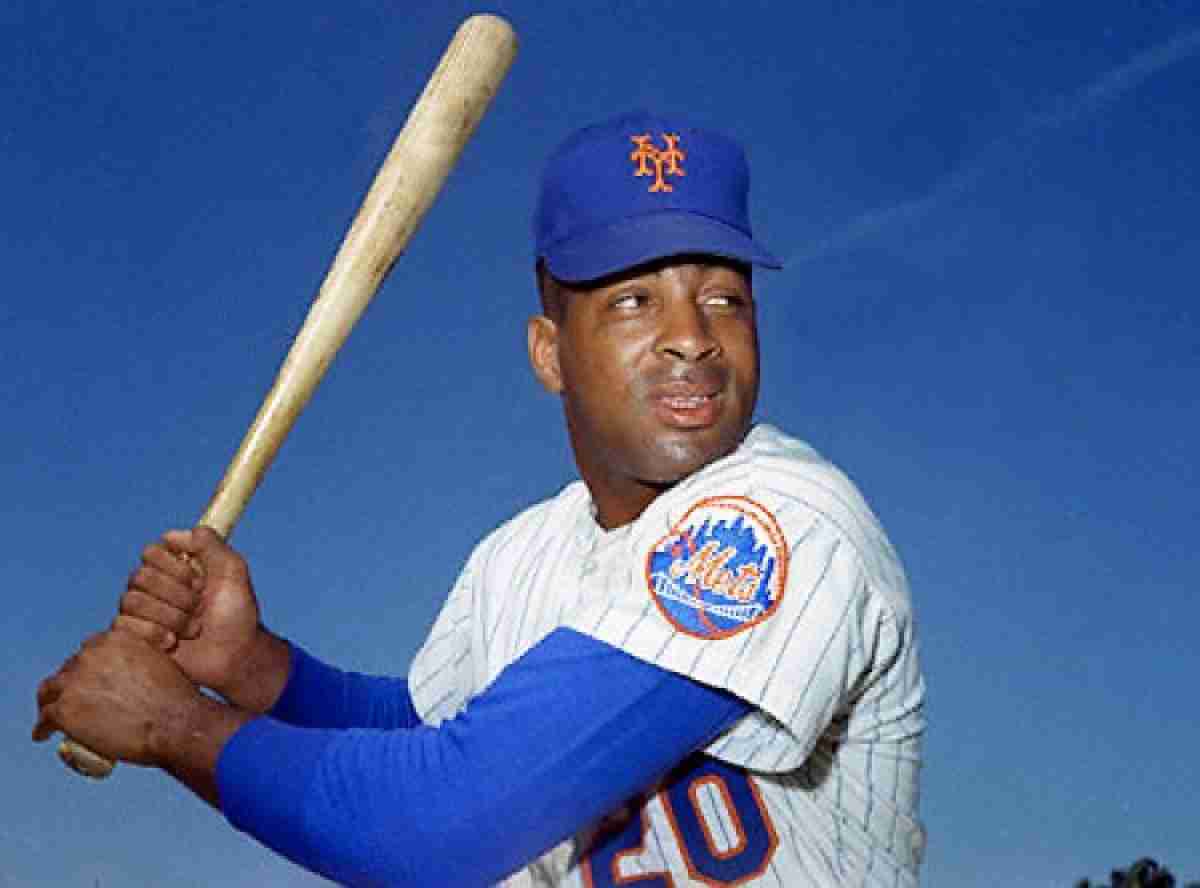
Tommie Agee arrived in New York before the 1968 season through a high-profile trade with the White Sox, bringing high expectations as a former American League Rookie of the Year. His first summer in Queens, however, was disastrous; he struggled with a severe hitting slump and was hit by a terrifying beanball from Bob Gibson, finishing with a poor .217 batting average. Despite this tough beginning, that difficult first year laid the groundwork for one of the most remarkable turnarounds in franchise history, reflecting the team's own dramatic evolution.
The 1969 season made Agee a legendary figure in Mets history. Once fully acclimated to the National League, the lively center fielder became the driving force behind the "Miracle Mets." On April 10, he hit a historic, long-distance home run off Montreal's Larry Jaster into the upper deck of left-field at Shea Stadium, a shot so iconic that the organization marked the spot with a white line on the seat to honor where it landed. Agee led the team with 26 home runs, 97 runs scored, and 76 RBIs, helping the Mets climb out of last place and finishing sixth in the National League MVP voting.
That regular-season surge was just a warm-up for his legendary showing in the 1969 World Series against the heavily favored Baltimore Orioles. In Game 3, Agee delivered what is arguably the greatest single-game performance in Fall Classic history. He started by hitting a solo home run in the first inning to set the tone, then made two incredible diving catches in center field, first robbing Elrod Hendricks in the snow-coned webbing of his glove, and later sliding across the warning track to prevent Baltimore from scoring with the bases loaded.
He maintained a high level of production into 1970, delivering a strong season with a .271 batting average, 24 home runs, 31 stolen bases, and earning a Gold Glove for his defense. Although ongoing knee injuries gradually reduced his speed and power during his last two seasons in New York, limiting his total with the franchise to 632 hits and a .329 on-base percentage, his most significant contributions were integral to the team's first championship identity.
After the 1972 season, the Mets traded him to the Houston Astros, ending his energetic five-year tenure in New York. While advanced metrics may see his career stats as humble, the franchise understood that his impact went beyond traditional box scores. Almost thirty years after his remarkable defensive plays helped win a title, the organization honored his legacy by inducting Agee into the New York Mets Hall of Fame in 2002.
Comments powered by CComment