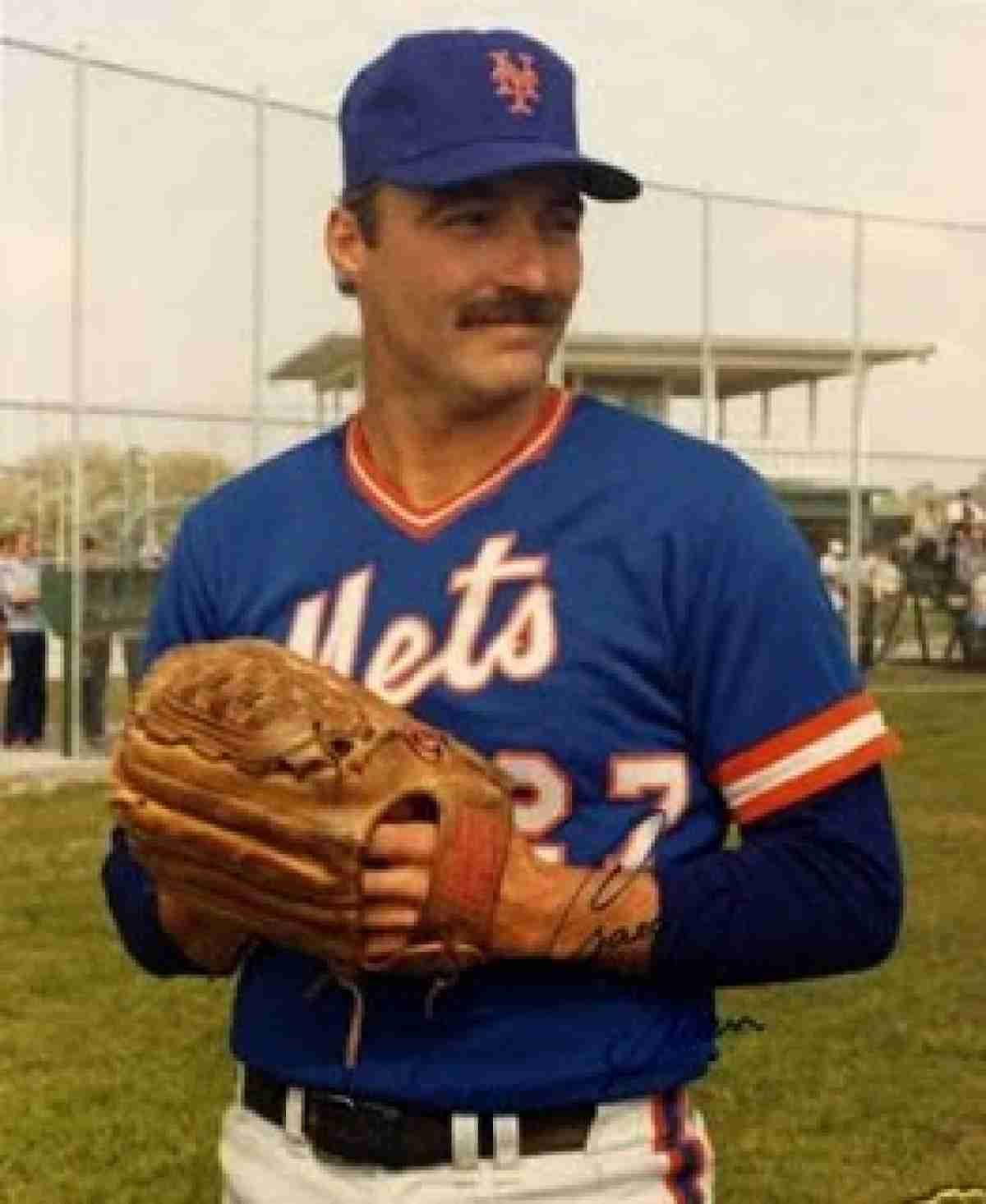
Craig Swan first broke into the major leagues with New York in September 1973, a third-round draft pick out of Arizona State University who possessed a heavy, low-90s fastball and a sharp slider. Arriving just as the "Ya Gotta Believe" pennant race reached its boiling point, the young right-hander was largely a spectator during the team's World Series run, spending the next two seasons waiting for a permanent opening while refining his craft in Triple-A.
Swan secured a permanent spot in the starting rotation during the 1976 season, delivering a strong debut as a regular starter with a 6-9 record and a solid 3.54 ERA, including a remarkable five-hit, 11-strikeout shutout against Atlanta. He remained a reliable, volume-focused starter throughout the difficult 1977 season. After the surprising mid-summer trading of Tom Seaver, Swan was placed in a higher-pressure role, leading a weakened pitching staff with 9 wins and 146.2 innings pitched, even as the team fell to the bottom of the National League East.
In 1978, Swan was the unheralded anchor of a 96-loss team. He completely shocked the baseball world by capturing the National League ERA Title with a spectacular 2.43 mark. He pairs that baseline achievement with an era-defining 143 ERA+ to lead the senior circuit, while finishing second in the league in both WHIP (1.07) and hits allowed per nine innings. He was entirely unhittable at Shea Stadium, where he spun a microscopic 1.68 ERA, but the punchless Mets lineup routinely wasted his efforts, leaving him with a deceptive, hard-luck 9-6 record that masked a brilliant 5.6 bWAR campaign.
He demonstrated that his remarkable peak was no accident by increasing his workload during the 1979 season, achieving his best statistical season with traditional volume. As the team's Opening Day starter, Swan bore a heavy load for a team that lost 99 games, pitching a career-high 251.1 innings over 35 starts and completing 10 games. He recorded a personal best of 14 wins, more than his two rotation teammates combined, along with 145 strikeouts and a solid 3.29 ERA. His outstanding two-year performance earned him the largest pitching contract in franchise history at that time when the front office signed him that winter.
His career took a frustrating turn after that financial peak as physical roadblocks derailed his efficiency. Swan started strongly in 1980 with a 2.21 ERA into June, but a torn rotator cuff ended his summer and wiped out most of his 1981 schedule. He made a strong late-career comeback in 1982, going 11-7 with a 3.35 ERA over 166.1 innings, narrowly missing the NL Comeback Player of the Year. Sadly, his arm shattered again early in 1983, and he spent the rest of his career trying to pitch through severe joint damage.
Swan was released in May of 1984, finishing up with a 59-72 record and a 3.74 ERA.
Comments powered by CComment