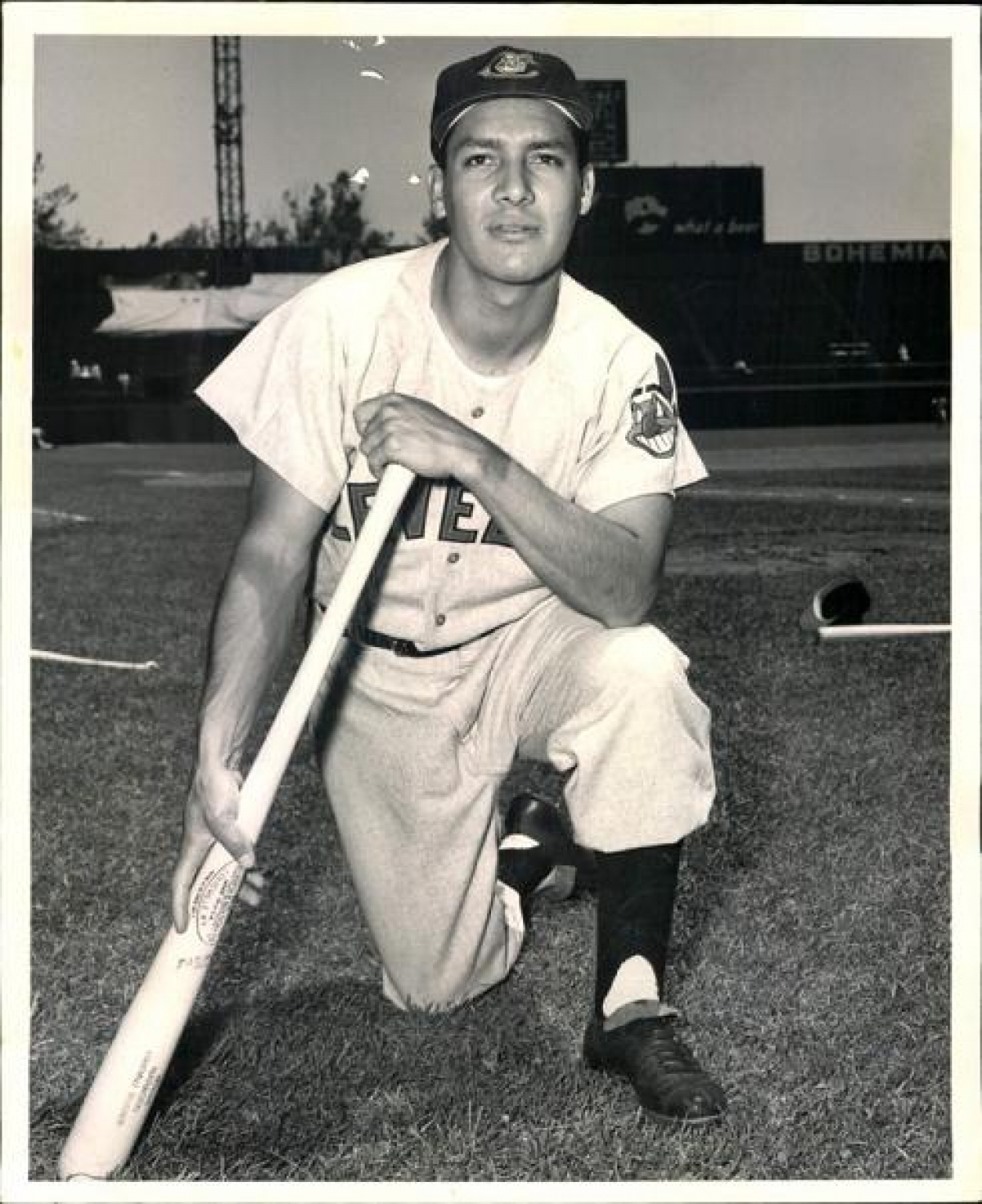
The 1949 arrival of Bobby Avila in Cleveland wasn't just a roster move; it was a watershed moment for international baseball. As the first Mexican-born player to truly seize a starring role in the Major Leagues.
Avila forced his way into the permanent starting lineup by 1951, immediately proving that his bat belonged at the top of a championship-caliber order. He possessed a specialized knack for finding gaps, hitting over .300 in each of his first two full seasons as a regular. His athleticism was on full display in 1952 when he led the Junior Circuit in triples and earned his first invitation to the Midsummer Classic. He was a model of specialized consistency, serving as the high-leverage spark plug for a Cleveland squad that featured some of the most storied pitching staffs in the game's history.
The definitive apex of his career arrived during the magical 1954 campaign. That summer, Avila authored a historic performance by capturing the American League Batting Title with a .341 average, becoming the first Latin American player to ever lead the league in hitting. His craftsmanship was the primary engine behind Cleveland’s record-setting 111-win season and its march to the World Series, earning him a third-place finish in the MVP voting. He was a high-frequency producer who combined elite bat control with a veteran poise, proving he could out-hit legends like Minnie Miñoso and Ted Williams over the course of a grueling pennant race.
Beyond the box scores, Avila’s presence was defined by a trailblazing resilience that made him a national hero in his homeland. He remained the tactical anchor of the Cleveland infield through 1957, utilizing a workmanlike approach to accumulate over 1,200 hits in a Tribe uniform. Whether he was lacing a line drive into the corner or providing sure-handed defense at the keystone, he competed with a focused intensity that solidified his status as a franchise pillar. He proved that a player could become an international icon by mastering the fundamental requirements of the "inside game" at the highest level.
Following a sharp decline in 1958, the team traded to Baltimore and finished its final lap in the league in 1959.
Comments powered by CComment