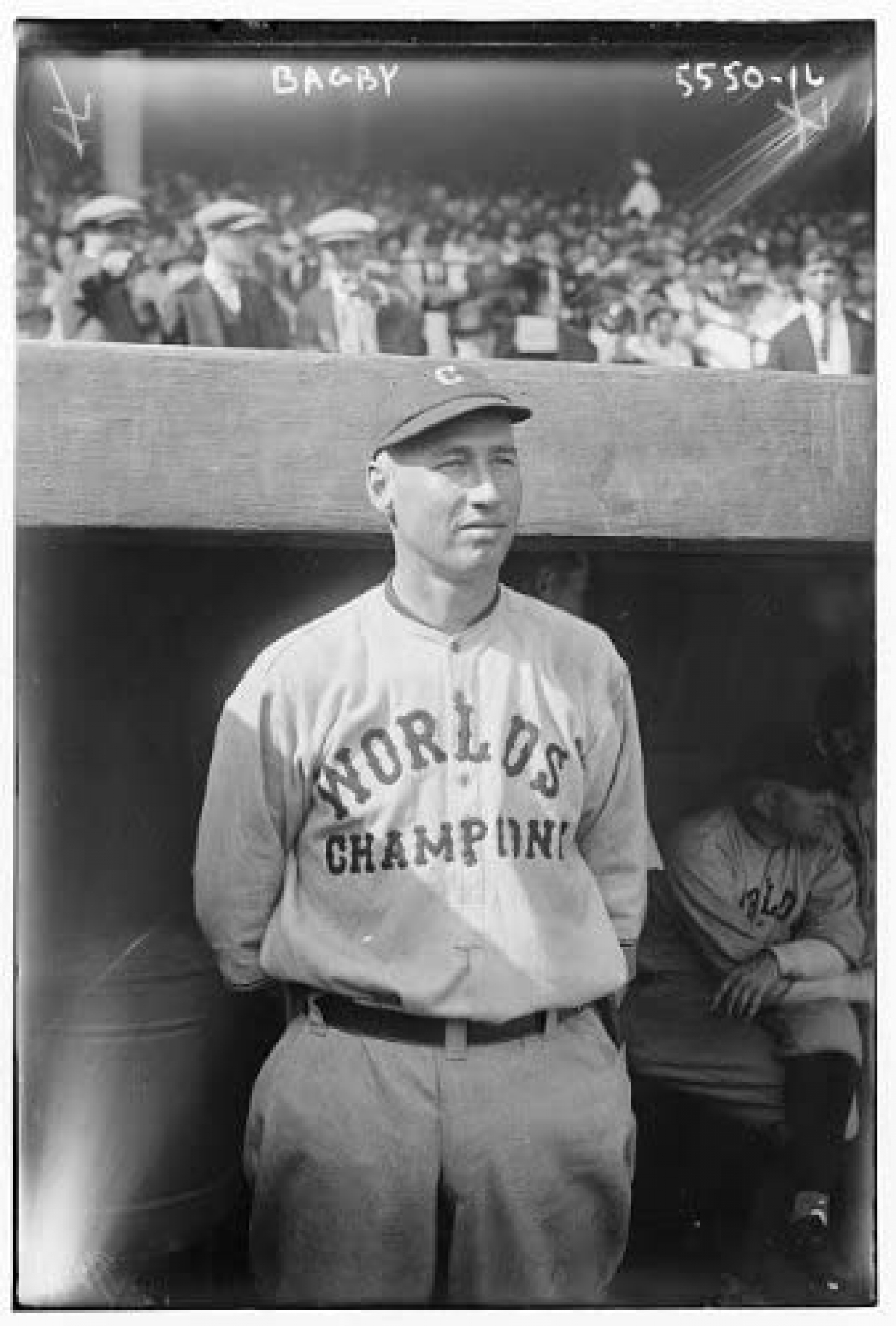
Bagby evolved into a premier workhorse as the franchise adopted the "Indians" moniker, consistently providing the high-leverage durability needed to keep the club in contention. He possessed a specialized ability to eat innings, maintaining a sharp 2.49 ERA over his first four seasons in a Cleveland uniform. However, his career reached an incredible inflection point during the legendary 1920 season. That summer, Bagby authored a workload that seems impossible by modern standards, leading the American League with 339.2 innings pitched and securing a staggering 31 victories. He was the definition of a high-frequency winner, serving as the tactical engine that powered Cleveland to its first-ever American League pennant.
The true magnitude of his contribution was felt during the 1920 World Series against Brooklyn. Bagby was a master of the big moment, becoming the first pitcher in World Series history to hit a home run, a feat of athletic versatility that punctuated his dominance on the mound. He was a model of specialized endurance, providing the strikes required to secure Cleveland’s first World Championship. This craftsmanship was the culmination of a peak that saw him lead the league in games started and complete games, proving that his game was built on a relentless refusal to leave the mound until the job was done.
His presence was defined by a professional resilience that eventually took its toll. After the heavy workload of 1920, his arm began to show the fatigue of those grueling seasons, leading to a decline in his effectiveness and an early exit from the sport just a few years later. He departed with a legacy of 122 victories and a reputation as the ultimate "big game" hunter in the twilight of the deadball era.
The organization provided the ultimate punctuation on his career nearly a century later by inducting him into the Cleveland Hall of Fame in 2007.
Comments powered by CComment